





















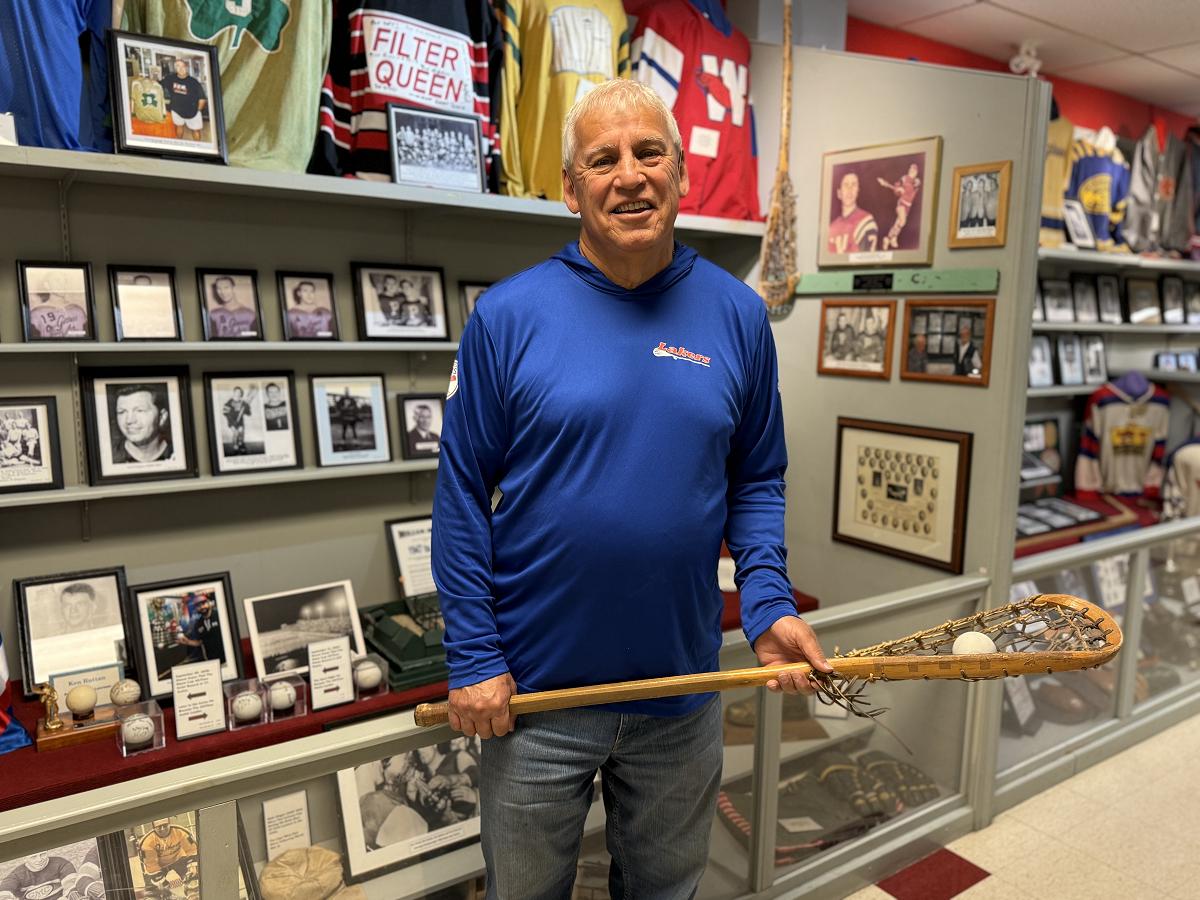
Whether he was playing lacrosse, hockey, or football during his award-winning sports career, Len Powers never experienced fear. But when the Peterborough resident faced a possible cancer diagnosis later in life, that all changed.
“When you hear the C-word, you think the worst,” says Powers, recalling the anxieties he and his family experienced while they were awaiting lab results to confirm whether he had prostate cancer and needed to begin life-saving treatment.
In the hopes that future cancer patients will not face those same anxieties, Powers is sharing his story in support of the Peterborough Regional Health Centre (PRHC) Foundation’s $70 million Campaign for PRHC to reimagine healthcare in the region.
VIDEO: Len Powers’ healthcare journey
The PRHC Foundation has made it a priority to invest in the future of cancer care by bringing digital pathology to the regional hospital, with the help of donors.
Like many hospitals across Canada, PRHC’s pathology laboratory currently processes all tissue samples from PRHC and four partner hospitals manually. A pathologist uses a microscope to assess the samples and render a pathology report to pass on to the patient’s doctor, who will determine the patient’s treatment plans. Last year, 2.3 million tests were run through the laboratory.
Through a $2.5 million investment in digital pathology, high-resolution scanners will digitalize the glass slides with precise imaging. Using emerging tools, pathologists will be able to process tissue samples more efficiently, analyze them in greater detail, and provide faster results.
“Digital pathology will take patient care to the next level,” says Lesley Heighway, president and CEO of the PRHC Foundation. “This is particularly vital as cancer rates continue to rise, PRHC sees more cancer care visits each year, and there’s a shortage of pathologists across Canada.”
“State-of-the-art digital pathology will help PRHC’s hardworking pathologists process the tests necessary for diagnosis and treatment decisions faster, so more accurate results get to doctors and their patients sooner. This means patients won’t wait as long in worry for the information required to start personalized cancer treatment.”
For Powers, digital pathology would have saved him and his family weeks of worry.
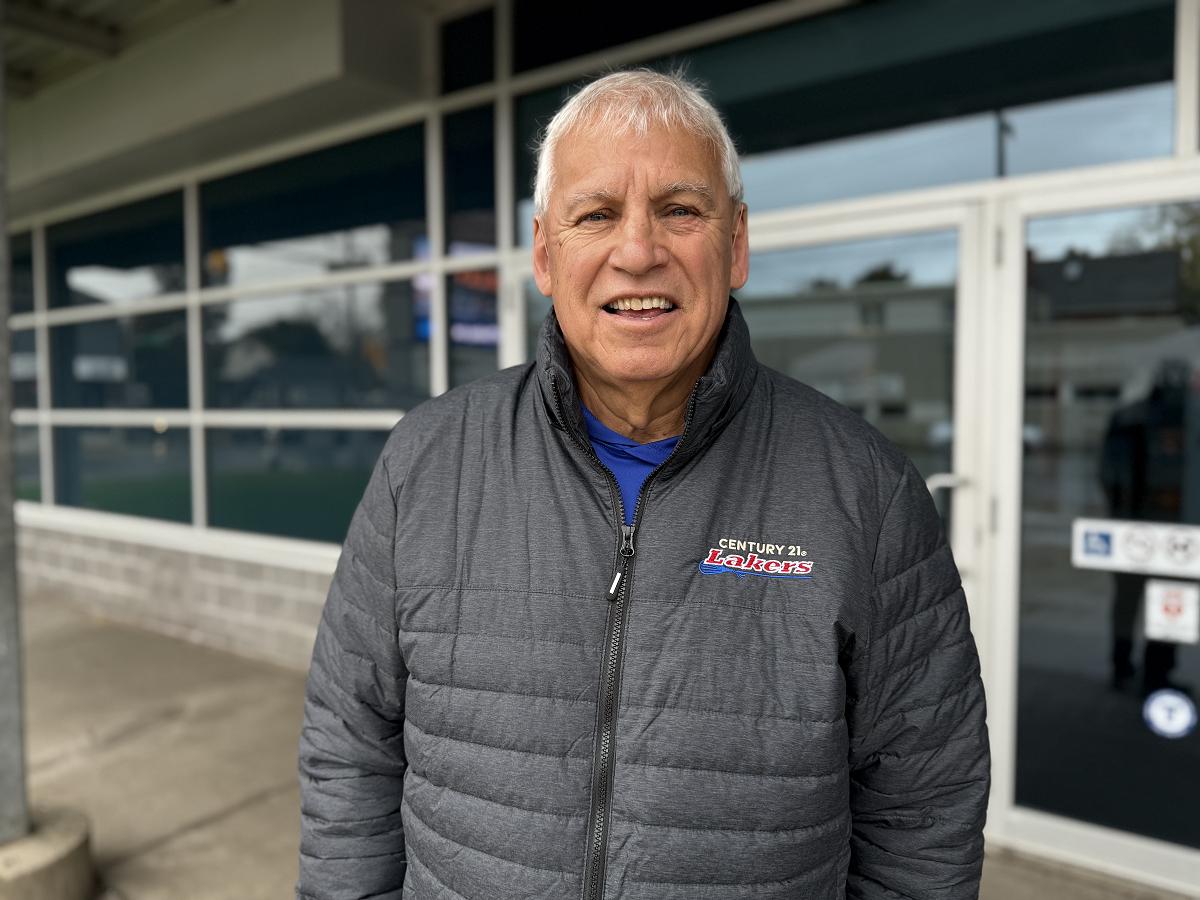
His patient journey began nearly six years ago when, at the age of 69, he had a routine prostate-specific antigen (PSA) blood test. The test, which measures the level of a protein produced mainly by cells in the prostate gland, revealed his PSA was double the normal level.
While a high PSA level can be caused by prostate cancer, there are also many other reasons for a high level. Powers was put on medication to determine whether there was another cause. However, when he took the test again later, his PSA level had risen again.
“I could have waited and seen where it went, but when you’re talking about cancer, you have a fear of it,” he says. “You want to do whatever needs to be done to hopefully get it out of your body.”
After Powers underwent a biopsy, it took weeks to confirm a diagnosis of cancer and to then meet with his oncology team to explore treatment options. He says this time spent waiting for the results brought “anxiety and fear for my family.”
“There was definitely anxiety for not just me, but my family, wanting to know what the results were, and the decision my wife and I were going to have to make,” Powers recalls. “I wanted to find answers. Where do we go from here? Do we go ahead and do a procedure?”
Once the cancer diagnosis was confirmed, Powers and his wife then weighed the options of having his prostate gland removed entirely or undergoing brachytherapy, a treatment commonly used for prostate cancer where radioactive material is placed directly inside or very close to a tumour to kill cancer cells without damaging the healthy tissue.

Powers had to travel to Oshawa for brachytherapy, which was then followed by 15 days of treatment at PRHC’s radiation suite — a suite that was entirely funded through community donations.
“I was very lucky I was able to get that done in Peterborough, close to home, and didn’t have to travel to Oshawa every day,” Powers says. “The funds raised by the Foundation saved me three hours per day of travel time and all that extra stress.”
While government funds a portion of hospital operations, many people don’t realize government doesn’t fund hospital equipment or technology. That means the most generous communities are the ones that have the best hospitals, with leading-edge technologies like digital pathology.
Based on his healthcare journey, Powers knows digital pathology will provide “a great benefit” to patients by reducing the wait time for lab results so they can begin life-saving treatment if needed.
“Instead of waiting a couple of weeks or longer, it can be done much faster and then the patient can start going forward,” Powers says. “As soon as you get the results, you can then make the other decisions that you have to make, which could be life-changing.”
As well as sharing his story as a grateful PRHC patient, Powers — a three-time Mann Cup lacrosse champion and inductee in the Ontario Lacrosse Hall of Fame — is also supporting the hospital as a board member of the Peterborough Century 21 Lakers lacrosse team. At the start of the 2025 season, the team became official ambassadors for the Foundation’s $70 million Campaign for PRHC.
“It was something that we wanted to do to help out as citizens of Peterborough, and all of our players have basically used the hospital at one time or another,” says Powers. “We thought we could step up and help with the campaign by bringing awareness and fundraising activities for the Foundation. It was a no-brainer for us to get involved.”

The PRHC Foundation attended home games throughout the season so fans could learn more about and support the campaign. Through various fundraising efforts including a jersey auction, merchandise sale, and donations, the team raised $15,484.50 for the Campaign for PRHC.
“The Lakers are a championship organization with deep community ties. Just like our regional hospital, they represent dedication, heart and excellence,” says Heighway.
“With how strongly this community rallies around the Lakers and PRHC, a partnership between the two is a natural fit. We’re grateful that they joined us this season. By sharing their own PRHC connections, helping to explain how important community donations are, and fundraising throughout the season, the Lakers inspired many more people to help us reimagine healthcare in our region.”

Heighway says that, throughout the season, Powers continued to share his connection to PRHC with the Foundation and expressed his gratitude at having world-class care close to home.
“We’re honoured that Len wanted to share his personal story more publicly in support of the Campaign for PRHC,” she says. “His love of all things local extends to his hospital. He wants the best for his community and that means bringing cutting-edge equipment to PRHC so that we all have access to the best care. Thank you, Len!”
Powers, who now has normal PSA levels and is no longer on medication, hopes that by giving his support, patients who hear the dreaded ‘C’ word won’t have to live in the anxiety and uncertainty for as long as he did.

“We never know when we’re going to need help from the hospital, and hopefully it never happens, but someone in your family could one day have their lab tests processed with the help of digital pathology to get results as quickly as possible,” Powers says.
“Your $5, $10, $100, or any-denomination donation will help move that along. If we all work together, we can hit the goal.”
To learn more about cancer care at PRHC and to make a donation, visit the PRHC Foundation website at prhcfoundation.ca or call 705-876-5000.
This branded editorial was created in partnership with the Peterborough Regional Health Centre Foundation. If your organization or business is interested in a branded editorial, contact us.