





















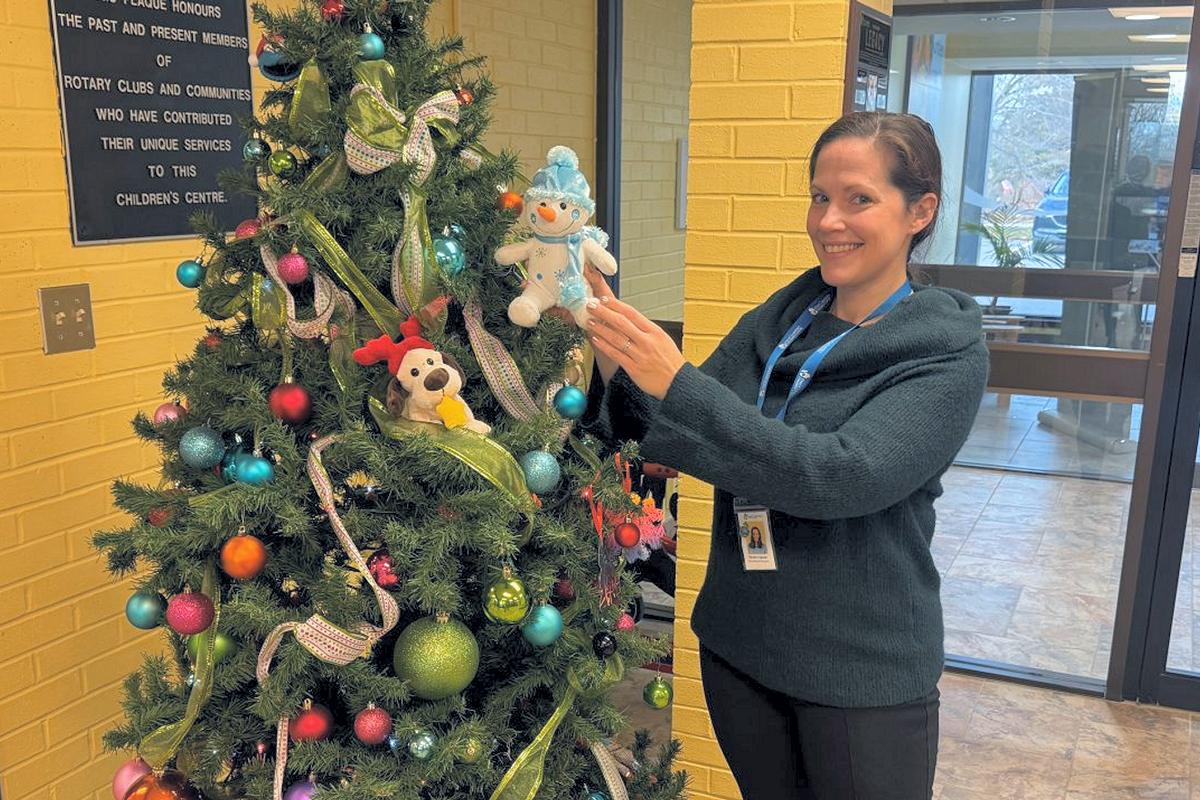
From setting realistic expectations to making space for quiet time, Five Counties Children’s Centre is offering tips for parents and caregivers to help their children and themselves this holiday season.
The regional children’s treatment centre, which supports children and youth with special needs and their families in Peterborough, Haliburton and Northumberland counties, and Kawartha Lakes, said providing support and suggestions to parents and caregivers is in the spirit of making the holidays merrier and more manageable for all.
“Parents and caregivers need to be regulated and calm so that children can borrow that calm and use if for their bodies,” Five Counties occupational therapist Nicole Captain told kawarthaNOW.
Captain works in Five Counties’ school-based rehabilitation services, providing occupational therapy support to students. Often her work in school involves discussions with students about regulation, which is also of benefit at home during the holiday season.
Regulation is a person’s ability to understand and manage their own behaviour, emotions, and reactions. A good example of regulation is that, when someone becomes angry, they are able to calm or talk themselves down before flying into a fit of fury.
“Unfortunately, the hectic pace, expectations, change in routine, and unpredictability of the festive season can all be triggers for stress in adults,” Five Counties said in a media release, pointing to an October study from Trent University and Lakelands Public Health that found 51 per cent of local parents reported “always” or “often” feeling stressed over the previous six months.
Stress levels often increase over the holiday season, Captain noted, and children may pick up on this, amplifying the problem for the entire family.
“Excitement around the holidays can be dysregulating for adults and children, as it is a time of heightened emotions and busy schedules,” Captain added. “Some key tips to cope are managing expectations, dealing with unpredictability, and addressing sensory overload. Consider keeping things simple, prioritize basic needs and connection, and be flexible.”
Parents and caregivers can help set the tone for a child ahead of the peak of the holidays, added Five Counties spokesperson Bill Eekhof.
“If an adult is dysregulated, stressed and out of sorts, a child will pick up on that and may act out similarly,” Eekhof shared. “By regulating their own behaviours and managing their emotions and actions, an adult can set a good example and help a child better cope and handle what’s ahead for the holidays.”
VIDEO: Making the Season Merry & Manageable
To manage stress during the holiday season, Five Counties has offered seven tips.
Take care of yourself
Eat well, get enough sleep, and stay well-hydrated. Set healthy boundaries and do what is best for you and your family. Take time when you need it, and don’t feel guilty saying no when you have to.
Plan your schedule in advance
Help your child prepare for what happens before an event, party, or outing. Share with them who will be at each event and where it’s being held. Discuss what situations may arise and come up with a plan that will work for all of you. If you have an older child or teen, discuss and negotiate what the plan will be.
Communicate openly about feelings with your child
Discuss with children how they are feeling or what’s making them anxious. Be available at holiday gatherings or parties so they know they can come to you for support if needed. A little one-on-one time throughout the holidays will help you get a better sense of how your child is feeling.
Set realistic expectations
Things won’t go perfectly, so adjust where needed. For example, decide if it’s better for your family to spend one hour at the party rather than five.
Find a quiet place and plan ahead for boredom
At a holiday gathering, set aside a space where you or your child can go for a break. Never force your child to interact with other kids or adults if they don’t want to. Let them have that time on their own to regroup. If your child is young, bring books or a bag of special toys. If your teenager needs to decompress with a game on their phone, that’s okay. Make sure to check in periodically with how they are doing to make sure everyone is still enjoying the activity, or if maybe some quiet time is needed.
Don’t worry about other people’s judgments
People may ask insensitive questions or make comments about your child’s behaviour. These comments can be rude or, at other times, they’re just trying to understand. Have a quick sentence or two response that explains your child’s situation. This will help you stay calm and to keep from overreacting.
Family time matters, so make time for each other
Set aside quality time over the holidays to do this, as these can make for the most memorable and cherished holiday moments. Outdoor activities offer one option to do this, especially in the sunlight, fresh air, and snow. If the weather outside is frightful, the power of indoor play can also be enjoyable — especially activities that are interactive, fun, engaging, and don’t involve a device screen.