










“Artistic expression in the service of truth that can be so magical and so impactful.”
That’s how Eryn Lidster of the ReFrame Film Festival describes documentary film, adding that viewing documentaries is a “powerful experience” everyone should have.
“I think its power comes from exploring the fuzzy line between creativity and reality,” Lidster says. “When engaging with documentaries, you are creating space for an experience to change your life.”
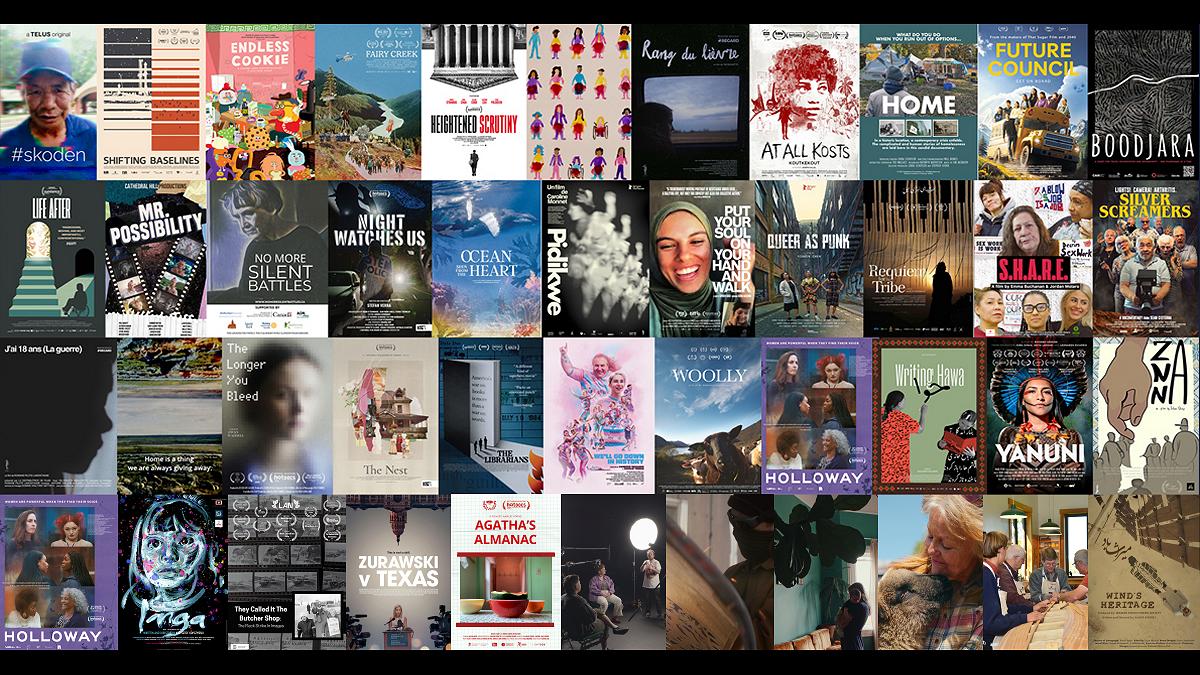
As ReFrame’s creative director, Lidster played an important role — alongside the festival’s volunteer programming advisory committee — in curating the lineup of more than 40 international documentaries that will be screened when the festival returns to downtown Nogojiwanong/Peterborough from January 30 to February 1, with in-person screenings at Market Hall Performing Arts Centre and Showplace Performance Centre, and virtually across Canada from February 3 to 8.
“The programming advisory committee is meant to be a reflection of the ReFrame community, so nothing is off the table when it comes to their reactions to the films, and everyone is coming to the conversations from a different perspective, with different interests and experience,” says Lidster.
“Of course, we talk about things like the filmmaking and whether the content is informative, but I think the most important thing we consider is how the films make us feel. I think that is the best indicator of the impact a film can have for our community and impact is always the goal.”

Lidster says the benefit of having a dedicated programming advisory committee means there is always someone to offer support because the films “can be so emotionally overwhelming.” Focused on social and environmental justice, each film can confront inequalities, spotlight harsh realities, and celebrate resilience.
“Just like during the festival, community is so important to maintaining our capacity to take action,” Lidster says. “The committee is like a mini ReFrame in a lot of ways. We bring different ideas and opinions to our conversations around the films — sometimes we disagree, we try to take on a new perspective, and we learn a lot.”
According to Lidster, the support that committee members show for one another is important when choosing films for the festival, because “When we feel held by a community, we often make the braver choice.”
Along with selecting the lineup, the committee also helps audiences find the films they might be interested in by dividing the lineup into collections based on subject matter or style. Lidster says the titles for these collections emerge as the committee notes the connections and themes of the films.
“There are some themes and subjects that will always be core to ReFrame as a social and environmental justice festival — like art and climate change — but they take on a slightly different flavour every season,” Lidster explains. “Finding the words to articulate those particular connections is one of my favourite parts of the programming process.”
The first collection, called “A Thousand Words,” explores the ways in which text and image connect us, divide us, and shape how we see the world. It includes films like The Librarians, which spotlights the unlikely defenders who fight for intellectual freedom sparked by book banning in Texas, and The Longer You Bleed, a film exploring how war becomes spectacle in the age of endless scrolling through the eyes of displaced Ukrainians in Berlin.
VIDEO: “Woolly” trailer
The “Art Beat” collection highlights growth and resistance powered by art. This theme is explored across social justice issues like aging in Silver Screamers, which follows a group of seniors who defy stereotypes by creating a horror film, and human rights, as seen in Queer as Punk, a film about a trans man and his punk band who plays gigs and protest on the street of Malaysia where being LGBT is criminalized.
“Flora & Fauna” dives into stories about relationships developed with fellow living beings, like Woolly, a film about life on a Norwegian sheep farm as it’s passed on to the next generation, and Yanuni, which tells the story of an Indigenous leader who confronts the personal cost of resistance during a fight to save the Amazon.
The collection “Sharp Angles” is made up of films whose documentary craft invites a new perspective on people, events, and experiences. Each to Their Own World offers intimate insight into the lives of deaf people who were raised with spoken English, while Wind’s Heritage follows 68-year-old Mohammad Wali Gandami, the last living craftsman who knows the techniques of building and repairing Iran’s ancient windmills.
“Windows In” features human stories that peek into intimate communities to share expanded viewpoints. Included in the collection are Agatha’s Almanac, about a 90-year-old woman who defies modernity by maintaining a solitary existence on an ancestral farm where she cultivates heirloom seeds, and Night Watches Us, an exploration of the tragic death of 23-year-old Nicholas Gibbs, a Black Montreal man who fell victim to police brutality.
Lastly, the “Women Everywhere” collection is a series of films showcasing women speaking out, sharing their stories, and standing up for their rights, freedoms, and each other. The collection includes Zurawski V Texas, about a group of women who band together to sue the state of Texas after being denied abortions, and Writing Hawa, about three generations of Hazara women from an Afghanistan family who aspire to emancipate themselves from patriarchal traditions.
“By the time we have narrowed down the program from the hundreds of films we consider every year, I truly love all the films in the lineup for different reasons,” says Lidster, noting it’s one of their “favourite things” to recommend a film based on a person’s interests.
VIDEO: “Silver Screamers” trailer
“If you care deeply about bodily autonomy, don’t miss Zurawski V Texas,” Lidster says. “If you’re into the mood for something light-hearted, you’ve got to see Silver Screamers.”
For those who have “stood on the picket line,” Lidster recommends a documentary made by Ottawa-based historian and filmmaker Lauren Stoyles, who grew up in Peterborough.
A short film about the 80 women of Fleck Manufacturing in Huron Park in southwestern Ontario who walked off the job in 1978 to fight for better wages, safer working conditions, and unions security, They Called It the Butcher Shop: The Fleck Strike in Images is one of several films made by local filmmakers.
These local films complement the national and international films screening at the festival that also share stories and experiences of resilience.
“Aside from the vitality for the arts community, that connection between local, national, and international filmmaking communities provides education, collaboration, and inspiration,” says Lidster. “I think it is also vitally important that we stay connected with communities featured in these international films, especially those experiencing violence.”
Lidster points out that, by bringing together documentaries from around the world on common themes, ReFrame reflects the interest in environmental and social justice that people share no matter where they live.
VIDEO: “The Longer you Bleed” trailer
“Within the context of the climate crisis, these folks are our neighbours too, they are affected by our action and inaction,” Lidster explains. “Add to this the direct connections to people here, our physical neighbours, through personal experiences, family and friends, shared history and culture, and the similarities in fights for justice happening everywhere — these stories are not as far away as they may seem.”
Whether you’re watching a local film or one made on the other side of the world, whether you’re watching stories about human rights or climate justice, or whether you’re attending a film in person or watching it from your own home, Lidster hopes you feel “empowered” after every screening.
“Whether it’s feeling enraged or inspired or just that you are not alone, I hope the festival gives us all what we need to face the challenges that come our way,” Lidster reflects. “I hope we all take action, small or large, throughout the year until we are back together again.”
VIDEO: “Yanuni” trailer
There are four festival pass options currently on sale, including a $145 hybrid pass that allows access to all in-person and online film screenings, a $120 all-access in-person pass, a $75 watch-with-a-friend virtual pass, and a $60 single virtual pass. The hybrid and in-person passes also provide access to all ancillary performances, workshops, exhibits, discussion panels, and Q&As related to this year’s lineup.
Tickets for individual films, both in person and online, are also available for $15 or pay what you can. They can be purchased in advance online or, for in-person screenings, at the door at Market Hall or Showplace 15 minutes prior to each screening.
For festival passes and tickets and to see the full lineup for the 2026 ReFrame Film Festival, visit reframefilmfestival.ca.
VIDEO: “Wind’s Heritage” trailer
kawarthaNOW is proud to be a media sponsor of the 2026 ReFrame Film Festival.