










For years, we have talked about how to help seniors age well. Too often, the default solution is to bring in something new — new programs, new providers, new systems layered on top of already complex lives. The NORC Ambassador Program reminded us that the most meaningful and lasting change often comes from strengthening what already exists.
The NORC Ambassador Program was developed in partnership with Age-friendly Peterborough, Home Care Workers Cooperative, and AON Inc., and was funded through the Ontario Seniors Community Grant Program. Together, this collaboration focused on supporting Naturally Occurring Retirement Communities, commonly referred to as NORCs.
NORCs are not retirement homes or institutions. They are apartment buildings or neighbourhoods that, over time, naturally become home to a high concentration of older adults. These are places where people have lived for years, sometimes decades. They are communities built on shared history, informal relationships, and trust.
When supports are embedded within these spaces, seniors do not have to leave their community to stay healthy and engaged. The community itself becomes part of the solution.
One of the core strengths of the NORC model is that it builds from the inside out. Rather than relying solely on external services, the program identified and supported resident “ambassadors” — volunteers who already live in the building and were willing to help connect neighbours, share information, and notice when something might be wrong.
These were not professionals brought in from outside. They were peers, and that mattered.
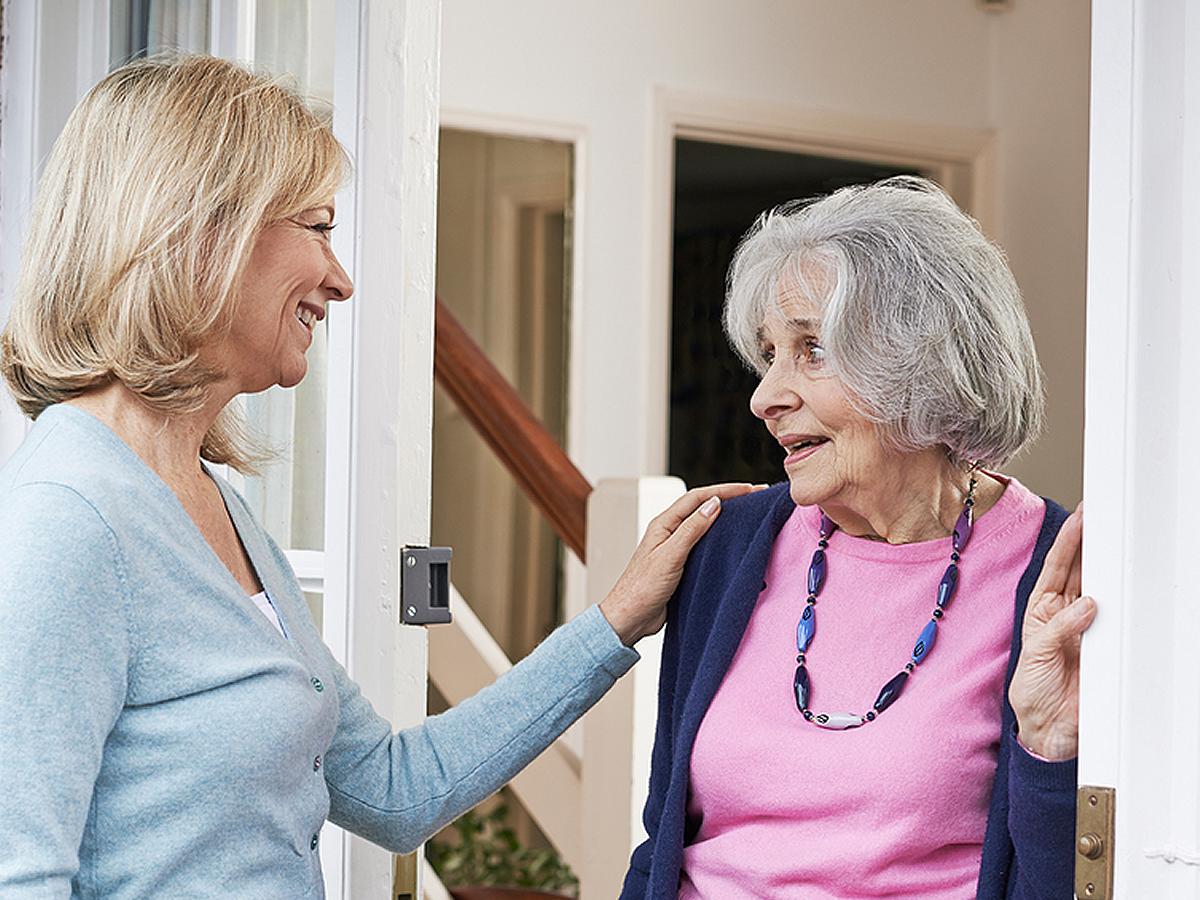
A particularly powerful example of this was the door hanger program. Door hangers were provided to all participating residents in each NORC building. Volunteers on each floor committed to walking the halls in the morning and again in the evening. In the morning, the hanger would be flipped to say “good morning.” In the evening, it would be changed to “good night.”
If a hanger had not been flipped during one of these check-ins, it was a clear signal that someone needed to be checked on. This was not surveillance. It was neighbourly care, rooted in consent and community.
Recently, this system worked exactly as intended. A hanger had not been changed, volunteers noticed, the superintendent was contacted, and first responders were called to assist the resident. That timely response quite literally made a difference.
This is proof that regular people — our friends and our neighbours — are often the ones who make the greatest impact. Community care saves lives.
Another key component of the NORC work was the creation of a speakers bureau. This is a curated list of community organizations that support seniors and people with disabilities, complete with contact information and plain-language summaries of the services they offer. This information was shared with all participating NORC communities.
Each organization also agreed to come directly into the buildings to offer short presentations, allowing residents to learn firsthand what supports are available and how to access them.
Importantly, these sessions were driven by resident interest and building-specific needs. This was not about organizations promoting services. It was about empowering seniors with knowledge, choice, and agency.
Perhaps the most telling outcome of the NORC Ambassador Program is that many of these initiatives have continued beyond the pilot. Ambassadors remain active. Door hangers are still in use. Residents continue to organize and support one another. That level of sustainability only happens when programs are rooted in community, rather than imposed from the outside.
NORC-based, community-driven programming supports better health outcomes because it directly addresses isolation, one of the greatest risks to aging well. When people are connected, changes are noticed earlier, help arrives sooner, and emergencies are often prevented.
Home Care Workers Cooperative remains committed to working alongside NORC communities, and this work continues to inform other projects aimed at supporting seniors to age safely and with dignity in the places they already call home.
If you would like more information about Naturally Occurring Retirement Communities, or about community resources available to seniors, you can reach out to Age-friendly Peterborough at afpadmin@peterborough.ca or to Danielle Turpin at Home Care Workers Cooperative at danielle@homecareworkers.coop.
When we build with seniors instead of around them, everyone benefits.