





















This is the time of year when heating bills may begin to look a little frightening. Major upgrades such as adding insulation or switching out a heating system can help lower expenses, but they also come with high up-front costs.
A more accessible start may be to work on improving airtightness in the home.
Air leakage and insulation are often confused by homeowners. Insulation, typically measured with an R-value (or RSI in the metric system), slows down heat transfer between the inside of a building and the outside in winter. It can be considered as a home’s “warm winter coat.”
Now, consider the difference between wearing a winter coat with the zipper wide-open versus fully closed. This is how a home’s performance can be impacted by its airtightness.
ACH50 stands for Air Changes Per Hour at 50 Pascals, and it is a measure of how leaky the house is. It’s a key indicator of how efficient and comfortable a home will be. A home with a high ACH50 will have high heating bills, dry air in winter, and may suffer from pests — even if it has great insulation.
The good news is that improving a home’s airtightness can often be a do-it-yourself job that has great payback. The support of an energy coach can make the job even easier.
“Usually, a door or window is the first culprit blamed for drafts by homeowners,” says GreenUP energy advisor Bryn Magee. Magee has been through many leaky Peterborough-area homes, and often finds other leaks that homeowners were not aware of, some much more significant than windows and doors.
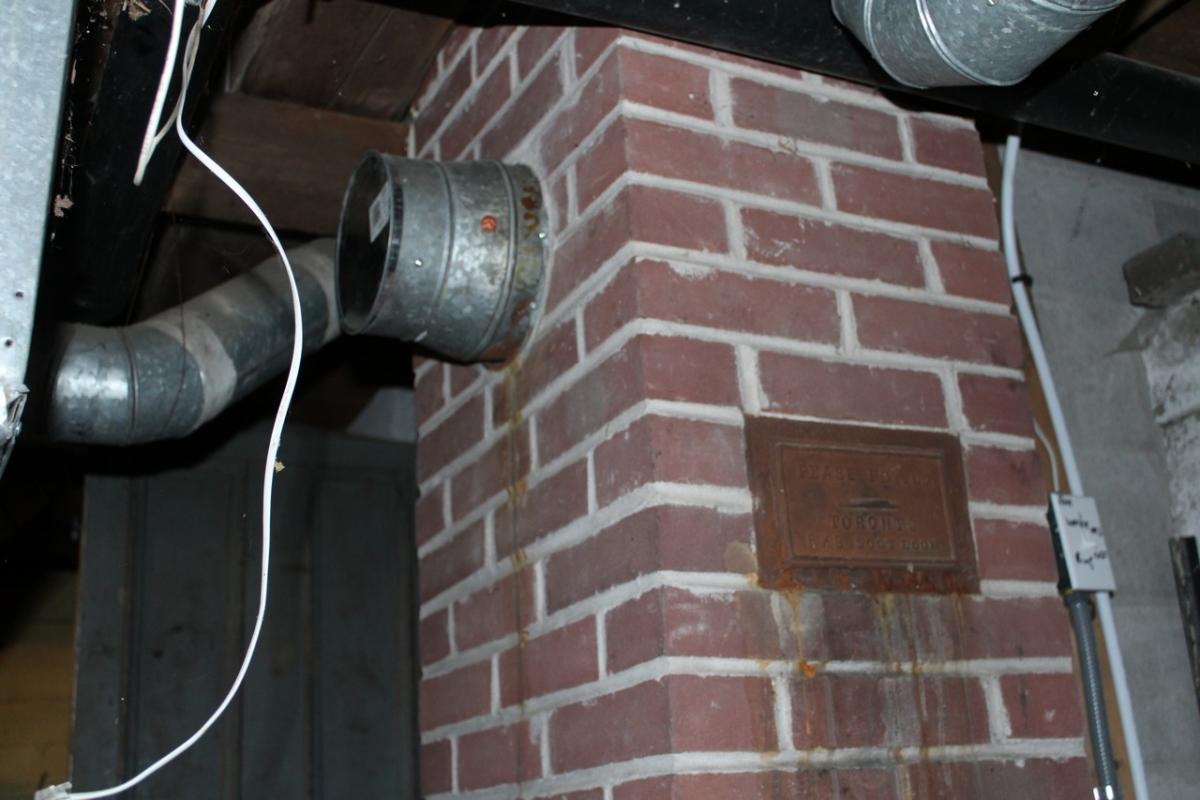
“The air leakages are in blind spots or areas never considered before,” explains Magee. “For example, ceiling pot lights or missing interior air sealing around rim board penetrations for plumbing may be contributing to a homeowner’s discomfort.”
Once identified, he can then provide advice for sealing the leaks, resulting in significant improvements in home comfort and lower energy bills.
Some air leaks can be identified by a homeowner on a careful tour of the house. Wherever daylight is showing through to the interior — under a door or around a dryer vent for example — that is a clear indicator of a leak.
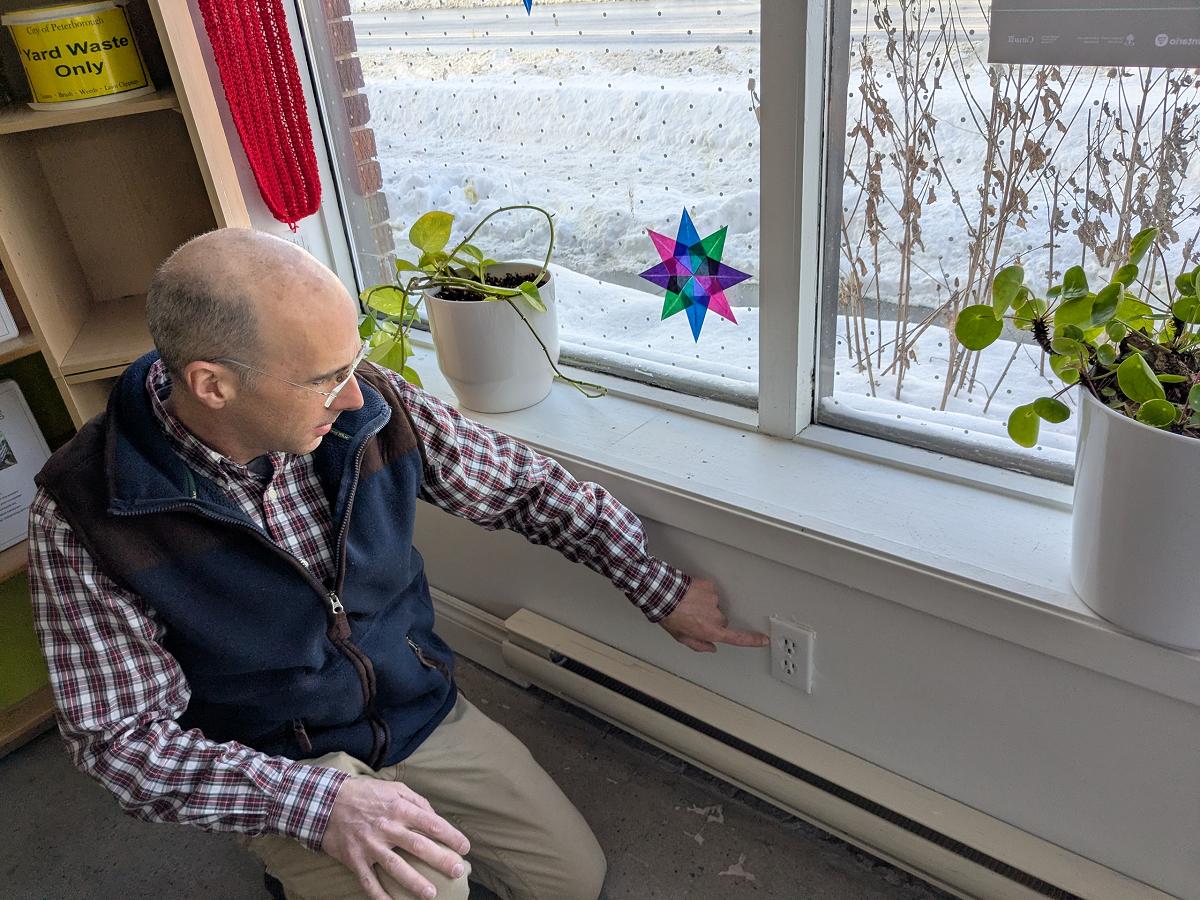
Other common areas of leakage include around attic and side attic hatches, along basement headers (especially around penetrations for venting or wiring), and from electrical outlets on exterior walls.
Each leak will require different techniques for sealing, but usually can be done with materials found at a hardware store, such as weatherstripping or caulking.
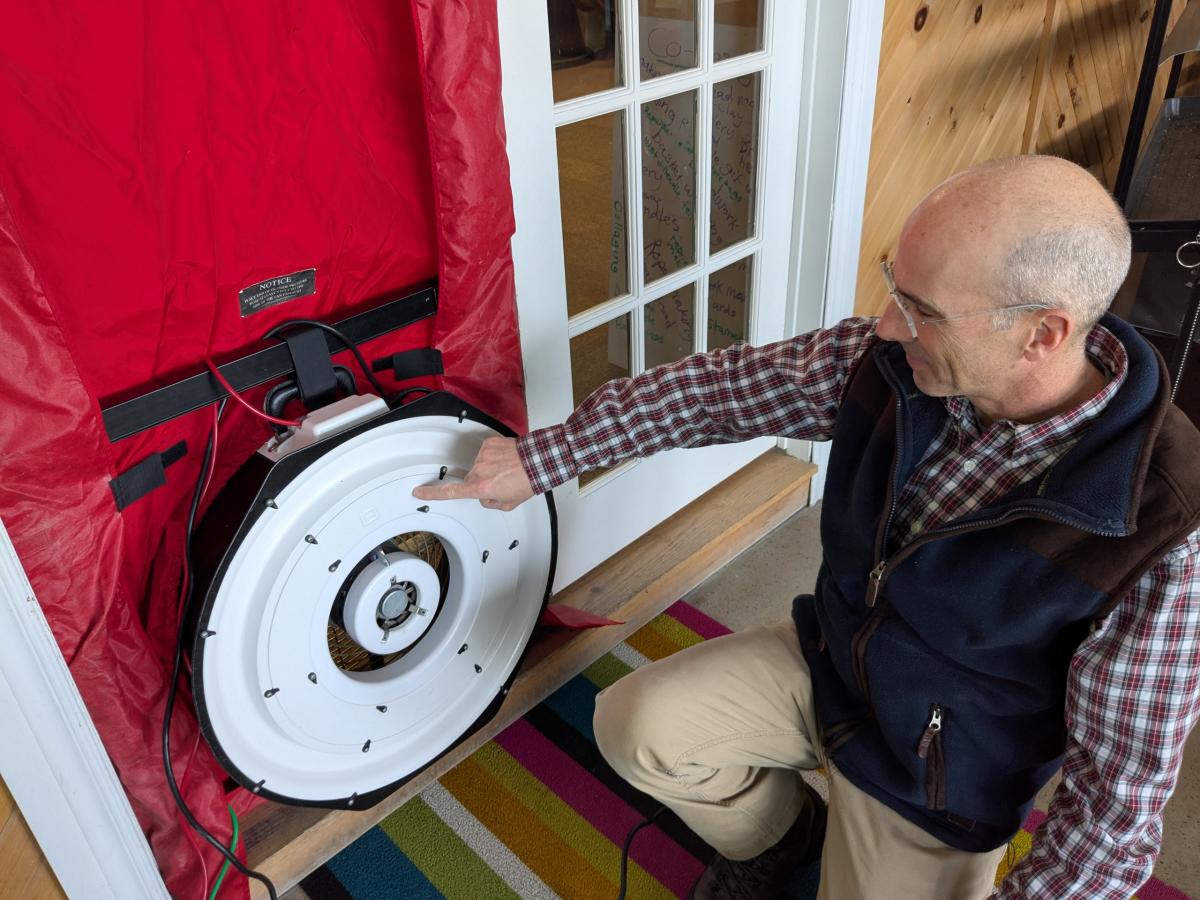
Blower door testing is the most effective way to measure the airtightness of a home and identify where all the less obvious leaks are occurring.
During a blower door test, an energy advisor installs a large fan in an exterior doorway. The house is then depressurized, so that air is drawn into the house through the home’s leaks, making them easy to identify. When Magee performs a blower door test, he conducts the homeowner on a tour of the home’s air leaks and provides them with advice on how to address them.
Better Homes Peterborough, the City of Peterborough’s financing and rebate program for home energy upgrades, has launched an air sealing challenge. In partnership with GreenUP, a limited number of city homeowners will be offered a free, in-depth air leakage identification evaluation with Magee, including a blower door test and customized advice on how to address air leaks in their homes.
Participants in the Better Homes Peterborough air sealing challenge will have until the end of April to gather supplies and address the issues identified during the air leakage evaluation. Magee will then return to do a follow-up test to measure the improvement. Homeowners who achieve the best improvement in airtightness will be awarded prizes.
As part of the challenge, Better Homes Peterborough will also be offering workshops and tips on improving airtightness, so that more homeowners can follow along.
While larger renovation projects may be on hold until the weather warms up, there’s no need to wait on air sealing. Taking action now can lead to immediate results.
To learn more about Better Homes Peterborough and join the air sealing challenge, follow Better Homes Peterborough on Facebook at www.facebook.com/betterhomespeterborough or email betterhomesptbo@envirocentre.ca with the subject line “Air sealing challenge.”
Learn more about GreenUP’s energy programs at greenup.on.ca/home-energy/.