




















In their lifetime, a person who is menstruating can spend upwards of $6,000 on hygiene products — and that doesn’t include incidentals like new underwear and pain relievers. For vulnerable persons living in poverty, those products are often sacrificed in lieu of other essential expenses.
That’s why United Way Peterborough & District has launched the 10th annual Period Promise campaign (formerly called Tampon Tuesday) with the goal of collecting 25,000 hygiene products for vulnerable community members.
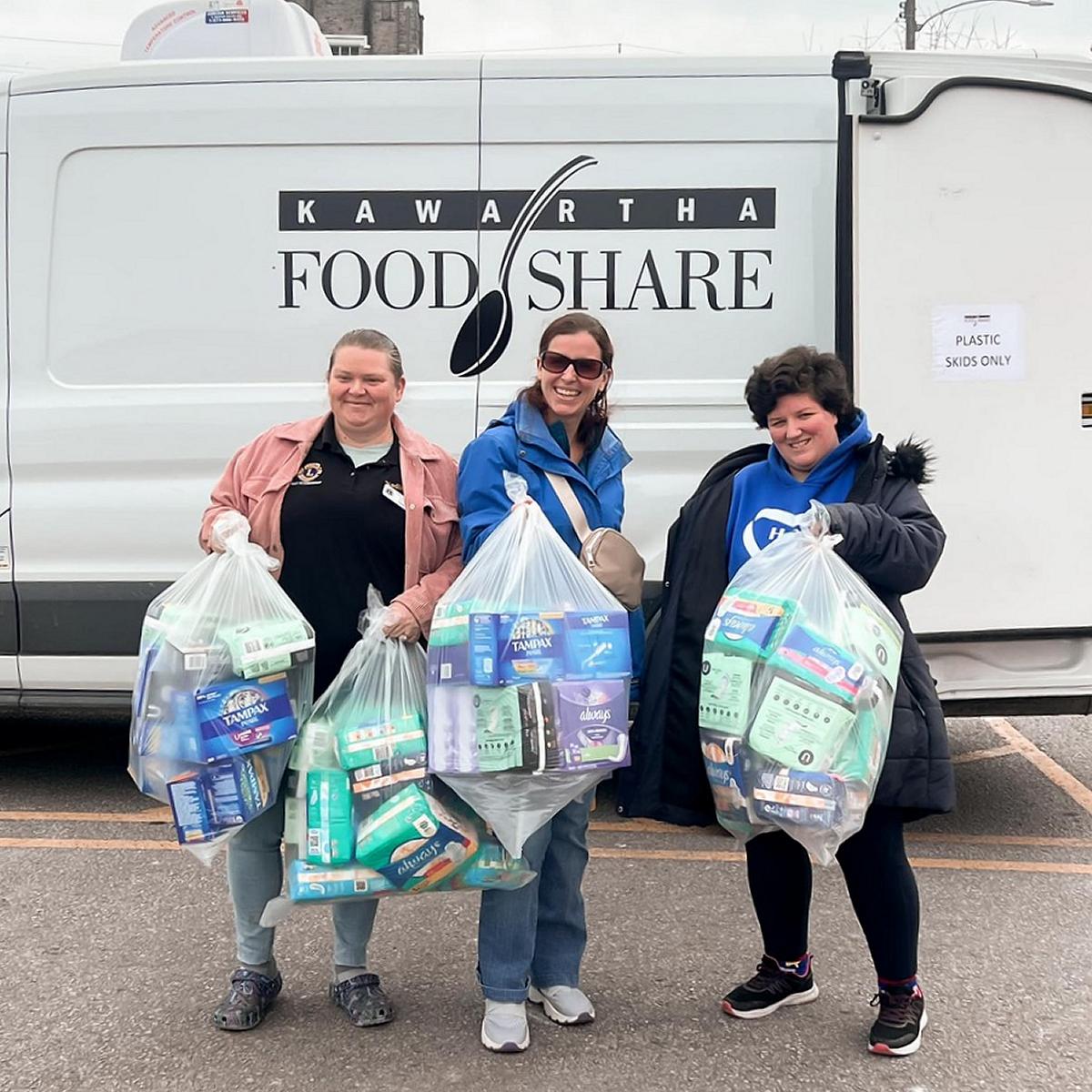
All donated period products and financial donations to the organization until Friday, March 13 will be given to Kawartha Food Share to distribute to partner agencies in the city and county of Peterborough.
Items can be dropped off at the United Way office (277 Stewart Street) from 9 a.m. to 5 p.m. Monday to Friday (with the exception of Thursday, February 26 when staff will be preparing for the Peterborough Performs benefit concert).
“It’s part of our mandate to focus on moving people from poverty to possibility and this drive is especially important because so many people who menstruate are living in poverty and can’t access the products they need,” says Elisha Rubacha, community impact officer for United Way Peterborough & District. “This is an opportunity to not only get products into people’s hands, but to get people thinking about menstruation and the body because there’s so much stigma around it.”
According to a 2023 survey, one in four people in Canada who menstruate have had to choose between purchasing menstrual products and purchasing other essential items like food or paying rent. This could result in people relying on unsafe alternatives, like using a product for too long, or missing out on school, work, and social events because they don’t have the right protections.
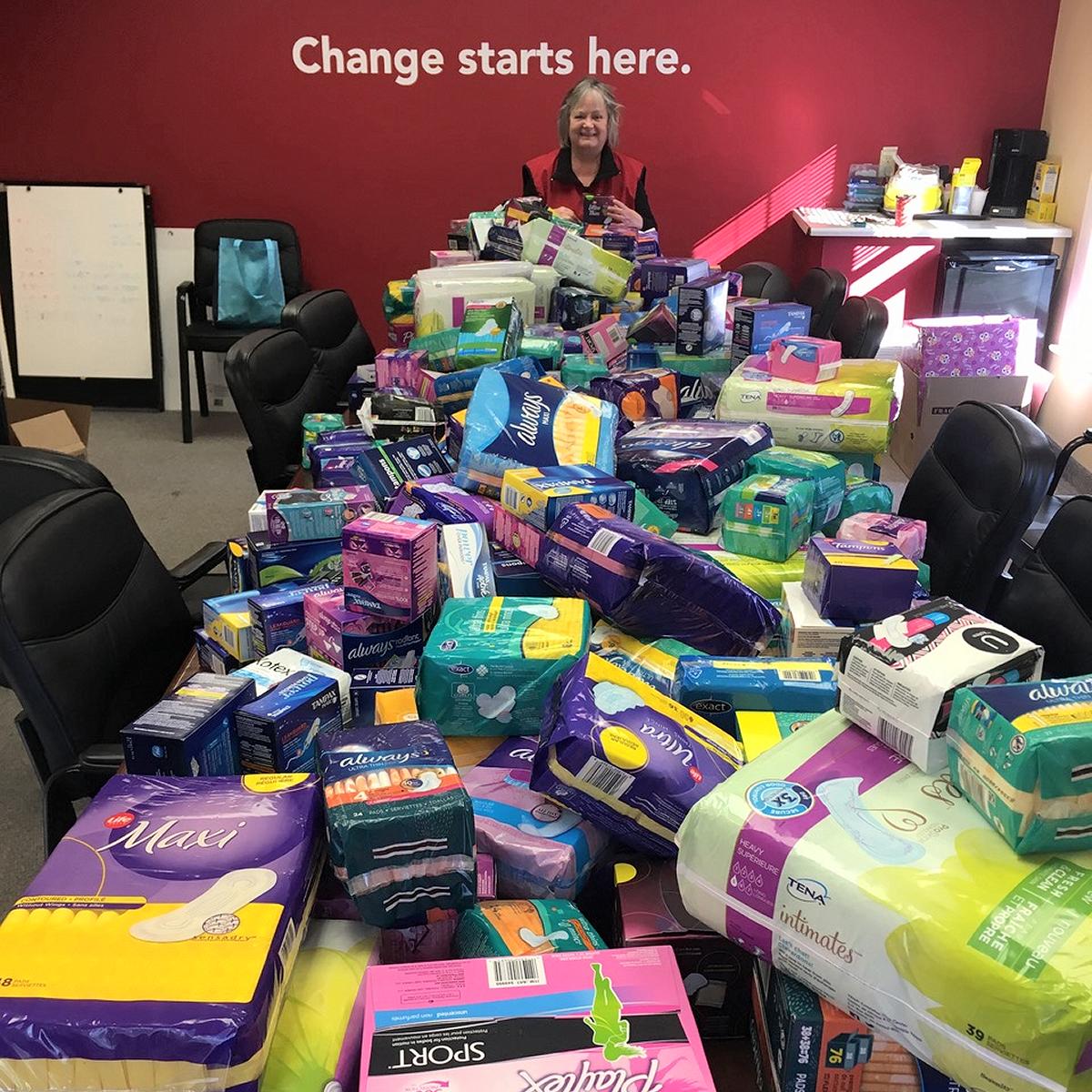
Despite the need for this basic necessity, menstrual hygiene products are one of the least donated items at local food banks.
“Stigma might contribute to that, but I think people just don’t always think about it — it’s not on people’s minds,” says Rubacha. “We don’t talk about it, so of course people aren’t thinking to donate those products.”
This is why the Period Promise is not just about collecting and distributing donated menstrual hygiene products, but also about starting and normalizing conversations around menstruation.
Research has shown the continued prevalence of the idea that menstruation is “dirty” or “shameful” and something that should be concealed, even in one’s own home.
“People need to be able to be in their bodies in their own homes, so if we can just get people talking about it, that’s a big step,” Rubacha says. “If we can get people implementing workplace policies that help people who are either menstruating or in menopause — all of those things are a big help.”
Items accepted by the United Way include pads, liners, tampons, cups, reusable and disposable underwear, and any other menstrual hygiene products. The organization is also accepting financial donations that will be funnelled towards purchasing under-stocked items at the end of the campaign.
“A lot of living in poverty means having your choices limited and so if we can open that up and give people more choices, that has a profound impact,” Rubacha says. “Trans men often menstruate, and they might not be comfortable using anything inserted like tampons, for instance. Maybe underwear makes you feel more comfortable in your body, and you don’t have that dysphoria that’s associated with a tampon or even a cup. Just providing more options for more people is really important with this campaign.”
Motivated by having collected a total of more than 85,000 individual products in the past five years alone, United Way has set an ambitious goal for the campaign’s 10th anniversary in trying to beat their 2022 record of collecting 23,000 products.
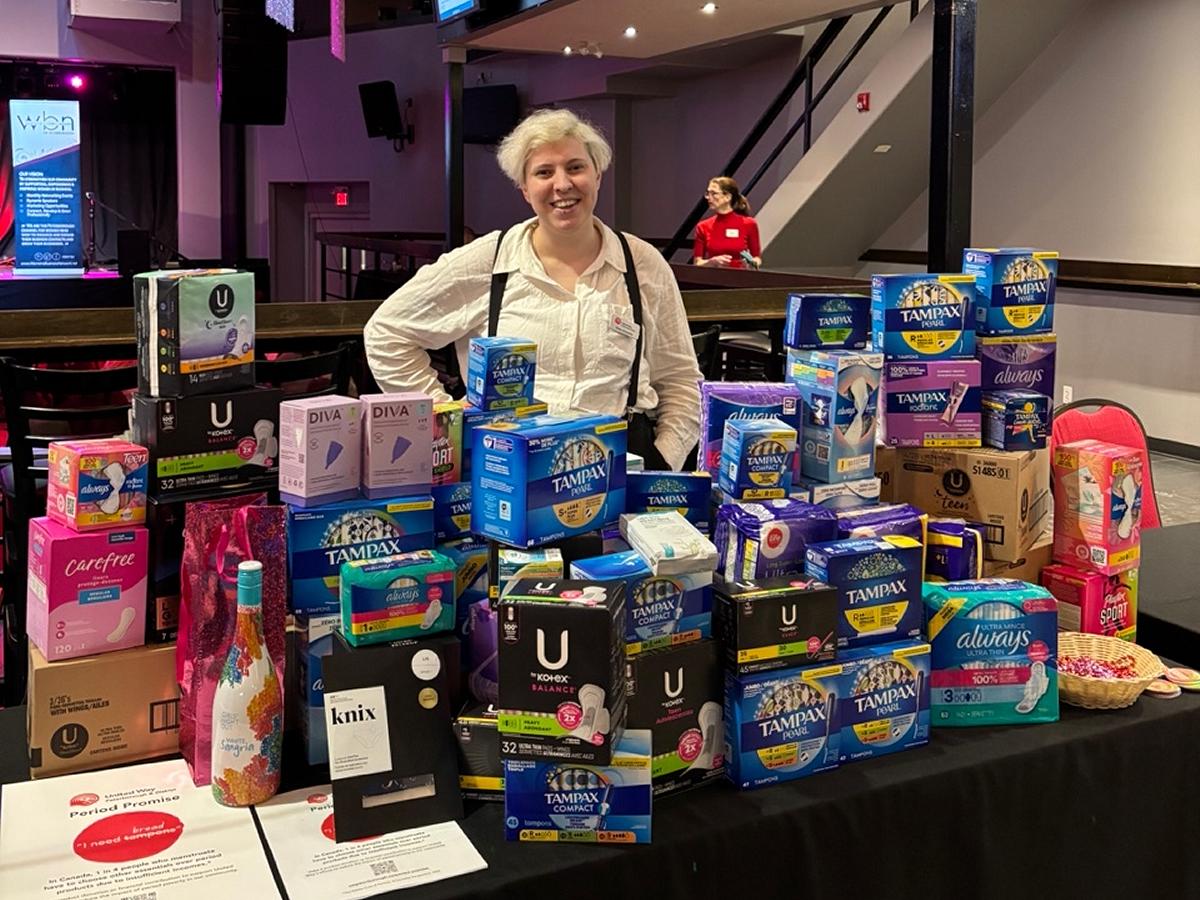
Period Promise has already kicked off to a good start thanks to a collection drive held during the Women’s Business Network of Peterborough’s most recent meeting. More than 6,101 products were donated, accounting for nearly one quarter of this year’s goal.
The United Way is encouraging businesses and workplaces to participate in the campaign by starting their own drives, or connecting with Rubacha to find other ways of starting the conversation or addressing period poverty.
“If other people come to me with an idea to talk about advocacy or workplace policies, we can figure that out,” she says. “I’m really excited to hear how other people want to engage with this campaign.”
To learn more about Period Promise, to make a donation directly to the campaign, or to get involved, visit www.uwpeterborough.ca/period-promise/.
kawarthaNOW is proud to be a media sponsor for this year’s Period Promise campaign.