


















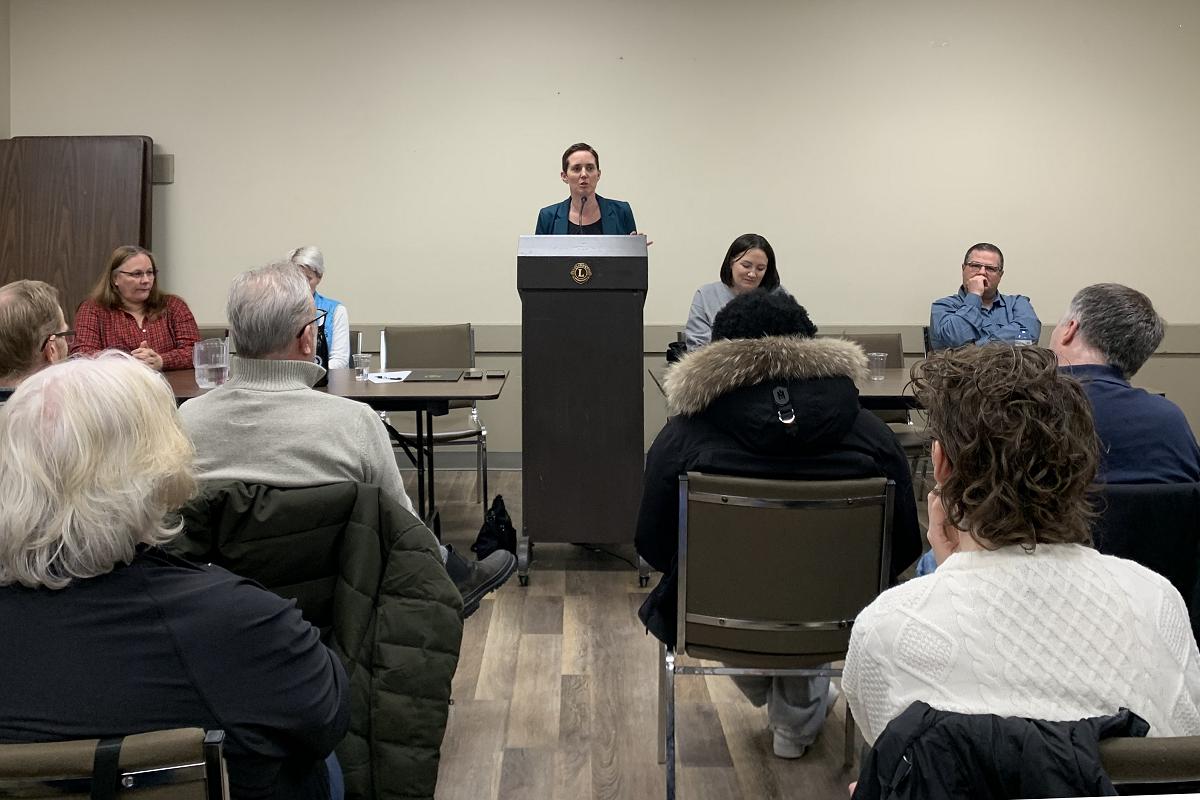
In a packed room at the Peterborough Lions Community Centre earlier this week, Ontario NDP MPP Chandra Pasma admitted, “I am going to depress you.”
She quickly delivered on her promise by detailing the current state of the Ontario public school system. From professional shortages to derelict buildings, the picture she paints is bleak.
As part of a series of “education emergency townhall” events, the Ottawa West-Nepean MPP visited Peterborough on Monday evening (February 23) to host a community conversation on education funding and democratic local oversight.
Bill 33 seen as government takeover of public school system
The townhall events are a continuation of the Ontario NDP’s critiques of Bill 33, Supporting Children and Students Act (2025), which the Ford government passed last November.
The legislation purports to take Ontario “back to basics” for the benefit of students, parents, and teachers. Most notably, it grants education minister Paul Calandra the power to place school boards under provincial supervision.
In introducing Bill 33 last June, Calandra spoke about accountability, efficiency, and transparency and walked the Legislature through a series of amendments to provincial legislation primarily concerning children and students.
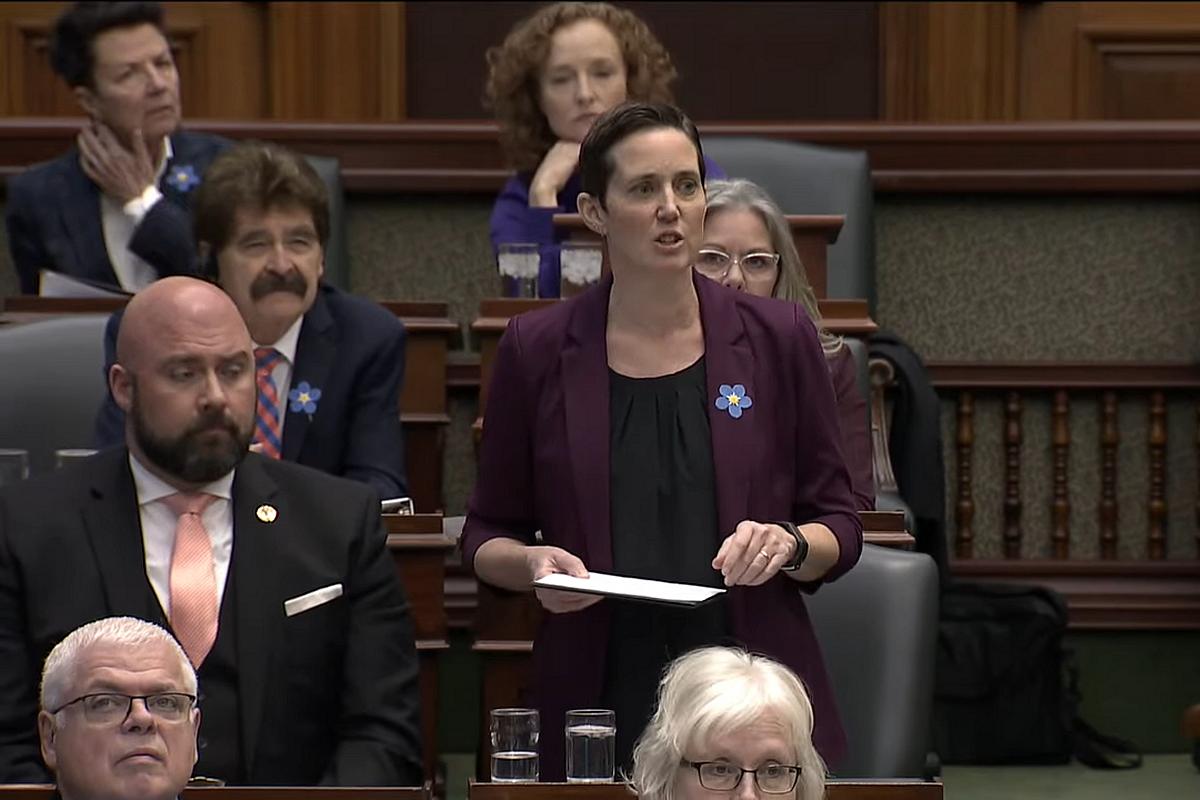
Pasma, who is the education critic for the official opposition, has criticized Bill 33 as an attempt to “take over” the public school system, and opened Question Period last June with the question, “Why is the minister grabbing more power to himself?”
Monday’s townhall in Peterborough featured a number of notable leaders in the education sector in the region, including moderator David Berger, who is president of the Kawartha Pine Ridge Elementary Teachers Federation of Ontario (EFTO) Teachers Local.
The panel explored the experience of engaging with the education system through a variety of perspectives. By including lived experiences of teachers, parents, and students, the event gave voice to those who feel disempowered by legislation and government practices.
Concerns over provincial supervision of school boards
Pasma and Berger opened the event with a clear message: Bill 33 is an attack on Ontario’s schools and an attack on Ontario’s democracy, especially at the local level.
The legislation enables the education minister to place a school board under investigation and subsequently under the supervision of a ministry appointee. To date, seven school boards have been placed under supervision, with another placed on notice.
This is not the first time the Ford government has used this technique, as seen with the appointment of a supervisor at the Kawartha-Haliburton Children’s Aid Society in 2024 amid ongoing reviews of the child welfare sector.
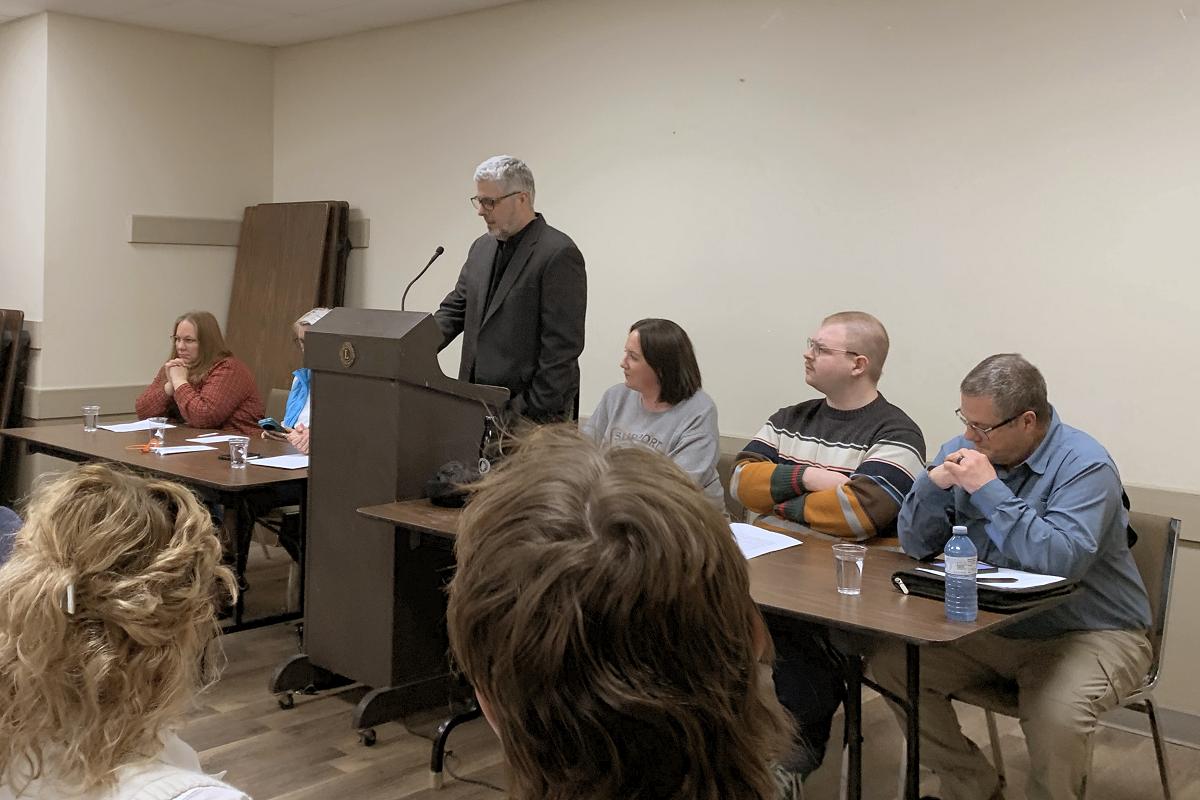
Berger highlighted this first as he criticized the ministry’s circumvention of the democratic process. School board trustees are elected by voters in their jurisdiction, whereas supervisors are appointed by the minister. Many school boards also have representatives from First Nations, francophone, or Catholic communities.
Throughout the townhall, Pasma spoke about the significance of removing trustees who act as the voice of the community as well as advocates for families.
Bill 33 allows the education minister to take supervisory action on the basis of “concerns about a matter of public interest.” Calandra has suggested some examples of this may be financial mismanagement, issues dividing students, and “issues where schools and trustees think that they’re in charge of geopolitical events.”
So far, the Ford government has appointed most of the provincial supervisors for concerns related to alleged financial mismanagement, including Brant Haldimand Norfolk Catholic District School Board trustees travelling to Italy to purchase art and the Toronto District School Board’s plans to rename three schools “whose historical legacies no longer represent the values and perspectives of our students and communities,” according to the school board’s website.
Underfunding means fewer extracurricular activities and arts programs
While Calandra has claimed that such endeavours take money “directly out of the classroom,” opponents of Bill 33 have criticized the legislation is a further step in the defunding of the public education system.
The EFTO has cited a 2025 report from the Canadian Centre for Policy Alternatives that found the Ontario government has underfunded schools by $6.3 billion since 2018 given inflation and enrolment growth.
A common theme from the panellists at the Peterborough townhall was that, when there is a funding shortfall, the programs and resources that are cut tend to be extracurricular activities and arts programs.
Jeff Bird, a co-op teacher at Crestwood Secondary School in Peterborough, described the importance of the social interaction students get through clubs, trips, and recreational activities. Although he reiterated that academia is the “bedrock” of school, he credits the moments outside of the classroom with leaving long-lasting memories.
“That’s what kids remember,” Bird said.
Sarah Whalen, a teacher at Duke of Cambridge Public School in Bowmanville, spoke about how “teachers feel shame and guilt” when they can no longer run extracurricular programs for students due to a lack of funding, resources, or capacity. She said that when teachers choose not to do these programs, it is a last resort.
Underfunding means less support for students with special needs
Another area identified as being significantly impacted by both chronic underfunding and Bill 33 is special education and support for students with disabilities.
Local parent Heather shared her son’s story of navigating the school system with a disability, and their difficulties in receiving support. Evident in her story was the lack of resources such as educational assistants or dedicated safe spaces at school. Due to being denied resources and support, Heather said she was forced to remove her son from school.
Jen Deck, president of the Kawartha Pine Ridge EFTO Occasional Teachers Local, highlighted the impacts of staffing cuts, especially for students with additional needs.
She explained that teachers are responsible for increasingly large classes that often include multiple children with additional needs. She said educational assistant support for individual children is often not possible due to a lack of staff, and that “schools need more adults in the building” to provide care and build interpersonal relationships with students to best identify and support their needs.
Whalen expressed that teachers know when the budget is tight and are “afraid” of being placed under supervision. All of the education professionals on the panel spoke about the increase in the number of people leaving teaching and the sector, further exacerbating existing staffing issues.
It is not just professionals among whom this is controversial, but also students. Cameron, a university student, described his life as a student under Doug Ford since 2018. Ultimately, his experiences have left him asking “Why should we trust a two-faced government?”, especially with the recent reduction in OSAP funding.
As the session came to a close, the audience was fired up and Pasma took the chance to urge them to take action.
She emphasized the importance of organizing and collaborating outside of the education sector, and said Bill 33 is representative of the Ford government’s political strategy and similar legislation can be seen in the healthcare, child welfare, and social services sectors.
NDP urges public action to repeal Bill 33
“Everyone should care about education,” Pasma told kawarthaNOW, adding that even people without children or young people in their lives are impacted by the public school system.
She said her primary goal is to “build solidarity among communities,” and reiterated the importance of organizing across sectors. She also indicated that other NDP opposition critics — including London West MPP Peggy Sattler, who is the shadow minister for Colleges, Universities, Research Excellence and Security — will be hosting similar events on different issues central to the NDP platform.
Pasma said the NDP’s focus through the townhalls is on encouraging constituents to make direct contact with their local MPP to express their concerns with Bill 33 and to share their experiences.
Pasma pointed to the NDP’s past success in helping to overturn undemocratic bills through sustained pressure, such as 2019’s Bill 124, which limited wage increases for most employees of a large range of public sector employers for three years. The Ontario government repealed the legislation in 2024 after the Ontario Superior Court ruled it was unconstitutional for infringing on unionized employees’ collective bargaining protections.
Fundamentally, the stories of the panellists and the comments from audience members at Monday’s townhall showed a stark contrast between what education professionals, parents, and students are asking for and what the Ontario government is willing to provide.
Calandra has consistently described Bill 33 as returning power to its rightful owners: parents and teachers. But for Pasma and fellow panellists, the legislation is an overreach of governmental powers that removes the power of local communities to have a voice in their schools.
Pasma will be hosting her next “education emergency townhall” in Sarnia on Wednesday, March 4.