











Thanks to an ongoing project by the aptly named Turtle Guardians, Ontario’s turtles will have a better chance of making it to the other side of the road without being struck by a vehicle.
A program of The Land Between, a Haliburton-based charity dedicated to conserving the bioregion between the Canadian Shield and the St. Lawrence Lowlands, Turtle Guardians designed innovative ecopassage systems that will strengthen roadway safety for wildlife, including Ontario’s at-risk turtle species.
The ecopassages have been installed and tested at four priority locations in Haliburton County and Peterborough County.
“Not only all are turtle populations in critical condition, they’ve declined so significantly — even the ones we think are common, like snapping turtles and painted turtles,” says Leora Berman, founder and chief operating officer of The Land Between and Turtle Guardians.
“To reverse population decline is a huge effort,” she adds. “The most important thing people need to understand is they (turtles) are not rodents. They take ages — decades — to replace themselves.”
A turtle can take up to 20 years before it is mature and ready to reproduce, and less than one in a hundred turtle eggs laid will hatch and grow into an adult turtle. A female snapping turtle that lays an average of 34 eggs each year would need to survive up to 60 years to replace herself in the population with another adult snapping turtle.
Berman compares the current state of Ontario’s turtle population to what an Elder of Curve Lake First Nation told her many years ago that, when they were a child, “you would walk amongst the turtles.”
“It would be nothing to see 50 turtles a day where you walked,” Berman says. “As a benchmark, that’s what we’ve lost and, of course, that’s the case with many species but they are the most difficult (to bring back) and the foundation of our whole natural ecosystem.”
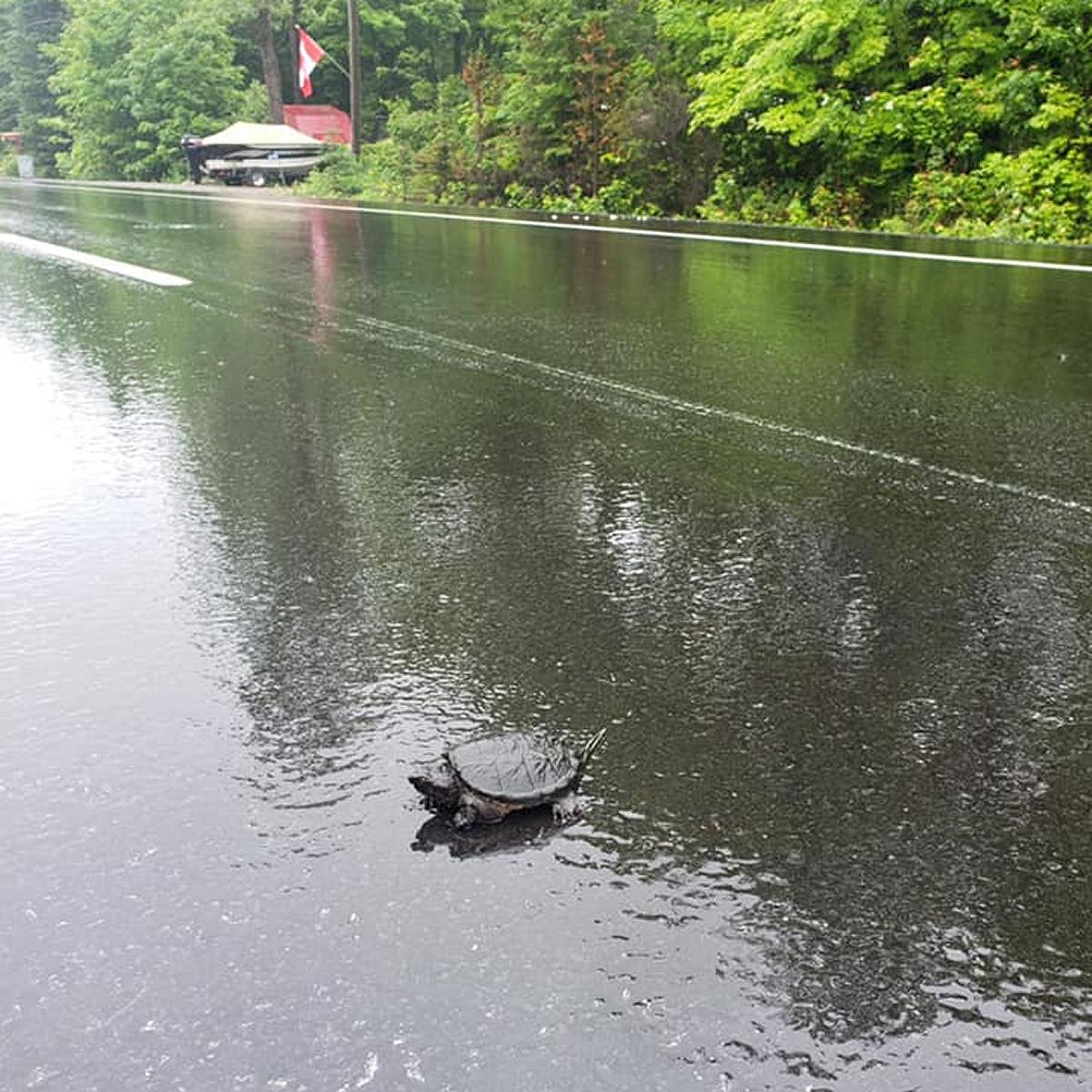
Berman estimates that in central Ontario, road strikes account for to 70 per cent of turtle mortality. Other factors include habitat loss and threats from disease and climate change.
A common fix to mitigate road strikes is the installation of ecopassages, which are specifically designed fencing and culverts that direct wildlife away from roadways. However, Berman says, incorrectly installed traditional lateral fencing can become a “death trap” and actually increase mortality rates.
“We want all wildlife safe on the roads, and with a lateral fence, sometimes turkeys or ducks can get hit on the road because they can’t get off easily,” says Berman. “Snakes and other animals get trapped between the fences, and certainly turtles will too. If there’s any chance of them getting on the road, now they’re stuck, and they’ll bounce back and forth between the fencing.”
Turtles often have many reasons for wanting to cross the road, including finding new habitat, moving to larger bodies of water, and scouring the land to find suitable locations to lay eggs. Their movement is essential for the ecosystem because they clean the wetlands while also spreading seeds from vegetation.
With traditional lateral fencing, according to Berman, “The turtles can see to the other side and that makes them frustrated to get across, so if there’s any opening, they’ll find it. If they can get on the road because the fence is installed incorrectly but there’s no chance to get off the road again, that makes the problem worse.”
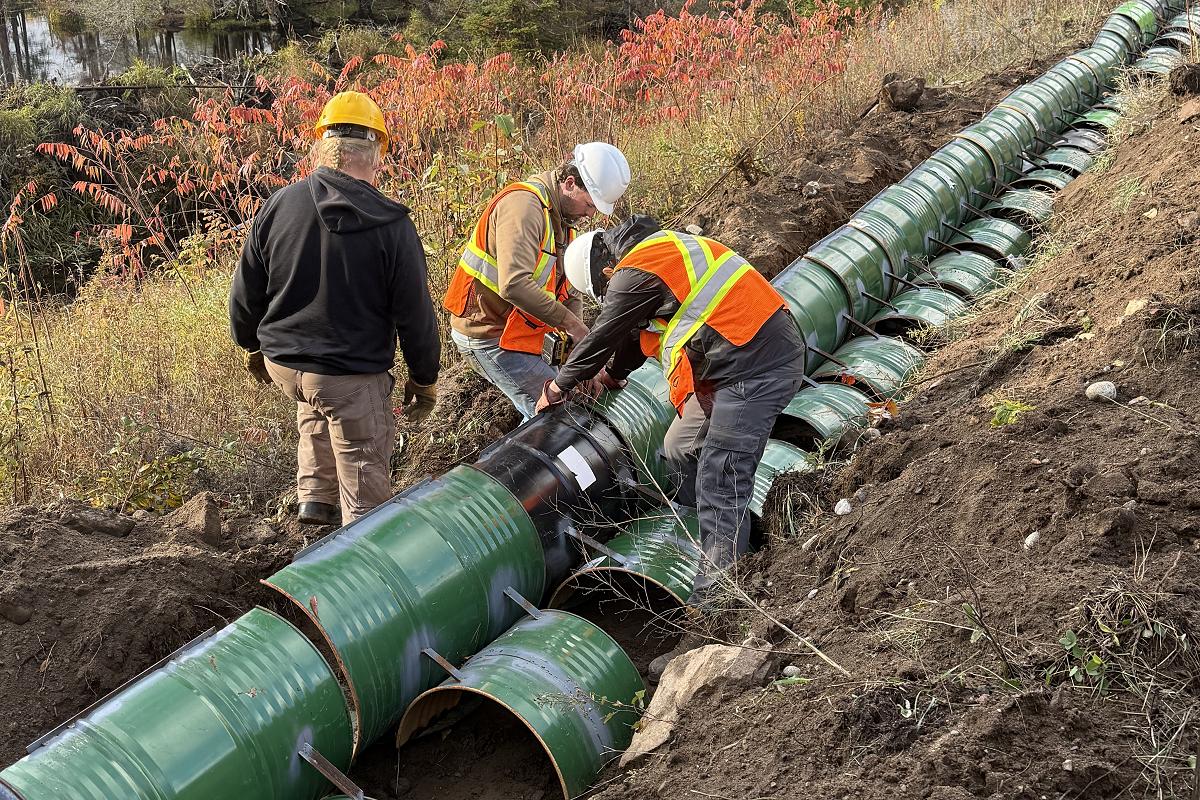
Turtle Guardians is undertaking a project, now five years in the works, that aims to correct the traditional designs of ecopassages with the support of the Ontario Ministry of Environment, Conservation and Parks Species Conservation Fund (MECP).
The new design uses sections of steel arches that were tested in the “most erodible” site in Haliburton County. The designs are durable, reduce maintenance, and are cost effective.
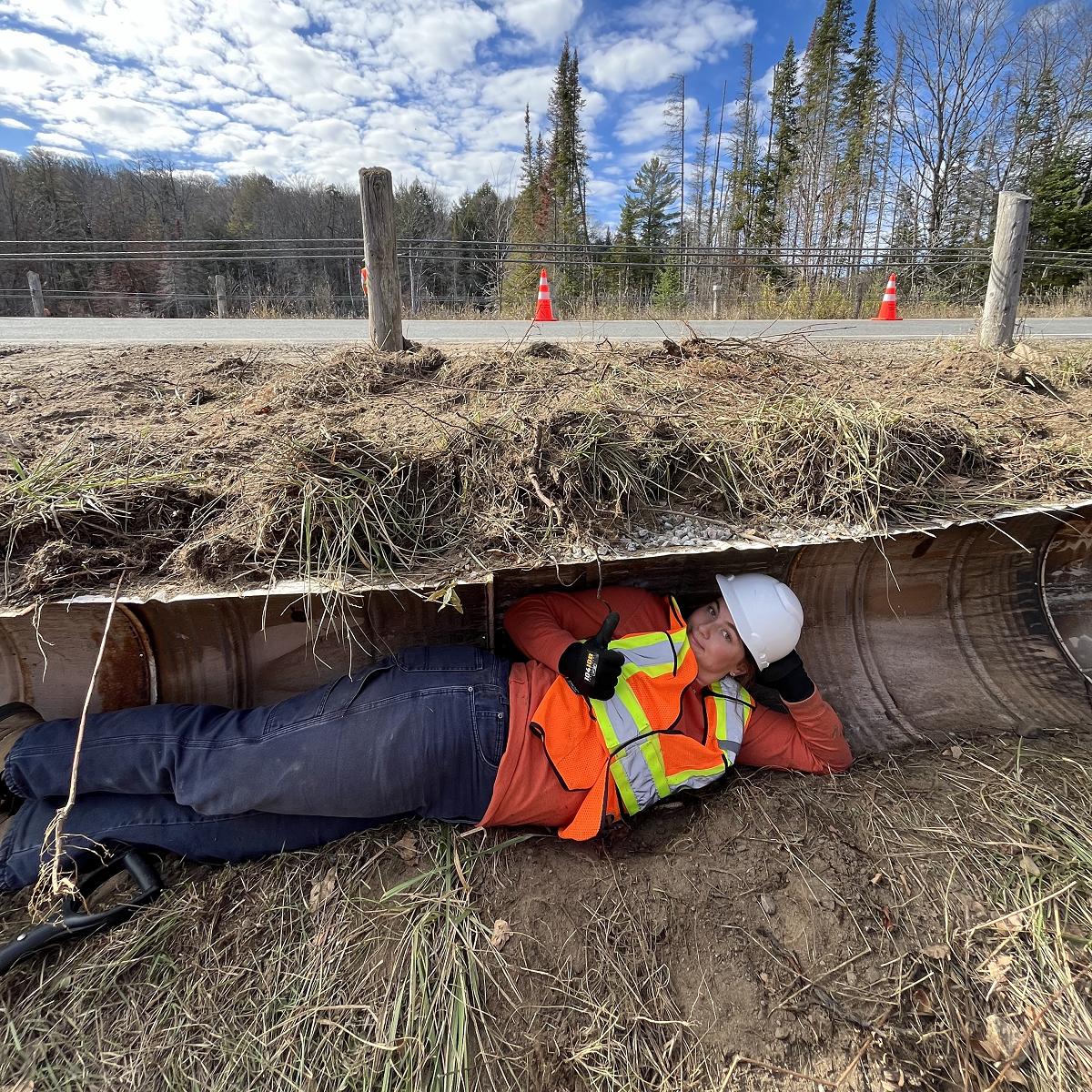
“You can backfill our design, so it becomes invisible — it’s invisible to the public, but also to the turtle,” Berman says. “And it’s fail-proof so if a turtle, a snake, a frog gets on the road, they can get off the road.”
The ecopassages then direct the turtles to a sizable culvert, with an opening wide enough for the turtle to see the light on the other side of the underpass. Berman says future goals include manufacturing more aesthetically pleasing ecopassages so landowners won’t mind having them on or nearby their property.
Now with three different prototypes, Turtle Guardians has installed ecopassages in four priority areas and identified 45 additional priority sites across the region where similar solutions could make a significant impact on road mortality.
Currently, Turtle Guardians is waiting on a patent and an engineer review to ensure the load bearing of the ecopassages for heavier vehicles that pull onto the shoulder of the road. The organization is working with local municipalities to enlarge culverts and the designs have garnered interest from the Ontario Ministry of Transportation.
“We’re always looking for sponsors and funding support because we’re truly a grassroots group,” Berman says. “We’re not government-funded, unless we’re really lucky to get discrete grants for specific projects.”
The MECP-funded project also supported The Land Between in documenting the ecological and cultural significance of the American eel, a once-widespread species that the Ontario government has listed as endangered.
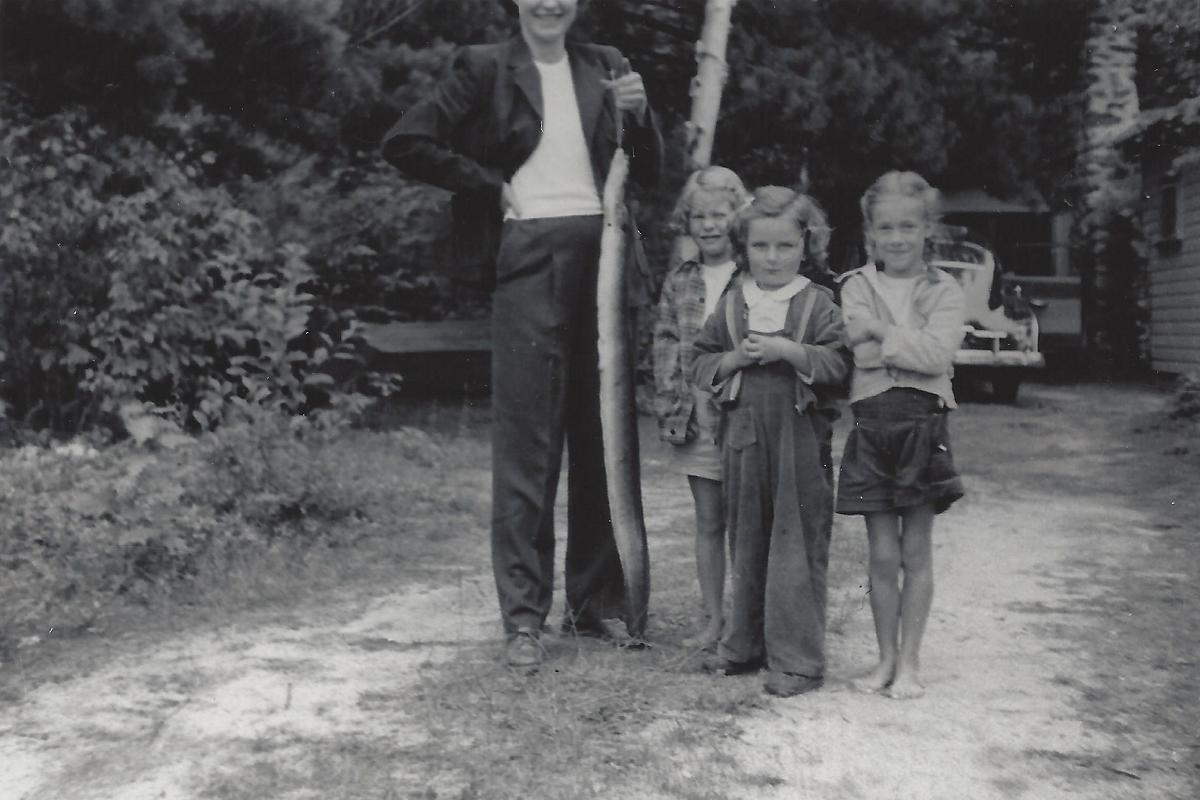
“The American eel was as abundant as turtles were and now the American eel has disappeared from this landscape,” says Berman. “The last one caught in the Land Between was in 1984 and there have been no American eels here since.”
Given the similarities between the American eel and turtle species, Berman says she sees a correlation between the projects and, as such, wants to use the American eel as a symbol of what could happen to turtles in Ontario.
“They are one the oldest allies on this earth that we have,” she says of turtles. “Certainly, I don’t want to live in a world where my grandkids don’t have turtles, don’t live with turtles, and don’t know that turtles are part of nature. I want to live in a world with turtles.”
To learn more about The Land Between, visit www.thelandbetween.ca.