











Flu season is off to an early start this year, according to Lakelands Public Health, with the first confirmed case of influenza being reported in early September.
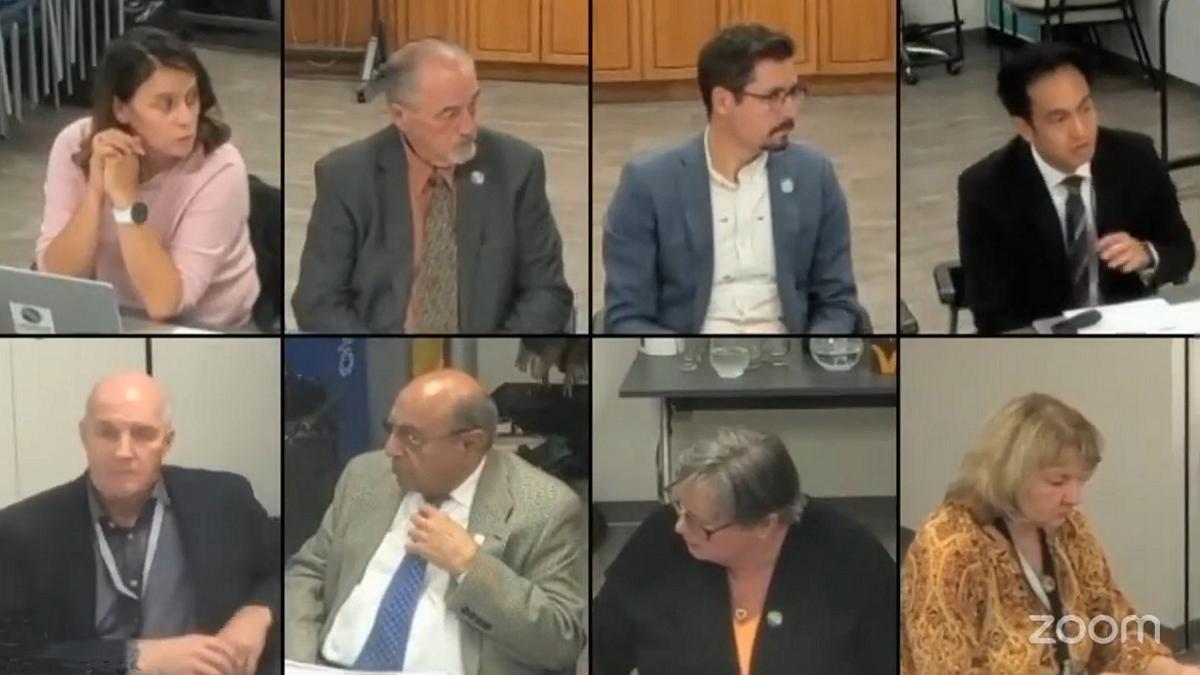
“This is a full month earlier than we would normally expect,” said recently appointed associate medical officer of health Dr. Maxwell Tran during a presentation at the board of health’s meeting in Port Hope on Wednesday (October 21).
Despite that early case, Dr. Tran said overall respiratory virus activity has since been low to moderate, “but we will expect that to pick up as we move into December to January.”
In 2025-26, the peak for influenza and COVID-19 transmission and infection was in December and January, which is in line with public health expectations, and respiratory syncytial virus (RSV) peaked later in February and March.
Dr. Tran said the health unit will continue surveillance through the respiratory infection season, noting the public can check the current status by visiting the respiratory infections dashboard on the health unit website, which is updated weekly on Thursdays. The dashboard also includes data on cases, outbreaks, test positivity, and hospitalizations.
He added that, new this year, Lakelands Public Health and Trent University are collaborating on a wastewater surveillance pilot program until December to track infection rates and risk for influenza, COVID-19, and RSV. The program spans the City of Peterborough, the Town of Cobourg, the City of Kawartha Lakes, and the Township of Minden Hills.
“With our experience from other viruses, such as mpox (monkeypox), we do tend to see that wastewater can often provide us an early signal of community level transmission that we can act on,” Dr. Tran said.
Dr. Tran also provided a summary of respiratory vaccine eligibility, with the health unit strongly recommending all individuals six months of age and older receive an annual influenza vaccination.
The priority groups for influenza vaccination include children under five, adults over 65, pregnant women, individuals with chronic health conditions, healthcare workers, individuals in or from First Nations, Inuit, or Métis communities, and residents of long-term care homes and retirement homes. A high-dose or adjuvanted influenza vaccine is recommended for adults 65 years of age and older.
“There are certain groups that are at higher risk of severe illness, and so they should be prioritized for vaccination as soon as it becomes available in the fall,” Dr. Train said.
The same groups should also receive a fall COVID-19 vaccination, with an additional spring COVID-19 vaccination recommended for immunocompromised individuals, residents of long-term care homes and retirement homes, adults 80 years of age and older, and adults 65 to 79 years of age who have chronic health conditions.
RSV immunization is strongly recommended for all adults 75 years and older, and some adults aged 65 to 74 who are at increased risk of severe RSV disease, with a single dose recommended that should offer protection for at least three years.
RSV immunization is also recommended for infants born in hospital during RSV season or, as an alternative, to their expectant mothers between 28 to 36 weeks of gestation.
Dr. Tran showed data demonstrating a significant decrease in RSV-related hospital admissions for children under the age of four since the expansion of the RSV vaccination program in the fall of 2024.
“This is a huge success story for public health,” Dr. Tran said.
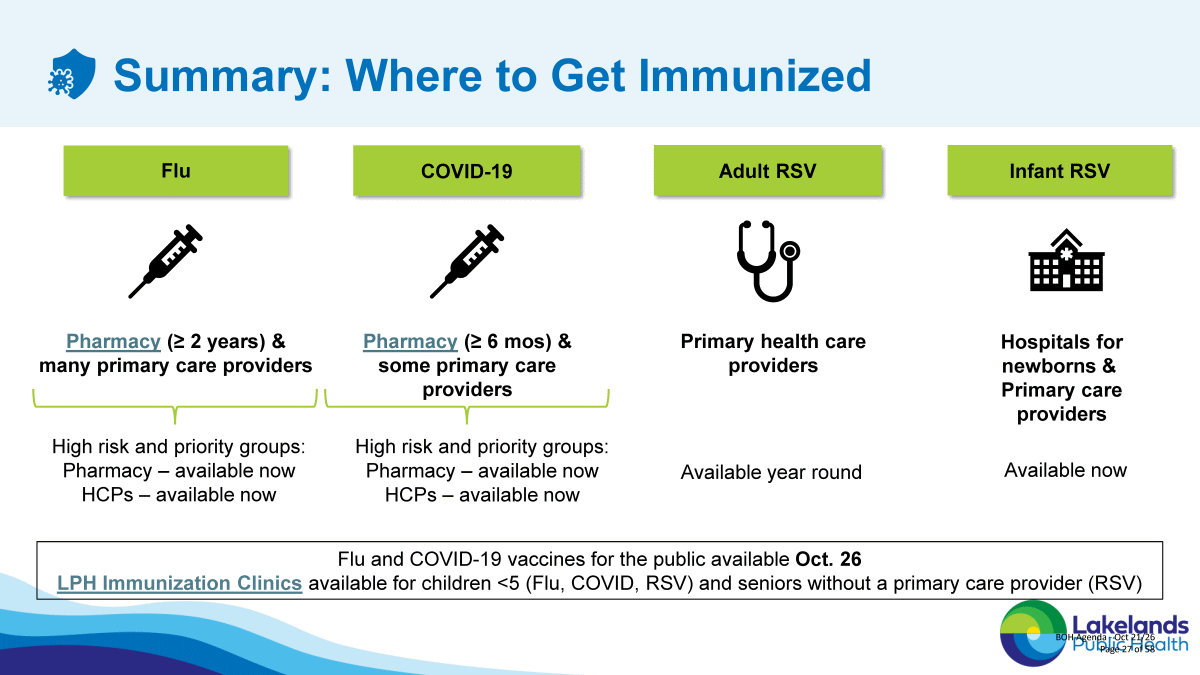
Influenza and COVID-19 vaccines for the general public should be available starting October 26 at pharmacies and primary care providers, with the vaccines available now for high-risk and priority groups. Adult RSV vaccines are available year round from primary care providers, with infant RSV vaccines available now in hospitals and primary care providers.
In November and December, influenza, COVID-19, and RSV vaccines for children five years of age and younger will be offered at all Lakelands Public Health offices, as well as RSV vaccines for seniors aged 75 and older and high-risk adults aged 60 to 74 who do not have primary care provider.
Lakelands Public Health also plans to offer flu, COVID-19, and RSV vaccination clinics in Alderville, Hiawatha, and Curve Lake First Nations.
“For all three of these (RSV, COVID-19, and influenza), Indigenous individuals are noted as a priority group due to intersecting social determinants of health,” Dr. Tran said earlier in his presentation.
To prevent outbreaks and significant transmission, Lakelands Public Health will provide on-site and virtual Infection Prevention and Control (IPAC) support and education for long-term care homes, retirement homes, shelters, correctional facilities, and other congregate living settings
Lakelands Public Health will also host “Connect & Learn” monthly sessions with all congregate settings focusing on various topics such as scabies, Legionella, and environmental cleaning.
All community outbreaks in the counties of Haliburton, Peterborough, and Northumberland and the City of Kawartha Lakes are posted on the health unit’s website.
The health unit also provides surveillance-based updates and education on how residents can protect themselves and others during the respiratory season.