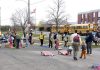










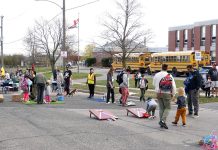


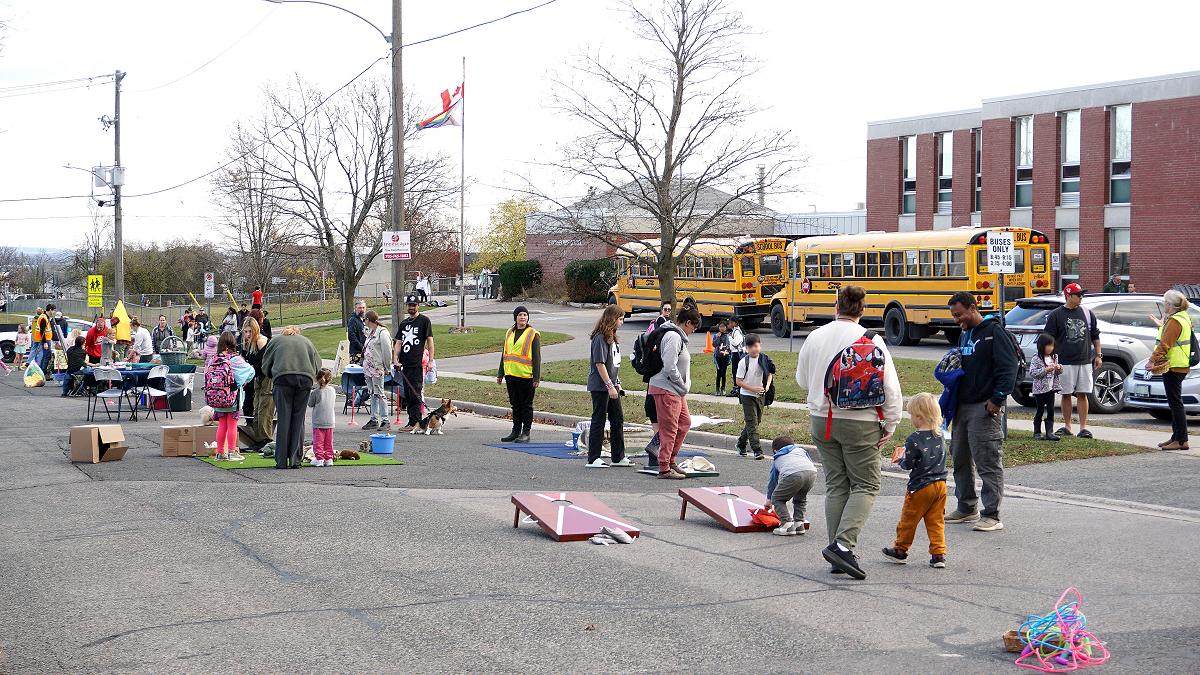
Residents and community members in the north-end neighbourhood near R.F. Downey Public School in Peterborough were greeted with an unusual sight on the morning of Thursday, November 5: a street without cars, but full of children, families, and activity.
In front of the school, Neptune Street was temporarily closed to vehicle traffic during morning and afternoon dismissal times, transforming it into a welcoming space for the school community.
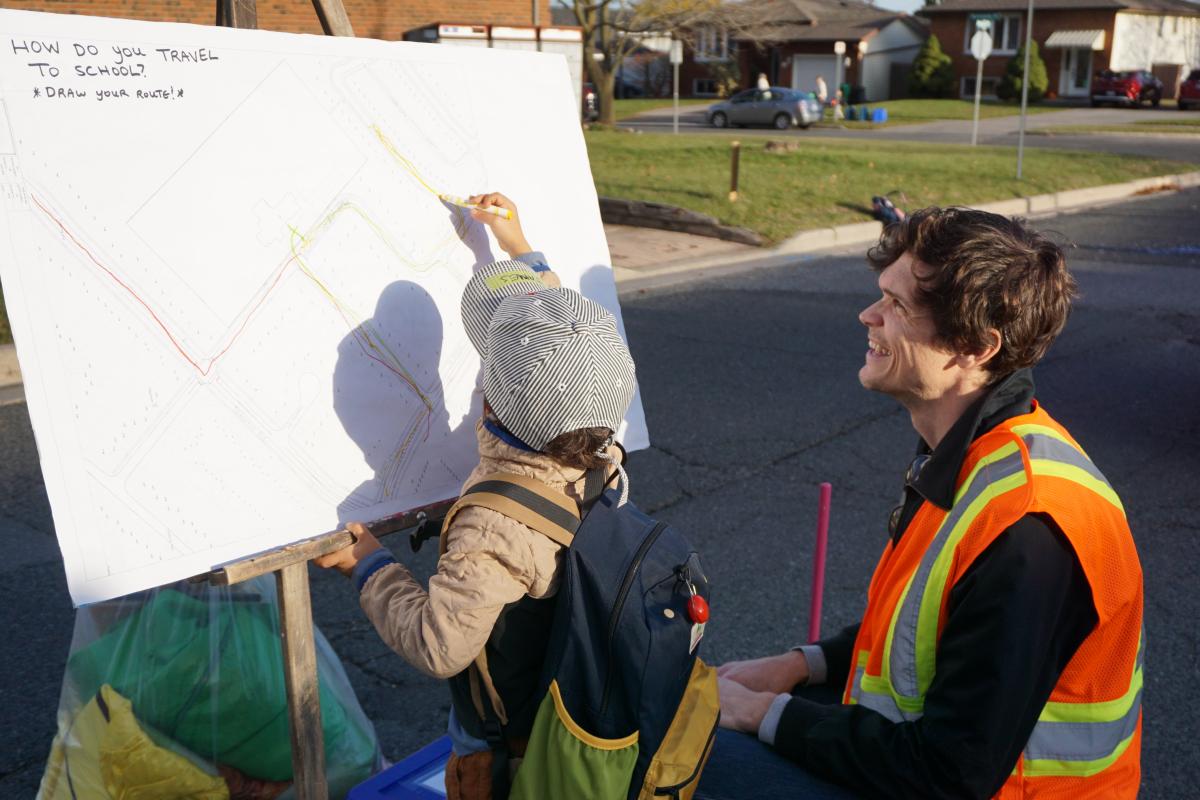
Instead of hurrying along the sidewalk or navigating around cars, children and families were invited to enjoy activities, grab a snack, share feedback about their travel experiences, and spend time playing and socializing with friends and neighbours.
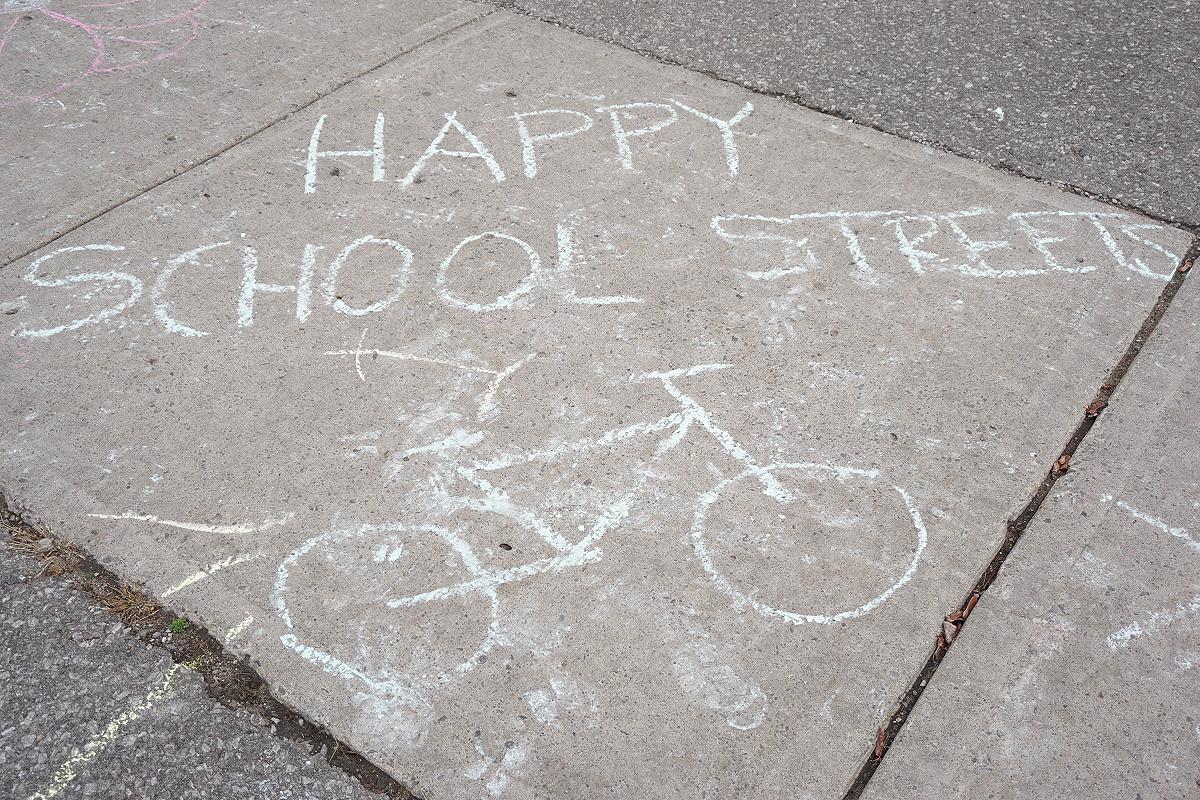
This type of intervention has a name: school streets.
With the support of neighbourhood residents, the school community, the City of Peterborough, and Peterborough Police Service, GreenUP coordinated this event — the first of its kind in Peterborough — as part of the National Active School Streets Initiative (NASSI).
The initiative represents a growing effort to rethink the spaces immediately surrounding schools and make them safer, healthier, and more welcoming for everyone.
The benefits of projects like this extend beyond road safety. School streets encourage more active travel to and from school, help reduce vehicle congestion, and create opportunities for children to spend more time outdoors and connect with their peers.
These potential shifts are particularly important when considering the challenges facing children and families today. According to CAA, nearly one in four drivers have personally witnessed a collision or near miss in a school zone, while nearly half have witnessed distracted driving.
Meanwhile, ParticipACTION reports that nearly one-third of Canadian children are not meeting recommended physical activity guidelines.
Making it easier and more enjoyable for children to walk, bike, or roll to school is one way to help address both challenges at once.
Active travel doesn’t have to mean walking all the way from home. Even parking a few minutes away and walking the remaining distance can give children an opportunity to move more, build independence, and enjoy some fresh air before the school day begins.
It also helps to facilitate more active travel to and from school and alleviate traffic congestion right in front of schools, where people, school buses, cars, pedestrians, and cyclists all share space.
While the R.F. Downey school street pop-up was temporary, it offered an opportunity to imagine what school arrival and dismissal could look like if streets were designed with children’s needs in mind. It also gave GreenUP and its partners an opportunity to hear directly from the people who use these streets every day.
The idea of school streets isn’t new. The movement began in Bolzano, Italy, in the 1990s, when the community began looking for ways to address traffic congestion outside schools during drop-off and pick-up times.
Since then, the concept has spread throughout Europe and North America, with communities adapting the approach to suit their local streets and school environments.
In Canada, Toronto piloted the country’s first school street in 2019. By 2021, four cities were part of a pilot at five school locations.
Today, NASSI is supporting dozens of communities across the country, connecting local organizations and partners over six provinces to explore what school streets could look like in their own neighbourhoods.
Peterborough is now among those communities.
The R.F. Downey event was an important first step in exploring how this approach might work locally. It has helped demonstrate what is possible when planners make a little more room for children in the places where they spend so much of their time.
A school street isn’t just about temporarily removing cars. It’s about creating space for children to move, play, and connect, making the school journey a more enjoyable part of the day, and building neighbourhoods where people feel comfortable and safe getting around.
For one morning in November, Neptune Street looked a little different. And perhaps that is the point: sometimes, seeing everyday spaces used differently is what helps communities imagine how much better they could be.
To learn more about School Streets and other GreenUP Active School Travel initiatives, email activeschooltravel@greenup.on.ca