

















Peterborough city council has unanimously rejected a proposed by-law that would have allowed the City of Peterborough to assume administrative control of a $150,000 annual payment to the Peterborough Downtown Business Improvement Area (DBIA).
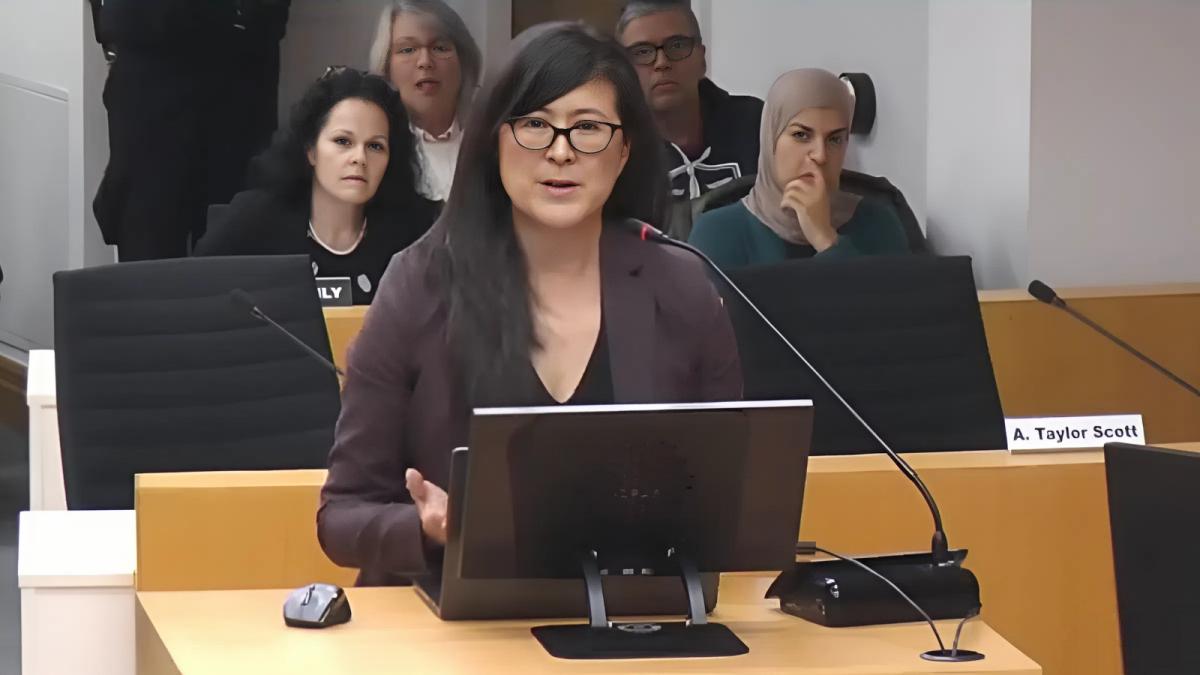
During a council meeting on Monday evening (December 1), councillors heard from 10 public delegations — the DBIA’s executive director, four members of the DBIA board including the board chair and vice chair, four downtown business owners, and one private citizen — who all voiced fierce objections to the proposed by-law.
The $150,000 annual payment was the result of a 2017 settlement between the DBIA and the city, after the DBIA and property rental company AON Inc. agreed to drop their appeals to the Ontario Municipal Board of the city’s decision to allow a casino at 1400 Crawford Drive instead of in the downtown core.
Under the settlement, which was intended to recognize the loss of potential revenue to downtown businesses with a casino located elsewhere, the city agreed to pay the DBIA $150,000 annually for 20 years — funding that the DBIA has been using for events, promotion, and security as per the settlement agreement — for a total of $3 million.
The proposed by-law would have used a section of the Municipal Act that allows a municipality to pass a by-law to assume a power or duty of a local board.
By considering the DBIA board’s ability to receive the city’s payment as a “power” or “duty” of the board, the city would assume that power, essentially allowing the city to become the recipient of its own payments instead of the DBIA.
Shortly after the DBIA became aware of the proposed by-law late last week, the organization issued a strongly worded media release against it, warning that the by-law “would shift authority over funds that have long supported downtown stability, revitalization, safety, and economic activity — potentially weakening the DBIA’s ability to deliver services at a time when downtown businesses are already facing unprecedented pressures.”
In the release, both DBIA executive director Nour Mazloum and board chair Sacha Lai-Svirk objected to the lack of consultation with the DBIA in advance of the proposed by-law and the threat it posed to the partnership between the city and the DBIA.
“We have been transparent, responsible, and accountable with every dollar we manage,” Mazloum stated. “That’s why this by-law is so concerning, it breaks trust. If the city can change direction without discussion on something this important, what will they do next? Trust requires year over year consistency. Right now, that’s what’s at risk.”
“We are prepared to defend the future of downtown businesses,” Lai-Svirk added. “If council chooses to move forward without consultation, AON Inc. and the DBIA are prepared to take every appropriate step to protect downtown businesses and the commitments made to this community. But our hope is to resolve this collaboratively. We want decisions that strengthen our momentum, not undermine it.”
Those concerns were repeated and amplified during the public delegations at Monday evening’s council meeting.
DBIA board member Deanna Guttman, who is also owner of Needles in the Hay on Water Street, told councillors that the by-law threatens the autonomy of the DBIA and would require the DBIA to ask the city for money to which it is legally entitled.
In her presentation to council, Lai-Svirk was blunt.
“Over the past weekend, many people have asked the DBIA whether we would appeal this by-law if it passes — and the answer is yes,” Lai-Svirk said. “Not as an act of defiance, but as an act of responsibility to the businesses we serve and to the integrity of the settlement agreement.”
After adding that she hoped that would not be necessary in favour of a more collaborative approach, she said “among the downtown businesses, this by-law landed as a threat — a threat to the DBIA and to the people they rely on every day.”
Lai-Svirk said the by-law “clearly removes the DBIA’s authority over funds specifically entrusted to us.”
“This is not permissible under the Municipal Act. Good governance is not about finding loopholes, it’s about honouring commitments, respecting autonomy, acting transparently, and protecting public trust, and by these standards, this by-law fails. It changes a settlement agreement without consultation, and that is not procedural action, that is structural overreach.”
Lai-Svirk added that, if the intention of the by-law were truly operational, the city had other tools available that would not require taking power from the DBIA. Instead, the city chose “the most extreme tool — the assumption of power,” which sets a precedent for other organizations that partner with the city and tells them “Your autonomy is conditional.”
“The DBIA is not a municipal program and it cannot be treated like one,” she said, noting that the DBIA has “new leadership, new financial discipline, and real momentum that will be essential as the city approaches major milestone … this is not a moment for control-based governance, this is a moment for modern partnerships.”
In her presentation, Mazloum noted that the DBIA has a small team of three full-time staff and seasonal employees but their “commitment is enormous,” with staff regularly working evenings, weekends, and holidays with no paid overtime or additional compensation.
“When the funding is stable, we can support at that level of dedication,” Mazloum said. “When funding becomes uncertain, it becomes harder to retain staff, harder to plan, harder to keep up with the increasing demands placed on our organization.”
She said the DBIA has not increased payroll in 2026 and has not increased the business levy in 2026, recognizing the challenges that small businesses are facing.
“This $150,000 is not discretionary — it is strategic,” Mazloum said. “It keeps our total budget above $500,000, which is the threshold required for many federal and provincial grants.”
“If this by-law passes, our budget drops under $500K a year, and suddenly we are disqualified from opportunities that bring new investments to Peterborough. These funds also allow us to meet matching-fund requirements, a standard condition for many grants.”
She listed programs that would be directly affected in 2026 if the by-law passes, including Win This Space, special events, Mac and Cheese Festival, Snowfest, Halloween in the Boro, Holiday in the Boro, Vibrancy Project, new murals, business support grants, member professional development, the Boro gift card expansion to digital, advertising and event promotion, and community event support.
“When long-term commitments can be changed suddenly, without consultation, it sends a message about stability and to people like me who chose this city because of its promise,” Mazloum said. “Peterborough has momentum. We all feel it. And I want to keep believing in that momentum.”
Councillor Alex Bierk, who said he and fellow Town Ward councillor Joy Lachica would not support the by-law, asked Mazloum how she found out about the proposed by-law. She said that city staff person told her the by-law was coming, but he didn’t know what the by-law said.
After Bierk asked if she had a chance to talk to staff after the by-law was made public, Mazloum said she was told it was about “tidying up the books” and “an easier way to have transparency over the money,” before noting that the city chooses the DBIA’s auditor, Baker Tilly.
Councillor Keith Riel asked about the partnership between the DBIA and the East City Village Business Improvement Area (VBIA), and whether the by-law would affect the VBIA, which Mazloum said it would.
Councillor Lachica asked Mazloum how many businesses reached out to her after learning about the by-law. Mazloum said over 70 businesses reached out directly, but others were “vocal on social media.”
Councillor Gary Baldwin asked Mazloum about the dialogue she has had with city staff since becoming executive director. She said she has had daily contact with city staff, except for the past three business days, with respect to items like parking ticket issues, events, and road closures.
“I’m a little bit surprised that there hasn’t been any type of consultation with you and/or your executive leading up to what we’re discussing tonight,” said Baldwin, adding that he was told by city staff there was consultation with the DBIA.
“It was a call — it was a 20-minute call — and it was on Tuesday (November 25), and I was just told that this was happening,” Mazloum replied. “When I asked questions, they said they haven’t seen the by-law, they don’t have answers.”
Councillors also heard from Alexandra Pyle, an investment advisor with CIBC Wood Gundy who has been on the DBIA board for just over a year.
“Over the past year, I watched the DBIA become increasingly accountable and intentional about how funds are managed and how decisions are made,” she said. “Every dollar is weighed carefully, and every initiative discussed in terms of its value for business owners and the community.”
She noted the DBIA was able to avoid increasing the business levy this year.
“That didn’t happen by accident, it happened because of disciplined financial decision-making and a commitment to supporting our members while still looking ahead.”
She added that the DBIA needs to maintain its autonomy and independence to respond to the needs of business.
After councillor Baldwin asked how the city’s administrative oversight of the $150,000 payment would affect the DBIA’s autonomy, since the funds would still be available to the DBIA, Pyle asked Mazloum to respond.
“When the fund doesn’t sit in our bank account and it sits in a different account, we can’t show that we have it, and I was told we have to ask for permission from the city on how to administer this fund,” Mazloum said. “No offence to anyone, governments move a lot slower than business.”
In response to a question from Mayor Jeff Leal about making applications for government grants, Mazloum said if the money is not showing in the DBIA’s bank account, the DBIA cannot demonstrate it has $500,000 in revenue as required for festival grants.
The next delegation was Nigel Lister, vice chair of the DBIA board and marketing committee chair. He said that four years ago, when he joined the DBIA board, he would be more accepting of the by-law, but said “Nour and the team that they have, and the board we have assembled, is fantastic, and you would be breaking a ton of momentum that they have going.”
“Last year, beautification was taken out of the DBIA’s hands and, I believe since mid-summer, we’re still without garbage cans in the downtown,” Lister said. “One example of agility in getting things done, they’re the people out there … they’re the ones scooping the poop, it’s not the city that’s coming through to do it.”
“This is going to be a very very big and tough bridge to build back, and it will erode a lot of the community’s trust. I think the city, unfortunately, is wrong on this one … I think they might have missed the mark.”
Councillor Baldwin said he was still struggling to understand why there is an issue with the DBIA applying for grant applications if $150,000 is still available to the DBIA, even if it is in the city’s account, using the example of co-signing for a loan.
“What I’m hearing is mom and dad need to manage the funds of the DBIA, and we’re adults and we know what we’re doing, so we don’t need mom and dad anymore,” Lister said. “There was a time where we maybe needed some co-signing — not anymore.”
Lai-Svirk came to the podium to respond to the question as well, stating that there is a conflict of interest from a legal point of view for a party that owes another party money to hold onto the money and make decisions about the use of the money.
Councillor Lachica asked Lister if the by-law represents gatekeeping.
“It’s just a lack of trust,” Lister said, repeating his comments about the strong DBIA team and board. “We have started cleaning our room and brushing our teeth and going to bed in time, and we’re now getting in trouble … you don’t discipline good behaviour.”
Councillor Matt Crowley asked Lai-Svirk why the by-law represents a conflict of interest, since the DBIA is a local board of the city and the Municipal Act explicitly allows the city to assume a power of a local board. He said it is “sort of dangerous” to suggest that the city is in a conflict of interest or is doing something illegal.
“Technically, this agreement does not go through the Municipal Act,” she replied. “This agreement is between three parties: the city, the DBIA, and AON. The Municipal Act does not overrule or have any power over that agreement. If you were to pass this by-law, we can trigger the agreement to say this is a conflict of interest, what you are doing.”
Councillor Bierk pointed out that the public delegations are presenting a different perception of the facts than those city staff presented to council during the closed session.
“It’s very uncomfortable to have these conversations happen for the first time at a public meeting,” he said. “I think it would have been much better to have these conversations done within the established relationships that the city has with the DBIA.”
The next delegation was Dave Dame, owner of Runner’s Life. He said he spoke with nine businesses in the area around his store — Tribal Voices, John Roberts Clothiers, Peterborough Photo, The Toy Shop, Soupcon, Gentry Apparel, McThirsty’s, Rawscoe’s Sport Collectibles, and Providence — and there was “100 per cent agreement than no one wants this.”
He said all the businesses felt the city was unilaterally breaking an agreement and that uncertainty is bad for business.
“There’s an agreement in place — trying to loophole the agreement says to everyone that, when dealing with the city, watch your back,” Dame said. “If there’s a pressing need for this by-law, then it should be pretty easy to explain. I haven’t heard it explained tonight.”
Dame said the city did not consult with either the DBIA or local businesses, and proposed the by-law just before Black Friday during the busiest time for businesses.
“Apparently it’s justified by saying nothing would change, which begs the question ‘Then why do it?’ Controlling the DBIA’s budget is obviously a power grab that I can only imagine that is a first step towards bringing the DBIA in house. Again, no one wants this.”
Dame added there were many business owners in the gallery who were not allowed to delegate.
Council also heard delegations from The Vine owner Tyrone Flowers, private citizen Judith Richardson, Sugar Me Right! owner Shannon Gray, and The Neighbourhood Vintage owner Jacquelyn Craft.
Gray said she moved her business downtown so she could be part of the DBIA, despite higher operating costs, aging infrastructure, and social issues, and said the city’s attempt to assume financial control shakes confidence and creates doubt and uncertainty.
“Your decision signals what kind of city council you intend to be,” Gray said. “It’s December 1st and this is the season when the city usually shows support for small businesses. A vote for this by-law sends a different message and it won’t be forgotten.”
“You have a choice tonight about what kind of relationship you want with the businesses that anchor this city. And I’m asking you to choose partnership, choose stability, choose to support the people who have chosen downtown, sometimes at a cost, sometimes against convenience, but always because we believe in this core.”
For her part, Craft said she also chose to set up her business in downtown and is regularly supported by the DBIA. She also operates five outdoor markets per year and gets funding support from the DBIA.
“They are incredibly agile and nimble,” she said. “I can reach them right away and get those small micro-grants that make a huge difference for us with different projects and events that we want to run in addition to the events that they put on.”
“This proposed by-law is coming at a time when there is a renewed sense of optimism among downtown business owners, and that is largely due to the DBIA and its new leadership and the partnerships that they’ve been able to forge, and we’ve directly seen that impact.”
After hearing from the delegations, councillors debated the proposed by-law.
Councillor Bierk asked CAO Jasbir Raina which city staff communicated information about the proposed by-law to the DBIA and why was there no meeting with the DBIA in advance of the by-law.
Raina named the three staff who had a “virtual meeting” with the DBIA, but his answer was not clear as his microphone was cutting out. He then referred the question to commissioner of legislative services David Potts.
“There’s been a lot of information that has been upsetting, if I’ve listened to the delegations correctly, but some of that information is not fully accurate or it’s not complete,” Potts said, implying that solicitor-client privilege has prevented a full disclosure of the reasons for the by-law.
“There is a gap in terms of the facts as they have been presented and as they actually are, and I think in fairness to the delegates, some of them might have been responding to either an incomplete or inaccurate version of the facts.”
Councillor Bierk said that, privileged information aside, the rationale should have been communicated before the council meeting.
“If this by-law is not changing anything, then why are we doing it?” Bierk asked.
Councillor Riel, who said he was on council with the settlement agreement between the city and the DBIA was reached, said “When you make a deal, you live by the deal. Plain and simple.”
“If there needs to be dialogue between the DBIA and the city of how the downtown is going to function, I don’t think that has taken place,” Riel said. “If we have some problems with how the business is being conducted by the DBIA and downtown, then let’s get together and talk about that. That’s what you do in a partnership. What I see here is a partnership breaking apart.”
Councillor Duguay commented on the language of the settlement agreement and the requirement of the $150,000 annual payment for beautification and security, noting that an agreement shouldn’t be required for the city to ensure beautification and security of the downtown.
Pointing out that the city’s relationship with the DBIA has changed under the DBIA’s new leadership “for the betterment of our downtown,” Duguay said “I feel comfortable that we can entrust the DBIA to continue with the wise and prudent use of the monies that are required through the settlement agreement.”
Following further comments from councillors Don Vassiliadis and Lachica, Mayor Leal called on Potts, who suggested waving solicitor-client privilege so he could address the facts. A motion to do so passed unanimously 11-0.
Potts then explained that the by-law was on the agenda because council had unanimously approved the recommendation of a closed session report to draft a by-law based on the appendix of a 2024 closed session report (neither report is publicly available). He said he researched the settlement agreement, which predated his employment with the city, and had concerns about the circumstances of the agreement.
“Council knows about the concerns because there have been fulsome discussions about the two reports in camera,” Potts said.
Councillor Crowley, who said he would not support the by-law, noted that he had been “defending it all week” based on the rationale for the by-law that Potts had presented to council.
“I understand why it’s coming to council and I understand the motivations behind it,” he said. “It was designed to have accountability and transparency. It was designed to have some assurances that taxpayer funding was being handled responsibly by a local board.”
Crowley said he has been telling people that the by-law would not reduce the DBIA’s funding, which council could have done when reviewing the DBIA’s budget during the 2026 budget deliberations.
“If we wanted to dissolve the DBIA to save ourselves … hundreds of thousands of dollars to put back on the tax levy, we would have,” he said. “We have economic development in house .,. we have tourism in house. We have the items in house to do the job the DBIA does. The difference is, the DBIA are the subject matter experts. These people are working constantly and consistently with the downtown businesses.”
Councillor Crowley noted that, during a conversation with Mazloum, she asked him questions about the by-law he couldn’t answer.
“While I understand it’s not like this, to the businesses downtown it feels a little bit like an adult hanging on to the allowance money for their child and telling them how they can spend it,” Crowley said. “It does seem like it adds a lot of layers of red tape.”
He said the DBIA is audited, and the city should be able to work with the DBIA if the audits need to have detail about how the money is spent.
In response to a question from councillor Baldwin about whether the $150,000 payment would remain with the DBIA if the by-law passed, Potts said that the by-law would not withhold the settlement proceeds but “would put the city into the shoes of the DBIA” for the right to receive the payment and the obligation to spend it according to the requirements of the settlement agreement.
“The key point goes back to a governance issue — transparency and governance,” Potts said. “Council on behalf of taxpayers does not have line of sight into the specifics of how the $150,000 is spent.”
He explained that, while the DBIA is accountable to its members for the use of the funds it collects through the levy on downtown businesses, the $150,000 provided through the settlement agreement is funded by the taxpayer, and accountability for the use of those funds rests with council.
“The by-law would put council in the position of being involved with the line of sight in terms of those expenditures,” Potts said, adding that he believes the DBIA audit does not contain details about how the settlement proceeds are spent, something that finance and corporate support services commissioner Richard Freymond confirmed.
In her remarks, councillor Lesley Parnell said that Mazloum has sent an email to all councillors outlining how the $150,000 was spent, adding that most of it was spent on promotion and events.
She asked Freymond whether the city could request the DBIA provide information about how the settlement payment is spent as part of the DBIA’s audited statement. He replied that the city could ask the DBIA’s auditors to do this.
“That would provide a good layer of comfort and transparency that we seem to be looking for here,” Parnell said.
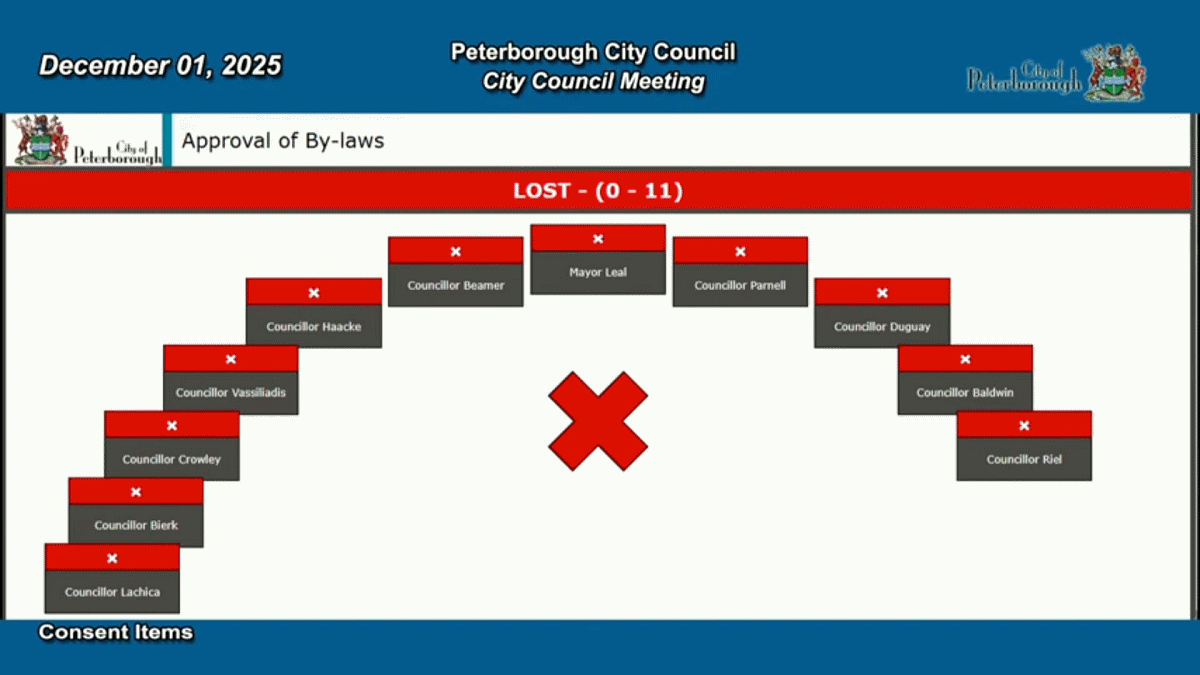
Council then proceeded to vote on the by-law, which lost in a unanimous vote of 0-11.