



















Northumberland County’s public works director is reflecting on the infrastructure successes of 2025, and looking ahead to the department’s 2026 projects, which includes upgrades to almost 500 kilometres of county roads, bridges, and culverts.
These past 12 months have been productive for Northumberland County’s public works department. From road resurfacing to culvert relining, critical infrastructure projects were completed across the region “to keep residents, visitors, and goods moving safely and smoothly,” the county noted, adding it applies an ongoing approach to maintaining safe, reliable infrastructure.
“Our roads, bridges, and culverts form the backbone of local connectivity and economic growth,” said public works director Denise Marshall in a media release. “This year, we’ve made significant progress on projects that enhance safety, accessibility, and long-term sustainability across the county. These improvements help ensure Northumberland continues to thrive as a connected and resilient community.”
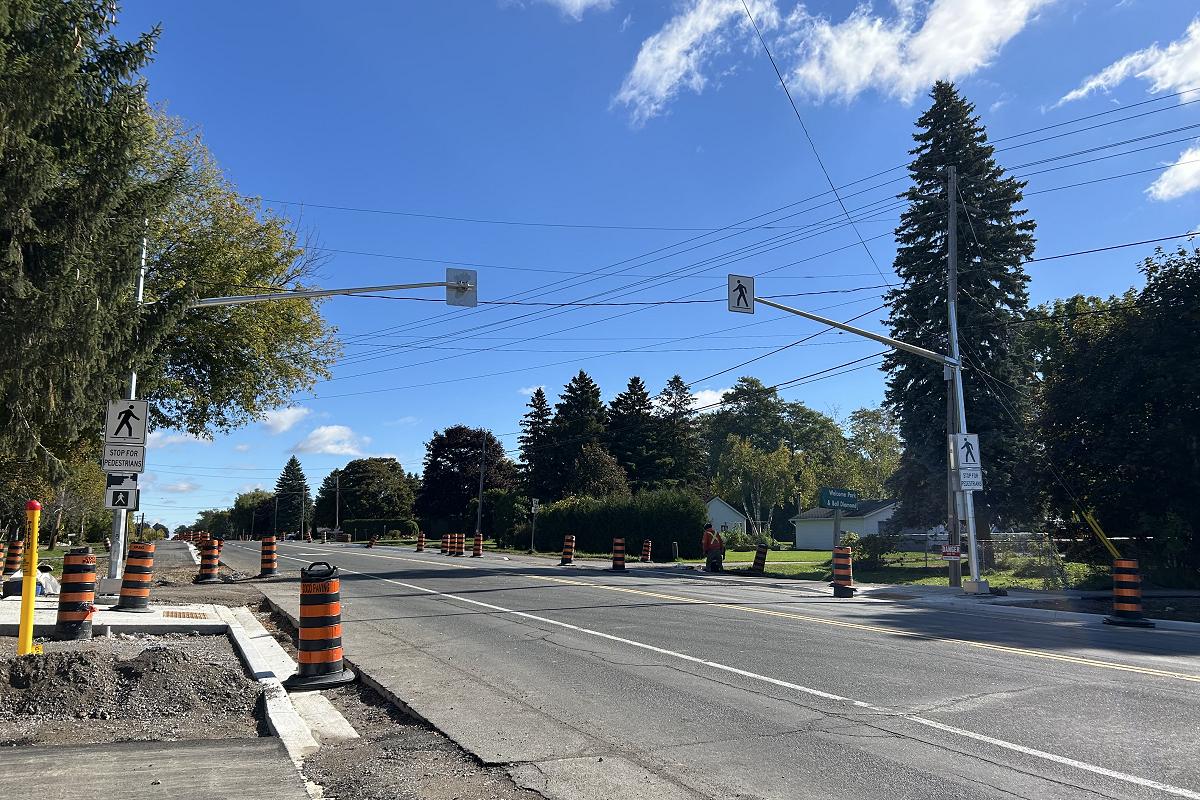
One of the most significant road safety improvements in 2025 was the Welcome intersection in Port Hope (County Roads 2, 10 and 74), which included upgrades to improve traffic flow and pedestrian safety. There are new pedestrian crossings on County Road 74 and on the south side of County Road 2 as well as new sidewalks, curbs, upgraded signage, and enhanced streetlighting for visibility. While the intersection construction will be completed in early December, final asphalt and line painting will be completed in the spring.
Northumberland County also continued a multi-year reconstruction of Prince Edward Street (County Road 64) in partnership with the Municipality of Brighton. Work completed in 2025 included the installation of new water mains, sanitary lines, and storm sewers from Harbour Street to Stephen Street, with curbs and asphalt nearing completion. The road is expected to open the second week of December. Construction work north to Main Street is expected to resume in the spring.
For County Road 25 south of Warkworth, the county rehabilitated the existing culvert, rather than digging up and replacing it, by relining the culvert with a geopolymer mortar that forms a new durable pipe within the old structure, extending its life by around 40 years. This trenchless rehabilitation technique not only reduced costs and project time, but did not require road closures.
The new Burnley Bridge on County Road 29 in the Village of Burnley in the Municipality of Trent Hills features a two-lane precast concrete rigid frame bridge, steel beam guide rails for added roadside protection, and reconstructed approaches to improve alignment and safety. Originally constructed in 1950, the bridge had reached the end of its service life and needed to be replace. The new bridge opened at the end of November, with a permanent speed reduction in the area.
The county also carried out a range of preventive maintenance projects on several county roads, including mico-surfacing on 10 kilometres of County Roads 9, 22, and 74 in Hamilton and Alnwick/Haldimand townships, crack sealing on 15 kilometres of roads across Hamilton and Alnwick/Haldimand townships and the Municipality of Brighton, and surface treatment on 20 kilometres of county roads.
The county also provided support for surface treatments on more than 100 kilometres of municipal roads.
Marshall shared with kawarthaNOW a sneak peek at some of the priorities and projects ahead in the new year.
“For 2026, our focus will be on short-term, high-impact investments that maintain the health and safety of our critical infrastructure, which spans almost 500 kilometres of roads, bridges, and culverts,” Marshall said.
“This includes advancing design and construction on key road projects in Grafton, Castleton, and Hastings, rehabilitation of the Trent River Bridge on County Road 30 North, and two culvert replacements on County Road 25.”
Also in the new year, the design will be finalized for the new Campbellford Bridge, “ensuring this project is shovel-ready to attract necessary government funding so we can pursue this generational community project,” the director said.
In addition, in early 2026, Northumberland County will open the doors of the new Golden Plough Lodge & Northumberland County Archives and Museum in Cobourg, “welcoming home residents to this new high-quality long-term home, and visitors to the new purpose-built archives and museum,” Marshall added.
The new 203,000-square foot facility has been built on Courthouse Road, adjacent to the existing Golden Plough Lodge, on county-owned property. Featuring 180 beds, the home includes a combination of one and two-bed rooms across six resident home areas.