








Camp Kawartha’s program focused on nurturing the next generation of environmental stewards has received recognition on an international stage.
Last Tuesday (December 2), Camp Kawartha and the Regional Centre of Expertise (RCE) Peterborough/Kawartha/Haliburton announced the Pathway to Stewardship and Kinship program has received an Outstanding Flagship Project Award from the United Nations University’s Institute for the Advanced Study of Sustainability.
The academic arm of the United Nations, the Tokyo-based United Nations University (UNU) is a global research and teaching institution that generates policy-relevant knowledge to address pressing international challenges such as peace, development, sustainability, and governance. In 2017, UNU designated Peterborough-Kawarthas-Haliburton as an Regional Centre of Expertise on Education for Sustainable Development.
Camp Kawartha said the UNU award recognizes the Pathway program as one of the world’s leading examples of education for sustainable development with its “community-grounded model” helping to raise environmentally aware, caring, and engaged young people.
The Pathway to Stewardship and Kinship program began in 2014 when staff from Camp Kawartha and other environmental educators held interviews with community leaders, gathering childhood memories and reflections on what had nurtured their bond with nature.
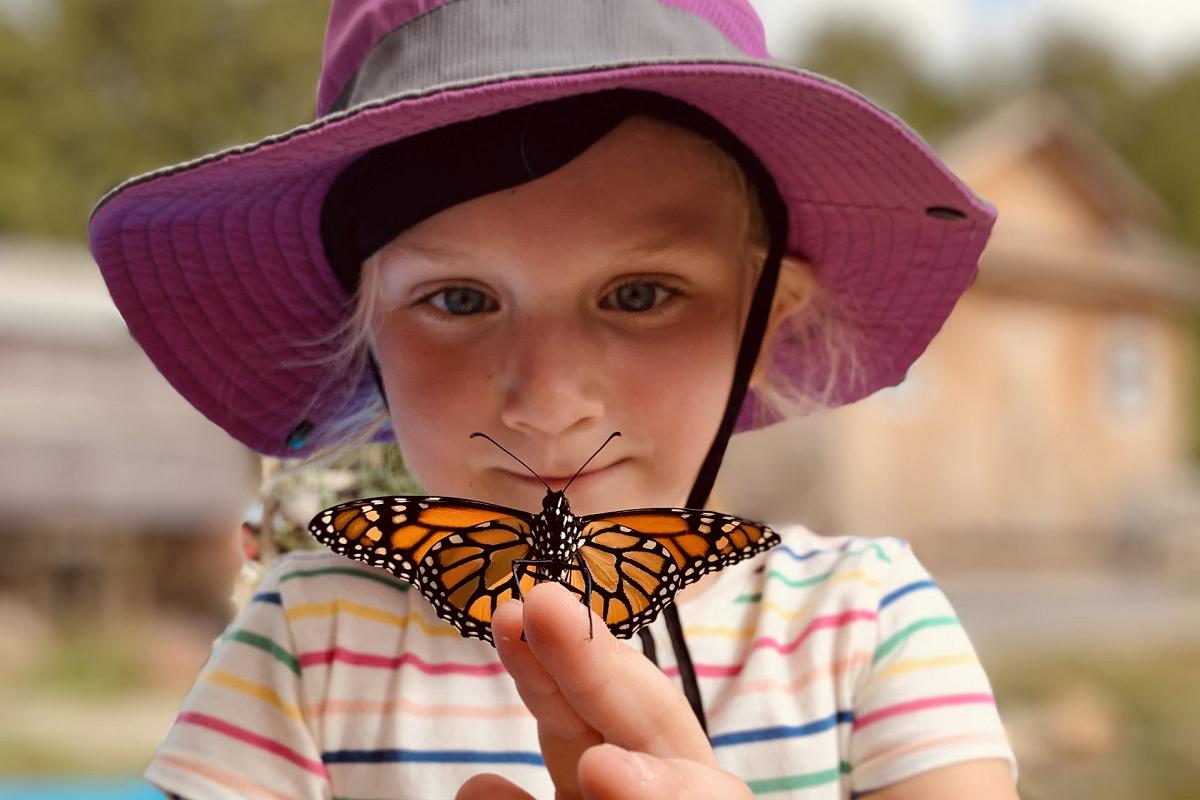
From these conversations — plus external research and Indigenous cultural wisdom — the organization developed 30 “landmark” experiences: simple, age-appropriate milestones designed to guide children and youth’s development in nature, community, and belonging as they grow from early childhood through the end of high school.
After pilot-testing the landmark activities with more than 1,500 children in early years centres and elementary schools in both urban and rural settings in the Peterborough area in 2018 and 2019, they began scaling up the project, expanding to 15 early learning centres and 21 elementary schools from 2020 to 2023 and logging almost 63,000 landmark experiences during that time.
“This honour affirms that our region has built something remarkable,” said Camp Kawartha executive director Jacob Rodenburg in a statement. “The Pathway program shows what is possible when a whole community works together to raise the next generation of earth stewards.”
The Pathway approach is further supported by the book The Wild Path Home: A Guide to Raising the Earth Stewards of Tomorrow, written by Rodenburg and Cathy Dueck, an environmental educator who served as lead writer, researcher, and coordinator for the Pathway program. Published in September by New Society Publishers, the book offers a deeper look at the philosophy and impact of the program.
The book’s publication followed an award-winning documentary by Anne-Marie Jackson with the same name, which screened at the 2025 ReFrame Film Festival.
VIDEO: “The Wild Path Home” trailer
Rodenburg shared with kawarthaNOW his thoughts about the impact of receiving the recognition and what it means for the future of the Pathway program.
“Our hope is that we can explore the possibility of creating a Centre for Earth Stewardship,” Rodenburg said.
“The centre could provide guidance to other jurisdictions in implementing and adapting the Pathway model, offer training for teachers, parents, and community leaders, and build out more age-appropriate resources that show what inspiring stewardship experiences look like at each age and stage of childhood.”
“Ultimately, our goal is to help communities everywhere nurture children who feel connected to, and responsible for, the earth we all share,” he added.
By elevating the Pathway program to the global stage, the UNU award creates possibilities for new partnerships, funding opportunities, and international knowledge exchange.
“By joining the UNU’s global repository of flagship projects, the Pathway becomes part of an international network of community-driven sustainability solutions,” a media release states. “Its success highlights what can be achieved when educators, school boards, Indigenous advisors, families, environmental organizations, and local governments work together toward a shared vision of stewardship and kinship with the land.”
For more information about the Pathway program, visit pathwayproject.ca to view videos, resources, and practical ideas for families, schools, and communities.