


















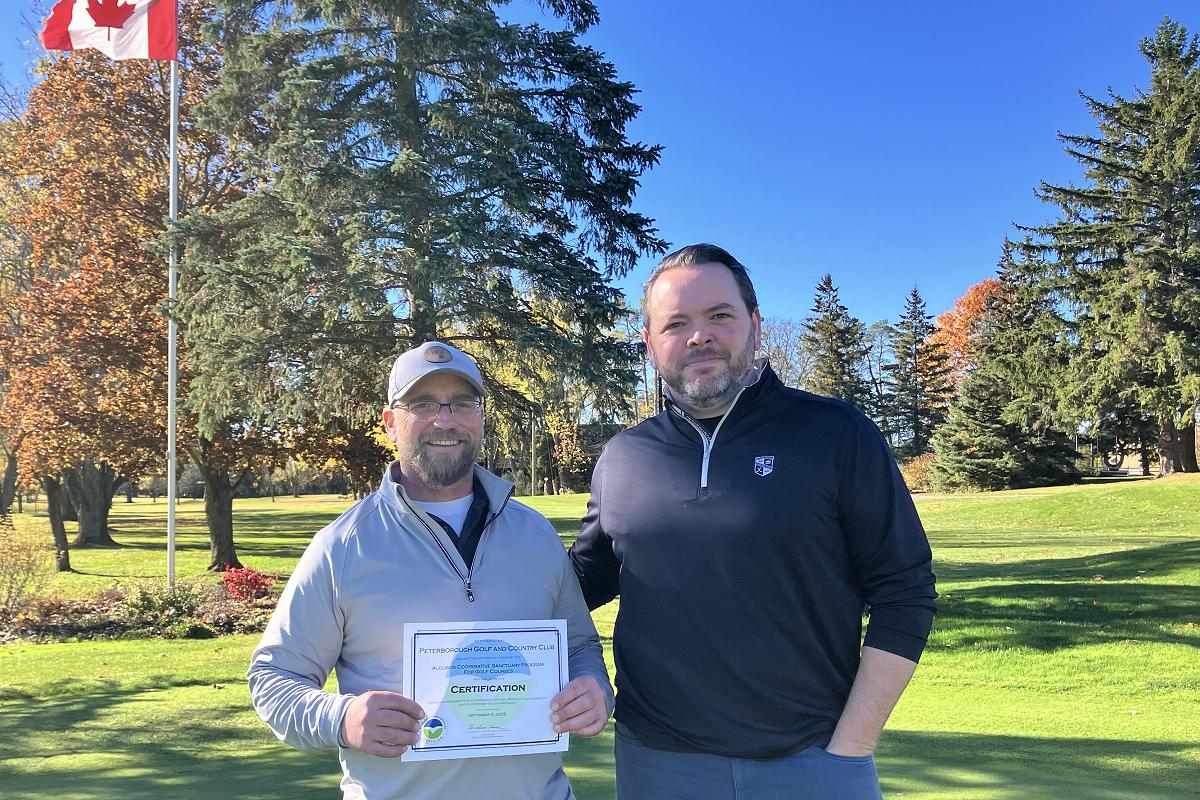
A multi-year effort by Peterborough Golf and Country Club (PGCC) has resulted in an Audubon Cooperative Sanctuary Program (ACSP) for Golf Courses certification for the organization — a first in the region.
Implemented at more than 2,000 courses worldwide, ACSP for Golf Courses is a globally recognized Audubon International education and certification program meant to both protect the environment and preserve the natural heritage of golf.
The program celebrates golf courses that demonstrate environmental stewardship in managing and enhancing their greens in six key areas: environmental planning, wildlife and habitat management, chemical use reduction and safety, water conservation, water quality, and outreach and education. Success in each area requires extensive documentation, a scientific approach, and a commitment to continuous improvement.
Audubon International specializes in supporting organizations to care for and manage the ecosystems where people live, work, and play. The strength, commitment, and engagement of the PGCC community was integral to gaining this recognition.
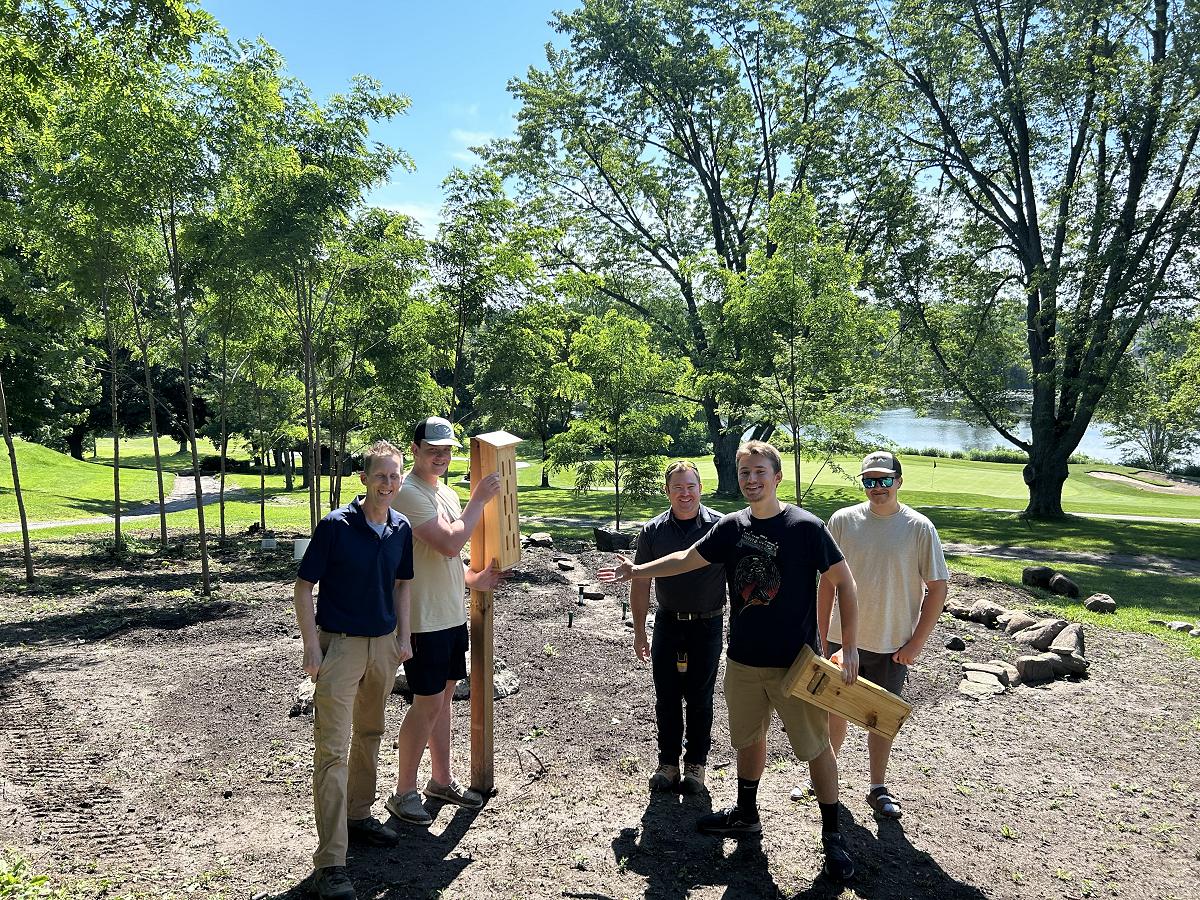
“Our members were at the heart of achieving this certification,” says Kevin Kobzan, course superintendent at the PGCC. “We had members who went above and beyond. They organized monthly meetings, connected with local experts, and even engaged the nearby high school’s woodworking class to build nesting boxes for the course’s wildlife habitat.”
PGCC maintains a healthy turf through aeration, top dressing, and vertical mowing, technique that removes excess thatch to improve air, water and nutrient flow.
Integrated pest management (IPM) techniques are employed by ACSP for Golf Courses certificate practitioners to manage disease thresholds sustainably. Principles of IPM include monitoring for pests and allowing for acceptable levels, prevention through healthy crops and soils, using barriers, traps and beneficial insects, and if needed, and managing any required pesticide use in a controlled and targeted manner.
Water, too, is a key focus for Audubon-certified clubs, who use strategies to reduce water use and protect water sources. Most notably, as part of their certification, clubs commit to ongoing improvement, maintaining detailed records, and preparing for recertification every three years.
For club members, the certification process wasn’t just about meeting environmental standards, but about validating and celebrating the club’s culture of environmental stewardship.
Will Mitchell, PGCC’s general manager, commends the ability of members to bring the project to fruition.
“It’s something that is quite unique to Peterborough Golf and Country Club,” he says. “You need a proud, committed group of helping hands, and then you need subject matter experts. We have both.”
Much of the initiative was carried out by the club’s Resource Advisory Group made up of club members Barton Fielders, Roseanne Brien, Karen Thomas, Joanne McCarthy, along with assistant superintendent David Hughes and Kobzan. Their combined commitment and expertise helped strengthen the club’s certification submission.
For Kobzan, who has worked at multiple golf courses, the Peterborough club’s approach was distinct.
“It was new for me to experience the type of support from a membership that wanted to do this,” he says. “Many clubs might shy away from the extensive work required, but here in Peterborough, members were eager participants.”
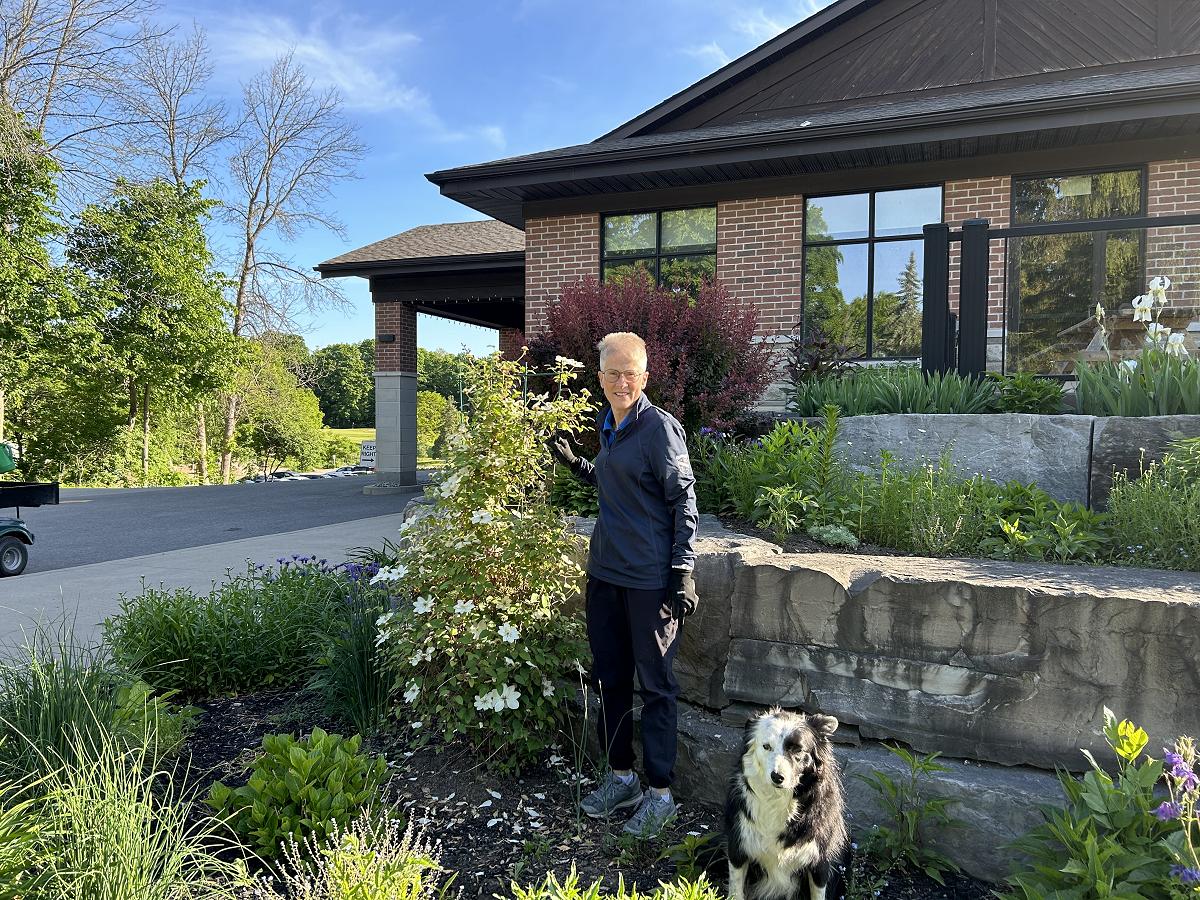
One standout achievement for the club was the transformation of an area overrun by invasive dog-strangling vine and buckthorn into a thriving pollinator garden. Another was the partnership with Thomas A. Stewart Secondary School’s woodworking class to build and install nesting boxes. A third was collaborating with experts like Dr. Bill Crins, a retired University of Toronto professor, whose background in ornithology, botany, entomology, and conservation biology was a valuable resource for inventorying the club’s wildlife and habitats.
For PGCC, this certification is a testament to a membership and staff team that understands its role as caretakers of a complex ecosystem. It shows that when passionate individuals come together, they can transform a space into a model of sustainable land management.
As Kobzan puts it, “You don’t really need accolades. The reward is that you’re benefiting something important.”
As the club looks to the future, this certification is just the beginning. With a membership committed to environmental care and a leadership that supports innovative approaches, PGCC is on the path for continued, community-driven sustainable practice.
Peterborough Golf and Country Club is a member of GreenUP’s Green Economy Peterborough network. There are many ways businesses can promote and support healthy ecosystems on their property and in their communities. Learn more at www.greeneconomypeterborough.ca.