













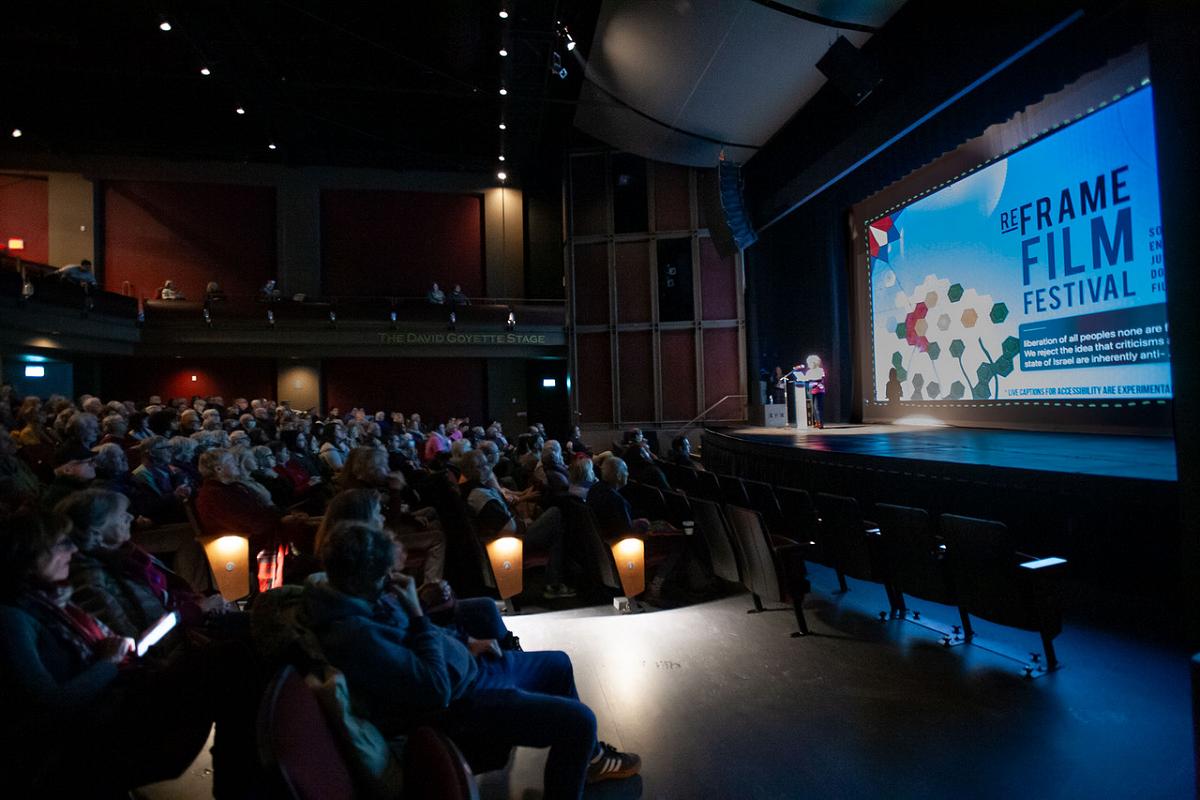
For the team behind the ReFrame Film Festival, accessibility is not something that can simply be “solved” or crossed off a checklist. Instead, it is an ever-evolving practice that responds to community feedback, new perspectives, and emerging technologies.
“Adapting to accessibility needs means staying open, listening carefully, and being willing to change course,” says ReFrame’s executive director Kait Dueck. “For us, accessibility depends on trust, feedback, and a shared commitment to learning alongside our community, rather than assuming we’ll ever have it fully figured out.”
When the documentary film festival returns to downtown Nogojiwanong/Peterborough from January 30 to February 1 and online across Canada from February 3 to 8, there will be a range of supports in place — physical, sensory, emotional, financial, and more — to invite a wider audience to enjoy more than 40 thought-provoking local, national, and international films.
“Accessibility has always been central to us because social justice is at the very core of what and who ReFrame is,” Dueck explains. “We are, quite literally, a social and environmental justice documentary film festival, and that means we feel a responsibility to ensure that our operating practices reflect the values and ideas being explored on screen.”
“For us, it’s critical that, as we program films about equity, justice, and care, we’re also actively working to reduce barriers to participation.”
This year will mark the third time the festival will be presented in a hybrid format, which makes it accessible to anyone across Canada with an internet connection and viewing device. Online delivery also supports those in the community who face difficulty accessing in-person film screenings due to mobility limitations, inclement weather, anxieties about large crowds, childcare challenges, and other obstacles.
“It also extends the festival experience for in-person audiences,” Dueck points out. “Many people want to see more films than they can realistically fit into a single weekend, especially when screenings are happening at multiple venues at the same time. The virtual program gives audiences the chance to return to work (after the weekend), catch the films they missed, and spend more time with the ideas that resonated with them.”
ReFrame creative director Eryn Lidster adds that the hybrid approach has also increased accessibility with respect to the filmmakers themselves.
“We can reach artists who cannot attend the festival in-person and do a lot more, in a relatively environmentally conscious way, on a tight budget,” Lidster says.
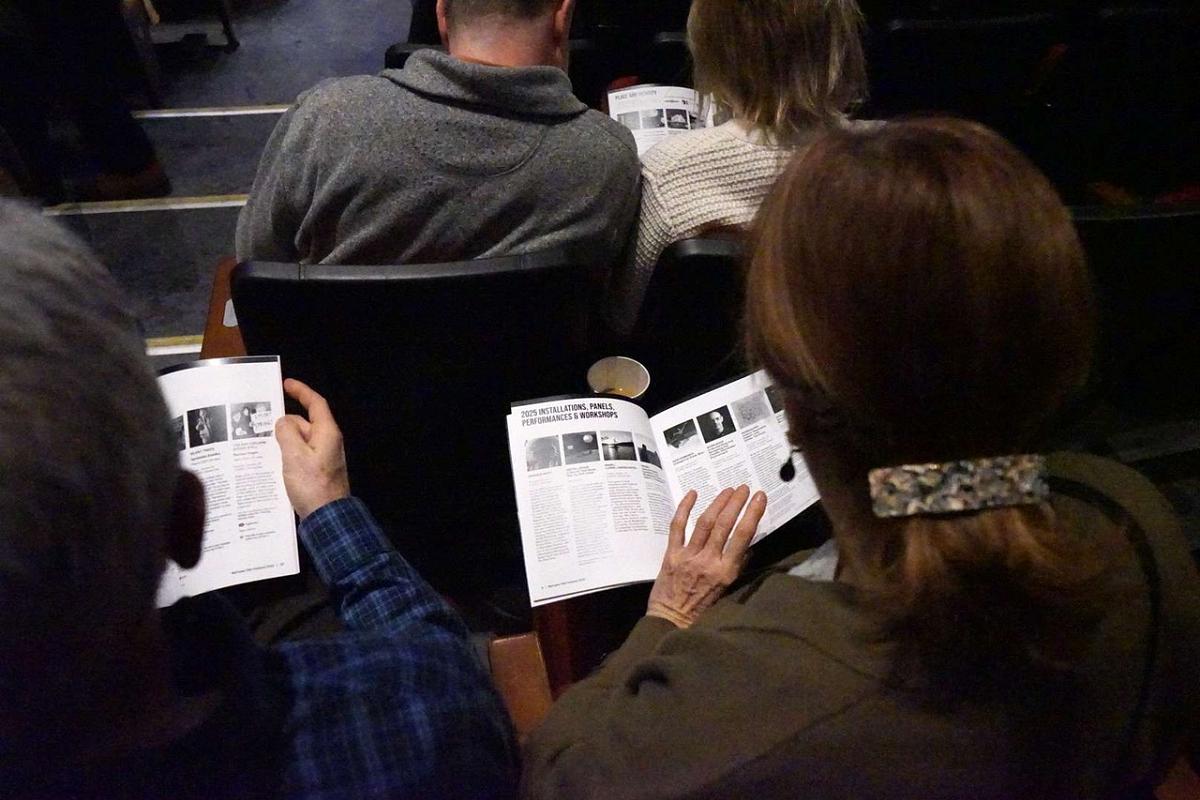
The majority of films presented at ReFrame are available with captions, subtitles, or both. When captioning is only partially available or not at all, this is clearly indicated in advance. Some virtual films may require closed captions or subtitles be activated manually by the viewer.
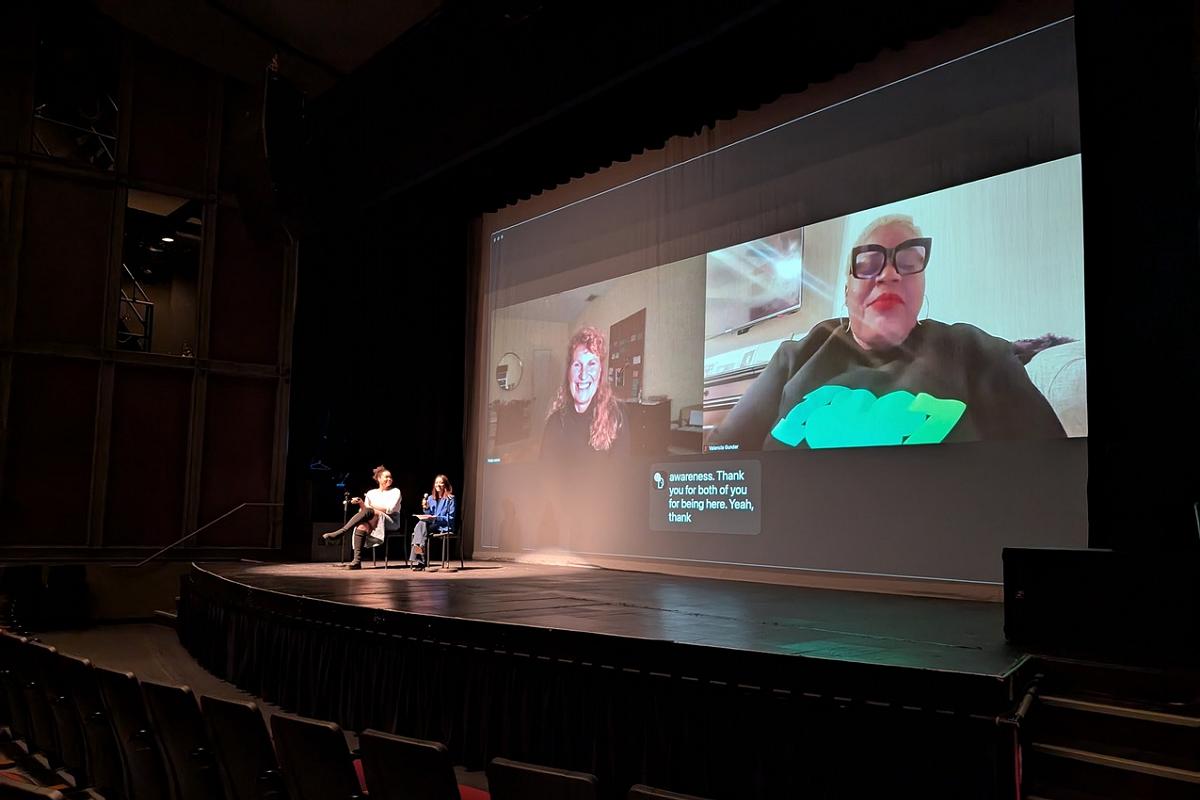
There will also be indication when Q&As, panels, and livestream events are available with open or closed captions, CART services, and ASL interpretation. Refining last year’s approach, ReFrame will be providing AI-generated CART captioning for many of the live in-person events.
“For us, accessibility decisions around emerging technologies such as AI are a bit of a balancing act,” Dueck says. “We’re thinking about how to put access first, while also being mindful of artist autonomy, ecological impact, and the limitations of our own capacity.”
“Live captioning technology is evolving quickly and, while it isn’t perfect, it can meaningfully expand access when more traditional options are financially or logistically out of reach. We’re approaching it pragmatically and transparently by naming where it will be available, being honest about its limits, and treating it as part of an ongoing learning process rather than a fixed solution.”
Dueck adds that, following the festival, the team is keen to hear audience response to the use of these technologies for accessibility purposes and whether it works and is worth it.
This year, audiences will also find new state-of-the-art assisted listening devices at Showplace Performance Centre and Market Hall Performing Arts Centre, the two venues for in-person screenings. Both locations also have sensory kits available that include fidget gadgets, sunglasses, and earplugs.
A quiet space is also available in the Cogeco Studio on the lower level at Showplace, where lighting will be lowered and festival films will be available to watch on a smaller screen with reduced volume.
These supports will help festival-goers who have heightened sensitivity to light, sound, or stimulation — something Dueck understands firsthand as she lives with chronic migraine.
“That lived experience has shaped how I think about festival and public performance spaces. What might feel like a normal theatre environment to one person can be overwhelming or even physically painful to another.”
Dueck adds that sensory supports aren’t about creating an “ideal” environment.
“They’re about offering choice, flexibility, and reassurance. When people know that their bodies and nervous systems are being considered, it lowers the barrier to participation and makes in-person cultural spaces feel more welcoming and humane.”
Beyond the sensory supports, each film — with a few technical exceptions — will be a relaxed screening, meaning audiences are welcome to move, leave, and re-enter the theatre as needed, make quiet sounds or speak softly, and attend with support people, assistance animals, and babies.
“We still screen films at standard theatrical sound and lighting levels, because we want to honour the work and the viewing experience, but by naming these screenings as relaxed, we’re signalling that care, flexibility, and welcome come first,” Dueck says. “Our hope is that this approach helps create an environment where more people feel comfortable attending, and where difference is met with understanding rather than judgment.”
Both venues for the in-person festival are located downtown, are wheelchair accessible, with elevators or lift service available, and have all-gender accessible washrooms. Accessible seating is reserved in advance by ReFrame, and clearly indicated at each venue.
Given the gravity of the social, environmental, and human rights issues covered by documentary films, some of the films that are screening at ReFrame may be emotionally intense, triggering, or challenging for some audience members. That’s why the ReFrame film guide provides content warnings and tone notes. In the online film guide, audiences can also select the “Lighter Fare” button for a curated list of films that are more uplifting, gentler, or hopeful in tone.
For films that may be particularly challenging, trained active listeners will be present in the theatre to offer quiet supportive care to anyone who needs it, and to check in with anyone who steps out during the screening.
“We also recognize that watching a difficult film can stir up feelings that extend beyond the screening itself,” says Dueck. “While ReFrame isn’t qualified to provide clinical or crisis support, we see it as part of our responsibility to help connect people to appropriate resources. That’s why we share lists of local, provincial, and national supports across our website, printed materials, and pre-screening slides.”
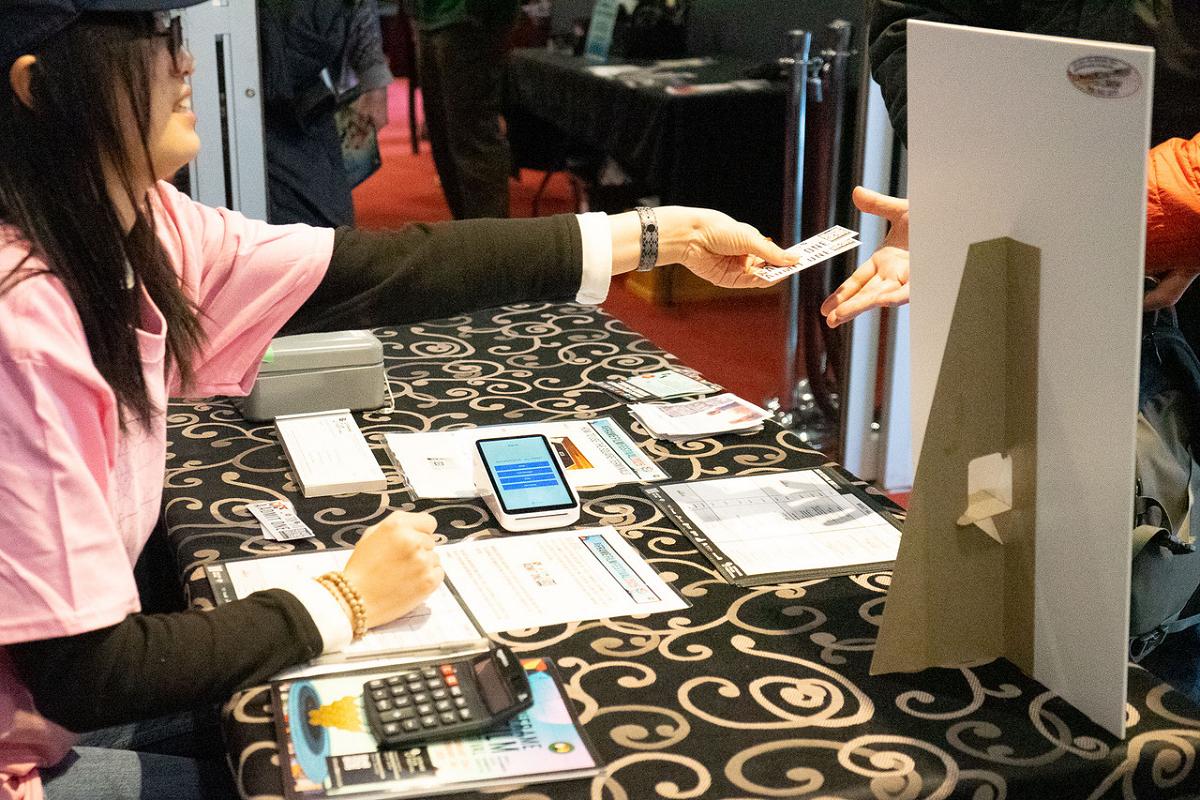
Addressing one of the most common but least visible barriers to participation, ReFrame aims to make it financially possible for anyone to enjoy the festival. No-questions-asked pay-what-you-can pricing is available for individual in-person and online screenings. These can be purchased both in person on a rush basis, 15 minutes ahead of a screening, or online for anonymity.
Through its Community Access Program, ReFrame also distributes a limited number of free festival passes and tickets to equity-deserving members of the community by partnering with local advocacy groups and service organizations.
“When people who are often excluded from cultural spaces are able to experience these films and have their perspectives included, the conversations around the festival become much richer,” says Lidster. “Community building is so important to social and environmental justice work and has to include the whole community to be meaningful.”
To support ReFrame’s mission to be accessible and inviting to all communities, the team encourage festival-goers who can afford to do so to pay full price for their passes and tickets and to make donations to cover the cost and lost revenue from meaningful access initiatives.
The team also welcomes ideas, feedback, and suggestions on making ReFrame as barrier-free as possible. People are encouraged to reach out to ReFrame by emailing info@reframefilmfestival.ca or kait@reframefilmfestival.ca.
“Building truly accessible cultural spaces isn’t only about infrastructure or policies — it’s about how we show up for each other in shared spaces,” says Dueck. “At their core, accessibility features aren’t just something that is provided by ReFrame or our venue partners. It’s something we practise together.”
For full details on accessibility supports available during the 2026 ReFrame Film Festival, visit reframefilmfestival.ca/accessibility.
For festival passes and tickets and to see the lineup of films, visit reframefilmfestival.ca.
kawarthaNOW is proud to be a media sponsor of the 2026 ReFrame Film Festival.