





















Peterborough city council has voted to endorse a new procedure by-law that, in part, bans councillors from taking their phones into council chambers.
A requirement of the Municipal Act, a procedure by-law governs the rules for calling, holding, and regulating municipal council and committee meetings. In Peterborough, it’s been the practice of council to consider amendments to the procedure by-law at least once during a council’s four-year term.
Meeting as general committee on Monday night (January 26), councillors considered a report from the city’s legislative services commissioner David Potts and city clerk John Kennedy that detailed proposed changes to the procedure by-law and included a draft version of the amended by-law.
The amendments were developed by a working group that included Mayor Jeff Leal, councillor Andrew Beamer as chair of general committee, and councillor Lesley Parnell as chair of planning committee, along with city staff including city CAO Jasbir Raina, Potts, Kennedy, and deputy city clerk Natalie Garnett.
According to the report from Potts and Kennedy, the working group met “on several occasions to discuss procedural considerations,” consulted the Ombudsman’s Office, and reviewed the practices of other municipalities including Caledon, Cambridge, Chatham-Kent, Guelph, Pickering, Richmond Hill, St. Catharines, Whitby, and Windsor.
The report states the amendments to the existing by-law strengthen the authority of a meeting chair in “maintaining order, decorum, and the effective conduct of meetings,” including new restrictions on councillors raising points of order.
Under the current procedure by-law, councillors can raise a point of order at any time for reasons including a breach of rules, improper language, out-of-scope discussion, and irregular proceedings. If the chair rules against a point of order, a councillor can challenge the chair’s decision and council will vote on the challenge.
Under the proposed procedure by-law, no councillor (other than the chair) can interrupt another councillor who is speaking, including by raising a point of order. Instead, a councillor must signal they wish to raise a point of order, and the chair will then decide whether or not to let the point of order proceed after the original speaker has finished speaking. The chair’s decision is final and cannot be challenged.
In addition, the proposed procedure by-law softens the wording on whether the chair is required to refer to Robert’s Rules of Order for guidance on any procedural issues that are not covered by the by-law. The current by-law says the chair “shall” refer to Robert’s Rules of Order, whereas the new by-law says the chair “may.”
The proposed amendments also place new restrictions for how long councillors can speak on a motion. The current by-law allows councillors to speak twice on the same motion for a maximum of five minutes each during general committee meetings and council meetings. The proposed by-law changes that to three minutes for council meetings.
“These revisions are intended to promote focused discussion, ensure equitable participation, and support the timely advancement of meeting business,” the report from Potts and Kennedy states.
As for public delegations, a maximum of 10 delegations will be allowed per council agenda under the proposed by-law. Under the current by-law, a maximum of 10 delegations are allowed per topic or report on the agenda. Neither by-law restricts the number of delegations during a public meeting under provincial legislation.
Under the proposed by-law, each councillor can only ask one question when a delegate finishes speaking, and the delegate’s answer to the councillor cannot exceed 90 seconds. Neither restriction exists under the existing procedure by-law.
“This approach maintains opportunities for meaningful public input while balancing the need for orderly and effective meeting proceedings,” the report states.
Another change in the proposed procedure by-law is that a motion to reconsider a council decision (requiring a two-thirds vote to be approved) cannot be introduced at the same meeting where the decision was made. Under the current by-law, a motion to reconsider can be made during the same meeting.
Other changes in the proposed by-law include a new land acknowledgement, additional criteria for introducing items under “Other Business,” and a new rule that councillors cannot change their vote after it has been cast — even if the councillor voted in error.
However, the most contentious proposed change to the current procedure by-law states that councillors must “not be in possession of any electronic device that could facilitate a communication” other than if they are participating in a meeting virtually. Although the by-law does not define an “electronic device,” the report from Potts and Kennedy describes “personal or (city) issued devices.”
“Members must communicate only through, and at the discretion of, the chair,” the report states. “These restrictions reflect the principle that the public must be able to observe all decision-making activity during open meetings.”
At Monday night’s general committee meeting, several councillors expressed concerns about the proposed procedure by-law.
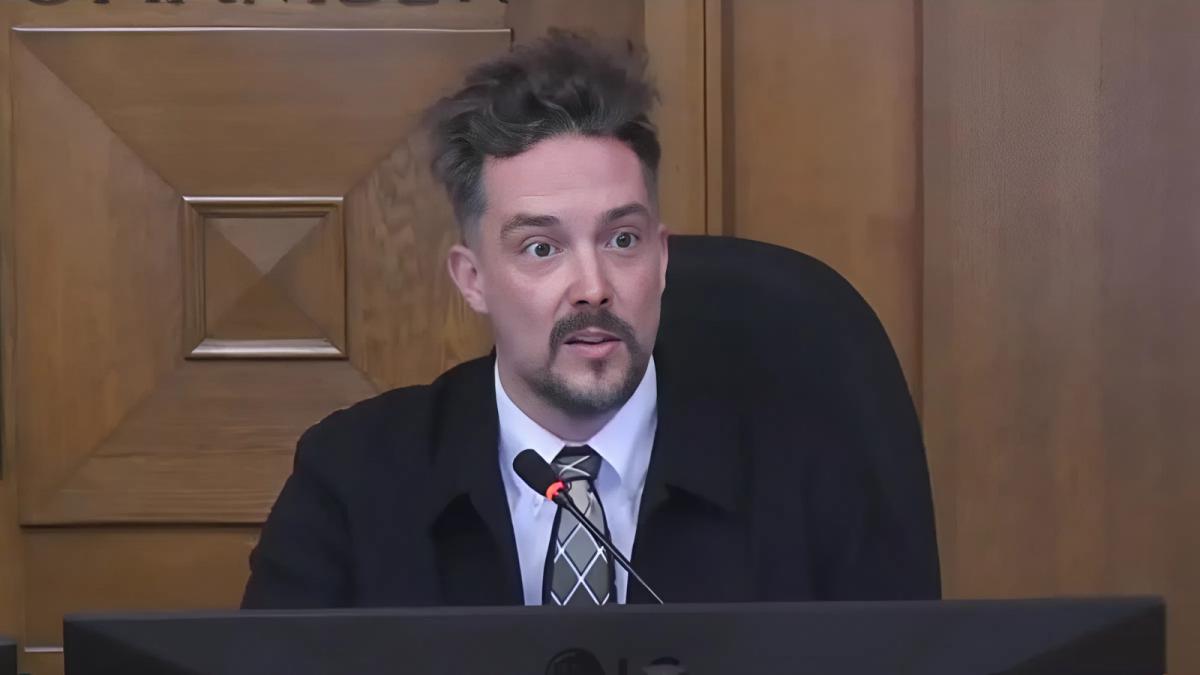
Councillor Alex Bierk, who requested that each change in the proposed by-law be separated out for a separate vote, said the proposed by-law contains “fundamental changes to how we function as elected officials.”
“I’m pleading with you to defer the vote on this procedural by-law as written and leave the work to the next term of council,” he said. “These are not just simply housekeeping edits. This by-law introduces a ban on personal electronic devices, drastically reduces how often and how long councillors can speak, and expands the authority of the chair.”
He called the ban on cellphones “vindictive and imperialistic.”
“It creates a problem where no problem has been demonstrated. We have had no findings from the Ombudsman, no pattern of public complaints, and no evidence that council is conducting business electronically at the horseshoe (the table in council chambers). For me, as someone who has received threats in this room and as a parent of young children who are at home right now, having my phone on my person is a basic matter of safety and family responsibility.”
Calling the proposed ban “an overreach” and “not a proportionate response to any proven issue,” Bierk said that other municipalities regulate electronic devices as a way of “stopping side conversations or improper debate, not banning councillors from possessing their phones all together.”
“What is being proposed here is far more extreme than what is typically happening anywhere else and again is being done without any evidence of any real problem to solve,” he added.
With a municipal election set for October, Bierk also suggested that it was inappropriate for council to make the changes so close to the end of their term.
“We should not be adopting one of the most restrictive procedural rules in the province in the final months of this term and imposing it on the next council without their consent,” he said.
In her comments, councillor Joy Lachica said she wanted to hear the motivation “to isolate councillors” by banning phones while city staff and the public in chambers would be able to retain their phones, especially in situations where councillors may need to be contacted by their family in case of an emergency.
Calling the proposed ban “draconian,” Lachica said it would contravene the Ontario Human Rights Code in terms of family status and asked for the rationale for the ban.
In response to Lachica’s comment, the city’s director of legal services Alan Barber said possessing a phone is not a “protected ground” under the Ontario Human Rights Code, and pointed out there will be a “workaround” to contact councillors in case of an emergency.
Councillor Keith Riel put forward a motion to defer approval of the proposed by-law and to have staff return with a report describing the reason for each change, adding that no councillors were consulted other those who were part of the working group.
Commenting on Riel’s motion, councillor Bierk noted that city staff did not provide councillor Lachica with a rationale for the phone ban and said “We’re creating a solution to a problem that doesn’t exist,” adding that he had never received any comments from anyone about the inappropriate use of phones during council meetings.
“We are not children — I’m 44 years old,” he said, pointing out that councillors already have access to their emails, text messages, and Microsoft Teams to consult with city staff on the computers that are available to each councillor in chambers.
He suggested it would be more reasonable to instruct councillors not to conduct council business on personal electronic devices, rather than banning them outright.
“Good luck policing that,” Bierk said. “You are going to have to strip-search me, and I welcome it.”
Councillor Matt Crowley said he recognized the issues behind the proposed phone ban but supported the deferral, noting that he preferred to read documents on his iPad rather than on paper. Councillors Kevin Duguay and Lesley Parnell said they would not support the deferral.
Bierk asked city clerk John Kennedy what the working group found with respect to how other municipalities deal with councillor phones. Kennedy said that, in St. Catharines, devices must be placed on silent mode during closed session meetings. He did not provide any information about municipalities that ban the use of phones.
Council then voted on Riel’s motion to defer the proposed procedure by-law, which lost 5-6. Councillors Lachica, Bierk, Crowley, Riel, and Gary Baldwin voted in favour, with Mayor Leal and councillors Don Vassiliadis, Dave Haacke, Beamer, Parnell, and Duguay voting against.
With debate resuming on the main motion, Mayor Leal referred to his time as a Cabinet minister in the provincial government and noted that all personal and work devices are banned during Cabinet meetings.
Councillor Duguay said he had received questions from members of the public as to why councillors are on their phones during council meetings, saying “This has been brought up more than once.” He added the issue has been raised at Association of Municipalities of Ontario (AMO) meetings “more and more often.”
“We may be one of the first communities to introduce (a motion banning phones in chambers), but we will not be the only community to introduce the motion,” Duguay said.
Councillor Haacke put forward a motion to change the number of questions that councillors can ask a delegate from one to two, which was carried by a unanimous vote of 11-0 and added to the main motion.
Councillor Crowley asked Barber whether there is a reason the use of personal electronic devices should not be allowed during council meetings. Barber replied that there a number of reasons, including that city staff do have access to personal devices to respond to Freedom of Information (FOI) requests from the public, but said the most important issue was one of public perception.
“The electors should have the confidence to know that is it those elected officials making the decision in real time, and that the decision that the elected official is making is not being influenced by somebody from the outside,” Barber said. “Whether that happens or not, I do not know, but the perception is as important as the reality for people who vote.”
Mayor Leal proposed a motion to amend the section on calling the vote (a.k.a. putting the question) to allow councillors to speak once on a motion after a vote has been called. As council had already voted in December against a motion from councillor Bierk that included that change, a two-thirds vote would be required to reconsider the decision. The mayor’s motion to reconsider the decision lost 5-6, with councillors Vassiliadis, Beamer, Parnell, Duguay, and Baldwin voting against it.
Councillor Bierk then put forward a motion to propose changing the wording of the by-law with respect to banning phones from “not be in possession of any electronic device” to “not to use any electronic device” during council meetings.
Councillor Parnell spoke against the motion, stating that not being in possession of electronic devices “protects us,” claiming that important information has been leaked in closed session “whether willingly or accidentally,” although she did not provide details.
“There can be no risk of anybody questioning any of us if we don’t have our devices,” she said, noting that the public observing council won’t know why councillors are using their phones if they are allowed in chambers.
Bierk’s motion lost 4-7, with councillors Lachica, Bierk, Crowley, and Riel voting in favour.
Addressing an earlier concern raised by councillor Lachica, Mayor Leal put forward a motion to add a new land acknowledgement into the proposed procedure by-law. The mayor noted that a video under development will be included with the new land acknowledgement, and agreed with Lachica’s request that the land acknowledgement be included at every council meeting. Leal’s motion was carried unanimously with an 11-0 vote.
Council then voted on the individual items in the proposed by-law. The item on banning electronic devices was carried 7-4, with councillors Lachica, Bierk, Crowley, and Riel voting against. Other items were carried by different votes. The most common vote was 8-3, with councillors Lachica, Bierk, and Riel voting against.
Items endorsed by general committee will proceed to the regular city council meeting on Monday (February 2) to be considered for approval.
The original version of this story has been updated to include information about a proposed restriction on the number of delegations per meeting.