





















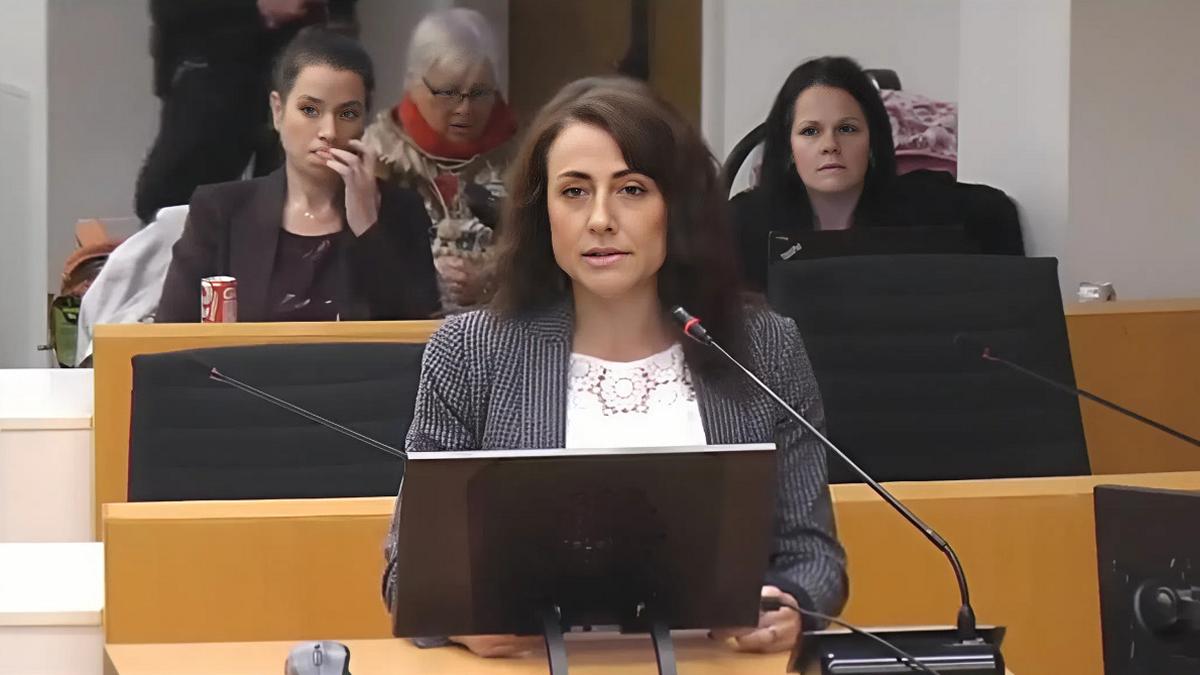
Peterborough city council has approved a new procedure by-law that bans councillors from taking their phones into council chambers, but reversed course on a proposed restriction on the number of public delegations that could appear before council at each meeting.
Ironically, council’s delegation decision at its meeting on Monday night (February 2) was influenced by a public delegation by former Peterborough mayor Diane Therrien-Hale.
A requirement of the Municipal Act, a procedure by-law governs the rules for calling, holding, and regulating municipal council and committee meetings. In Peterborough, it’s been the practice of council to consider amendments to the procedure by-law at least once during a council’s four-year term.
The new procedure by-law was developed by a working group that included Mayor Jeff Leal, councillor Andrew Beamer as chair of general committee, and councillor Lesley Parnell as chair of planning committee, along with city staff including city CAO Jasbir Raina, Potts, Kennedy, and deputy city clerk Natalie Garnett.
Along with prohibiting electronic devices in chambers, the new procedure by-law allows the aural recording of closed sessions, expands the chair’s authority (including by limiting the ability of councillors to raise points of order), reduces councillor speaking time on motions during council meetings, limits the total number of public delegations at a council meeting to 10, limits both the number of questions councillors can ask public delegates and the speaking time delegates have when responding to questions, and removes the ability of council to reconsider a motion it has approved during the same meeting.
In her delegation, Therrien-Hale said that she understands council’s mandate to update the by-law and supports some of the proposed changes, but added that other changes reflect criticism that council can be “somewhat archaic” and “lacking in transparency and forward-thinking decision making.”
She said that, while she supports the decision to aurally record the proceedings of closed sessions, she disagrees with the proposed ban on electronic devices other than in closed sessions.
“In open session, such a ban is an outright overreach of authority and something that literally no other municipality in the province has enacted,” Therrien-Hale said. “Passing the by-law with this ban will only serve to further the city and this council’s reputation as being stuck in the 20th century, unable and or unwilling to adapt to the current technological reality of how the world works in 2026.”
“I take particular umbrage with some members of council who spoke in support of this change by making unfounded accusations towards other members and contravening their own stated desire to ‘Elect Respect’,” she added, in an apparent reference to councillor Parnell who previously accused councillor Alex Bierk of receiving outside information on his cell phone during a council meeting.
“Such cognitive dissonance continues to be disappointing, but not surprising. Moreover, implementing such a ban three months before the May 1st nomination period opens for the October municipal election seems, as the kids would say, highly sus.”
Therrien-Hale noted that imposing a phone ban will “further alienate young people from the political process.”
“If you personally don’t want to use or learn to use a cell phone, that’s fine, but do not police the rest of council and the incoming council with such unnecessary and regressive measures.”
With respect to limiting the number of public delegations to 10 for each council meeting, instead of the current limit of 10 delegations for each topic or report on a council agenda, Therrien-Hale said the proposed by-law raises issues of “fairness and equitable access of residents to be able to speak before council.”
“Limiting delegations to a maximum of 10, regardless of the number of agenda items, is deeply problematic,” she said. “There are often cycles of council where there are multiple highly contentious issues on the agenda, and restricting the public’s ability to delegate on those issues is not helpful in building trust and confidence between the public and our elected officials, which at all levels of government seems to be at an all-time low.”
“Allowing only 10 delegations means that the ability of people to register depends entirely on their quick access to reliable technology and internet, their ability to navigate the (city’s) website, or their ability to physically attend the (city) clerk’s office to fill out the delegation forms. I would argue that this is unfair and borders on discriminatory to people without reliable technology and to folks who rely on transit or other forms of transportation to physically get to City Hall to register in time to be one of the first and only 10.”
As a “compromise,” the former mayor suggested that public delegations continue to be permitted per topic or report on the agenda, but that the number of delegations per item be reduced from 10 in the current by-law to between three and five.
“(This is) something that other municipalities have done and is quite in line with how other municipalities in eastern Ontario have handled this issue.”
In response to a question from councillor Keith Riel about changes to the procedure by-law during her time as mayor, Therrien-Hale noted that, when she was the chair of the Eastern Ontario Mayors’ Caucus, the City of Peterborough allowed an unlimited number of public delegations allowed council meetings, which was an issue.
“Other municipalities in eastern Ontario thought that the City of Peterborough having no limits was just wild and unheard of,” she said. The city’s procedure by-law was subsequently changed to a limit of 10 delegations per topic or report.
“Going from what we have now, 10 per item, to 10 overall, regardless of what the agenda looks like, to me is just going to be problematic down the road because, as you know, some agendas are quite light (but for) some cycles the agenda is super heavy, and you have a ton of different issues that people want to speak to.”
In his comments, councillor Gary Baldwin recalled a city council meeting “when there were probably 40 or 50 delegates talking about (BWXT Nuclear Energy Canada Inc.) and we didn’t finish the delegations until almost 11:30 at night. Council business completed at 3 a.m.”
“There were a number of us, I think including yourself at the time, who said at the time that council couldn’t make great decisions after midnight,” he said.
In response to a question from councillor Bierk about the proposed phone ban, Therrien-Hale said she can understand the concern about the public thinking city business is being done on personal electronic devices, but noted some members of the general public think business is already being done “behind closed doors anyways.” She wondered how the city would enforce a ban that is more restrictive than the rules in high school.
“It’s trying to solve a problem that hasn’t really been pointed to as actually being a problem,” she said, reiterating that a phone ban may dissuade younger people from getting involved in municipal politics.
Additional public delegations on the topic included Danielle Turpin, Rob Hailman, and Roy Brady, who all also raised concerns about the changes in the by-law that restrict public engagement and discussion, particularly the limit on delegations.
During council debate on the proposed procedure by-law, councillor Dave Haacke proposed an amendment to allow four delegations per agenda item rather than 10 delegations per agenda. During the general committee meeting last Monday, Haacke had also proposed an amendment to the proposed by-law to increase the number of questions a councillor can ask a public delegation from one to two. That motion was carried by a unanimous vote of 11-0 and added to the main motion.
Councillors Bierk, Beamer, Joy Lachica, Matt Crowley, Kevin Duguay, and Gary Baldwin all spoke in favour of Haacke’s latest amendment, while councillor Riel reiterated his concerns from last week’s general committee meeting about the lack of consultation with individual councillors about the proposed procedure by-law.
After the debate, council voted 11-0 in support of Haacke’s amendment.
Councillor Bierk then proposed a second amendment to change the wording of the proposed procedure by-law from “not be in possession of any electronic device that could facilitate a communication that does not comply” with direction by the chair to “not communicate through any electronic device that could facilitate a communication that does not comply,” noting the purpose of the procedure by-law is to govern how meetings are run, not to govern the conduct of councillors.
“It just limits the very awkward thing of the chair having to police what I’m going to do with my phone, and that will be an awkward situation,” Bierk said. “This negates all that. It is just it is putting the onus on us to follow the rules, and it doesn’t take these drastic steps that are being proposed that no other municipality, including the municipalities that were consulted in the report, are taking. This wording aligns much more closely with how other municipalities govern communications at a meeting.”
He pointed to the city computer in front of him (each councillor has access to a computer during council meetings).
“This falls under the definition as the by-law is written as an electronic device,” he said, adding that the microphone each councillor uses while speaking does as well.
Councillor Lachica proposed an amendment to Bierk’s amendment that would include an exception for emergency use related to family status and accessibility reasons, with Lachica noting that minors may not know how to contact the city clerk during a family emergency and councillor Riel noting that he uses his cellphone to control the volume of his hearing aids.
Councillors debated the concerns about accommodating accessibility needs and how councillors would be contacted during emergencies, consulting with city staff on several points, before voting 7-4 in favour of Lachica’s amendment to Bierk’s amendment, with the mayor and councillors Haacke, Beamer, and Parnell voting against.
Councillors then voted on Bierk’s amended amendment, which lost 5-6, with the mayor and councillors Don Vassiliadis, Haacke, Beamer, Parnell, and Baldwin voting against.
Council then returned to a debate on the main motion, with councillor Lachica noting that it was “oxymoronic” that her amendment to Bierk’s amendment passed but the original amendment did not, and councillor Baldwin asking city staff if there could be an educational session at the beginning of every term where councillors learn about the procedural by-law.
“It is my personal belief that a by-law … should not need an education session — it should be clear to everyone involved,” Bierk said in reference to Baldwin’s question.
“Maybe it’s just the fact that I’m the youngest on council,” said Bierk, who turned 44 last Monday, before placing his hand on the city computer in front of him. “I understand how I can use this thing in the exact same way as I can use my phone. It’s absurd to me that this (city computer) is allowed when the by-law explicitly says any electronic device (is prohibited).”
Council then voted on the main motion to pass the new procedure by-law, including the two amendments proposed by councillor Haacke, which carried 8-3, with councillors Bierk, Lachica, and Riel voting against it.
After the meeting, councillor Lachica provided a brief statement to kawarthaNOW about the debate on the procedural by-law.
“Universal, inclusive design is so essential in removing systemic barriers to participation for all. It is my utmost hope that in our governance we are always reflecting on whether we are, indeed, removing systemic barriers or creating them.”