












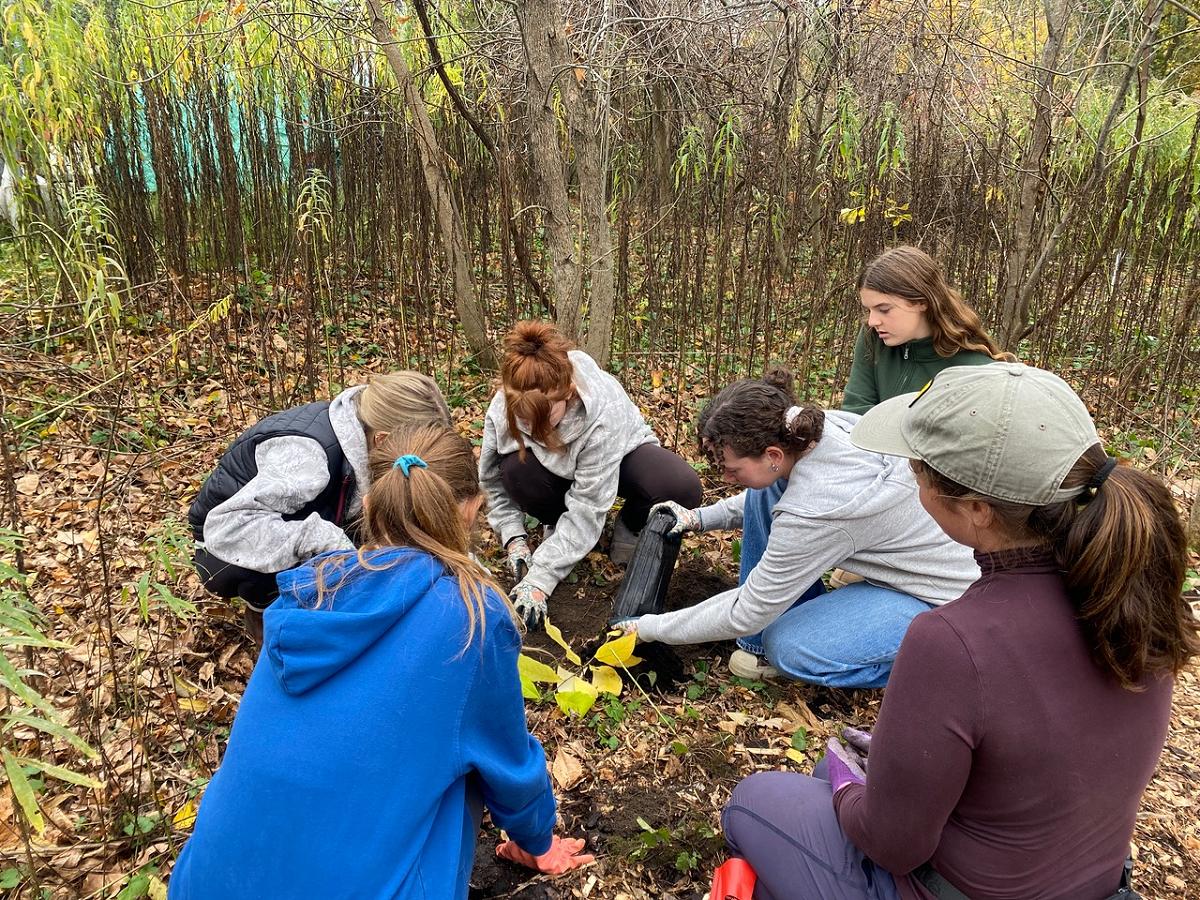
Since 2018, Youth Leadership in Sustainability (YLS) has been transforming farms, forests, and parks into classrooms to empower young people to protect the planet against the most critical climate crises it faces today.
A one-semester and four-credit program offered by the Kawartha Pine Ridge District School Board, YLS invites grade 11 and 12 students to learn about sustainability by getting out of the traditional classroom and connecting with expert community leaders. Through experiential learning, the program prepares youth for leadership roles while giving them practical solutions they can put into action.
“Climate change isn’t a problem of tomorrow,” says YLS program coordinator and teacher Emma Jane Woods. “It’s something that we’re facing right now, and oftentimes the onus of climate change is put on the younger generations, which is incredibly stressful. It’s anxiety inducing.”
“It’s super important to have them empowered and feeling like they can make a difference, and they can use their voice to accomplish big things, both within our community and within the global community as well.” Woods adds.
Woods took over the helm of the program when award-winning teacher and founder Cameron Douglas left in the summer of 2025 to become a program director at British Columbia’s Pearson College UWC.
Though he founded YLS because he saw students yearning to “roll up their sleeves, dive in, and make things happen” when it came to tackling climate issues, Douglas also found students had a new “zest for learning” when they completed the program.
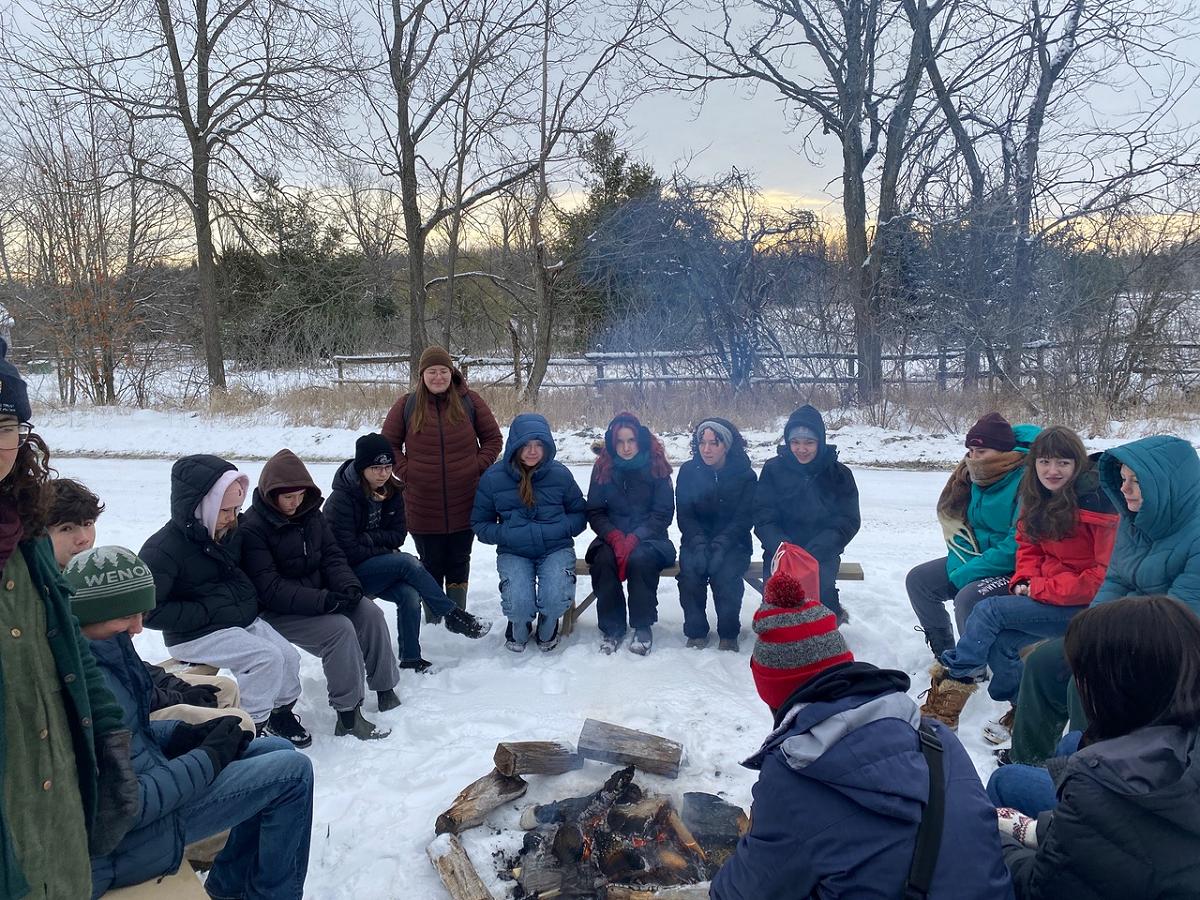
“They explored a different learning model and, in a number of cases, students who were pretty disengaged at school came to life and really responded well to that wireless format that’s much less structured,” Douglas says. “Very significantly, what they responded to was a strong sense of community because we spent the day together and we spent a lot of time building a secure, reinforcing classroom. They came out of their shell and were able to engage.”
For her part, Woods adds it’s difficult to sum up just how beneficial experiential learning can be for students, especially when it comes to getting them to care about the planet.
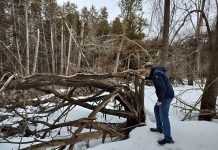
“At the end of the day, they probably aren’t going to remember the specific lesson or the specific term that I taught them when standing up at the front (of the classroom), but they are going to remember planting 300 trees and the pride that they felt,” she says. “They are going to remember walking through the woods and watching a barred owl fly right past them. They are going to remember these connections that they form with the land and the love that they feel with the land as a result.”
Woods explains that strengthening the students’ connection to the land and building that love is essential for inspiring conservation efforts of the future.
“If somebody loves something, they’re much more willing to protect it and much more likely to take action to protect it, so getting our youth outside and connected to the land is absolutely crucial, as well as getting them connected to the community.”
Between traditional classroom settings at Trent University and Peterborough Alternative Continuing Education (PACE) at PCVS, students enrolled in the fall 2025 class went on 19 separate field trips that had them learning from local organizations.
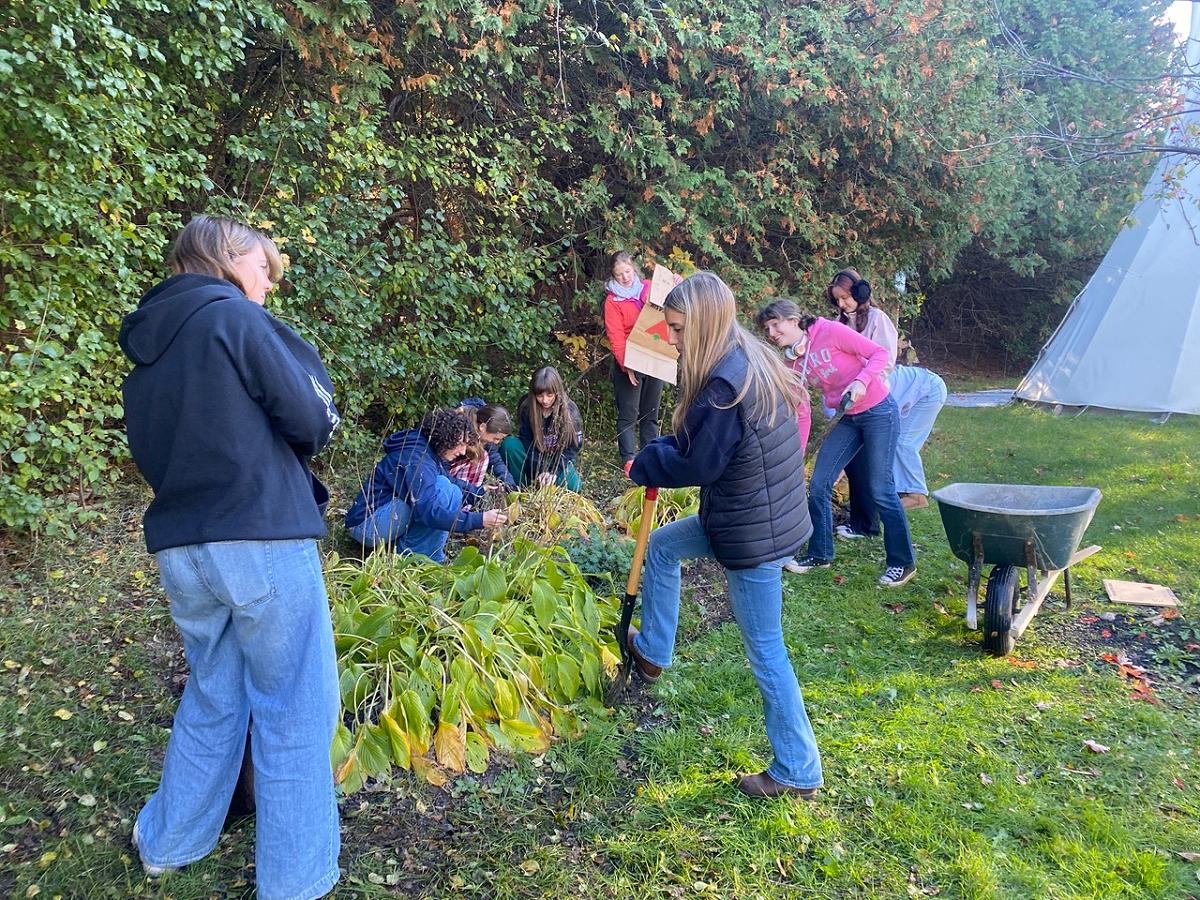
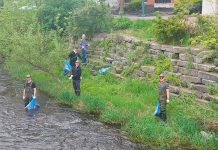
Among several others, these included trips to Ecology Park to learn from GreenUP, tree planting with Otonabee Region Conservation Authority, learning traditional practices at the Alderville Black Oak Savanna, visiting property protected by Kawartha Land Trust, volunteering with the Haliburton Children’s Water Festival, and going on overnight camping trips in provincial parks.
Organizations like One City Peterborough and Kawartha Food Share even spoke to the students to provide understanding on how supporting vulnerable populations can ultimately connect to broader sustainability efforts.
“We’ve been really fortunate that the community has opened their arms to us very readily,” says Woods. “I can tell you it’s the experiences that make a difference for them (the students). It’s the learning that comes from that and hearing from someone that they aren’t hearing from constantly that they really appreciate. That helps to connect the dots for them between what sustainability mean and how they can be a leader for sustainability in their life.”
“When communities and organizations host us and engage with us, we as teachers and students are the beneficiaries,” Douglas adds. “Often in their mandate is engagement of youth, so it’s a two-way street. They were quite happy to have this captive YLS audience to share some of their priorities to. That’s an absolute cornerstone of the program that brings it to life — the rich range of community partnerships.”
The YLS program also largely focuses on integrating Indigenous perspectives on the land into sustainability understanding.
“One of the best ways to fully engage with reconciliation efforts is through land-based reconciliation, which we do a lot of throughout the semester,” says Woods. “My co-teacher is absolutely fantastic, and she makes a lot of time and space to hear from Indigenous people, spotlight those Indigenous voices, and have some of those tough conversations in a really supportive environment.”
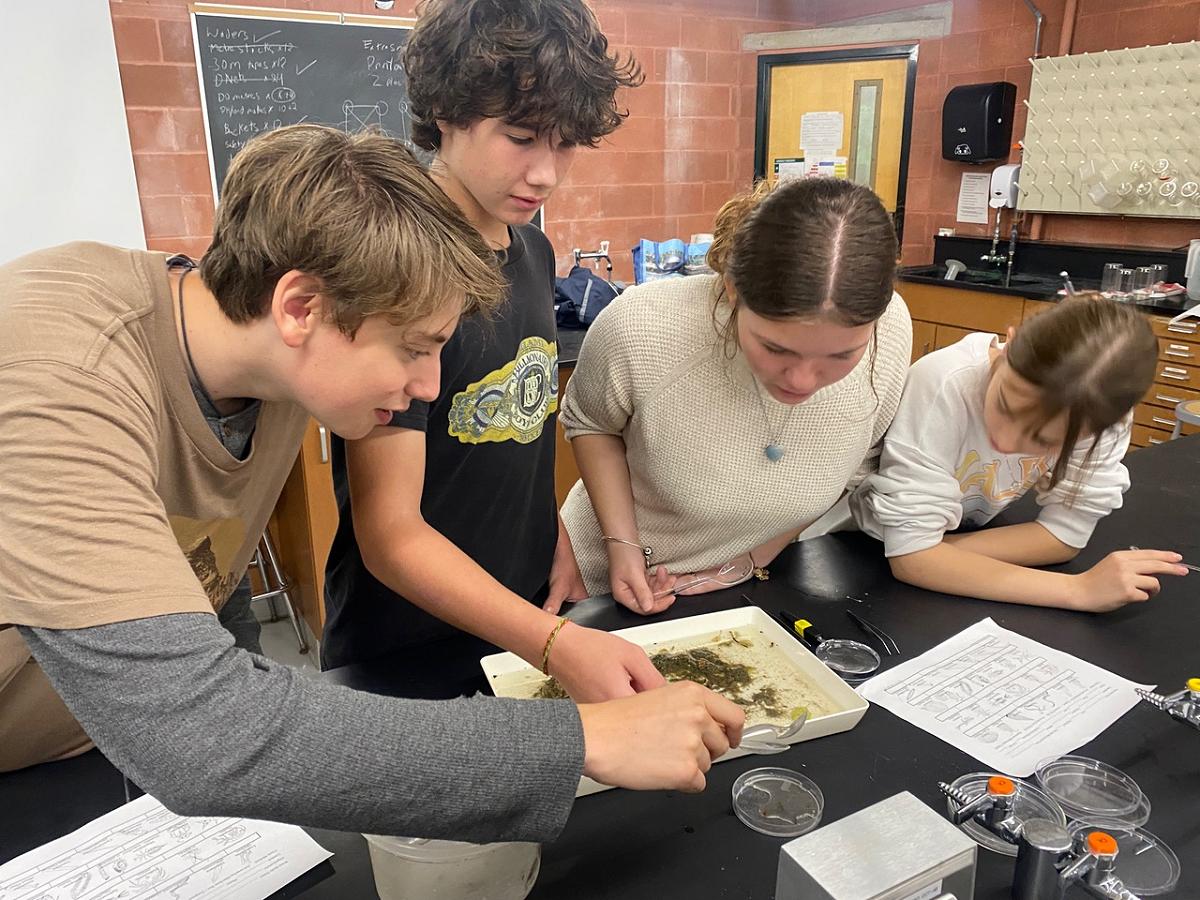
Graduates of YLS have gone on to post-secondary studies in related fields, have worked in climate education, and have been involved on advisory teams for the Canadian Net-Zero Emissions Accountability Act and Climate Action Network Canada’s campaign for a national Youth Climate Corps program, which would employ tens of thousands of young Canadians in climate-related work.
Students are additionally invited to attend Trent University lectures and complete complementary coursework as part of the YLS program. Students who achieve a certain grade in the courses are then eligible to receive a non-transferable Trent University credit.
“Even if they don’t go to Trent, the biggest benefit is seeing what university is like, but still with the dedicated support of high school teachers there to help them navigate it,” says Woods. “What I’ve heard from a lot of my students is that they appreciate being able to immerse themselves in the post-secondary setting and that it has taken a lot of anxiety or nervousness away from them when they think about going into their own post-secondary pathway afterwards.”
With limited spots available, registration is now open for the 2026 YLS cohort. Though there is a fee to cover the cost of the field trips, financial assistance is available on a limited basis. Those interested in donating to ensure students do not face financial barriers, as well as organizations interested in hosting fields trips, are encouraged to reach out to YLS.
“That network of support from partners is really what makes a difference for these folks when they’re getting that experiential education and creating those connections within the community,” says Woods.
Based on student testimonials, not only have the youth challenged themselves, connected with “like-minded” friends, and consider YLS to be a “highlight” of their lives, they also felt empowered to use their voices to make change.
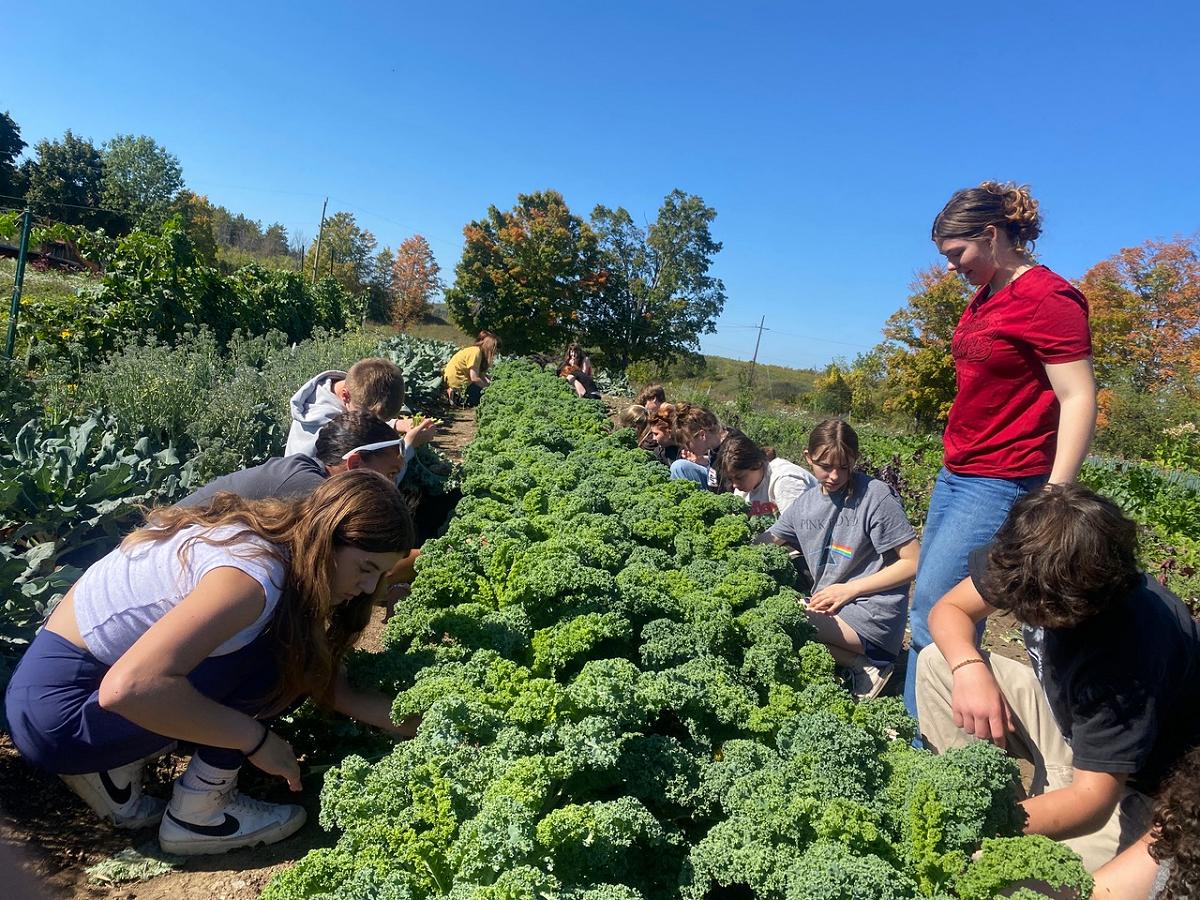
“YLS helped me to grow as a leader and step out of my comfort zone,” says Elizabeth, a graduate of the 2025 program. “I now know how to be an informed environmental activist within my community and create effective change.”
That, Woods says, is key to the program’s success.
“Ensuring the students are empowered, feel a sense of agency in the discussions, and feel like they do have a voice at the table — because they should, because it’s going to be their problems, and they’re going to be facing the consequences of these things — will ultimately help them manage the stress of navigating the changing climate,” she says. “It will help them recognize that they do have the power to make a difference.”
To learn more about YLS and to apply, visit yls.green.
VIDEO: “ReWilding The Classroom” documentary by Rodney Fuentes
The original version of this story has been updated to clarify that Climate Action Network Canada supports a campaign for a national Youth Climate Corps program but does not operate such a program. The only Youth Climate Corps programs currently operating in Canada are located in British Columbia and run by the non-profit organization Wildsight and its partner Youth Climate Corps British Columbia.