



















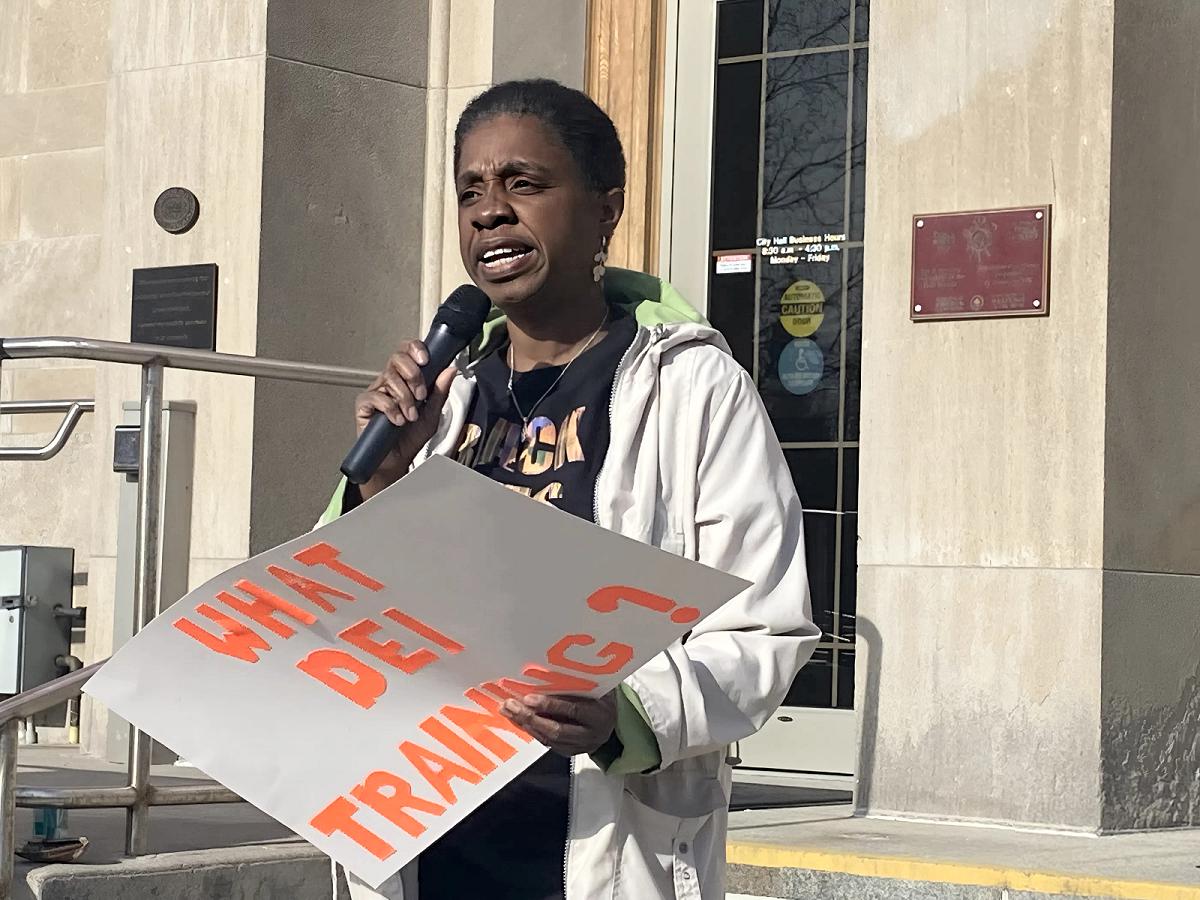
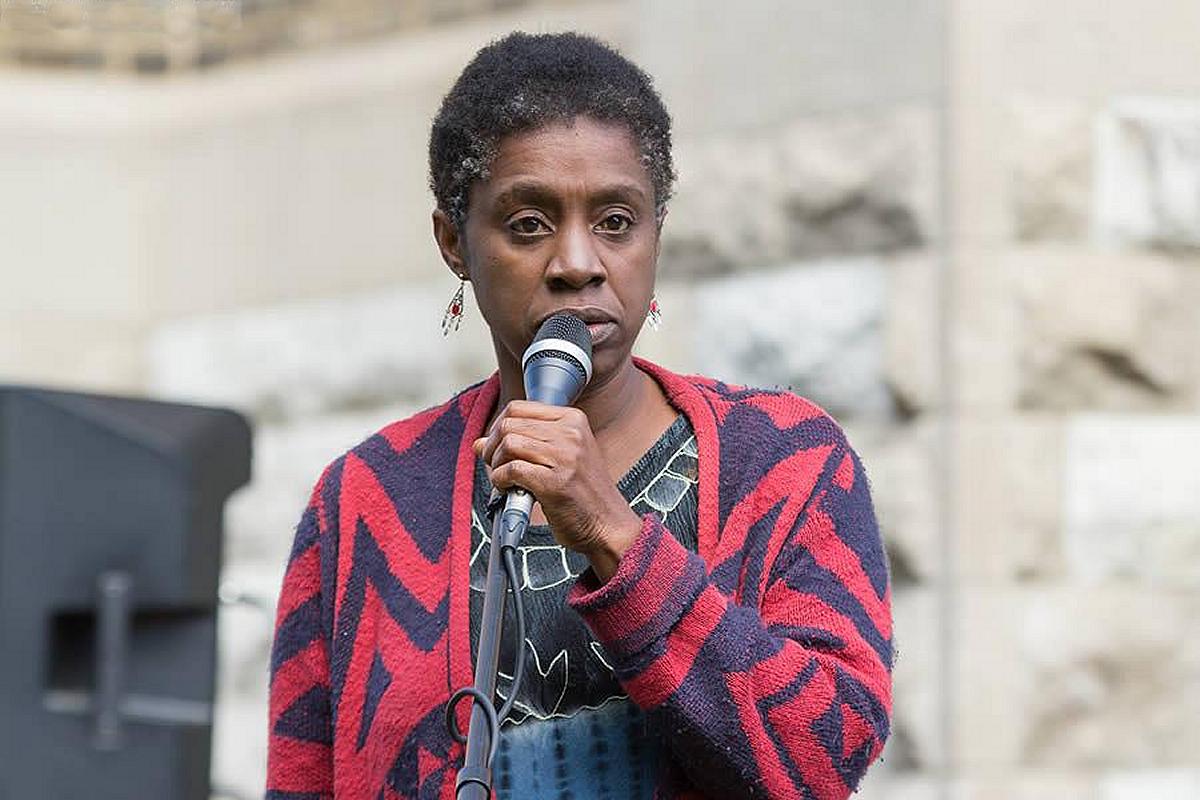
As Black History Month comes to an end, Peterborough resident Charmaine Magumbe is calling for more accountability and action when it comes to anti-racism. She says silence from media, officials, and public institutions is not neutral — it’s how violence is sustained.
The chairperson of the Community Race Relations Committee of Peterborough and co-founder of the Afrocentric Awareness Network of Peterborough, Magumbe has written an article titled In Peterborough, Anti-Racism Must Mean Accountability, Not Silence.
“Once it’s invisible, people will say, ‘Oh, there’s no such thing as racism here in Canada’ and ‘We’re not racist,'” Magumbe tells kawarthaNOW. “It’s buried. And that’s why we have Black History Month, because people don’t know about the racism that occurred here in Canada.”
Magumbe’s article shares the story of Keith Porter, a Black father who was killed by an off-duty United States Immigration and Customs Enforcement (ICE) officer on New Year’s Eve. At least 32 people, many of whom were people of colour, died in ICE custody in 2025 — the deadliest year in two decades.
During the City of Peterborough’s annual Black History Month proclamation on February 4, Magumbe listened as city councillor Joy Lachica similarly commented on racialized violence and the lack of media attention when Black, Indigenous, and other minority communities are harmed.
“She was really referring to the U.S. but then I thought, there are killings that we don’t know about here in Canada because they’re invisible,” Magumbe says. “Why is that? Why don’t we hear about these killings of people who are Black and Indigenous?”
Upon doing research, Magumbe learned about Darrell Augustine, a Mi’kmaw from Sipekne’katik First Nation in Nova Scotia, and Bronson Paul, a Wolastoqey man from Neqotkuk First Nation in New Brunswick, who were both killed by RCMP just days apart in January.
“The outcry from us Canadians was very muted because we don’t know about this,” she says. “Then I also heard about a Black lawyer (Sudine Riley) who was doing her job and was brutally attacked (by the Durham Regional Police Service) because they said that she was in the wrong place at the wrong time. They didn’t believe that she could be a lawyer because she looked the way she did. These are things that people don’t know about.”
“I really thought, why is it that we don’t talk about Black and Brown people who are violently attacked in our society? I feel the ugly side of our history doesn’t want to be exposed, (including) what happened to Indigenous people at residential schools. Black Canadian history is Canadian history, but they don’t want to really talk about what had happened.”
Magumbe says people like to believe Canada is not like the U.S., but the difference is racism in the U.S. is just more visible than it is in Canada. While Canada did not have Jim Crow laws, segregation did exist.
Peterborough itself was once a “sunset town” (or “sundown town”), where Black people were threatened with violence if they were not off the streets by sundown.
“If you talk to the white counterparts here, they’ll say there’s no racism here, it doesn’t exist,” says Magumbe. “That’s what makes it really hard to fight racism. If everyone thinks there is no such thing as it, then why fight it?”
Recent statistics released by the Peterborough Police Service paint a different picture. An average of 46 hate/bias incidents have been reported to the police each year over the past five years, with police adding the number of incidents is underreported.
A high-profile incident of racism involved Peterborough mayor Jeff Leal, who used an anti-Black slur while referring to former U.S. president Lyndon Johnson during a guest lecture at Trent University last year. That incident resulted in a number of complaints to the City of Peterborough’s integrity commissioner, who completed an investigation and released a report earlier this year.
The report concluded that, while the mayor’s use of the racial slur was “odious,” he did not violate council’s code of conduct. Magumbe notes how harmful the messaging in the report was, including the finding that the mayor’s “one-time use of the N-word” did not violate section 10 of the code, which prohibits members of council from speaking in a manner that is discriminatory to any person, including based on their race or colour.
“Once is all it takes and, for overt racism like that, it does affect the person’s morality,” Magumbe says. “The reason why this is so important is that our leaders in those positions have to set the example — they have to set the bar — because once the leader gets away with it, then it’s a free-for-all. That’s what’s happening down south.”
As the chairperson for the Community Race Relations Committee of Peterborough, Magumbe sees many incidents of children being bullied using the N-word and other racial slurs.
“It’s very extreme and it’s not just a one-off,” she says. “The kids are psychologically being bullied and abused in that way, and it’s affecting them to even not want to go to school or to think about going to another school. It’s brutal because there’s no recourse because you’ll say, ‘Well, the mayor said it so I can get away with it.'”
Though Leal issued a public apology and Peterborough’s city council agreed to anti-racism, diversity, equity, and inclusion training for all councillors and city staff, in addition to directing staff to amend the strategic plan and code of conduct to prohibit the use of the racial slurs “regardless of circumstance,” Magumbe says that’s not accountability.
“He said he believed that he was sincerely sorry for what he said, and then he recuses himself from the council meeting,” she says, referring to mayor’s behaviour during the January 19 meeting when council heard public delegations responding to the integrity commissioner’s report. “The accountability would’ve been he stays in (and) listens to the hurt (and) the pain. If he had said then, ‘I hear your pain and I’m sorry,’ that would have been accountability.”
As for the rest of the public, Magumbe has other suggestions for further proving that action — not silence — is the way to confront racism.
“It’d be great to see more people from different backgrounds being employed, especially in the public sector — that would be something they could probably put forward as leaders,” she says.
“I always recommend that you should read authors from all walks of life. The more you read, the more you get into the mindset of what people are thinking and how they’re feeling and how they deal with things in a different way.”
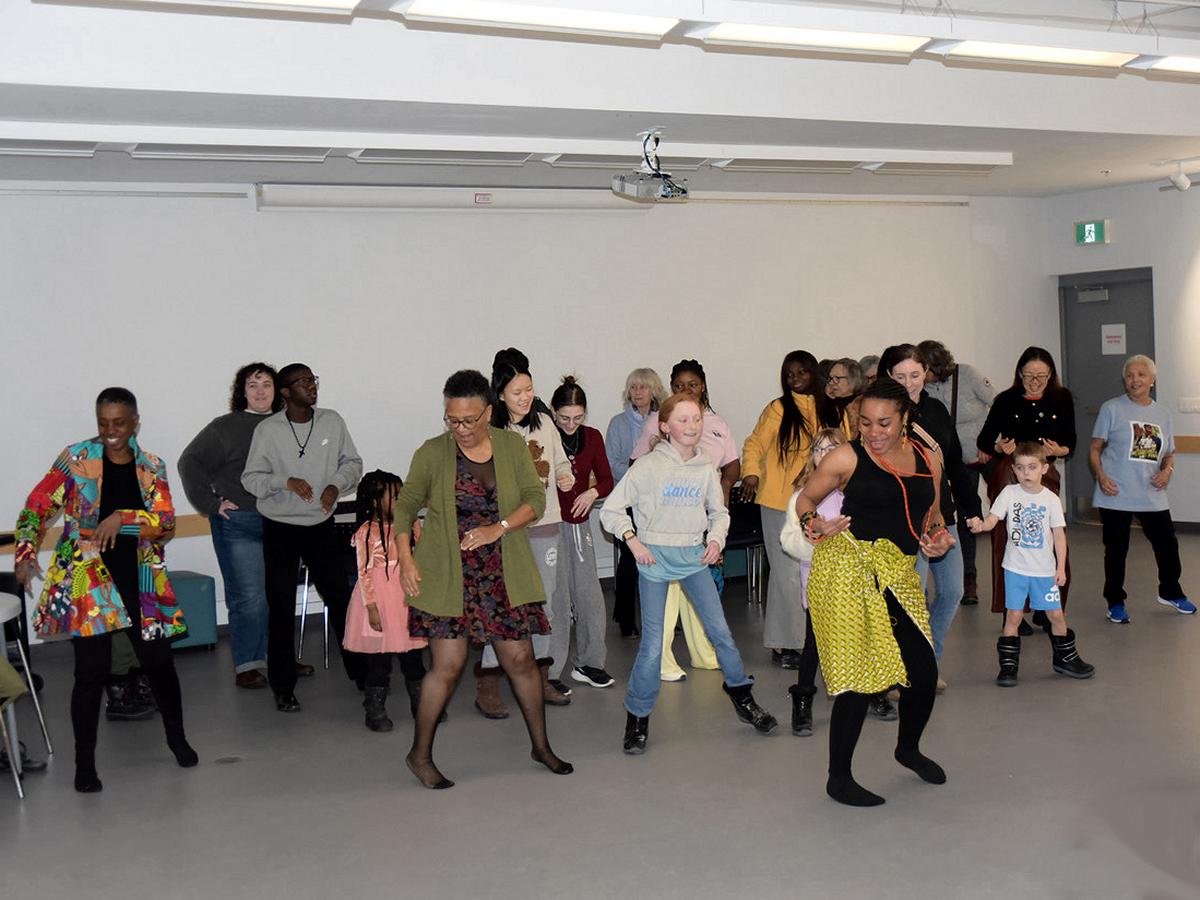
This can be done by joining AANP for Afrocentric Storytime, a monthly event for children that explores stories about Africans and the African diaspora, or by joining the BIPOC Book Club. Both events are held in partnership with the Peterborough Public Library.
In celebration of Black History Month, AANP will also be hosting “Get Real,” an interactive workshop that combats anti-Black racism in the film industry. The event is being held at the lecture hall at Sadlier House on Wednesday (February 25).
“We are seeing people from all walks of life who want to know more about Black joy,” Magumbe says of AANP events. “This is good to get to know them and say ‘Hey, they’re just like me.’ We’re all human beings. We all want good things in life, we all want good things for our children, a good job, a good education — we’re all the same.”
In Peterborough, Anti-Racism Must Mean Accountability, Not Silence
Last week, the Peterborough community gathered to mark the launch of Black History Month with the city’s annual proclamation, read by City Councillors Alex Bierk and Joy Lachica. While the ceremony celebrated Black history and contributions, it also raised a pressing question for our city: what does anti-racism mean when violence against Black and Indigenous people continues to be met with silence in Canadian society?
During the event, Lachica drew attention to racialized violence in the United States, particularly deaths linked to U.S. Immigration and Customs Enforcement (ICE), and the lack of media coverage when Black, Indigenous, and other racialized people are killed. While some deaths receive attention, many others disappear from public view.
One such case is that of Keith Porter, a 43-year-old African American man killed during an encounter with an ICE agent. The circumstances of his death remain contested, no video footage has been released, and media coverage has been minimal. His killing is part of a broader pattern. This year alone, at least 32 people have died in ICE custody or during ICE encounters — the highest number recorded since 2004. The majority were Black or People of Colour.
These realities may feel distant to some in Peterborough. They should not.
Canada often distinguishes itself from the United States by pointing to a less overt form of racism. But silence is not the absence of violence — it is how violence is sustained. When racialized deaths and assaults are underreported or framed as isolated incidents, institutions are shielded from scrutiny and communities are denied justice.
Recent events across the country expose this pattern. In January, RCMP officers shot and killed Darrell Augustine, a Mi’kmaw man from Sipekne’katik First Nation in Nova Scotia, and days later killed Bronson Paul, a Wolastoqey man from Neqotkuk First Nation in New Brunswick. Both cases are under investigation by the Serious Incident Response Team (SIRT), yet public details remain limited and media coverage fleeting.
That same month, a Black female lawyer, Sudine Riley, was violently assaulted by police while working in an interview room after completing a trial. According to her lawyer, Neha Chugh, officers responded to her presence with “rage, disrespect, and contempt,” slamming her head onto a desk and pressing their knees into her back and neck. She was dragged from the room, handcuffed, and placed in a cell, during which her headscarf was torn off, and her skirt lifted. No charges were laid.
“She committed no offence other than being a Black woman practising law,” Chugh said.
For Peterborough, Black History Month must be more than proclamations and symbolic gestures. Municipal leadership has a responsibility to name systemic racism, demand transparency from institutions, and support meaningful oversight and accountability. Silence-whether from media, elected officials, or public institutions-is not neutral. It is a choice.
Anti-racism requires action: media coverage, public accountability, and a willingness to confront uncomfortable truths, even at the local level. If Peterborough is committed to justice, it must ensure that Black, People of Color, and Indigenous lives are not only celebrated in February but also defended every day.
Charmaine Magumbe
Chairperson of the Community Race Relations of Peterborough
Sources
Atlantic chiefs call for ‘meaningful action’ after 2 First Nations men killed by RCMP (CBC News, January 28, 2026)
Durham Regional Police Service refers lawyer assault case to York Regional Police (Law Times, February 2, 2026)
York Regional Police to take over criminal investigation into cops accused of assaulting lawyer in Oshawa (CP24, January 30, 2026)