

















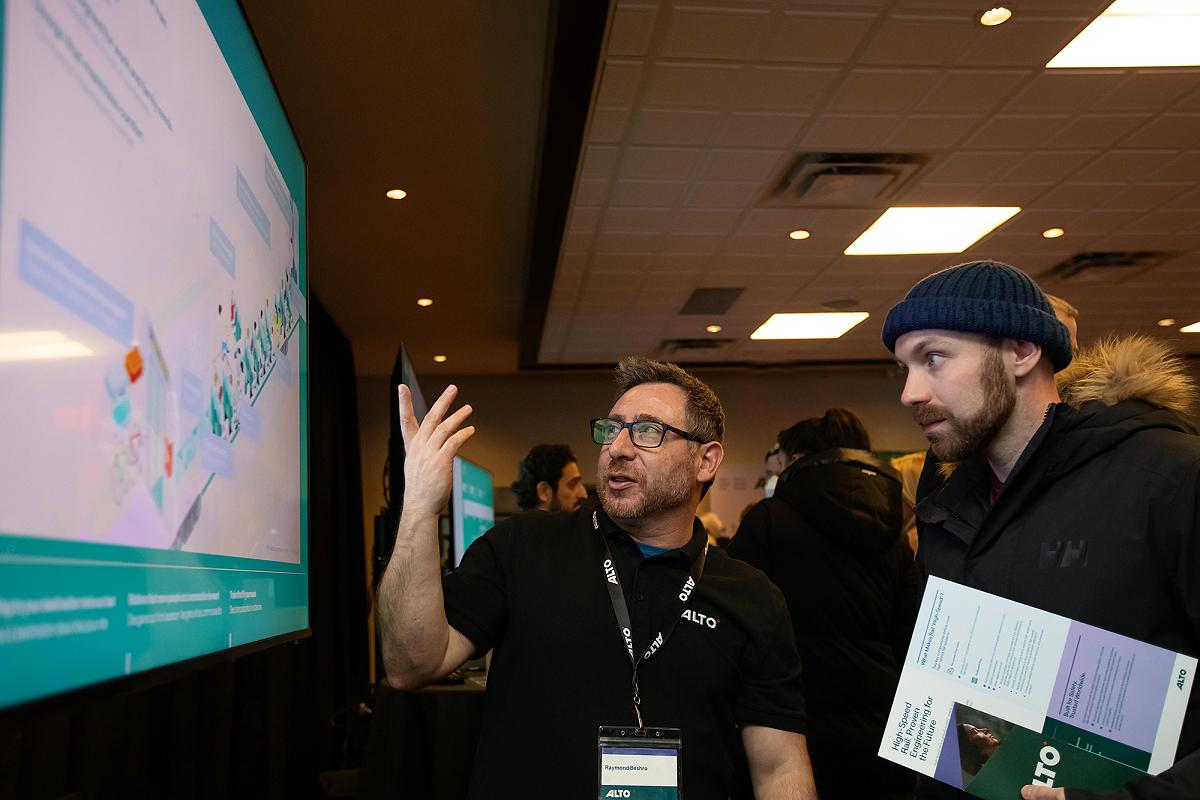
Over 800 people gathered at the McDonnel Street Activity Centre in Peterborough on Thursday (February 26) for a public open house hosted by Alto as part of its early consultation process for the proposed high-speed rail network between Toronto and Quebec City, which would include a stop in Peterborough.
From 11 a.m. to 3 p.m. and again from 5 to 9 p.m., residents, elected officials, and stakeholders had an opportunity to learn more about the project and speak directly with Alto staff about potential routes, station locations, land use impacts, and next steps as planning for the long-term infrastructure project moves forward.
Traffic lined the street before the doors opened, the parking lot filled quickly, and there was a steady hum of conversation inside the room as attendees moved between information stations to ask questions one-on-one with the Alto team. According to Alto, 815 people had attended the two sessions by the end of the day.
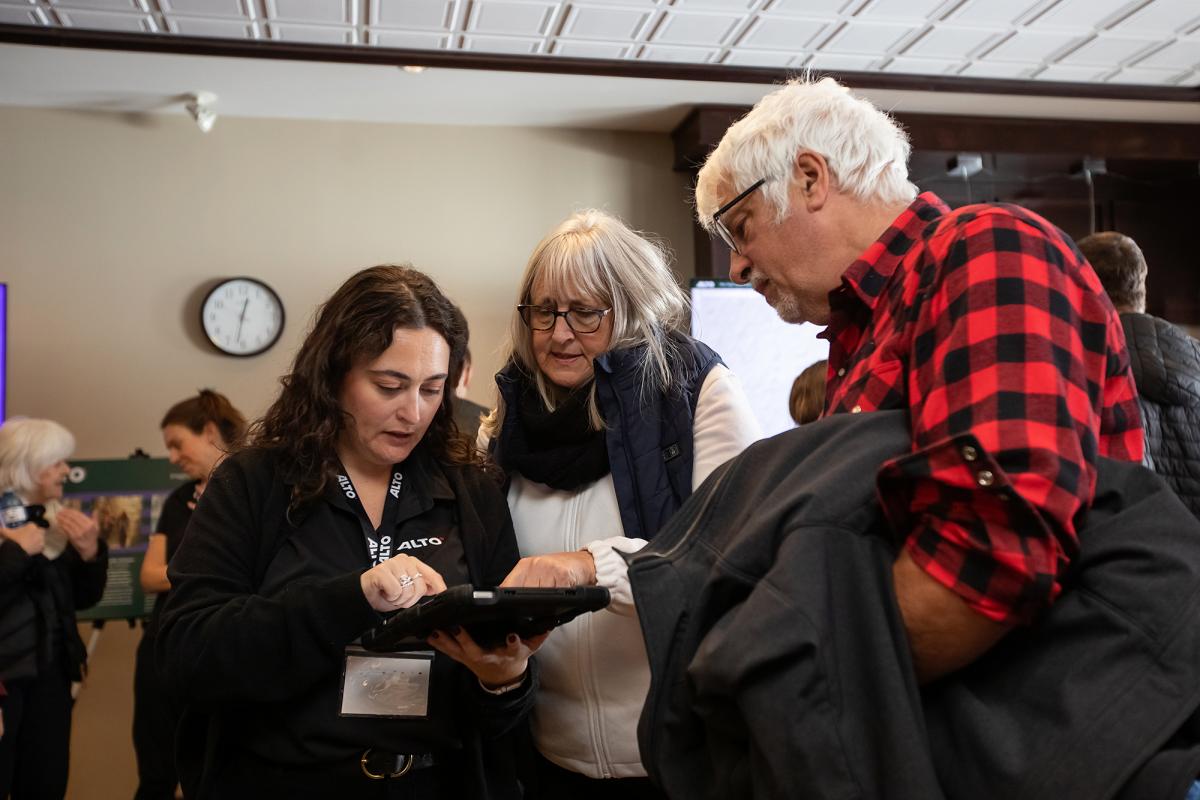
By design, the Peterborough consultation was a drop-in open house format instead of a formal presentation.
There were eight mini-stations, with multiple Alto staff circulating throughout the room and speaking directly with attendees in small groups, answering specific questions and hearing concerns. Several people described the room as “buzzing,” with a level of excitement that felt, to some, like “next level” momentum.
That momentum, however, came paired with a theme repeated throughout the open house: it’s still very early days. Alto staff emphasized the initial public consultations are focused less on presenting final answers and more on gathering local feedback and knowledge that can shape next steps.
“We’re here to listen”
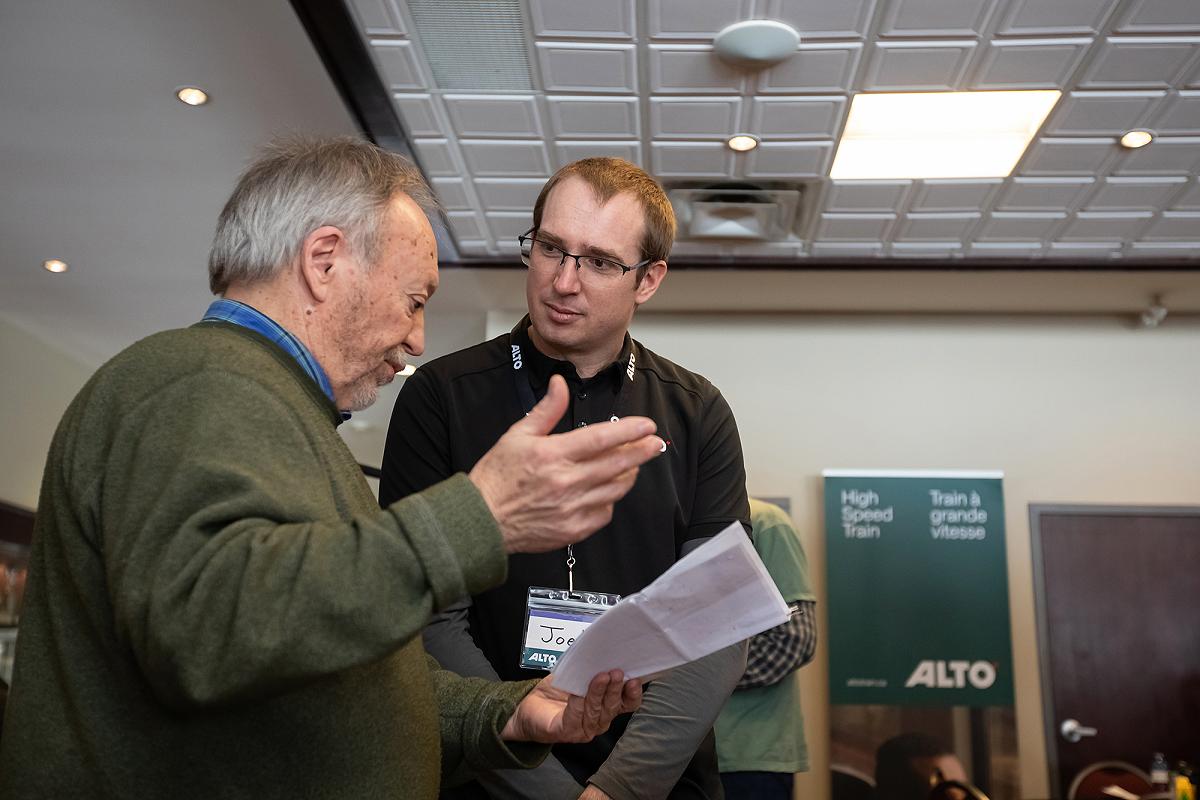
Alto’s senior advisor of community relations Joel Wiebe, who was previously vice-president of government relations and operations for the Peterborough and Kawarthas Chamber of Commerce before joining Alto last October, said many residents arrived at the open house hoping for definitive answers — especially around route alignment and where a station might ultimately land.
“I think a lot of people come wanting a lot of answers, and we’re still very early on in the process,” Wiebe told kawarthaNOW. “We’re here to listen — we want more local knowledge on this project.”
Wiebe said Alto has been hosting open houses throughout the corridor specifically to collect feedback before making alignment decisions.
“People want to know where the train is going, but we don’t want to put those alignments down until we talk to the communities it’s going through,” he said. “There are a lot of things we’re learning in these sessions that aren’t necessarily on official maps — environmentally sensitive areas, culturally sensitive areas, and things that are important to communities. The best way to find that out is to actually go into the areas and talk to the people who live there.”
Wiebe stressed that the consultation process is not a formality — and that there is no predetermined route being quietly advanced behind the scenes.
“There’s no secret alignment that we’re just doing token service around,” he said. “The comments that are coming in online and through these open houses are being reviewed by our engineers.”
Wiebe said Alto is asking practical and community-focused questions as feedback comes in. Did planners have all the relevant constraints in scope? Were they aware of the places — and the values — that matter locally?
“Not just physical elements, but what’s culturally important to communities we may be crossing through or setting up solutions in,” Wiebe said.
Even when that feedback is skeptical or critical, Wiebe said it remains essential.
“Not all of it is positive, but those concerns come from a real place, and we want to make sure that’s incorporated,” he said. “There’s no easy way to build a project like this, but the more information we have going into it, the better decisions we’re able to make.”
The best route is the one that will have the least impact on the community
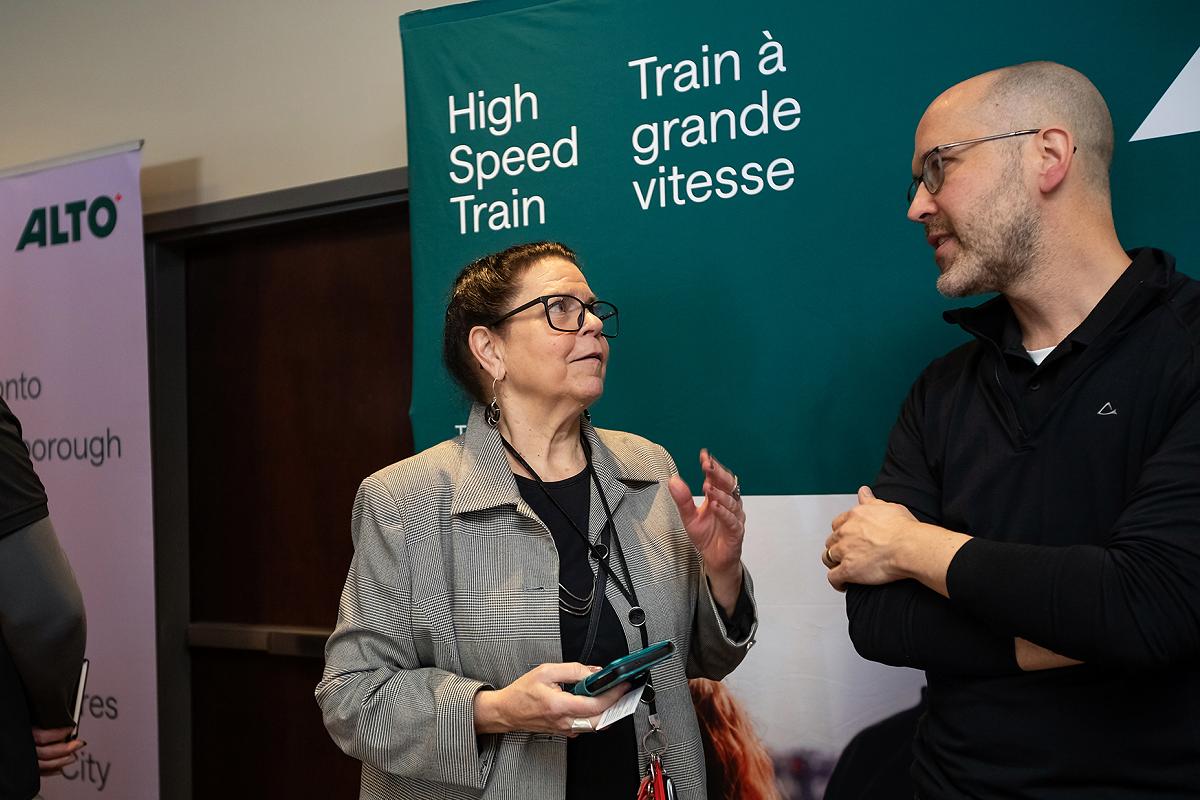
Philippe Archambault, Alto’s vice-president of communications and brand, travelled from Montreal for the Peterborough session and said the turnout matched what Alto has seen elsewhere. Around 200 people showed up within the first hour of the open house.
“Usually we have between 300 and 500 people per open house, so this is a really good turnout for the first half of the day,” Archambault said. “We are receiving a lot of good and constructive comments.”
Archambault said the entire point of holding consultations now, before a route is finalized, is to identify the option that has the least impact on the people and places the corridor would pass through.
“This is why we are doing this exercise as early in the process — to make sure that before the route is finalized, we can gather as many comments, questions, and concerns as possible to identify the best route — the one that will have the least impact on the community,” he said. “The best way to do that is to have feedback from people who live here and know the area.”

Archambault said Alto expects multiple rounds of public consultation as plans become more detailed.
“We will come back later with a more refined corridor and have a second round of consultation,” he said. “For segment one (Ottawa to Montreal), there will be a second phase of consultation this year, and for segments two and three (Montreal to Quebec City and Ottawa to Toronto), that will follow into 2027.”
He added that Alto is also engaging directly with municipalities and elected officials, focusing on how the project would integrate with land use and urban planning.
“It’s all about communication and collaboration,” Archambault said.
Concerns about farmland impacts and land acquisition
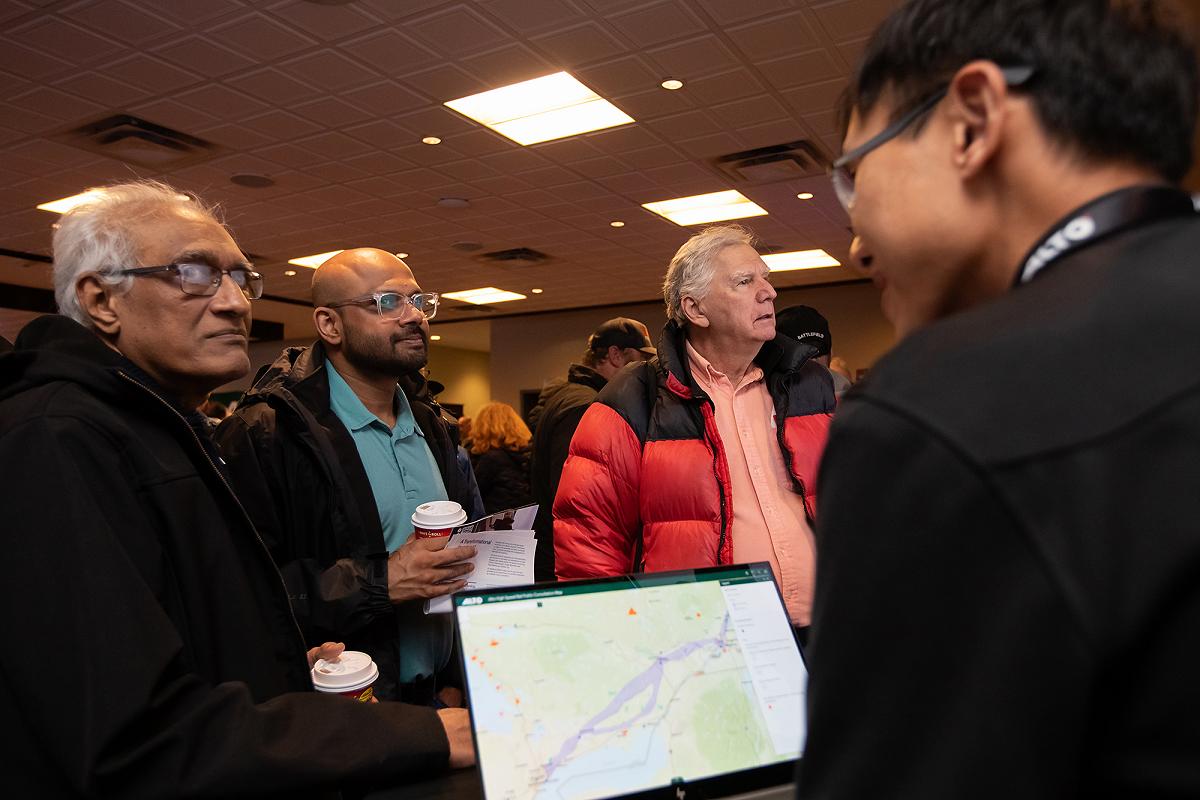
For many attendees, the biggest questions involved the route itself, including farmland impacts and land acquisition.
Michelle Caldwell, who lives in the Fife’s Bay area, said her primary concern is how Alto will acquire land along the route.
“I think my number one concern would be land expropriation,” Caldwell said. “What does that mean to heritage farmers? What does that mean to residential members of Peterborough? How are they going to acquire this land in order to build the rail line? Is it going to be up to the landowner?”
Caldwell said she came looking for specifics — and found the answers vague.
“I got beautiful, flowery answers,” she said, adding that if land in other parts of the corridor is already secured, she wants to know how that was achieved and what the plan will be locally for direct communication with landowners.
David Ramsay, a downtown Peterborough resident who has lived in the city for more than 40 years, said his concern was similar: the apparent scale of new land acquisition required.
“I thought that perhaps it was going to be using existing rights-of-way, but it appears that it’s a whole new thing — that they’re going to be acquiring land where they can,” Ramsay said. “So that’s a big issue.”
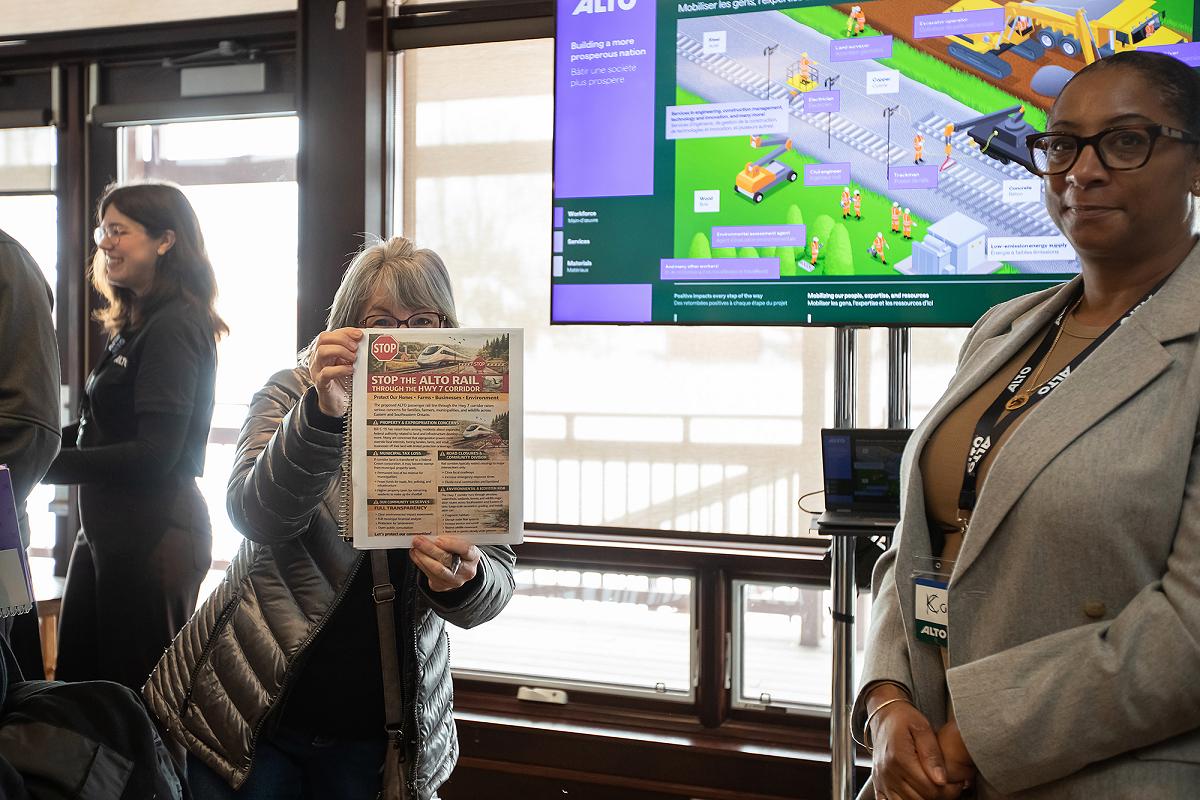
Michael Eamon of Trent University said land and route impacts were also what he heard most often during conversations at the open house.
“A lot of people are worried about their farms — about their land being expropriated or taken — or about the routes they’re used to having being cut off by a high-speed rail line with no crossings,” Eamon said.
Asked directly about these concerns, Archambault said Alto would be contacting landowners directly and in person if or when land negotiations begin.
“We want to be as transparent and as human as possible,” Archambault said. “The first contact will always be made directly by us, by a person.”
While expropriation is legally possible, he said Alto views it as a last resort.
“Expropriation is a tool that we have, but it is not a tool that we want to use first,” Archambault said. “The first objective is to have discussions with landowners and try to negotiate a mutual agreement while minimizing the impact.”
He added that if only part of a property is required, the intention would be to limit the impact and maintain existing land use wherever feasible.
Station location and the “last-mile” question
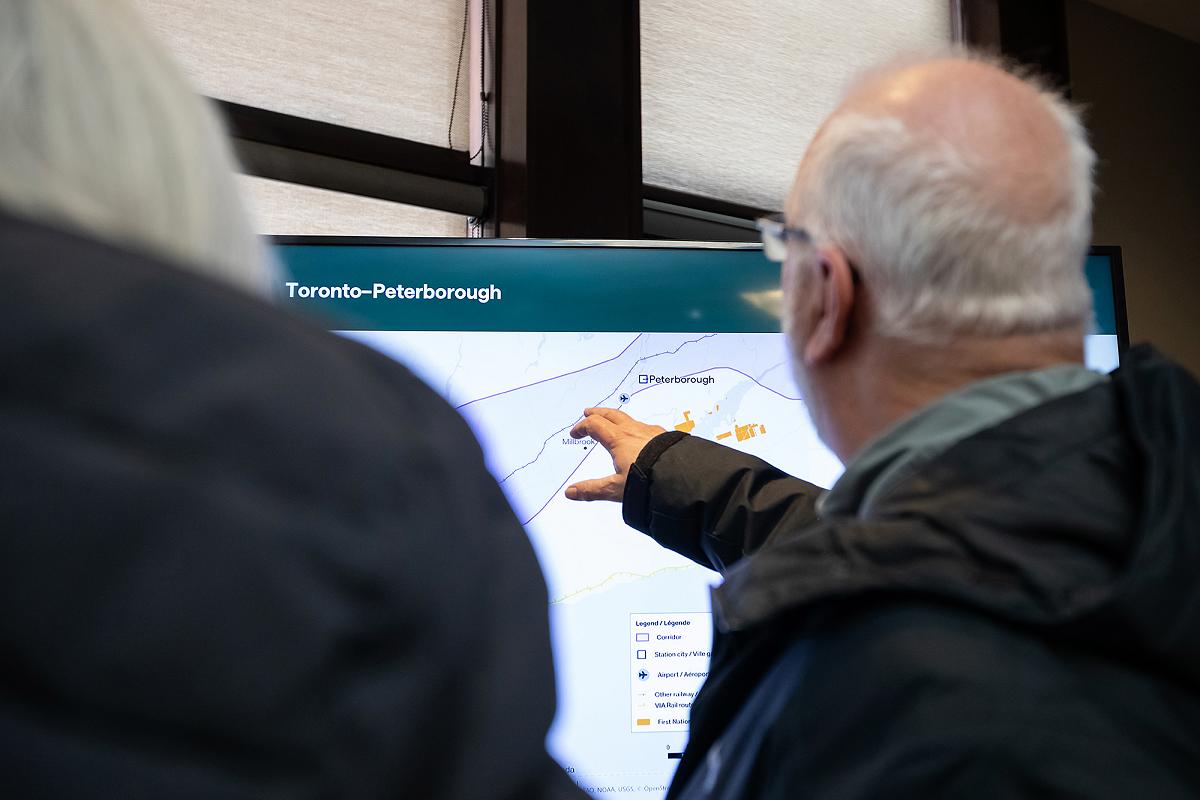
While concerns about a potential route dominated the conversations at the open house, discussion about station location also surfaced repeatedly, especially in the context of how people would actually reach the station — particularly those who don’t drive.
Mark Woolley, recently retired and car-free for 20 years, said he supports high-speed rail but worries about practical access if a station is placed on the edge of town.
The City of Peterborough is eyeing the Coldsprings growth area, located at the southern limit of the city, as a potential location for an Alto station because of its large area, proximity to existing transportation facilities, and relatively unencumbered land use pattern.
“I can see the logic for placing the station on the edge of town,” Woolley said. “But my question, going back to being car-free, is ‘How do I get there?'”
Woolley pointed to his experience visiting Dijon in France — a city he chose in part because of its new streetcar lines and direct rail connections.
“That’s certainly what you saw in Dijon — both of the streetcar lines they built went directly to the rail station,” he said, adding he hopes Alto and local governments will consider transit connections as part of overall planning.
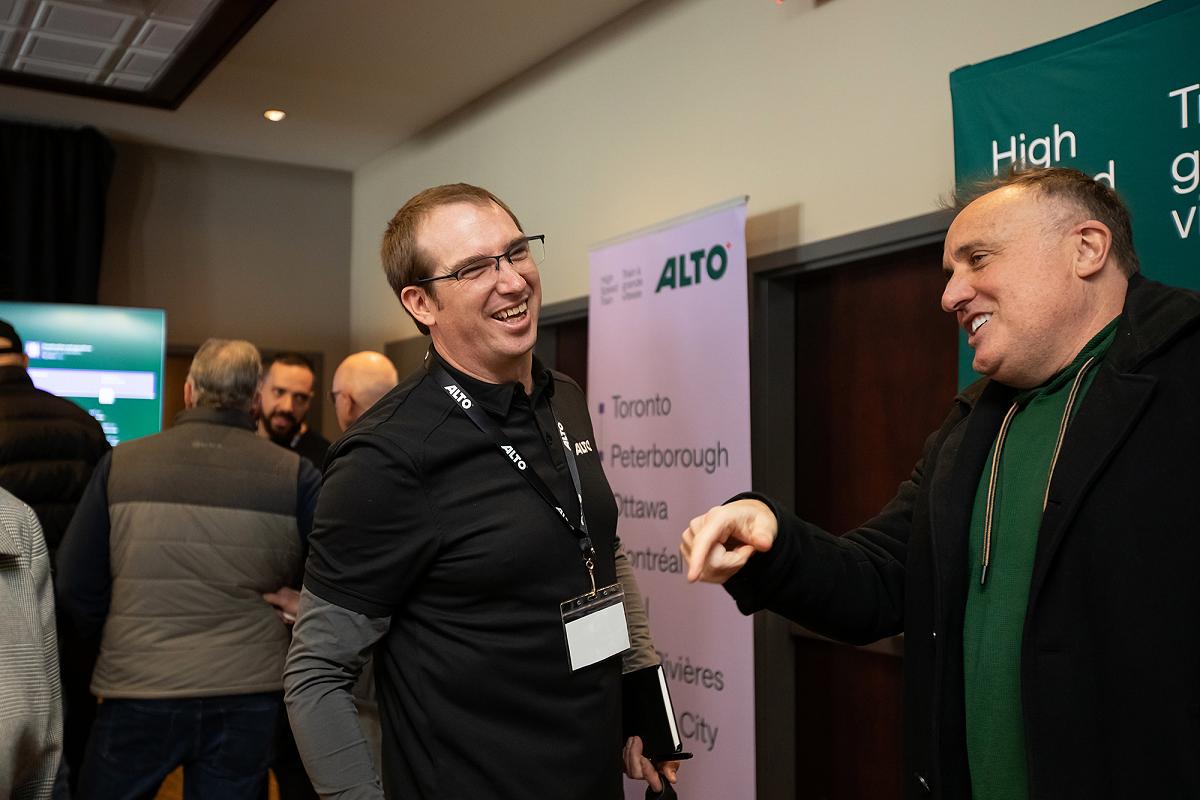
Neil Morton, a local entrepreneur and marketing consultant, said he views the project as an economic win even if the station ends up outside the downtown.
“Coldsprings works to me,” Morton said. “I don’t see how it’s going to work right through Peterborough. But as long as it’s in this area, it’s going to have a massive impact on Peterborough and the county, and it’s a win-win for both of us.”
Morton believes the project could draw new residents, increase tourism, and raise the region’s profile — without erasing Peterborough’s identity.
“This is like winning the lottery that we’re getting Alto here,” he said. “This is the kind of project that has a generational impact — something that’s going to shape what this region looks like for decades to come.”
Eamon said that, in his conversations, very few people are concerned about the station location.
“People are more worried about the route and whether it will ever be built,” he added.
Local political support for “transformative” project
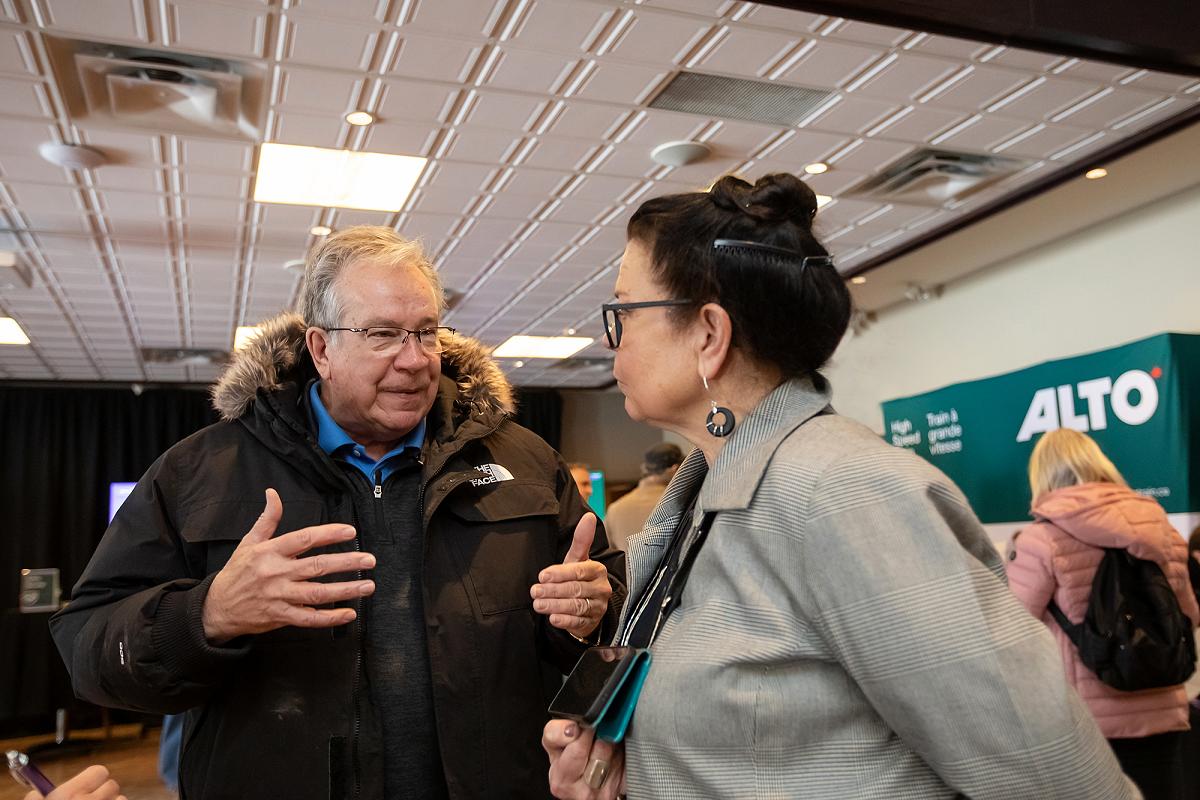
Several local politicians also attended the open house’s morning session, including Peterborough mayor Jeff Leal, who said the turnout itself signalled the level of local interest in the Alto project.
“You can tell it’s a good turnout when you can’t find a parking spot,” Leal said. “There’s no question that high-speed rail with a stop at Peterborough is a game-changer for the region.”
Leal compared the project’s potential nation-shaping impact to the construction of the 306-kilometre stretch of the St. Lawrence Seaway between Montreal and Lake Ontario during the mid and late 1950s, which has been called one of the most challenging engineering feats in history,
“I would liken this project to the St. Lawrence Seaway in terms of magnitude, scope, and the ability to change the landscape for Canada,” he said.
Leal, who served as Ontario’s minister of agriculture and rural affairs from 2013 to 2018, acknowledged the sensitivity around farmland impacts. He referred to the Highway 407 extension during his time as minister.
“Some very good farms were bisected,” Leal said. “There are lessons learned … and we can apply those lessons to this particular project.”
On station location, Leal pointed to geography and rail engineering realities, including river crossings and constraints through urban areas.
“The Coldsprings area … has that narrowest river point,” Leal said. “If you’re really looking at high-speed rail, you want your bridge crossing at the narrowest point.”
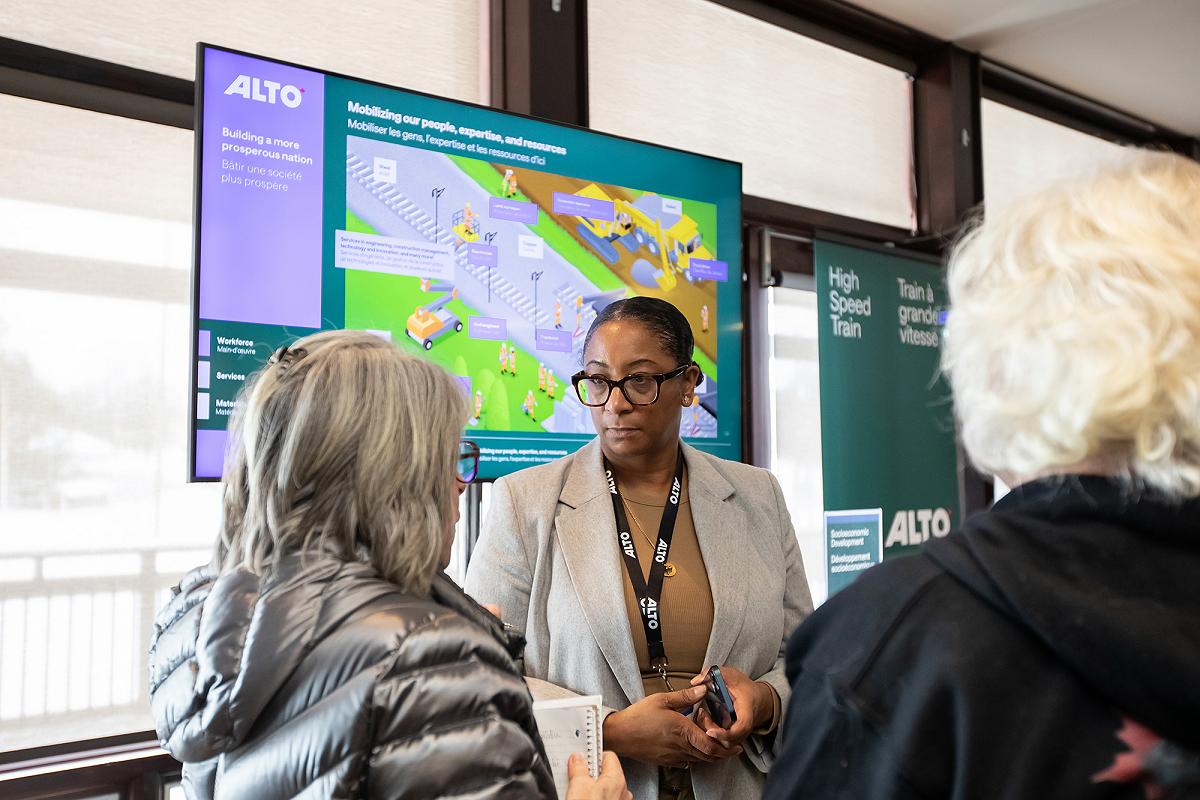
Peterborough city councillor Matt Crowley said he believes the project would be “transformative,” citing long-term population and economic impacts, and said the city’s focus should be on readiness.
“I think it’s going to be absolutely transformative for our city,” Crowley said, adding it would expand the municipality’s tax base and strengthen economic development and tourism.
“I’m looking at what’s good for the city 25 or 50 years from now, and getting our city ready now for that future,” he said.
Crowley pointed to continued work on infrastructure and revitalization to prepare for the arrival of Alto.
“We should look at revitalizing the downtown, ensuring that our parks are great and that our infrastructure is solid,” he said.
Peterborough city councillor Lesley Parnell said the potential for a local Alto high-speed rail station presents a significant opportunity for long-term, sustainable growth.
Ideally, she said, a future station would be located in the Coldsprings area east of the Otonabee River, calling it “a blank slate” for thoughtfully planned development.
Parnell envisions a new residential “village of Peterborough” built around the station, with strong connections to active transportation, downtown, the regional airport, Fleming College, Trent University, and other amenities. She also hopes an additional pedestrian crossing over the river could be incorporated alongside a future rail bridge.
“The area east of the river is ideal for servicing and residential intensification,” Parnell said. “We have an incredible opportunity to transport people by train rather than fuelled cars — and to build a new, sustainable village within our city.”
What comes next and how to participate online

Both Wiebe and Archambault encouraged residents who could not attend the open house in person — or who want to submit more detailed comments — to use Alto’s online engagement tools, including a survey and interactive map. Feedback will be accepted until Sunday, March 29.
“The best way is through our online and digital engagement tools,” Wiebe said. “There’s a survey and an interactive map where you can leave feedback, and our engineers are reviewing that regularly.”
Archambault said Alto is also offering multiple formats for engagement, emphasizing that one-on-one conversations can sometimes surface concerns that don’t come out in a traditional town hall.
“That’s why we offer online platforms, virtual sessions, open houses, and roundtable discussions,” he said, adding that questions sent to Alto’s project email are also reviewed and answered by staff.
Upcoming virtual sessions are scheduled for Tuesday, March 3 (in English) and Tuesday, March 17 (in French). For more information on Alto’s public consultation process, visit www.altotrain.ca/en/public-consultation.
What we heard in the room
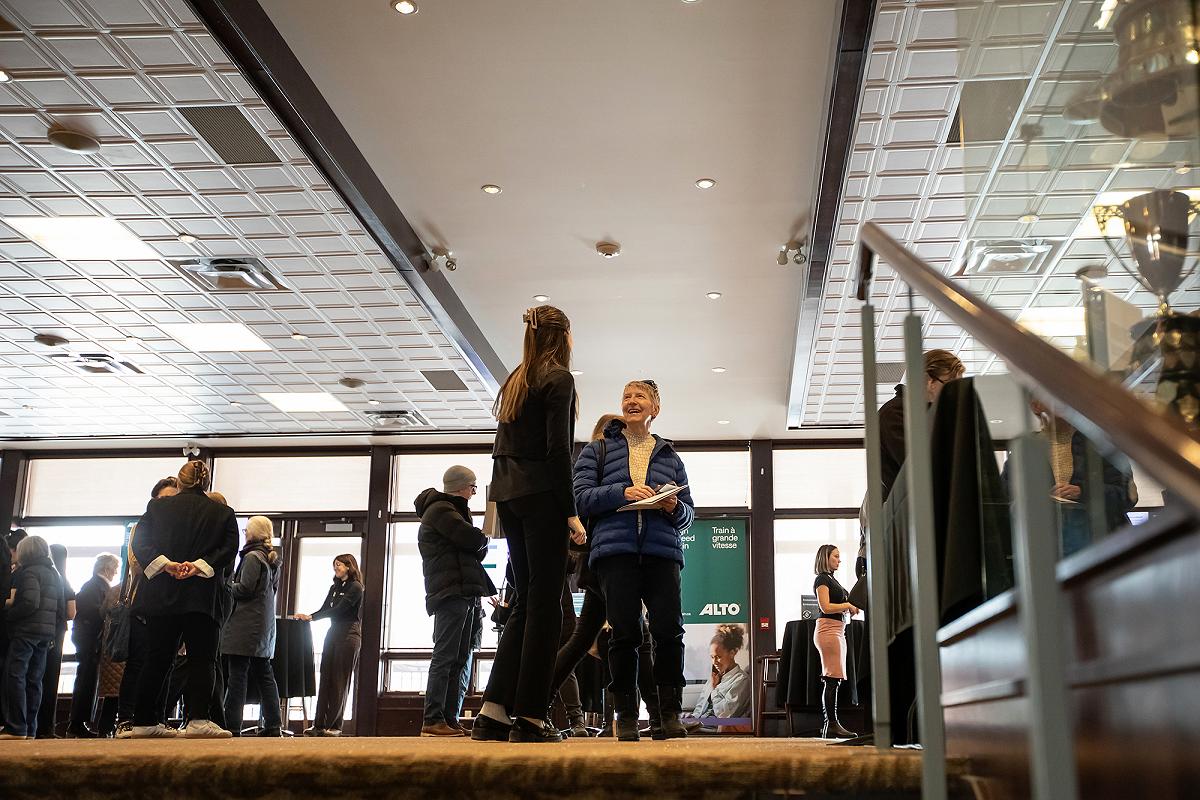
As attendees at the Peterborough open house moved between Alto’s information stations throughout the day, several themes surfaced repeatedly in one-on-one conversations with staff and among attendees.
“This could be transformative — but it’s going to take time.”
Many described the project as a once-in-a-generation opportunity for the region, while acknowledging that construction — and benefits — may still be years away.
Land use and farmland impacts are the top concern.
Questions about land acquisition, expropriation, and how potential routes could affect heritage farms and rural ecosystems were raised frequently.
“How will people actually get to the station?”
Accessibility — especially for residents without cars — was a recurring issue, with some attendees asking how last-mile transit connections would work if a station is located outside the downtown core.
Excitement about economic development and tourism.
Some participants said improved rail connections could draw new residents, increase tourism, and make commuting to larger urban centres more feasible.
Concern about Peterborough’s character.
Others wondered whether increased connectivity could change the identity of the city or turn it into more of a bedroom community.
Questions about timelines and momentum.
Several attendees noted that with the project still in early planning stages, it remains difficult to visualize what a final route or timeline might look like.
Station location matters — but route matters more.
While some discussion focused on where a station might be built, many conversations centred on where the rail line itself could run and what impacts it might have across the broader region.