

















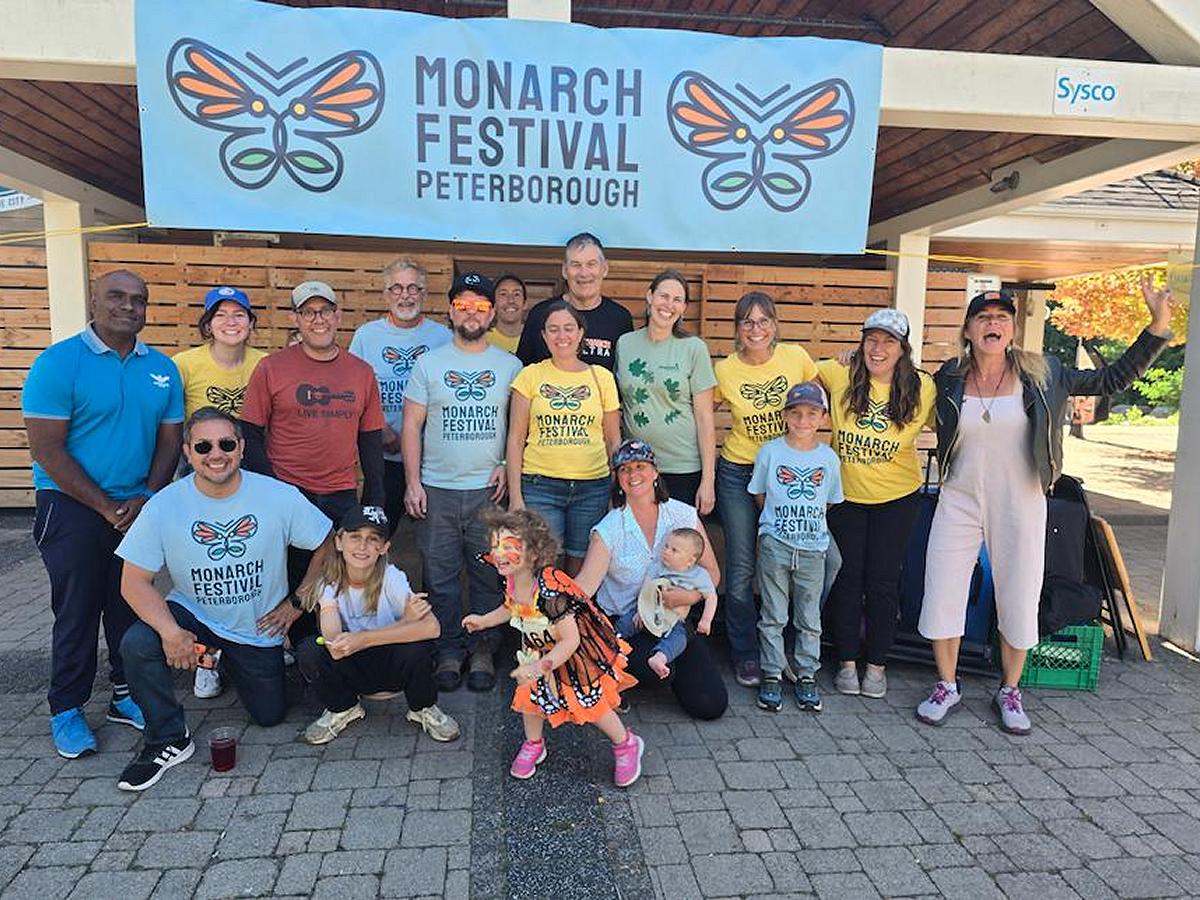
On the wings of recent positive reports from conservation scientists, the Monarch Festival and Race hosted by the Monarch Ultra is returning to Peterborough on September 19 for its fourth year.
This volunteer-led event celebrates and raises awareness for the monarch butterfly, which has been recognized as an endangered species in Canada since 2023 under the Canada’s Species at Risk Act.
Carlotta James, co-founder of The Monarch Ultra, spoke to kawarthaNOW about the significance of hosting this event in light of recent reports about a rebound in the butterfly population.
“The team is uplifted by this news,” she says.
In 2019, along with filmmaker Rodney Fuentes, run director Clay Williams, and chef and driver Guenther Schubert, James organized a relay run from Peterborough to Mexico where ultra-marathon runners followed the path of the monarch butterfly’s western fall migration. Fuentes later released a documentary about the 4,300-kilometre multi-national ultra run.
For The Monarch Ultra team, the monarch’s migration to Mexico each year is an ultra-marathon and, as an ultra-runner herself, James admires these ultra-flyers. She said that monarchs represent how “so much is possible.”
Over the past seven years the organization has raised over $40,000 for conservation efforts in North America. Beneficiaries of their work have included Camp Kawartha, Monarch City USA, and Nación Verde.
James explained that working with conservation partners likes these allows them to see the real impact of their work and have confidence in the charities that funds raised are supporting.
“We know that the funds we raise here go directly to tree planting,” James said.
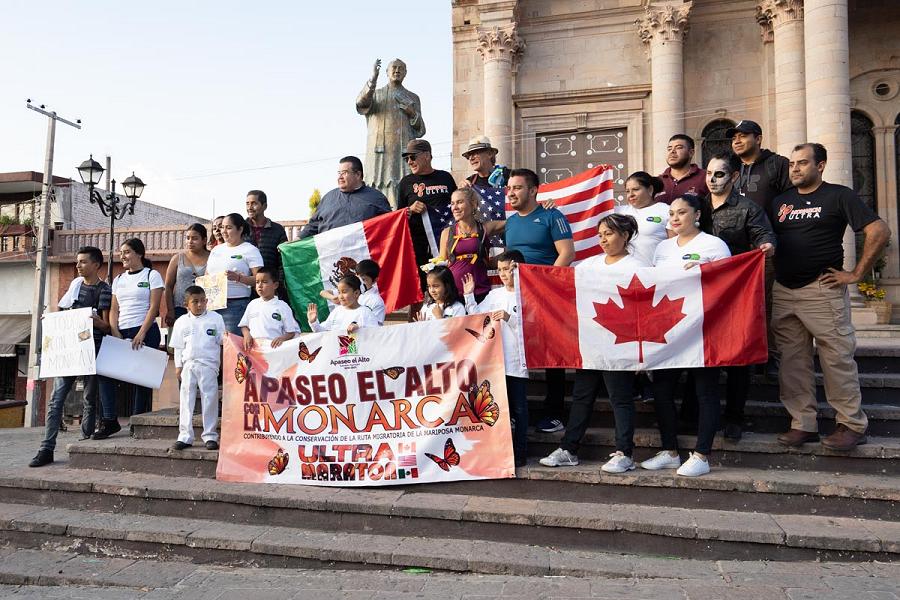
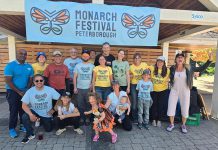
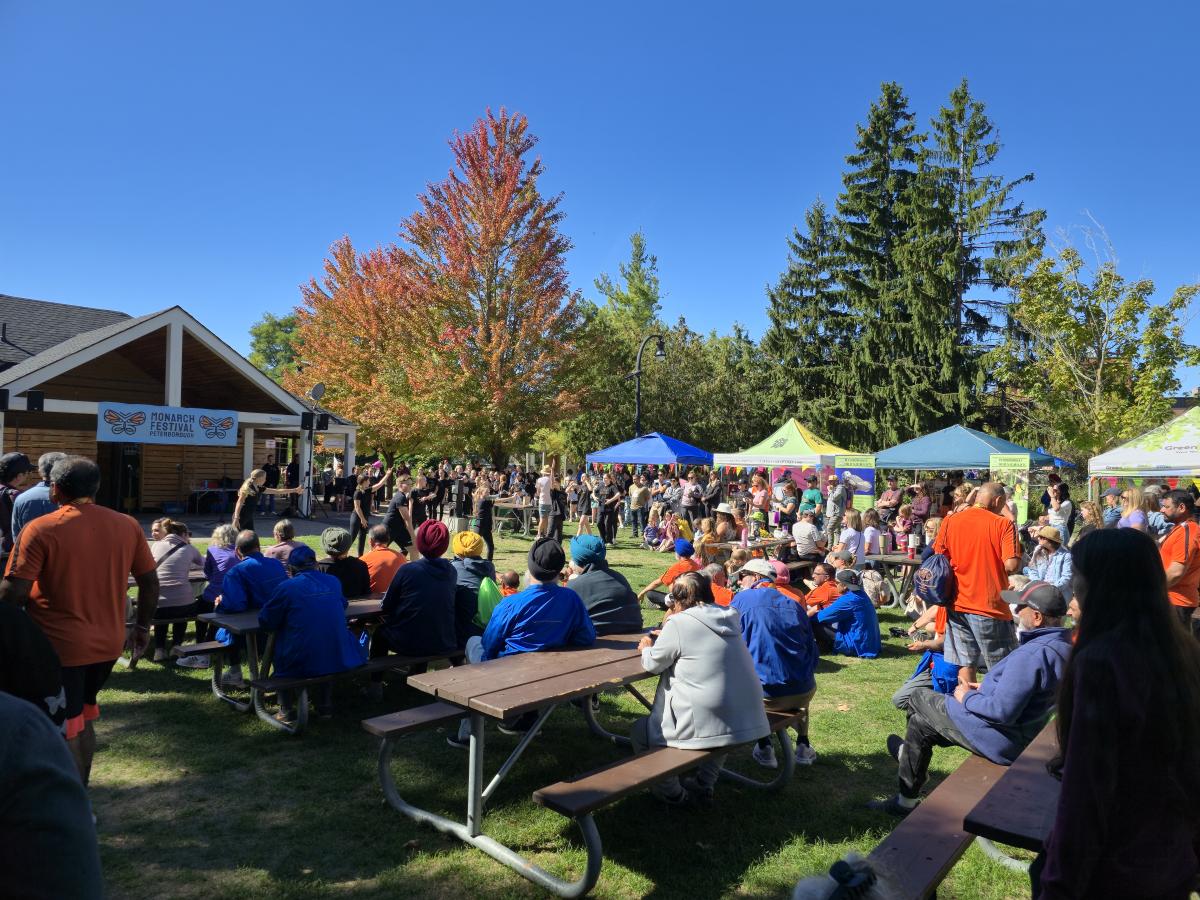
In 2023, The Monarch Ultra hosted the first annual Monarch Festival and Race in Peterborough’s Millennium Park. The event featured a 10-kilometre race, a one-kilometre kids’ fun run, educational booths, community activities, and artist performances.
Going into the fourth year of this event, James highlighted the way in which the community comes out to show their support. As the whole event is volunteer-run, it is the support of individuals and businesses that enable the event to remain accessible and able to raise funds for monarchs.
“We want to get together and make change,” James said.
This year’s event at Millennium Park will once again give participants the choice between a 10-kilometre and one-kilometre run and will feature a host of local vendors and organizations.
The festival schedule for 2026, available at www.themonarchultra.com/peterborough, highlights activities and workshops at the event including a pollinator garden workshop and drumming performances by Janet McCue.
James said the festival is a “celebration of the waterways” in a space that also features butterfly and pollinator gardens.
As well as raising awareness, the Monarch Festival and Race is a key fundraising event for monarch conservation efforts. James said this year’s goal is to raise $5,000 for Nación Verde, a non-profit organization based in Mexico that engages in conservation through tree-planting, youth education, and advocacy for environmental justice.
According to a media release, funds raised by the event will support tree-planting and reforestation efforts at Mexico’s Cerro Pelón Monarch Butterfly Sanctuary. This site is a vital winter home for monarch butterflies following their fall migration from Ontario.
“The relationship happened serendipitously,” said James, explaining how she met the team at Nación Verde after the Monarch Ultra was nominated for a Monarch Ambassador award.
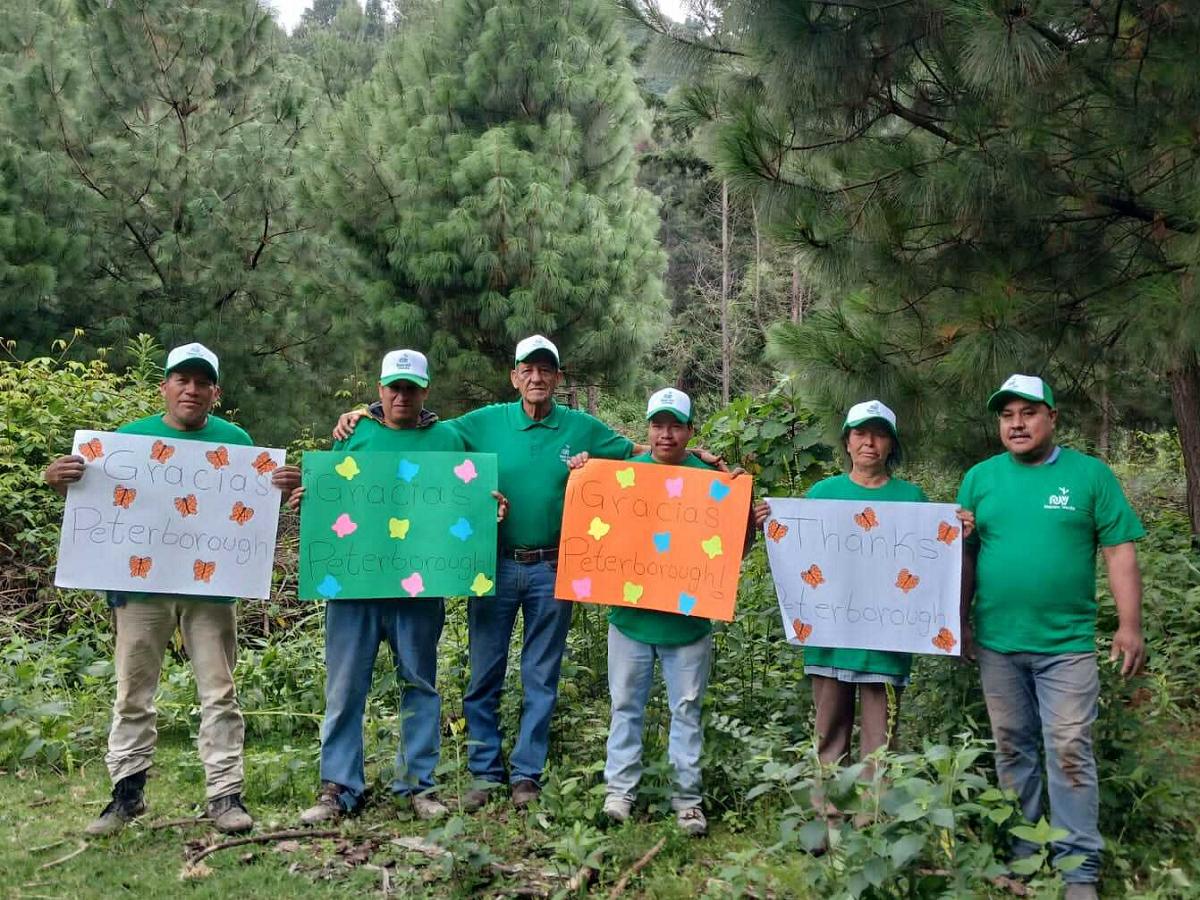
The Monarch Ultra team has visited Mexico in partnership with Nación Verde on two occasions to see in person the habitat that their work supports.
“When we go to Mexico, we can see all the trees and nurseries,” said James.
For James, it is the ability to see the impact of their workand efforts of community members at the Monarch Festival and Race has that continues to inspire the Monarch Ultra team. She also shares these experiences and updates with supporters to engage them in continued action.
Also a co-founder of Peterborough Pollinators and Three Sisters Natural Landscapes, James spoke about the significance of the monarch butterfly as a representation of the impact of environmental decline on all insects and pollinators.
“Monarchs are a symbol of resilience and a call to action to do more,” she said.
Due to habitat loss and climate change, all insects and pollinators are facing endangerment and declining populations. Canada is the summer home to two distinct migratory populations of monarch butterflies. On the east coast, the monarchs travel from B.C. to California and, further west, monarch butterflies migrate from southern Ontario to Mexico.
James explains that despite recent positive reports showing that eastern monarch population has increased by around 65 per cent over the past year, marking one of the
most significant rebounds in nearly a decade, there is still work to be done to protect monarchs and their habitat especially in the long-term.
Eastern monarch populations in particular continue to face ongoing population decline despite conservation efforts, James noted.
In addition to the environmental impacts represented by the decline in monarch populations, these butterflies are also an important cultural and spiritual feature of indigenous cultures in Mexico and North America.

The Monarch Ultra and their conservation partners espouse the importance of stewarding the land that makes up the habitat of monarchs, not only for the butterflies themselves but also in respect of the Indigenous communities that have conserved the land for generations.
“This land is so important and so is the connection to the monarch butterfly,” James said of the relationship between Indigenous peoples and the monarch.
Monarch butterflies return to Mexico during the celebration of Dia de los Muertos (“Day of the Dead”. It is believed that monarchs carry the souls of loved ones who have passed on, and the migration during this celebration is a representation of those souls returning home.
Nación Verde is also committed to furthering environmental justice and addressing environmental inequalities. They work directly with Indigenous communities to determine need, provide training, and vocational opportunities.
“If the monarch disappears, their culture disappears,” James said.
James added about that Indigenous values and teachings are embedded in all of the work done by the Monarch Ultra, including the community festival. The event will feature offerings of milkweed and other native plant seeds to promote sustainable gardening in Peterborough.
Community members can support the Monarch Ultra and ongoing conservation efforts by registering to participate in the race and by attending the festival.
“Come to the festival and hear about all the great things happening in our community,” said James.
She also encourages people to talk about the importance of conservation work with their friends and families and promote charities and organizations actively involved in this work.
“Continue to talk about the importance of supporting pollinators, because from talk is action,” James said.
The Monarch Festival and Race takes place from 10 a.m. to 2 p.m. on Saturday, September 19 at Millennium Park in downtown Peterborough, with one-kilometre kids’ fun run starting at 9:30 a.m. and the 10-kilometre race starting at 10 a.m. An awards ceremony at 11:30 a.m. will follow the race.
To register for one-kilometre kids’ fun run and the 10-kilometre race, or to donate, visit raceroster.com/events/2026/117030/monarch-ultra-10km.