
















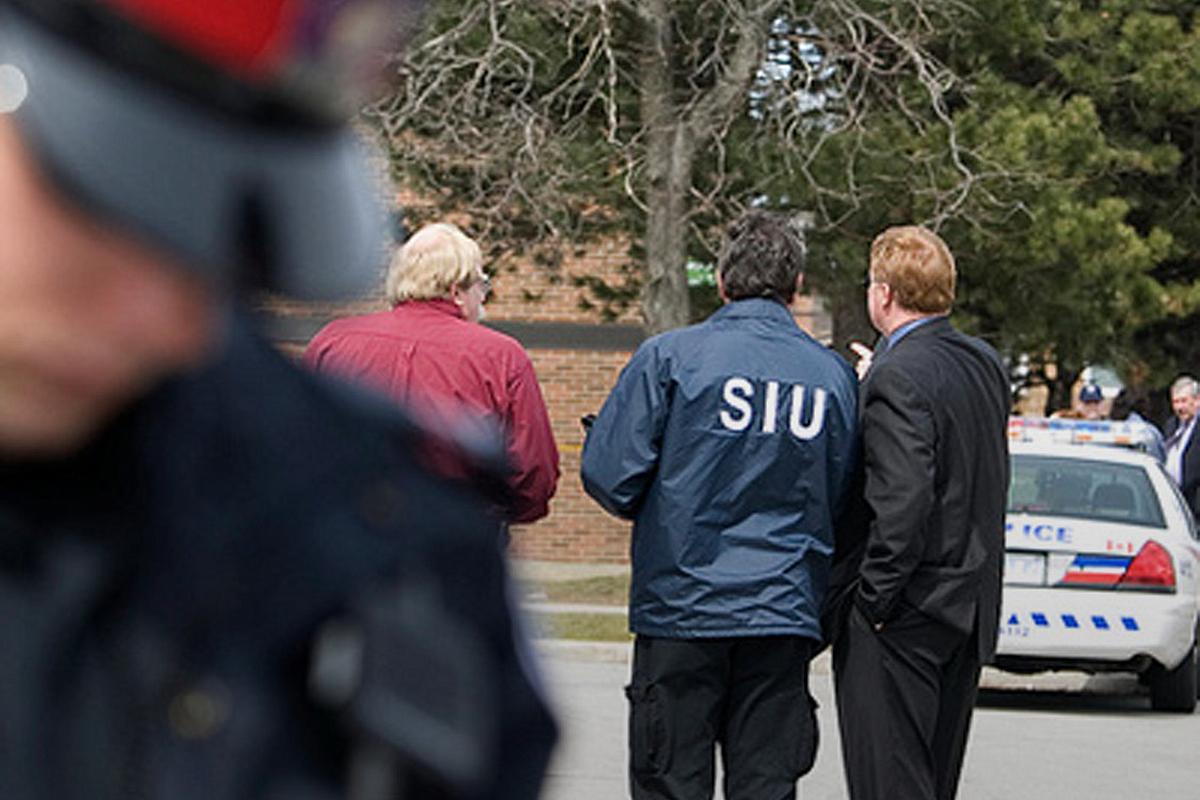
Ontario’s police watchdog has cleared an officer with the Kawartha Lakes Police Service of criminal wrongdoing in connection with a high-speed pursuit through Lindsay in April that ended in a violent collision and left two people seriously injured.
However, Special Investigations Unit (SIU) director Joseph Martino has identified possible violations of the police code of conduct arising from the officer’s failure to stop at a red light during the pursuit.
In his report released on Thursday (August 13), Martino said he will refer the matter to the Kawartha Lakes police chief for review and to the Law Enforcement Complaints Agency.
The two sections of the code cited by Martino deal with failing to perform police duties appropriately without a lawful excuse and failing to comply with procedures established by a police chief. The referrals do not constitute findings of misconduct.
The high-speed pursuit began shortly after 3:20 a.m. on Sunday, April 19, after Kawartha Lakes police officers were dispatched in response to a 911 call from a woman who could be heard arguing with the driver of a vehicle and pleading to be let out.
A responding officer found a black BMW on William Street North near Regent Street. When the driver became aware of the police cruiser, he accelerated north on William Street before turning west onto Regent Street.
As the BMW approached Victoria Avenue North, the woman who had made the 911 call exited the moving vehicle from the rear seat, rolling across the road. The officer later told other officers he believed she had been thrown from the moving vehicle.
After slowing to check that the woman was okay, the officer pursued the BMW south on Victoria Avenue with the cruiser’s emergency lights activated. Video recordings reviewed by investigators did not capture the sound of a siren.
Satellite positioning data from the cruiser showed the officer failed to stop at a stop sign while turning from Regent Street onto Victoria Avenue North. The cruiser accelerated to a maximum speed of 144 kilometres per hour near Peel Street.
The officer drove through a green light at Colborne Street West and then through a red light at Kent Street West at more than 130 kilometres per hour. He also travelled through the intersection at Russell Street West at about 100 kilometres per hour without slowing or stopping after the BMW had struck a utility pole and knocked out power to the traffic signals.
The cruiser travelled more than one kilometre from Regent Street to Glenelg Street West in about one minute.
Just south of Glenelg Street West, the BMW driver lost control of the vehicle and struck a parked Nissan Versa head-on, propelling it more than 30 metres along Victoria Avenue South. The BMW also struck the utility pole and several other parked vehicles before coming to rest on top of a Ford Escape in a residential driveway. The officer’s cruiser was not involved in the collision.
The 20-year-old BMW driver and his 32-year-old front-seat passenger, who both remained conscious and talking after the collision, were extricated from the vehicle and taken to Ross Memorial Hospital, where the driver was confirmed to have internal injuries. The passenger was later taken to St. Michael’s Hospital in Toronto due to the nature of her injuries.
The police watchdog’s collision analysis concluded the BMW was likely travelling at more than twice the speed limit when its driver lost control. According to the report, road and weather conditions did not contribute to the collision. A toxicology report found the driver of the BMW had a blood alcohol content over twice the legal limit, as well as evidence of cocaine and cannabis use.
In his report, Martino considered whether the officer’s driving amounted to dangerous operation causing bodily harm, an offence that requires conduct representing a marked departure from the care a reasonable person would have exercised in the circumstances.
While acknowledging the officer’s high speed and disregard for multiple traffic controls, Martino concluded the conduct did not reach the threshold for criminal charges.
“This conduct was no doubt dangerous but fell short of constituting a marked departure from a reasonable standard of care in the circumstances,” Martino wrote, noting that the risks associated with the speed at which the officer was driving and his failure to comply with traffic controls were reduced by the use of the cruiser’s emergency lights and the absence of significant traffic at that time of the morning.
Martino also found no evidence the officer had lost control of his cruiser or directly endangered other motorists. He also determined the officer had reasonable grounds to pursue the BMW because he believed a passenger had been thrown from the vehicle and that a possible forcible confinement had taken place.
“On this record, weighing the competing considerations in the balance, I am unable to reasonably conclude that the (officer) transgressed the limits of care prescribed by the criminal law in his pursuit of the BMW,” Martino wrote.
The officer declined to be interviewed or provide his notes to investigators during the SIU investigation, as was his legal right.
The investigation included interviews with the BMW driver and passenger, three civilian witnesses and two police witnesses, as well as a review of police communications, body-worn camera footage, surveillance video, cruiser positioning data, medical records, and collision evidence.
The Special Investigations Unit launched its investigation on April 19 after being contacted by the Kawartha Lakes Police Service. The civilian agency investigates incidents involving police that may have resulted in death, serious injury, sexual assault, or the discharge of a firearm at a person.