













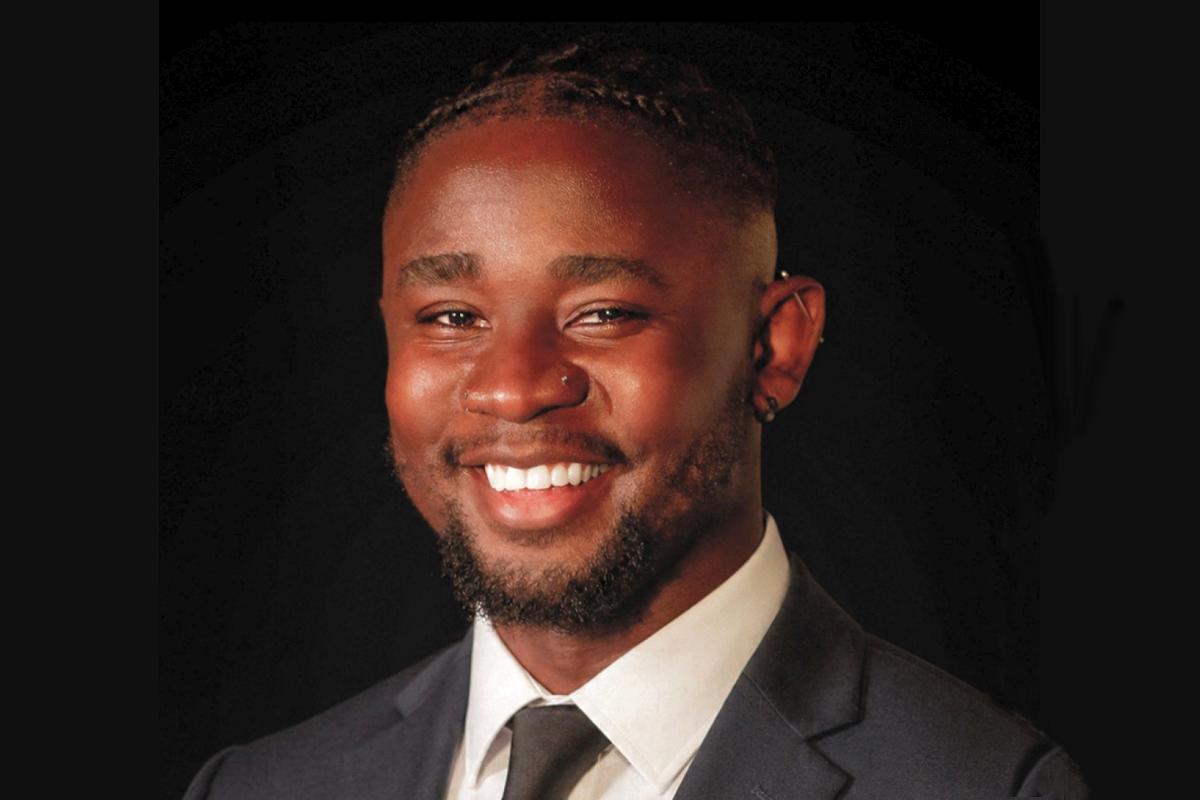
The face of United Way Peterborough and District has changed for the first time in nearly 15 years, with recently appointed CEO Jason Seguya coming to the non-profit organization in time for its 85th anniversary.
Last December, after long-time CEO Jim Russell announced he would be retiring the following summer, the United Way began the search for new leadership before announcing the appointment of Seguya in June as the organization’s 10th CEO.
Seguya, 27, a native of Uganda, comes to Peterborough via Ottawa, having previously served as executive director of The Fulcrum Publishing Society and of Ontario Student Voices. He has a bachelor of science in social sciences from the University of Ottawa.
Building capacity through collaboration
One month after Seguya began his role, kawarthaNOW sat down for an in-depth interview with the new CEO to learn more about what he has learned so far and what his goals are for his tenure.
“One thing that has to be core with this work is it has to be led by community for community,” Seguya said, before describing his past experience.
“I’ve really built a career on non-profit governance and leadership from as soon as I was at university, serving as the first executive on the student union team for the University of Ottawa Students’ Union, continuing with Ontario Student Voices and a number of different organizations, like The Fulcrum (Publishing Society).”
Most recently, Seguya served as director of human resources for the Canadian Queer Chamber of Commerce, which supports queer entrepreneurs across the country including through funding provided by the Federal Entrepreneurship Program Fund.
“What is unique about that perspective is I come into this role not only with the experience relevant to run a non-profit and a charity like the United Way Peterborough and District, but to really serve and contribute to conversations in conjunction with other non-profits and charities on the focus of the relevant internal infrastructure and long-term support that each of our organizations need to not only survive, but thrive.”
Since starting his role on July 6, Seguya has been meeting with community partners — including organizations supported by the United Way’s agency capacity fund, a new three-year fund supporting registered human and social service charities across the city and county of Peterborough that are enhancing capacity to deliver inclusive programs and services — to learn about their missions, programs, and needs.
“It shows with each and every one of those interactions a true element of care towards the programming that they’re developing and delivering towards our community, matched with ideas that are beyond just a simple checkbox, but really speak towards not just the symptoms, but the long-term impacts that are relevant to the city of Peterborough,” Seguya said.
According to Seguya, one of the most common challenges facing charities in the Peterborough region is a lack of internal capacity both to implement programs and to manage business operations. However, fundraising to cover operational and administrative costs can be met with stigma from donors and funders who may prefer to directly fund programs or materials.
“The programming that we develop and deliver is so important on all fronts, but if we are to equally invest into capacity building within our organization, the return on investment that the community will feel is stronger, more long-lasting impact on the work that we’re doing,” he explained.
In addition to providing sustainable and flexible funding to local non-profits, Seguya sees the role of United Way as acting as a convener and facilitator between community organizations, client populations, and Peterborough at large.
“United Way of Peterborough and District, and the whole United Way movement, really does serve as a convener in so many different formats, whether it’s by community, as we come together and address some of the largest pressure points, or by nature of the organizations that we partner with.”
Being such a small sector, there are sometimes barriers that organizations experience when there are overlapping functions of work across the region, said Seguya. This manifests through splitting the community donor base, competing services, and replication of administrative and operational tasks.
“Our effort, when we do our internal reviews of capacity and shared efforts within the sector, is to ensure that if there’s overlap, it’s complementing each other, rather than repeating or recreating work that’s already been conducted,” he said.
“Role ambiguity is known as one of the largest areas that create conflict. If our main effort can serve as conveners on each of these different functions and formats, we will see a strong sector where we’re all contributing in a way that’s meaningful.”
Bringing together his priorities of capacity building and community convening, Seguya will lean on his human resource background to facilitate collaboration within United Way and beyond to the local non-profit community.
“With my own background, what I’m hopeful to bring amongst the shared efforts of each of the staff and teammates throughout the organization is a room for convening on those topics focused on capacity.”
“If we’re to ensure long-term capacity for the organizations involved, you will see that in the ways that we develop our programming. You’ll see that in the way that we develop our interactions with community, and you’ll see that in the way that we develop our research and long-term planning.”
Embedding equity throughout the United Way’s work
Seguya, who grew up in the York Region and pursued his post-secondary education at the University of Ottawa, has been involved in many community and student organizations, which he said has influenced his professional work.
“Beyond my work working with non-profits and charities, I’ve also been a community organizer, really working on the ground addressing some of the largest issues that came towards my eye as well as community while living in both Ottawa as well as previously in the York Region area.”
In particular he notes his understanding of convening multiple organizations working in overlapping or similar service areas as stemming from his work with grassroots groups.
“There’re elements within community organizing or efforts of grassroots (organizations) that should motivate and actually lead and guide the ways that we can serve as a community when it comes to addressing some of the larger issues.”
At United Way’s annual general meeting last Thursday (August 6), community impact officer Elisha Rubacha shared information about the ongoing work to integrate the values of reconciliation, equity, accessibility, diversity, and inclusion (READI) throughout the organization’s work, both internally and externally.
For his part, Seguya said that oftentimes historically marginalized individuals are disproportionately represented in data on homelessness, poverty, and food insecurity.
“One of the things that I hold core to my beliefs is when you support those who are most vulnerable in any capacity, all benefit, and it will be shown in the way that this process is shifted and moved,” he said.
Over the past year, United Way has assessed their internal systems against United Way Centraide Canada’s DEI Toolkit, developed an action plan based on strengths and spaces for improvement, and implemented READI values across the organization.
“One of the dangers about engaging with this work without that clarity or guidance is efforts that should be positive could actually be more detrimental towards the communities we’re aiming to serve and support if they’re not informed accordingly,” said Seguya of the importance of looking critically at internal processes.
READI values have also been applied to the redevelopment of the community impact model, the agency capacity fund recipients, and Reaching Home fund distribution.
“It’s also looking external towards our efforts to make sure it’s included in every element that we do, rather than held in silo by itself,” Seguya added. “That’s one of the most beautiful elements that I’ve seen as it really shows that it’s becoming embedded in the way that we operate in the organizations on all fronts rather than an effort that’s just intending to be presented for the sake of demographics or show.”
Alongside READI values, Seguya said that he intends to continue to receive community input across the scope of United Way’s programs and campaign initiatives to ensure that the most pressing issues are addressed.
“It’s that effort that we’re going to continue to see through data collection, research, and more, to be able to guide us in efforts ensuring that voices that aren’t naturally or often initially included in conversations are intentionally included in those discussions as we continue.”
“One thing for me that it would signal as well is more efforts on fair, clean research and data collection that would be able to support us in those efforts. That way, our answers and our supports on these specific issues can be guided by the experiences of folks within community rather than assumption.”
Seguya noted the importance of reports such as the Point-in-Time Count and Community Homelessness Report in both guiding United Way’s own work and establishing quality public data to be used by other organizations.
One example he shared was that, when research identified a disproportionate number of Indigenous people experiencing homelessness, the United Way dedicated funds towards organizations working with Indigenous clients.
“One beautiful thing I appreciate about the United Way Peterborough and District is at the same time that it’s community-oriented, it’s also pragmatic with its efforts,” Seguya said.
Leading through a time of transition
Having spent the last month transitioning into his new role, Seguya said he has been supported in all areas by the United Way’s staff team who have ensured the engine of the organization never falters during times of change.
“In the course of these past few weeks leading up towards a month, I’ve seen leadership demonstrated from every member of the team in such an impactful and meaningful way that it made me more excited for the future to come,” he said.
To help facilitate the transition to a new CEO, Seguya said, previous CEO Jim Russell remained on staff until July 17 and has continued to be an active resource to Seguya and the team since his retirement. Having led the United Way for nearly 15 years, Russell has considerable organizational experience and knowledge.
“Jim is a key partner, just as everyone else is in the community, in guiding this effort forward. I’m not alone with this work.”
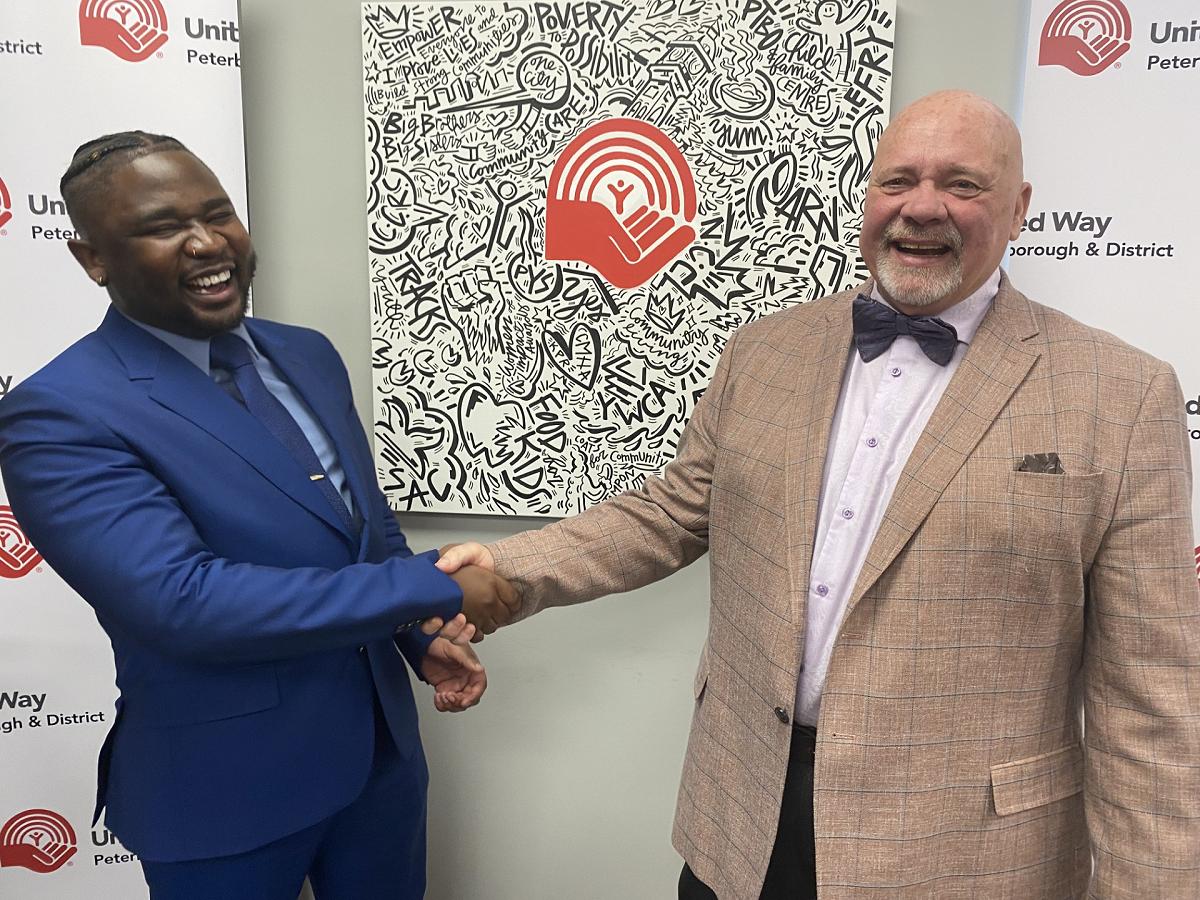
Going forward, Seguya said he will foster a working environment that promotes transparency, collaboration, and safety.
“One thing that I’ve made a point of instilling within the team, both in the way I present myself as well as the feedback I receive, is ensuring that psychological safety is core within the function of the organization.”
“There’re actual actions and behaviors that can be represented that ensure psychological safety is put in, and that’s been intentionally incorporated in the ways that we interact with each other and the way that I lead on a daily basis.”
Seguya also noted the wider United Way community as having been primary supporters in his transition.
“Although our solutions and results within community may differ, some of the experience and the relevant knowledge is all shared,” said Seguya.
Alongside Seguya’s excitement about his role and the opportunity he sees for United Way, he recognizes that he has big shoes to fill and high expectations to meet.
“It comes with a lot of anxiety and quite a bit of pressure that’s sometimes attached to it, but in the best of ways,” said Seguya.
Despite being just 27 years old, Seguya says he hopes the community will see him for his experience and his potential, not just his age.
“When it comes to my work as someone whose core value is merit, I hope that that’s what’s captured with all that’s done, where folks will see me for what I’m able to develop and deliver.”
Furthermore, he hopes to inspire other young professionals to take risks in their work and have faith in their abilities and value.
“I’m hopeful that my own introduction and experience towards this position will equally include and encourage other individuals within my generation to raise their hand, to be a little bit audacious with their efforts, to try something new, even if it means potentially failing, and go for that opportunity,” said Seguya.
“But most importantly, (to) know that their voice matters and deserves to be part of the conversations that are impacting our communities, as we are the leaders of tomorrow.”
Making space for a new generation of leaders
Seguya, whose family emigrated from Uganda to Canada when he was two, said he knows he is not the typical charity executive, but that his background and intersectional identities allow him to bring unique and progressive ideas to his work.
“I will always stand on my background in terms of experience, the ideas I bring to the table, the jokes I’ll throw midway through, but I’m happy that me being in roles like this serves as motivators to others,” said Seguya.
Furthermore, he wants to demonstrate that leadership and the non-profit sector are not only welcoming to people of all backgrounds but also are actively making space.
“It goes without saying that when folks see individuals like myself, who are the non-traditional chief executive officer or non-traditional leader, they know to themselves that they can at least try and raise their hand and do so.”
“In terms of my reference of my race, I would want that to be captured amongst the Black community and also be incorporated in the work. In terms of me being quirky and flamboyant, I would want other queer kids to know you can be a leader and be embraced and accepted in the spaces that you want to engage with. And even if you aren’t, that you’re good enough that it doesn’t matter.”
When asked about his goals for the next 12 months, Seguya said that he wants to focus on supporting capacity building for partner agencies and creating guidelines and checkpoints to ensure long-term sustainability.
“I care for the sector as a whole, and I want to ensure that as an organization, we’re able to develop and deliver capacity towards the organizations and groups we partner with beyond just a dollar amount that’s provided towards them, but the core things that ensure that they’re able to run and not only survive, but thrive in the long term.”
Internally, Seguya said he will take a long-term planning approach to strategic and financial goals. For him, this better allows an organization like the United Way to address internal infrastructure needs.
“One thing that’s core towards me is being objective as possible when it comes to long-term planning over the course of an organization. That way we can actually give ourselves a moment to smell the roses and celebrate when there’s progress.”
Seguya’s most public responsibility this year will be to lead, alongside recently announced campaign cabinet chair Tiffany Arcari, the 2026-27 United Way Campaign to a potentially record-breaking total.
Planning is already underway for the campaign, which will be officially launched in September when the United Way will announce its fundraising goal.
“There’s no effort, no donation, no element that’s considered small,” Seguya said. “All of it’s important. We’re in this together as a community.”