















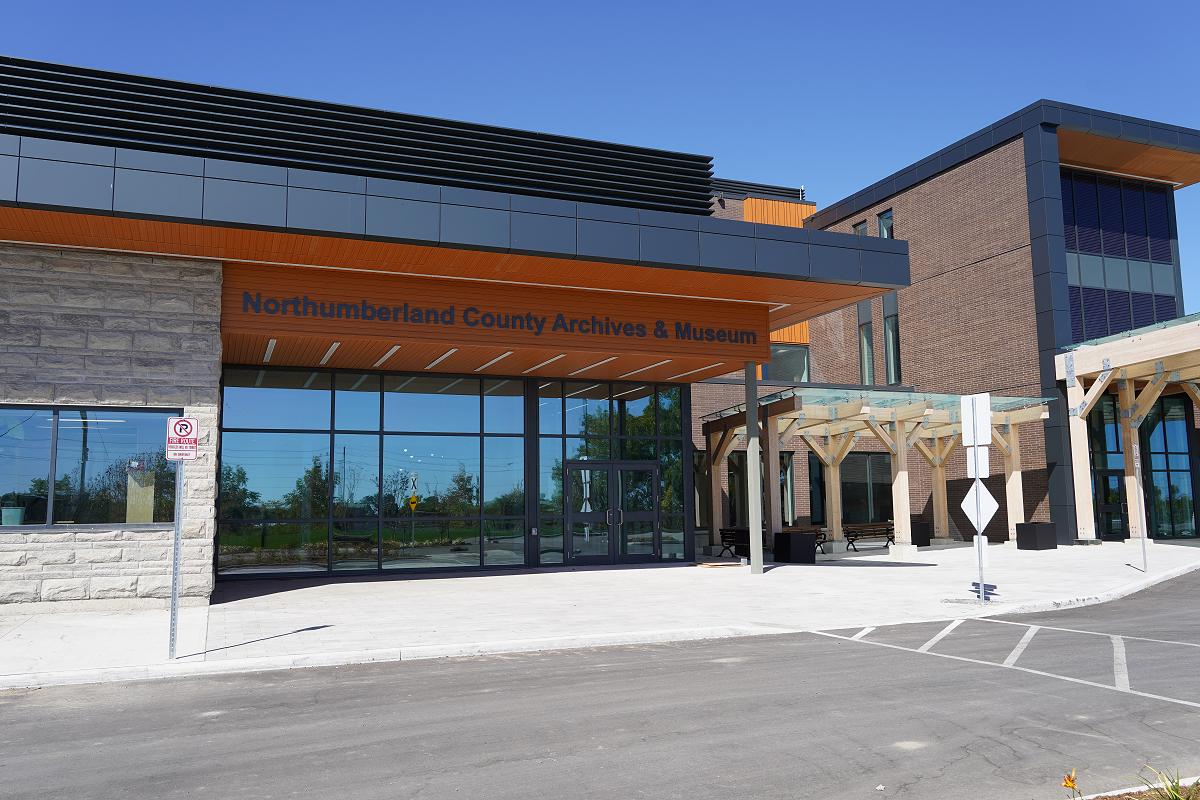
Northumberland County’s history has a new home in Cobourg, where the Northumberland County Archives and Museum (NCAM) has officially opened its doors with an inaugural exhibition celebrating the language and culture of the Michi Saagiig people.
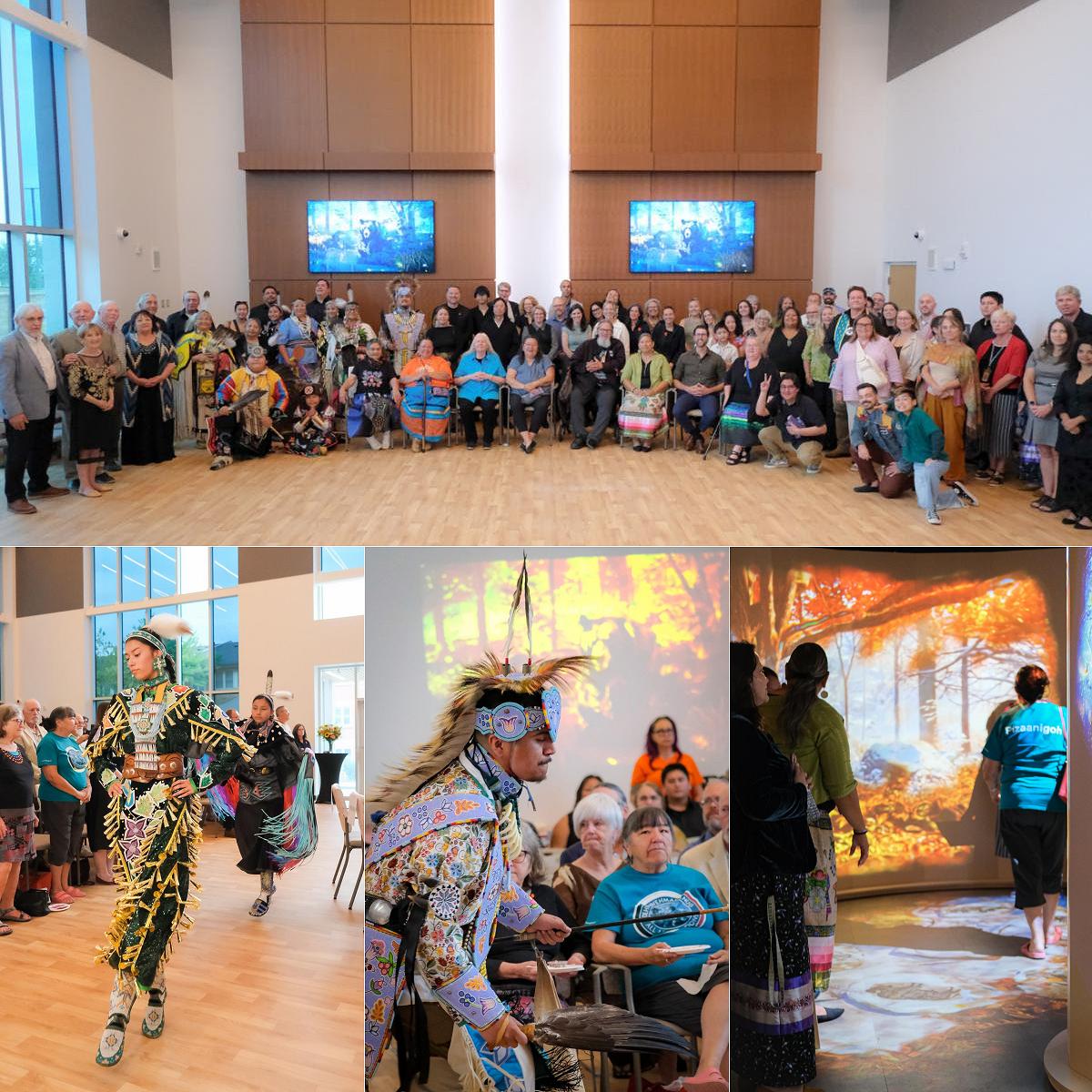
The 6,000-square-foot facility at 2-590 Courthouse Road, built alongside the newly opened Golden Plough Lodge long-term care home, welcomed First Nations Chiefs and Elders, elected officials, community partners, and community members for an opening ceremony on Thursday (September 17).
Residents and visitors can explore the new museum during a free public open house on Friday (September 18) from 10 a.m. to 4 p.m. and Saturday (September 19) from 10 a.m. to 2 p.m., with opportunities to tour behind-the-scenes spaces, experience the inaugural exhibition, and receive a portrait from a caricature artist.
“The newly built NCAM facility is a new home for the stories, records and objects that help us understand who we are and where we have come from,” says Northumberland County Warden Bob Crate in a media release.
Inaugural exhibition honours Michi Saagiig language and culture
Thursday’s ceremony began with smudging, an opening song, and prayer, followed by remarks from Crate, First Nations Chiefs and Elders, and community partners.
The event also marked the debut of “Gidinawendimin,” an exhibition developed under the guidance of e wiindmaagzijig, a circle of Indigenous Elders, Knowledge Keepers, and language teachers who worked with county staff to shape how Michi Saagiig language and culture are shared with visitors.
Gidinawendimin means “we are all related” in Anishinaabemowin. The exhibition celebrates the Michi Saagiig dialect and grew from the museum’s commitment to honouring the long history of Indigenous peoples on the land and supporting language revitalization.
VIDEO: “Gidinawendimin” – Northumberland County Archives and Museum
“Our language is more than words put together — it is the heart and soul of our people,” says Alderville First Nation Elder Melody Crowe. “It carries our values, our way of seeing the world, and a connection to our ancestors.”
“As visitors experience Gidinawendimin, we hope they see the beauty of our language and understand how deeply it is connected to who we are. We are very thankful for the opportunity to share this part of who we are and to help carry our language forward for future generations.”
Canadian Heritage contributed $393,069 toward the development of Gidinawendimin, which will remain at NCAM over the next year. The federal government also provided $412,406 through the Canada Cultural Spaces Fund toward establishing the archives and museum space.
The exhibition is housed in the Stewart Richardson Gallery, named for the local entrepreneur, history enthusiast, and philanthropist whose $85,000 donation was announced in June 2025. The museum’s first major individual private donation, Richardson’s gift supported the creation of the inaugural exhibition.
Specialized spaces protect collections and expand public access
Designed to meet Canadian Heritage Category A curatorial standards, the new facility provides specialized environmental conditions, conservation spaces, and technology to preserve municipal records and historical collections while expanding opportunities for research, exhibitions, and programming.
The opening follows a substantial relocation effort. NCAM closed its former Ontario Street location to the public in February 2025 as staff prepared to catalogue, package, and move more than 530 linear metres of archival materials and hundreds of artifacts.
Along with its main gallery, the new museum includes the Parker Westgate Studio, equipped with digitization technology to make collections more accessible, and a reading room sponsored by Cameco for research and community and family programming.
Climate-controlled storage protects archival records and artifacts, while a dedicated processing and conservation lab provides space to care for and prepare collections. A separate quarantine area for newly received and unprocessed materials helps protect the permanent collection.
The museum’s pairing with Golden Plough Lodge also creates opportunities for history programming alongside the long-term care home.
“Our collections will be given the care they deserve while creating new opportunities for people to explore Northumberland’s history,” Crate says. “It is also a place where we can continue to build relationships and create space for the histories and experiences of the many communities that make up Northumberland.”
Museum hours
Following the open house, NCAM’s regular public hours will be Wednesdays and Fridays from 10 a.m. to 4 p.m. and Thursdays from 1 to 8 p.m.
The museum will also open on the first Saturday of each month from 10 a.m. to 2 p.m., with special children’s programming. The museum is closed from Sunday to Tuesday.
Admission is free. For more information about the museum including the Gidinawendimin exhibit, visit ncam.northumberland.ca.
Research services and access to collections are available by appointment. To arrange a research visit or student field trip, email ncam@northumberland.ca.