





















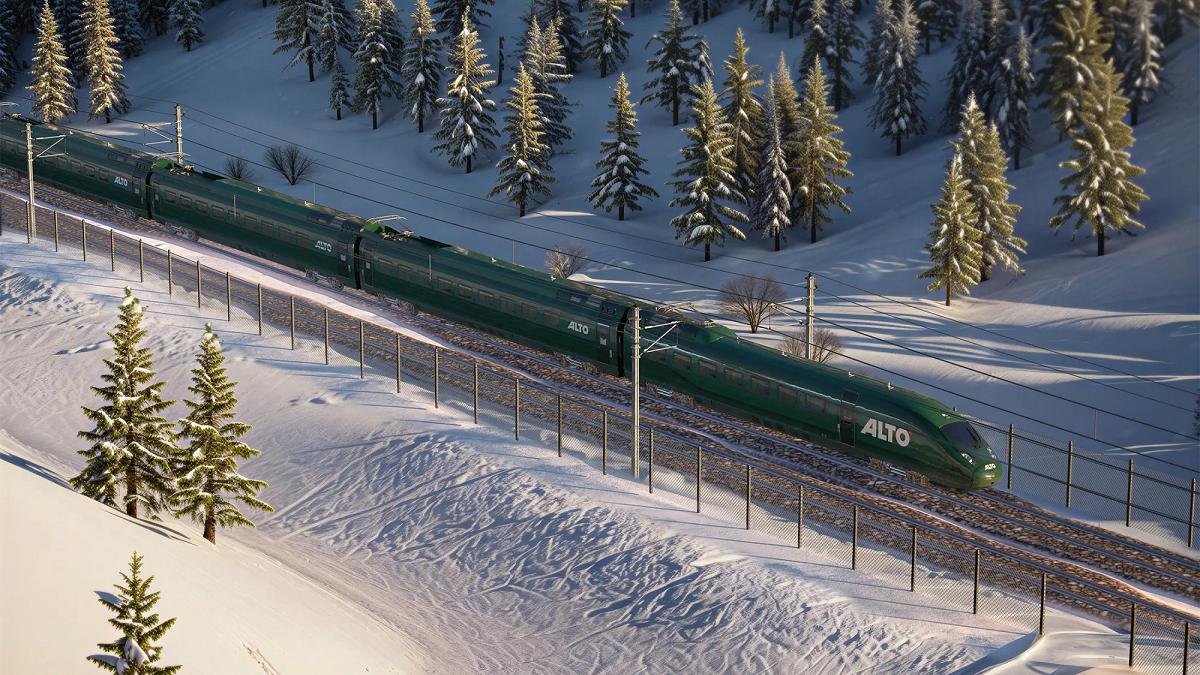
Residents in the Kawarthas region will have a chance to learn more about the proposed high-speed rail line linking Toronto and Quebec City and provide initial feedback when Alto hosts a public open house in Peterborough in February.
The open house will take place at McDonnel Street Community Centre at 577 McDonnel Street on Thursday, February 26, with drop-in hours from 11 a.m. to 3 p.m. and again from 5 p.m. to 9 p.m.
The Peterborough open house is part of a three-month consultation process beginning on January 21 that Alto announced on Thursday (January 15), as the Crown corporation advances the development and pre-construction phase of the rail project.
More than 20 open house sessions are planned in communities along the corridor between January and March, in addition to eight virtual meetings and a dedicated online information portal.
Federal transport minister Steven MacKinnon — who announced on December 12 that the Ottawa–Montreal corridor will be the first segment to move forward as part of Alto’s planned high-speed rail network — called the launch of consultations “an important milestone” in the project’s development, saying the engagement process will help shape the future of the transportation corridor.
“By engaging Canadians early, and by working in partnership with Indigenous communities, we are ensuring this project is shaped by local knowledge, environmental responsibility, and shared priorities,” MacKinnon said in a media release. “This work will help lay the foundation for a modern transportation network that creates good jobs, supports economic growth, strengthens regional connections, and delivers lasting benefits for communities along the corridor.”
In addition to public sessions, Alto has already begun a dedicated Indigenous consultation process that includes technical briefings, co-designed tools, and collaboration agreements.
The corporation says it intends to work with Indigenous communities, municipalities, and institutions throughout the project’s design, environmental studies, construction, and long-term operations.
Alto president and CEO Martin Imbleau said meaningful engagement is fundamental to how the project will move forward.
“Public engagement is a cornerstone of the Alto project,” Imbleau said. “Through broad consultations with Canadians, including meaningful dialogue with Indigenous communities, we will ensure that every voice is heard in shaping the future of transportation. By working collaboratively, we will build a rail network that reflects shared priorities, respects Indigenous rights and knowledge, and delivers lasting benefits for generations to come.”
Alto says that feedback collected during the initial public consultation will inform the rail network’s alignment to be defined later this year. A second round of consultations will follow to review and refine the proposed alignment.
Projected to cost between $60 billon and $90 billion, the project to create the country’s first-ever reliable and frequent high-speed rail system will be the largest public infrastructure project in Canada in recent history.
Planned stations include Toronto, Peterborough, Ottawa, Montréal, Laval, Trois-Rivières, and Quebec City, connecting millions of residents across the most densely populated corridor in the country.
Following a speech in Montreal on Tuesday, Imbleau said construction on the Ottawa–Montreal segment is set to begin in 2029 or 2030. Engineering work on one of both of the Toronto-Ottawa (including Peterborough) and Montreal-Quebec City segments will begin at the same time, with construction on one of the segments expected to begin in 2032.
The proposed high-speed rail network would see up to 72 trains per day running on dedicated electric tracks at speeds of up to 300 kilometres per hour, cutting current travel times in half. For example, the estimated travel time between Peterborough and Toronto would be 40 minutes — 45 per cent faster than the 90 minutes required when travelling by road with normal traffic.
Full details on the public consultation process and options are available on Alto’s website at www.altotrain.ca/en/public-consultation.