














The weather may not have gotten the memo that spring is here, but the birds certainly have. According to Sue Paradisis, president of the Peterborough Field Naturalists (PFN), the birds are all returning on schedule.
Unlike previous years, this year’s more traditional winter means migrating birds have not come back to the region prematurely. Just a few years ago, Paradisis says she heard robins as early as mid-February, when they should not be returning until the second week of March.
“Early spring can really cause a disconnect,” Paradisis says. “Not all bird migration is triggered by the same thing. Some move forward as the snow melts and it gets milder, and that used to happen around the same time (each year). Others are triggered more by the increasing daylight.”
Birding has become an increasingly popular pastime over the past decade. In 2023, Statistics Canada said that 11 per cent of households reported that they participated in birdwatching or photography. This year’s Great Backyard Bird Count in February revealed that national use of the Merlin Bird ID app grew by 82.7 per cent, while eBird checklist submissions increased by 35.2 per cent.
Locally, Paradisis can attest to the growing interest in the hobby since the pandemic, when membership of the PFN almost doubled.
“I don’t think I’ve ever seen the trails as busy as they were because people had time,” she says, noting that dedication continued even beyond the lockdowns. “Once you discover the trails in Peterborough or a new activity such as birding, just because you’re back to work, it doesn’t mean that you won’t continue to enjoy those activities.”
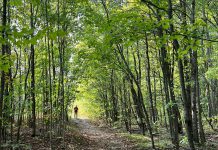
Paradisis says Peterborough is “truly blessed” to have many great birding hotspots, including the Rotary Greenway Trail, Meadowvale Park, the Lang-Hastings Trail, and the Miller Creek Wildlife Area to name but a few. The PFN maintain also many feeders in Ecology Park to attract birds even throughout the winter.
“Because of all the vegetation in Beavermead and at Ecology Park, there are a lot of warblers there, so that’s a hot spot come May,” she says. “Depending on where you go, you’ll find different birds. The Marsh (Conservation Area) in Lakefield, of course, is completely different from what you would find in, say, Jackson Park.”
If you’re hoping to attract more birds to your own property this year, Paradises says you’ll need more than just grass in your yard. Feeders, birdhouses, and birdbaths will all entice birds if they are kept clean, but providing more shelter for them is also essential.
“For gardeners, you can plant food like serviceberries, elderberries, and crab apples or provide shelter in the form of shrubs and evergreens,” Paradisis says. “When I first moved here, I really didn’t have very much, but I planted many, many trees and they provide shelter, food, and nesting places, and I’ve got bird baths and flower gardens. My yard naturally attracts birds with what I’ve planted.”
To further make your home a safe space for birds, Paradisis suggests to put stickers on your windows (to prevent bird collisions), keep your cat in at night (after habitat loss, domestic and feral cats are the single largest source of bird mortality), and stop using insecticides.
“Grasslands is one of the habitats at greatest risk,” she says. “Disappearing insects mean the aerial insectivores, like swallows, aren’t able to find food. There aren’t as many swallows as there used to be.”
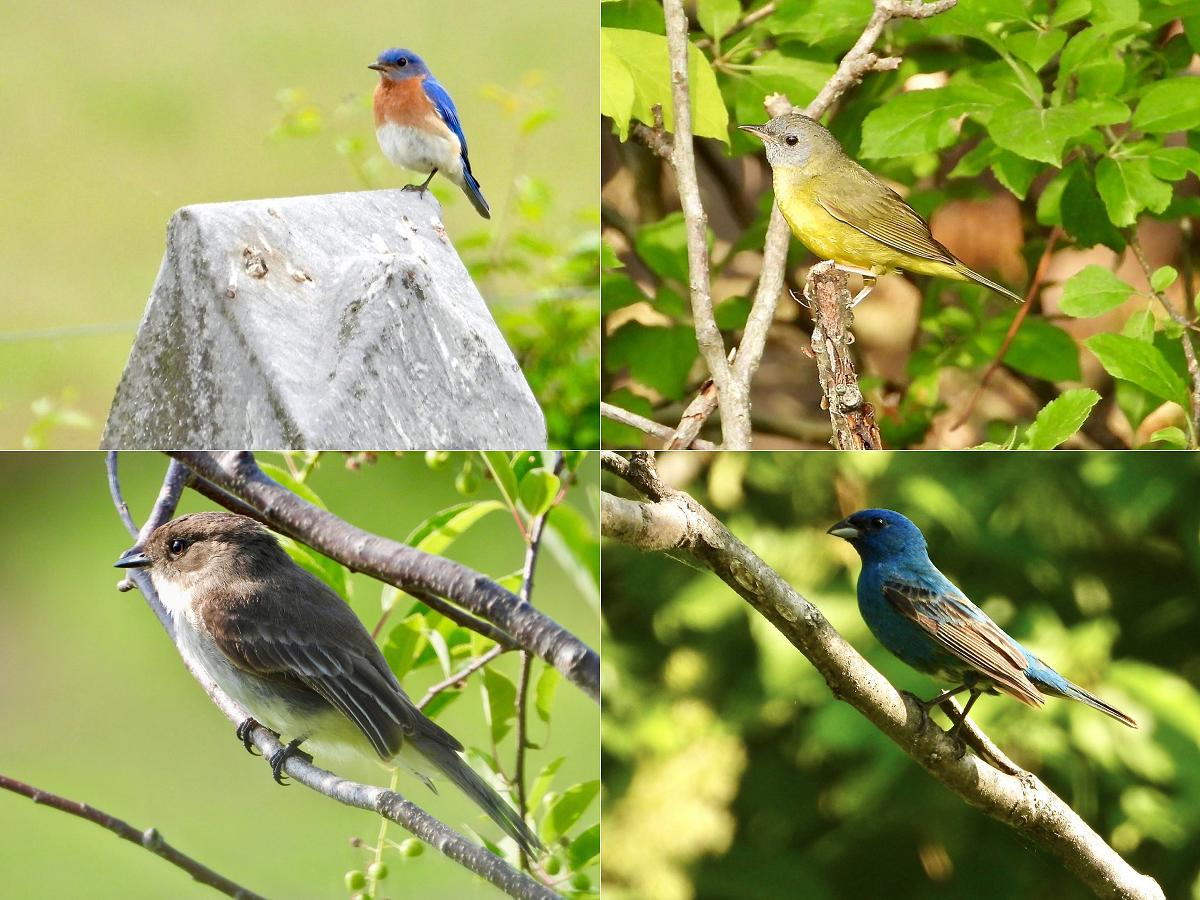
If you’re late to hop on the trend of birding, there are many ways to get started including using apps like Merlin Bird ID and eBird. Peterborough residents can also borrow bird watching kits the PFN donated to the Peterborough Public Library. Each kit includes binoculars, field guides, instructions, checklists, and more, making it easier to get started.
Paradisis reminds people not to play recorded birdsong in an attempt to attract birds, as doing so can distract birds from their normal activities. Especially during nesting, birds require all their energy to catch insects or find seed to feed their young.
With these ethical considerations, Paradisis suggests there are many benefits to engaging in birding, including just getting out in nature, which is one of her favourite parts.
“Listening to birdsong can significantly improve your mental health by reducing anxiety, enhancing your mood, and promoting focus and attention,” Paradisis says.
“I’ve read that part of the reason for that is that, if birds are singing, there isn’t a threat around. If there was a threat in their environment, like a bear or wolf, they would go silent, so it’s bred in people to know that if the birds are singing, you’re safe.”
If you’re interested in immersing yourself in the world of birding, Paradisis suggests this is a great time of year to do so, because there are birds stopping over for a short period while waiting for northern lakes to thaw before completing their migration back to their breeding grounds.
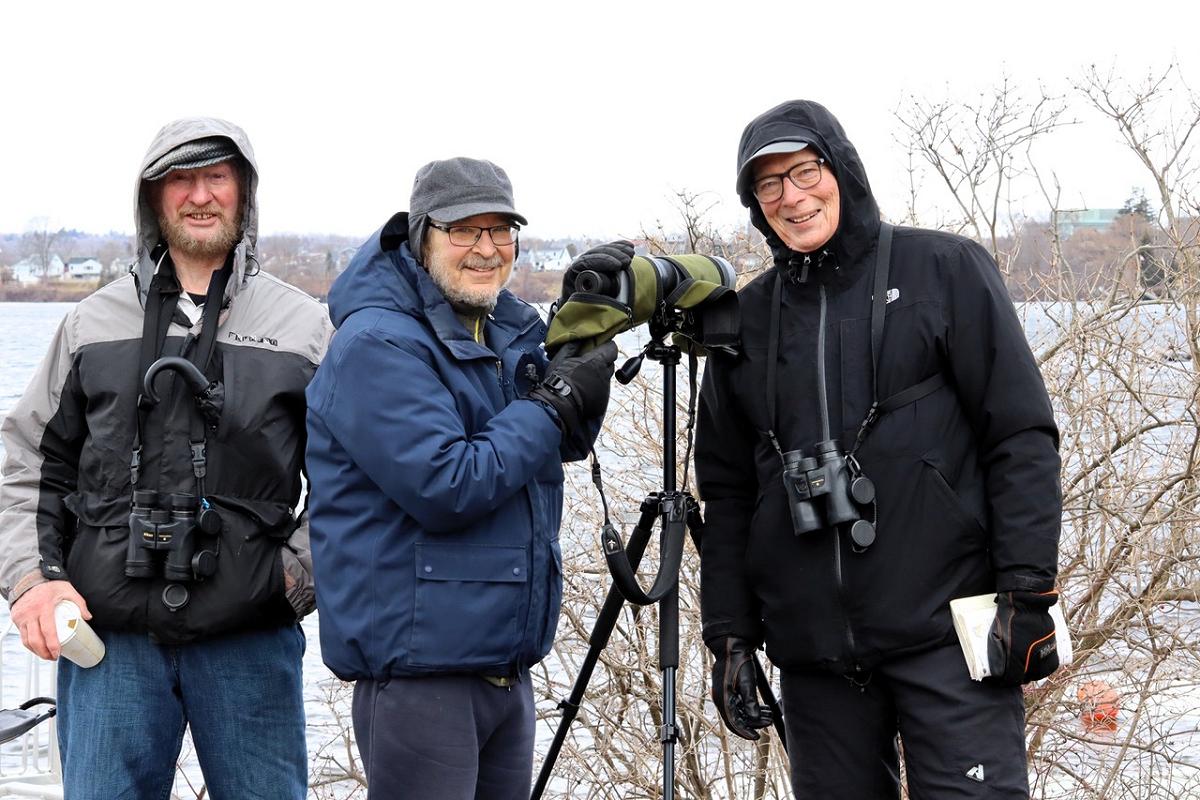
Some of these migrating birds can be seen during the “Return of the Birds to Little Lake” community event being held by the PFN on Saturday, March 28 and Sunday, March 29 from 11 a.m. to 3 p.m. Experienced birders will be on site at the docks of the Canadian Canoe Museum near Beavermead Park and at the boat launch at the end of Mark Street in Rogers Cove to help visitors find and identify a range of waterfowl.
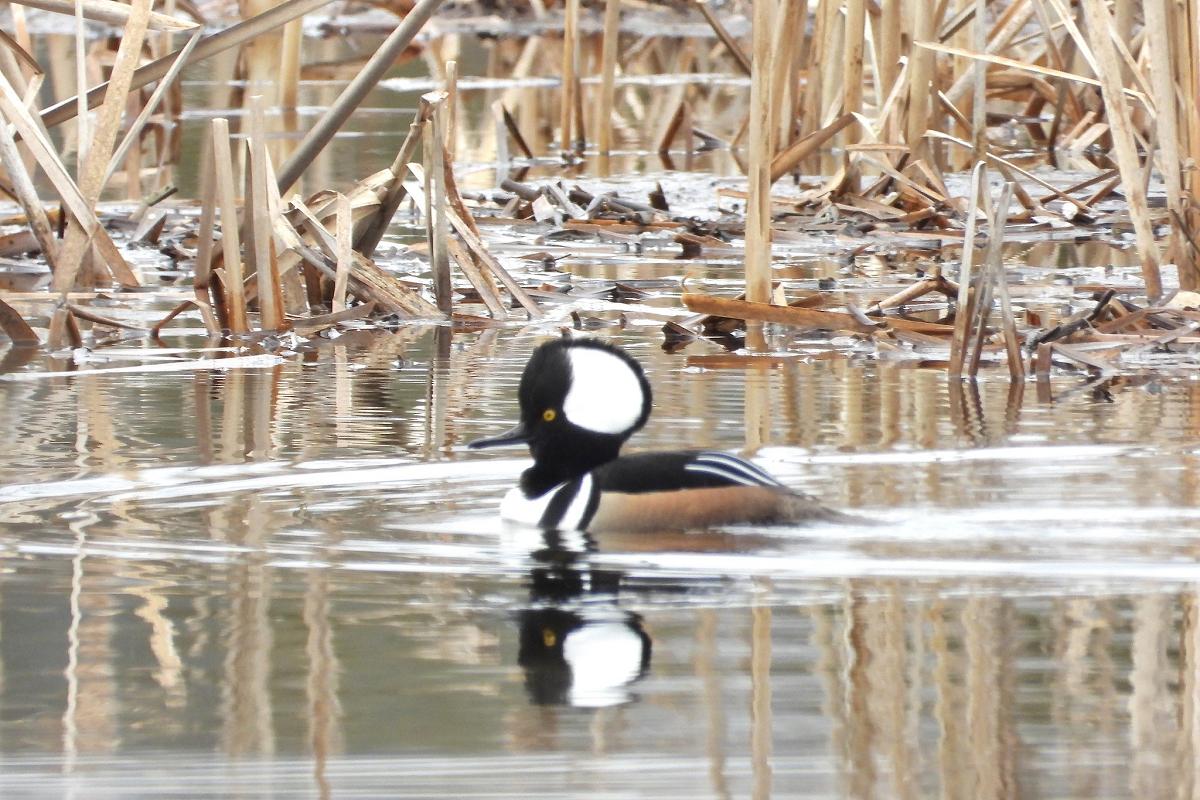
“There are literally hundreds of birds down there right now — a number of different species of ducks, mergansers, grebes, swans, and dabblers,” she says. “It’s exciting for birders to see these birds passing through because they’re not here all year.”
During the event on Sunday, there will also be an exhibition of some of Ken Morrison’s collection of taxidermied birds at the Canadian Canoe Museum.
Despite poor weather during last year’s event for the 85th anniversary of the PFN, more than 50 people came out to connect with fellow birders while adding to their bird counts. This, warns Paradisis, it the only risk of birding: it can be addictive.
“They may start small, but I know some people that have just loaded the Merlin app on their phones and then they get hooked. It can be habit forming,” she says. “You’ll find that you are drawn to other people who share the interests, so it can become quite a social event as well. You go out birding with some friends and then need to stop for coffee or lunch. It’s a great way to spend your time.”
For more information on the Peterborough Field Naturalists, including upcoming events, and to become a member, visit peterboroughnature.org.