


















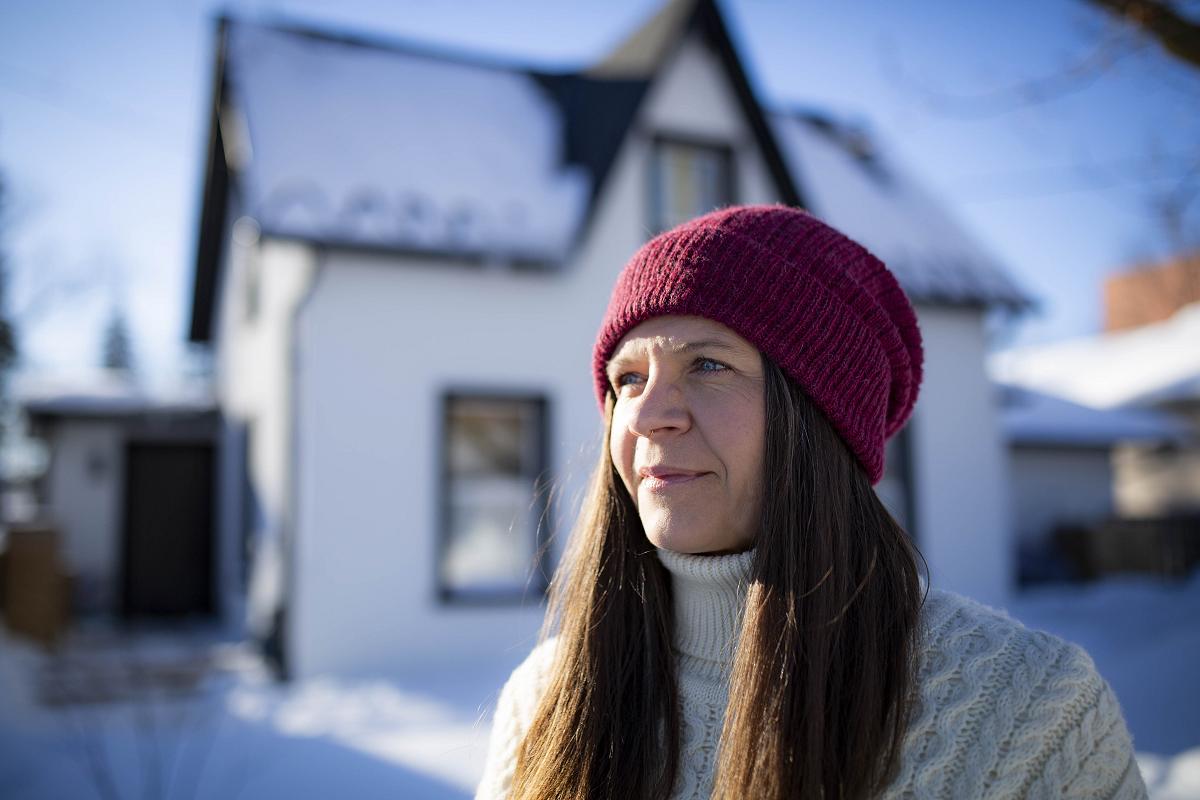
When Kat Senyk purchased a house in Port Perry a few years ago, she knew that it would need some work — a challenge that didn’t put her off.
“I had an EnerGuide inspection completed right away,” explains Senyk.
“The energy modelling report estimated that my house consumed 191 per cent more energy than a typical new house of a similar size.”
With a career in building science, Senyk understood the importance of insulation and air sealing to creating an efficient and comfortable home.
“The exterior paint on the wood cladding was peeling, and the walls were cold to touch in the deep-winter months,” says Senyk. Other than a bit of sawdust, the walls were uninsulated. “The building was the opposite of airtight.”
Through her work managing capital projects for a non-profit organization, she had led several exterior insulation and finish system (EIFS) overcladding projects, and opted to install an EIFS to completely reclad and insulate her new home from the outside.
“I discovered and fell in love with EIFS while in Germany in 2017,” she says. “I was confident that cladding improvements paired with full-wall insulation would benefit both the aesthetics of my home while improving occupant comfort.”
Adding insulation to walls is one of the biggest challenges when retrofitting existing buildings. Buildings built before the 1970s were often constructed with little or no insulation.
While insulating from the interior is an option, it can be disruptive to occupants, and limited by factors like the wall cavity size. Exterior insulation like EIFS avoids these issues.
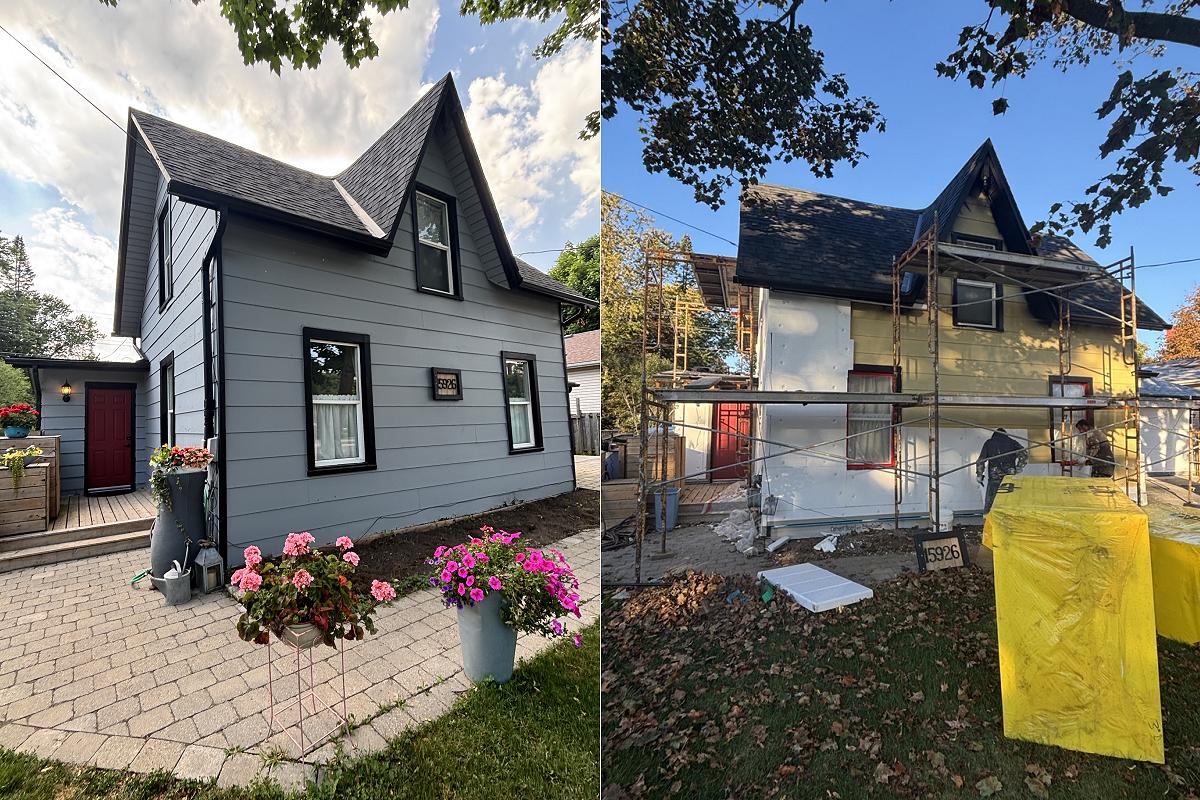
At Senyk’s home, the insulation and exterior cladding were added right on top of the existing wood siding on the home.
“I wanted my home to retain its historic traits while blending a clean, contemporary look,” says Senyk.
The finished home has an off-white stucco finish with window frames in black, and retains the existing finials and soffits.
Scaffolding was installed outside the house for more than a month as the layers of the EIFS were applied one by one, yet since the work was all done on the exterior, Senyk was able to occupy the home and even work from home while the insulation was being installed. Being present allowed her to keep on top of decisions that needed to be made during the project.
A sudden onset of winter presented some challenges to the installation. For example, some materials had limited temperature ranges for application and had to be stored in a climate-controlled location. However, with the crew working over a few weekends to catch up, the project was completed on time.
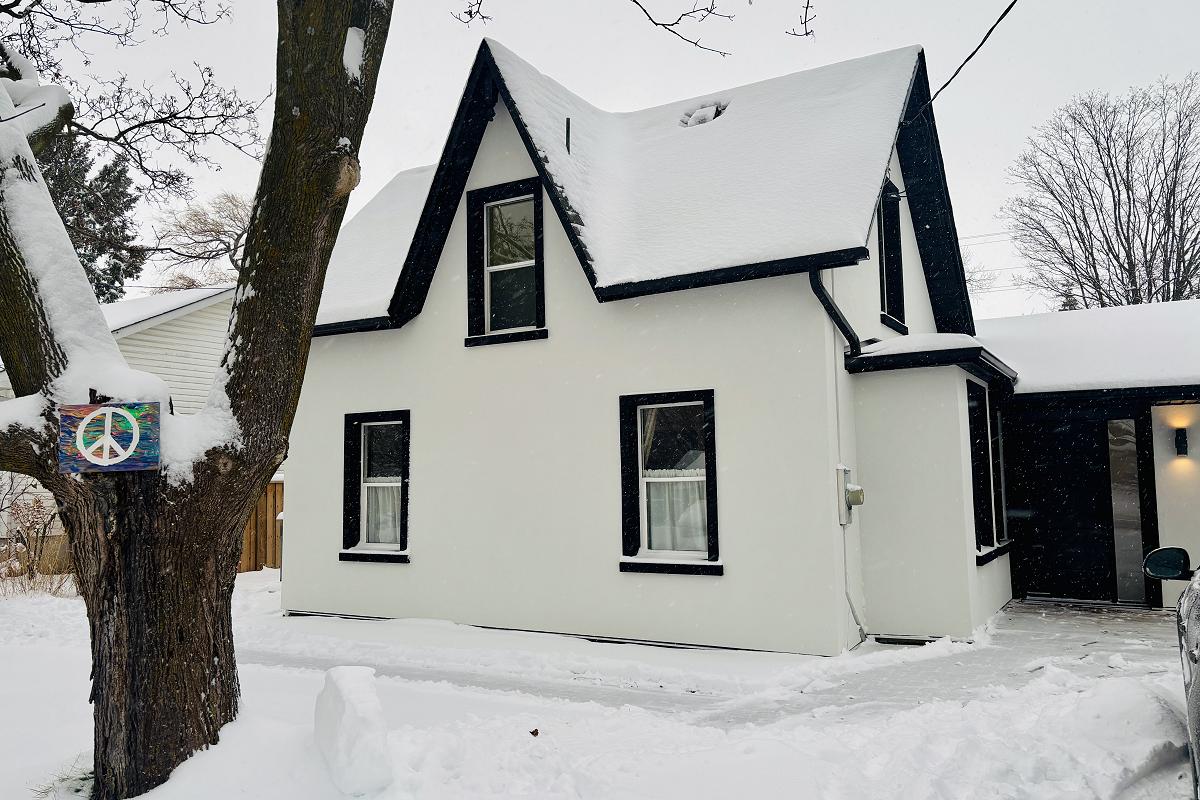
In addition to the EIFS exterior insulation, Senyk also installed a heat pump, added attic insulation, and replaced three exterior doors in her home. The post retrofit EnerGuide modelling report estimates that these measures will reduce her home’s energy use by nearly 50 per cent, and GHG emissions by 79 per cent.
“I love my new old house,” says Senyk. “The project was significant, but worth the investment. I’m looking forward to the summer months to monitor the energy use of the heat pump to provide cool-conditioned air.”
City of Peterborough homeowners are invited to attend a free in-person workshop on do-it-yourself air sealing on Wednesday (April 1) at the GreenUP office from 6 to 7:30 p.m. The workshop is presented by Better Homes Peterborough in partnership with GreenUP. Register at greenup.on.ca/event/better-homes-peterborough-diy-air-sealing/.