



















Pushback from rural communities against the proposed Alto high-speed rail project is continuing, with the City of Kawartha Lakes the latest community in the Kawarthas region to formally express its opposition to the project.
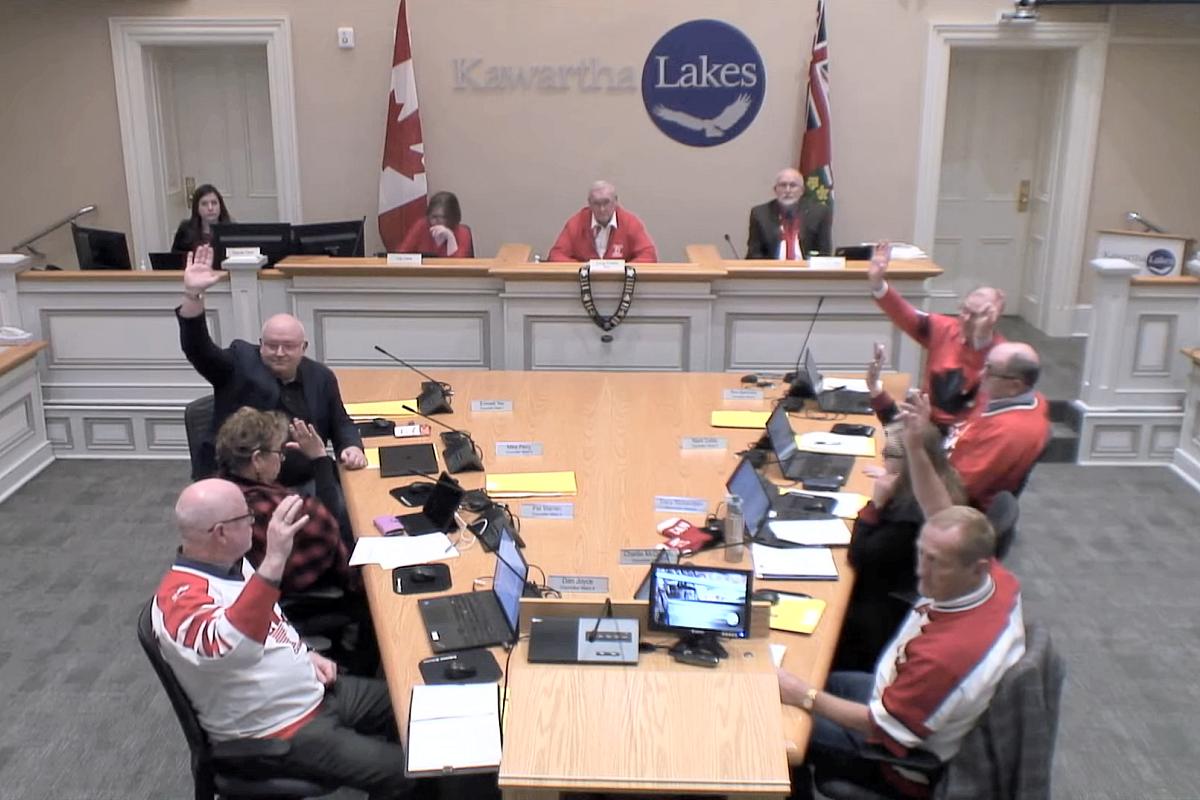
At its committee of the whole meeting on Tuesday afternoon (April 7), council voted unanimously to support a memorandum from deputy mayor Tracy Richardson “regarding the agricultural community concerns” around the consultation process for the proposed 1,000-kilometre high-speed rail network between Toronto and Quebec City, which includes a stop in Peterborough.
In part, the memorandum states that the City of Kawartha Lakes formally opposes the Alto project “in its current form as expressed by the Eastern Ontario Wardens’ Caucus” and formally requests that Alto “provide additional, accessible, in-person consultation opportunities within the City of Kawartha Lakes prior to advancing any decisions related to the Alto initiative.”
Memorandum aligns with Eastern Ontario Wardens’ Caucus resolution
The memorandum refers to a March 29 resolution unanimously endorsed by the Eastern Ontario Wardens’ Caucus (EOWC), a non-profit organization comprised of 13 wardens and mayors that advocates for 113 small urban and rural municipalities across eastern Ontario, including the City of Kawartha Lakes.
The EOWC resolution states in part that “there is only currently one proposed stop across the (EOWC’s) 50,000 square kilometre region, benefiting urban residents at the cost of rural residents and lands” and “advocates that the federal government and Alto fully explore train route options along existing infrastructure corridors, such as VIA Rail and/or Highway 401.”
In addition to the deputy mayor’s memorandum, council also received correspondence from the Kawartha Lakes Haliburton Federation of Agriculture and Victoria Beef Farmers objecting to the Alto project because of its potential impact on “productive farmland,” including concerns about land expropriation, severed agricultural land, exclusion fences, and the closure of rural roads.
Public delegation to council highlights rural concerns with Alto
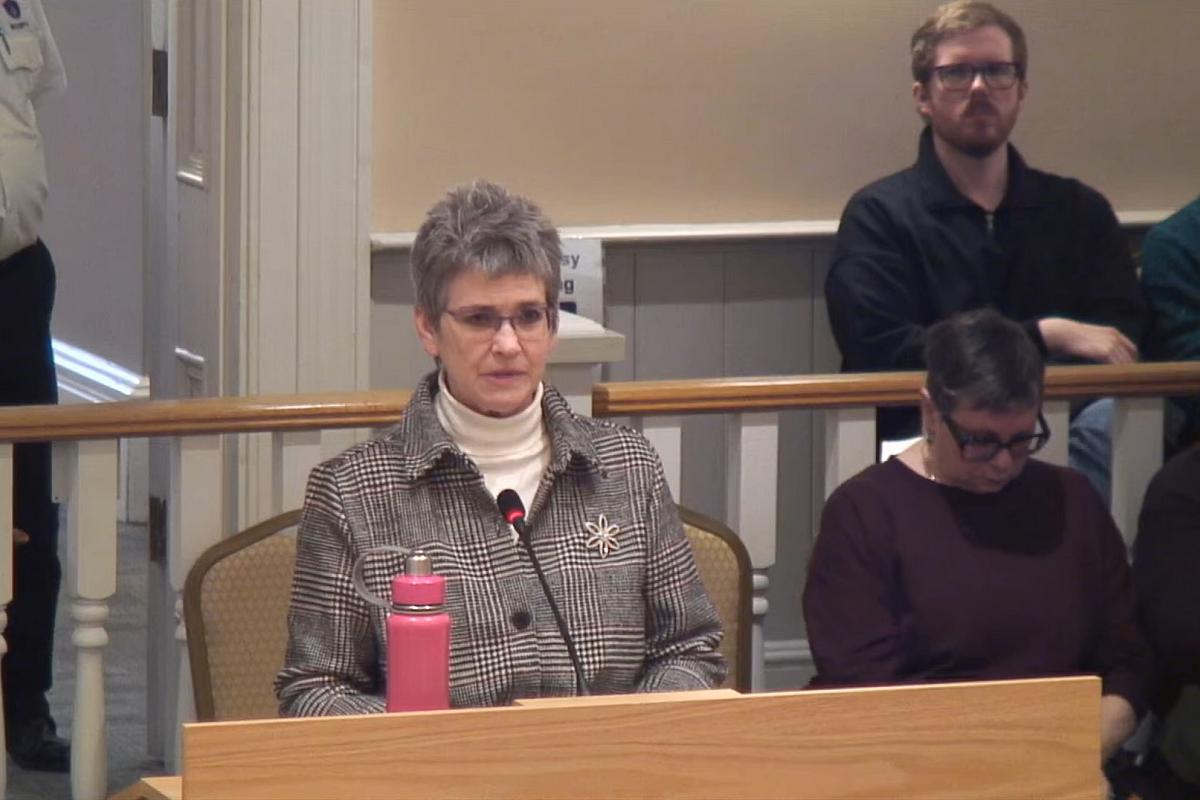
Tuesday’s meeting began with a public delegation by Laurie Reynolds, who expressed her concerns with the Alto project. Reynolds described herself as a “lifelong resident of the Bethany-Pontypool area” in Ward 8 of Kawartha Lakes, the former Manvers Township which is located in the proposed corridor for the Alto project.
“(High-speed rail) with no land crossings will sever many local and country roads, and this will lead to longer travel times for emergency services, school buses, snow removal and waste collection,” Reynolds said. “Recreational trail networks and farmlands would be bisected. Businesses on either side of the fence rail system will be negatively impacted. Communities will become divided.”
“Many families have deliberately chosen the countryside to preserve nature and live in peace. A 300 kilometre an hour train will wreak havoc on this, and it offers no meaningful benefits to our residents and comes with significant and long-lasting harm. I understand that the lands in the proposed Alto corridors fall into the former Manvers Township region of the City of Kawartha Lakes, and I realize there are many other areas of the city not directly impacted by the (Alto) proposal. Logistics costs, however, for Alto will be downloaded onto the municipalities across the targeted areas.”
“There will be a long-term operating burden for the City of Kawartha Lakes resulting from this (high-speed rail) line, and this will require the city to increase property taxes for all residents. Communities such as ours should not be left to absorb the long-term effects of this project, which does not serve our community. I understand the necessity of advancing the existing infrastructure of our province and country, but I cannot accept that this needs to come at the expense of rural communities. Residents need affordable, daily commute transit that serves the communities through which it runs, and this should be done by upgrading existing systems along already existing corridors.”
Reynolds added that high-frequency rail should be considered rather than high-speed rail, as it would be more accessible and affordable for a greater percentage of the population. She noted that Bill C-15, which received royal assent on March 26, includes amendments to the Expropriation Act specifically for high-speed rail that would expedite federal land expropriation and removes the rights of property owners to negotiate for the values of their properties.
She also raised concerns about the “unacceptable environmental impacts” on sensitive watershed systems, wetlands, fish and wildlife habitats, and natural heritage features, pointing out that a 1,000-kilometre stretch of fenced rail system will prevent the migration of many species.
Reynolds concluded by noting the impact of the Alto project on arable land and the impact of family farms, speaking from a personal perspective.
“Farmland is precious and we cannot afford to lose more of it,” she said. “For myself and my family, like many others, the potential impacts of this project are profoundly personal. I reside on two multi-generational family farms, both of which fall into the Alto corridors being considered for the project.”
“My father, grandfathers on both sides of my family, and my great-grandfather on the farm where I reside, have farmed the lands which my husband and myself and my children now farm. These properties are more than acreage — generations of my family have built their lives, homes, and livelihoods on these farms. They represent my family’s heritage, investment, and the future. They hold deep meaning and are intended to be passed down to the next generations of our family.”
In response to a question from deputy mayor Richardson about Alto’s consultation process, Reynolds said the consultations needed to be more of an open town hall style format, rather than a “science fair” style setting with booths around the room. She added that Alto’s online interactive map is “very difficult to read” and to use.
Councillor Pat Warren asked Reynolds whether she would be in favour of high-speed rail “in some different form.”
“Personally, I would like to see high-frequency rail that allows land crossings and doesn’t have huge fences on either side of it … so that roads aren’t cut off to communities, farms aren’t cut in half, you’re still able to cross those tracks,” Reynolds replied. “I mean, to have a high speed rail that does 300 kilometres an hour — could 200 kilometres an hour for a high-frequency rail not satisfy the same requirements?”
‘Not here, not now, use what you have that’s available’
Mayor Doug Elmslie thanked Reynolds for her delegation and said that EOWC’s view is that “we already have a transportation corridor in the south,” referring to the Highway 401 corridor, “and that is the ideal place for it.”
“The support was for high-speed rail, but not this high-speed rail in this location,” he added. “Not here, not now, use what you have that’s available.”
Later in the meeting, deputy mayor Richardson also thanked Reynolds for her delegation, before asking her fellow councillors to support her memorandum.
“The Alto proposal, as it stands, risks leaving rural communities like ours behind, offering limited benefit while placing real strains on our residents, our agricultural land, environment, and infrastructure,” she said. “Our farmers and our rural residents have not been adequately heard from, and the current consultation process has not met the standard of accessibility or inclusion they deserve.”
“We’re not opposing progress here today — we’re calling for fairness. We’re asking for a plan that reflects the realities, contributions, and voices of rural Ontario. Until that happens, we stand firmly in support of our community and opposed this project in its current form, along with the same position of the Eastern Ontario Wardens’ Caucus.”
‘The government needs to be prepared to radically revise this plan’
Councillor Mark Doble spoke in support of the memorandum, saying “The government needs to be prepared to radically revise this plan.”
He asked councillors to imagine restoring daily passenger rail service from Lindsay to Toronto, the need for daily bus service from Kawartha Lakes to Toronto and Peterborough, and a four-lane highway along Highway 35 from Lindsay to Highway 115.
Doble added that those projects could be funded for a “small fraction” of the potential $90 billion cost for the Alto project.
While councillor Dan Joyce said he has been in favour of high-speed rail for many years, as it will reduce air travel and pollution and climate change, he said the proposed Alto corridor “is in the wrong place.”
“We have a transportation corridor already between Toronto, Ottawa, and Montreal,” Joyce said. “It’s called the 401 and the 416. That’s where the high-speed rail needs to be.”
Councillor Ron Ashmore also spoke in support of deputy mayor Richardson’s memorandum, stating that the Highway 401 corridor “is the most appropriate place to put this,” with councillor Warren also stating that “it needs to be in the 401 corridor.”
Councillor then voted unanimously to support deputy mayor Richardson’s memorandum.
Decisions made at committee of the whole will be brought forward for consideration at the next regular council meeting on April 21.