

















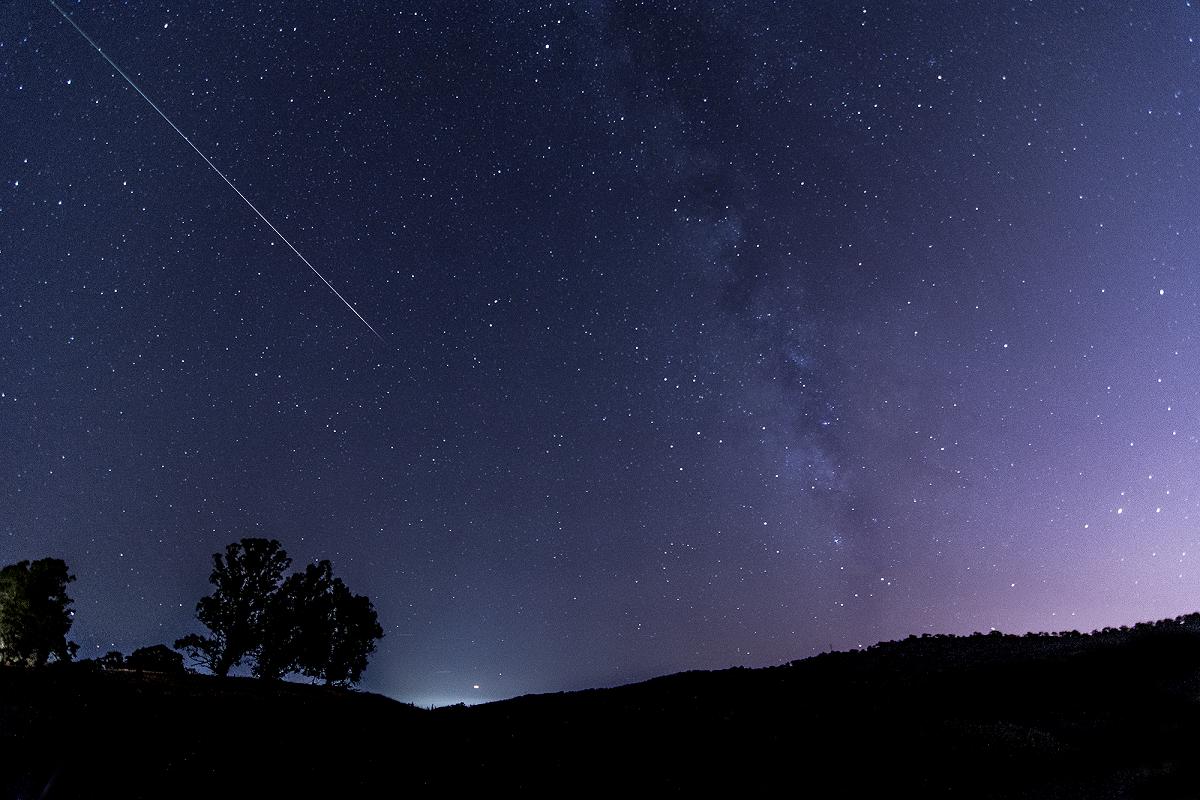
Every August, stargazers look forward with excitement to the annual Perseid meteor shower and, this year, the meteor shower will peak on Wednesday night (August 12).
During the peak, 50 to 120 meteors will be visible per hour if you are in a dark location — and the good news is that there will be a new moon, so the entire sky will be dark all night.
Making Wednesday extra special for stargazers, that new moon will be eclipsing the sun earlier in the day, resulting in a partial solar eclipse in the Kawarthas region.
Perseid meteor shower
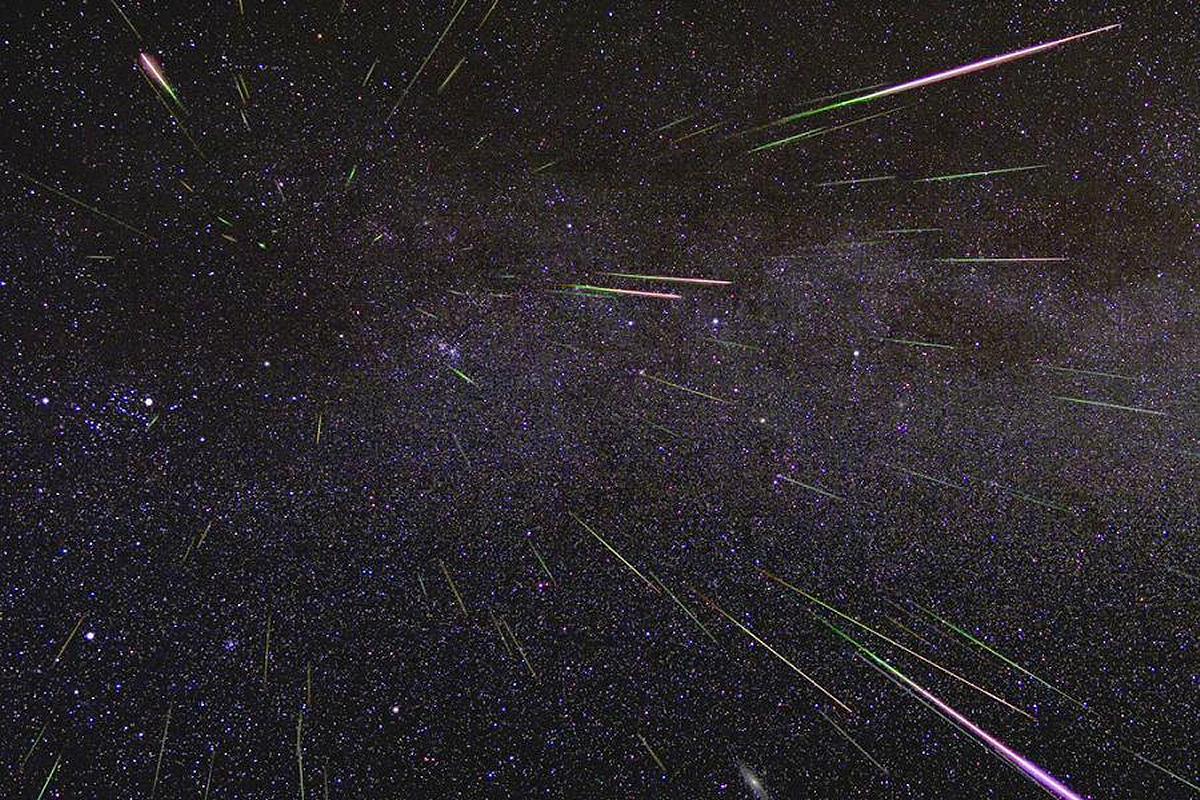
Every year from late July to early August, Earth plows through the interplanetary debris left behind by comet Swift-Tuttle when it passed close to Earth (the last time was in 1992, and the next time will be in 2125).
When the particles of debris — which can be as small as a grain of sand or as big as a pea — slam into the Earth’s atmosphere at around 210,000 kilometres per hour, they heat up to 1,650 degrees Celsius and are vaporized in a burst of heat and light, resulting in a “shooting star.”
The meteors are called the Perseids because they appear to originate from the northeast sky in the direction of the constellation of Perseus.
While the Perseid meteor shower has been active since mid-July, the Earth goes through the densest area of the comet’s debris field at around midnight on Wednesday. That’s the best time to see the meteors, with about half as many meteors visible on Thursday night. The number of meteors will then decline each night until the shower ends on August 24.
Partial solar eclipse
During the day on Wednesday, there will be a total solar eclipse along a line from the Arctic down through Greenland, Iceland, the Atlantic Ocean, Portugal, and Spain, ending in the Mediterranean Sea. In those regions, the moon will completely block the sun along the “path of totality” for a few seconds up to two minutes and 18 seconds, depending on the location.
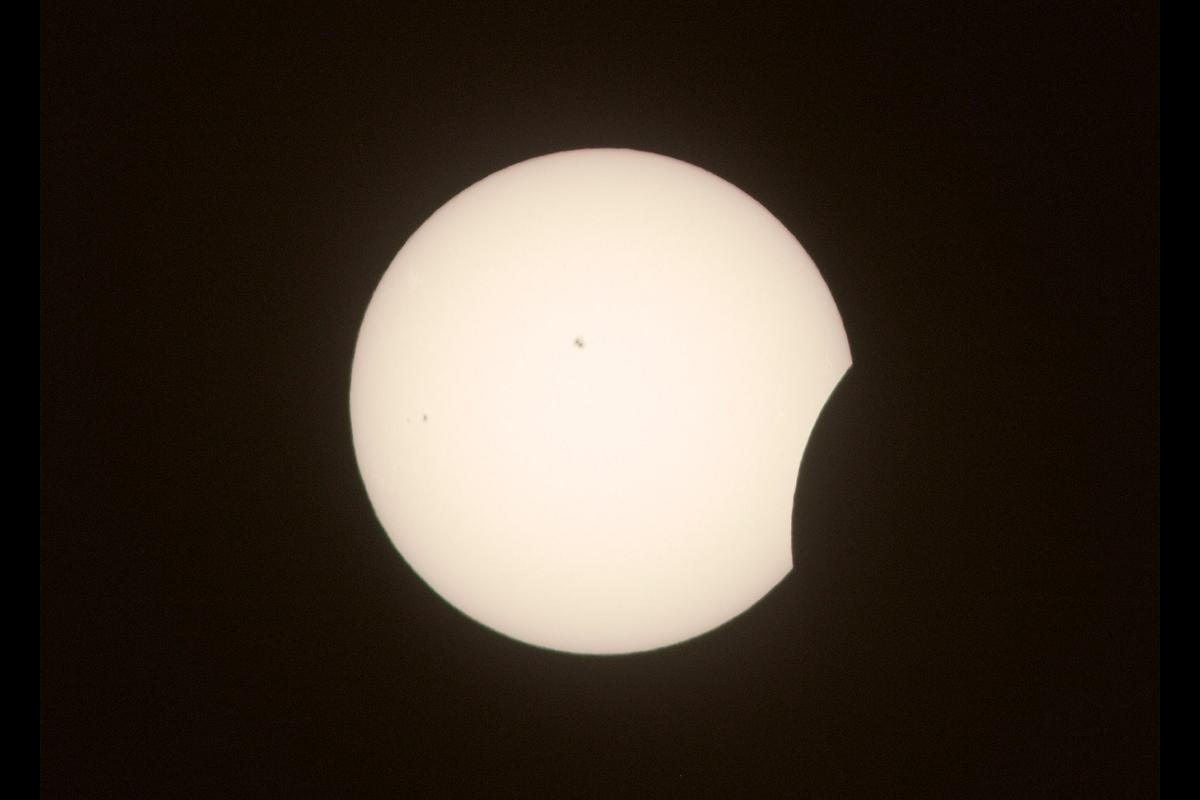
In Canada, we will only see a partial solar eclipse, with the magnitude of the eclipse greatest in the most northern and eastern parts of the country. The farther west and south you are, the smaller the magnitude of the partial eclipse will be.
In Peterborough, the partial solar eclipse will last one hour and 35 minutes, beginning at 12:53 p.m. and ending at 2:27 p.m. It will reach its maximum at 1:41 p.m., when the moon will cover around 10.4 per cent of the sun’s visible area — a small “bite” out of the sun.
With such a small amount of the extremely bright sun covered, there will be no visible darkening of the sky or other effects. During the eclipse, you may be tempted to glance up at the sun to look for the moon — don’t. You won’t actually be able to see the moon with your bare eyes, but you will damage them.
It’s as unsafe to look directly at the sun during an eclipse as it is at other times. Without proper protective eyewear, the sun’s rays will burn your retinas (even if you only look for a couple of seconds). Sunglasses are not adequate protection; you need special eclipse glasses that block out 99.9999 per cent of the sunlight.
If you still have a pair of certified eclipse glasses from the 2024 total solar eclipse, you can use those. If you don’t have eclipse glasses, you can make your own pinhole projector using common household materials like a cereal box. A pinhole projector allows you to see the moon obscuring the sun without having to look at it.
Partial solar eclipse and Perseid meteor shower viewing events in Peterborough
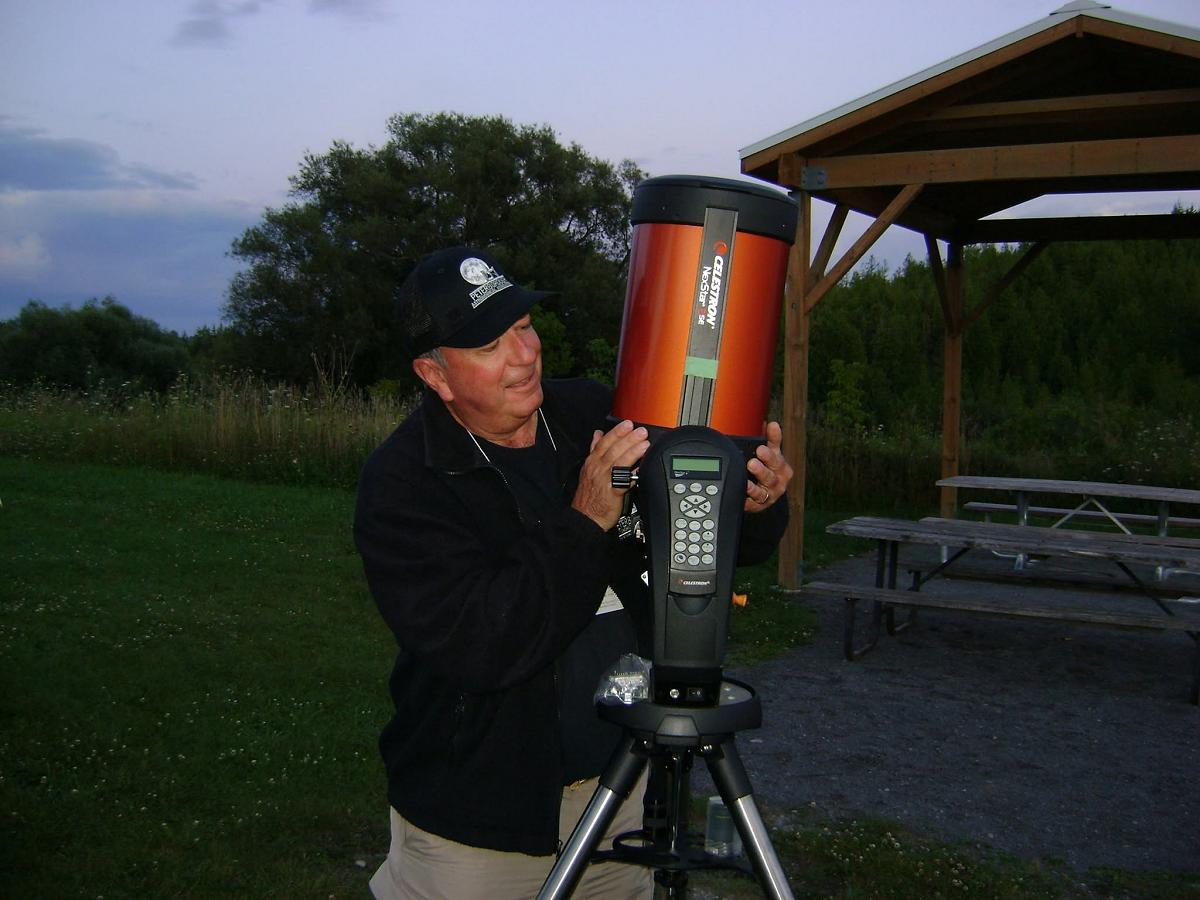
The Peterborough Astronomical Association will be hosting two free events on Wednesday: one to view the partial solar eclipse during the day and one to view the Perseid meteor shower in the evening.
The partial solar eclipse viewing event takes place from 12:30 to 2:30 p.m. at the Gazebo at Riverview Park and Zoo (1300 Water Street, Peterborough). Association members will have special equipment available so attendees can safely view the eclipse.
Then, from 9 to 11 p.m. (or even longer), the association will host a Perseid meteor shower viewing at Harold Town Conservation Area (2611 Old Norwood Road, Peterborough). The family-friendly event is open to the public.
Although optical aids are not needed to see meteors, association members will have telescopes and binoculars set up to view other wonders of the night sky, or you can bring your own binoculars. There will guided tours of constellations and night sky gems, including star clusters, nebulae, and galaxies that will be visible as the evening progresses. There will be a chance to see Venus and, later on, Saturn and its rings.
Both events are weather dependent and will be cancelled if skies are cloudy.
Tips for viewing the Perseid meteor shower
Find the darkest place you can, away from any light pollution, with as much open sky as possible. Rural areas away from city lights with few buildings or trees are the best. If you can’t get away from your city, find a park or golf course.
Lie on your back and take in as much of the night sky as possible. You don’t have to face Perseus (to the northeast) to see the meteor shower, but the more sky you can see, the better your chances.
Be prepared to stay outside for at least an hour. It takes 20 to 30 minutes for your eyes to fully adjust to the darkness, and the meteors come in spurts and lulls — so the longer you wait, the more you’ll see.
Stay awake. The Perseids are typically best between midnight and dawn.