
















If we’ve learned anything about Lisa Dixon, it’s that she rarely sits idle. The Peterborough resident’s relentless search for her next project has proven very fortunate for the Peterborough Theatre Guild which, for the second time in less than a year, is able to promote a Dixon-directed play.
It was just last November that Dixon directed the drama 291, an original play written by her daughter Jade O’Keeffe that related the complicated love story of Georgia O’Keeffe and Alfred Stieglitz, one of modern art’s most iconic couples.
Now the ever-busy Dixon is back at the Guild Hall in East City, directing the two-actor drama Venus in Fur which, on September 18, will open the theatre company’s 2026-27 season.
Written by American playwright David Ives and set in New York City, Venus in Fur is billed as “a razor-sharp psychological drama” that sees what appears to be a simple audition evolve into “a mesmerizing contest of power, performance, and perception.”
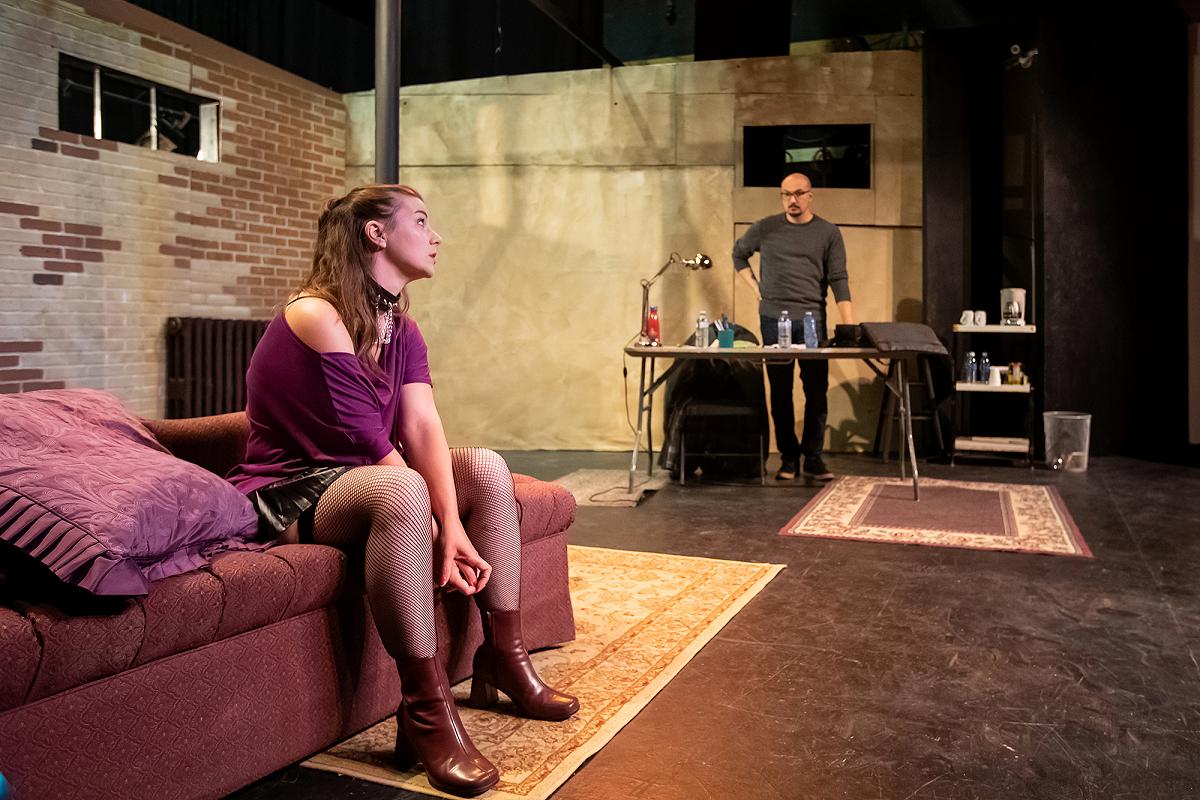
Actress Vanda Jordan (Carissa Kaye) arrives late to audition for a new adaptation of real-life Austrian author Leopold von Sacher-Masoch’s 1870 erotic novel Venus in Furs. She convinces exhausted director Thomas Novachek (John Austin) to let her read for the lead role, and he steps in to read the male lead role with her.
Showing considerable insight into both the novel and her character, Vanda nails the audition, which sees her and Thomas get caught up in the characters they’re portraying. Vanda pushes Thomas to direct and act with increasing intensity and the balance of power is ultimately reversed, with the actress gaining total dominance over the director.
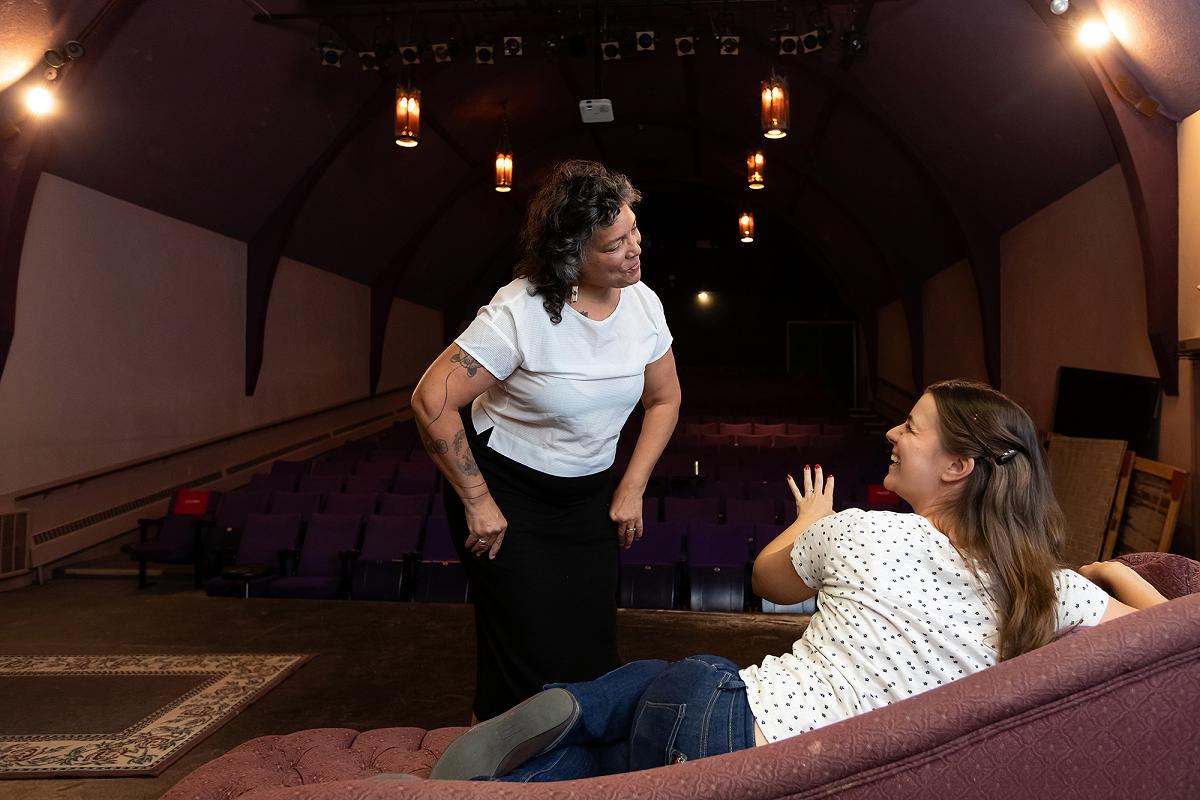
Dixon says she was first exposed to Venus in Fur after a staged reading of the Tony award-nominated play that was presented by the Guild.
“It blew me away — I couldn’t stop thinking of it,” she recalls, adding “David Ives’ concept of text on stage is brilliant. It’s very loaded.”
“I thought ‘OK, I had a really good time with 291.’ I do like two-handers and I do like one-act plays. It was a risk submitting it to the (Guild’s) play selection committee, but I did and it got in. They had a lot of people interested in taking it further as a full production.”
Dixon says that while she harbours a preference for two-handers, that dynamic comes with a risk “because I’m working with only two people and we have to work well together.”
“It’s also a challenge because they have to be really good,” she says of the actors. “If not, I have to find a way to make sure they’re good because they’re on the stage alone for 90 minutes.”
“If you have a 14 people (in the cast) you can maybe bring in someone’s first time on stage and give them a feel for what it’s like. I could not take that risk with a two-hander.”
“This play is a play within a play. It’s heavy, and it’s an intellectual play. I believe that people will leave thinking for many, many days and probably in the middle of the night, wondering what just happened.”
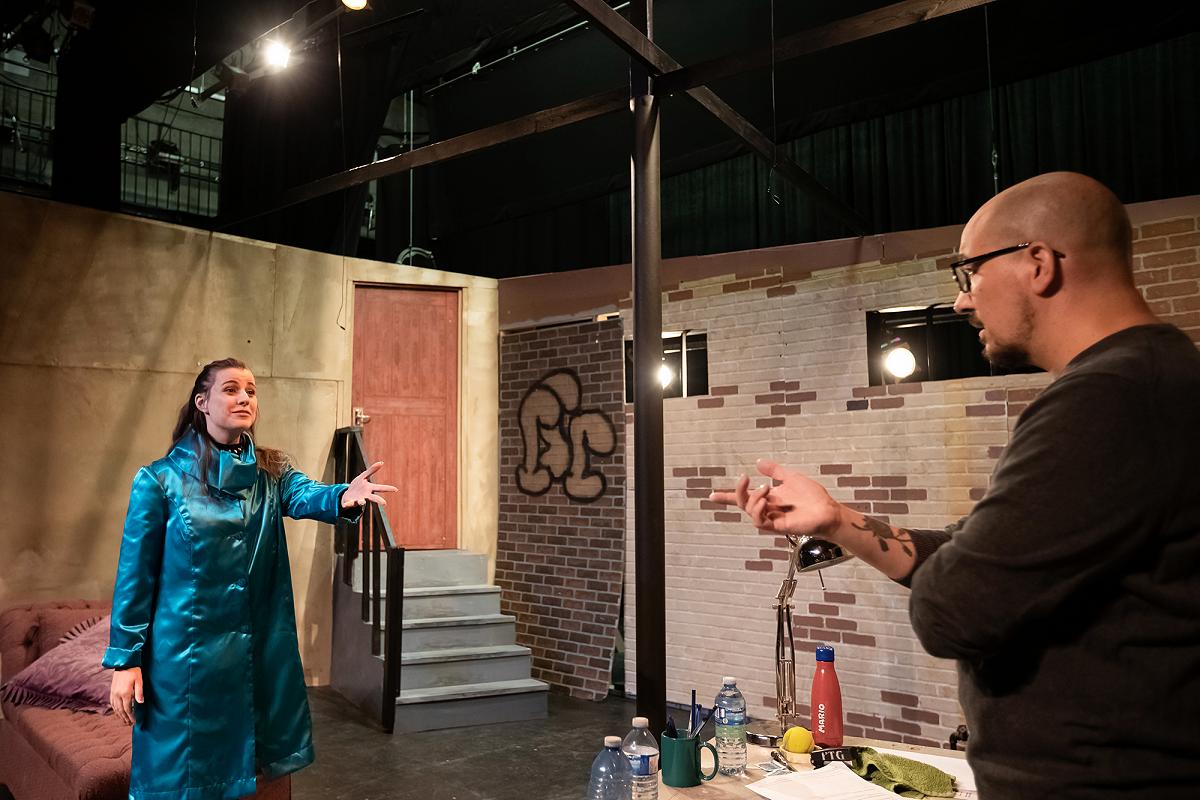
Dixon notes Kaye and Austin did what’s called a chemistry read, which determines how well actors work together.
“Their chemistry read was phenomenal,” she assesses.
“There were many amazing auditions. What happened was I didn’t need to see anything else after they read together. They’re very talented. They’re very smart. They push and take risks, or they wait for me to help them take risks. Being yourself when on stage, and allowing yourself to be vulnerable, is very important. They’re both doing a great job with that.”
“There’s no time for giving space. We have to get in each other’s face a lot with this play. We have to look inside a lot and be vulnerable, and they’re allowing each other to do that and with a lot of care.”
Of the story itself, Dixon assures audiences “will not know the ending until the ending happens. You may have clues, but it will be very difficult to realize what will happen until it does.”
The “magic” of the play, notes Dixon, is Vanda’s breaking of “the barrier of what the perfect conventional woman is.”
“There isn’t a conventional perfect woman, despite many men and media thinking there is,” she says.
Although the play’s themes are heavy, Dixon notes that, during rehearsals, she laughs “maybe every three minutes.”
“I try not to because then the actors stop and say ‘What?’ There’s play on words, and there’s physical comedy, especially of Vanda. I was looking for people who could clown, not through their voice but their body. (The play is) also very sexy. There are times when I’m fanning myself.”
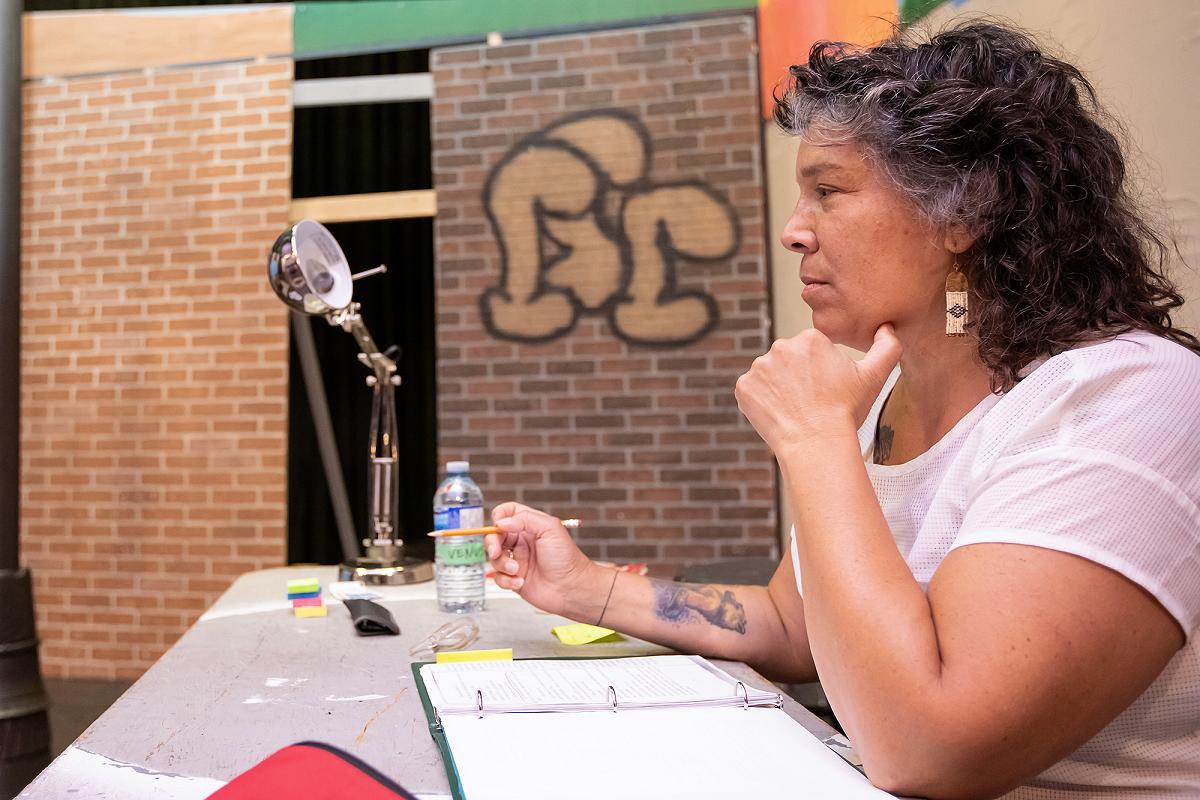
As for her increasing involvement in theatre, Dixon says that after she finalized the sale of her downtown Peterborough business Blackhoney Desserts and Coffeehouse and its associated bakery in December 2023, she found herself with more time to pursue her interests.
That took the form of continuing to teach pastry arts and culinary arts at the college level as well as ramping up her involvement with the Kawartha Youth Orchestra. But in addition, theatre tugged at her creative side.
“It is addictive — I’m already thinking of things I’d like to do next year,” Dixon says.
“I like to watch theatre, but I also like being a part of it. That’s not because I think I can do better. It’s kind of like being a chef. I want to cook that dinner for 12 people really badly; picking out the right tomatoes and the right fish. The production is what I really like … the steps of getting there. I love working with, and having a relationship with, people.”
Asked what she hopes audiences will take away from Venus in Fur, Dixon turns to a quote by famed Hollywood director Oliver Stone: “If I can get someone in a room and they can’t leave, I would show them the worst of what humanity is, and then I would give them hope.”
“Entertainment is a funny word,” Dixon says. “I really need people to be challenged.”
“This (play) is a feminist piece. I want a lot of people to go home realizing ‘I have not been fair to my partner’ or maybe it triggers ‘I had someone who didn’t treat me right and I’m going to change. I’m going to empower my belief of how I’m a good person, and not let that happen to me again.’ That’s Vanda’s voice and, poor Thomas, he pays for it.”
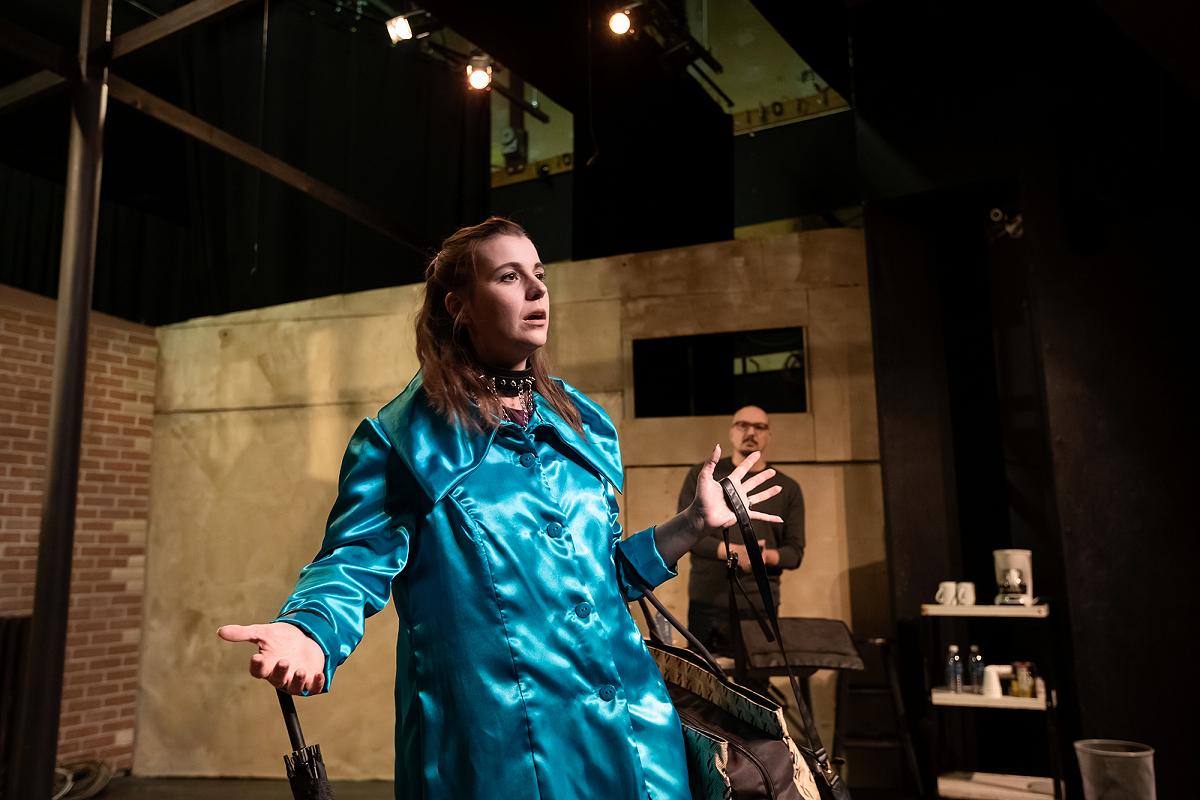
Looking ahead, Dixon admits she’d “love to do a musical” and, in fact, has two in mind. In the meantime, besides this directing stint, she’s working with a writer on a cookbook.
“The book will be the story of Blackhoney through my eyes, from the beginning (in 2005) to the end, with recipes.”
Now, as opening night nears, Dixon notes the Guild’s continuing progression. Asked if this is a play the Guild would have presented as recently as few years ago, she opines “No way.”
“They’re pushing. This (play) is a risk. It may trigger you, or upset you, but you’ll be a better person from it.”
Venus in Fur is produced by Kym Hyde, with other members of the creative team including stage manager Marilyn Robinson, assistant stage manager Taya McKeen, sound designer and composer Beau Dixon, set designer Erin Brownson, lead costume designer Jayne Martin, hair and makeup stylist Shelley Moody, lead lightning designer Don White, and intimacy director Mercedes Davy.
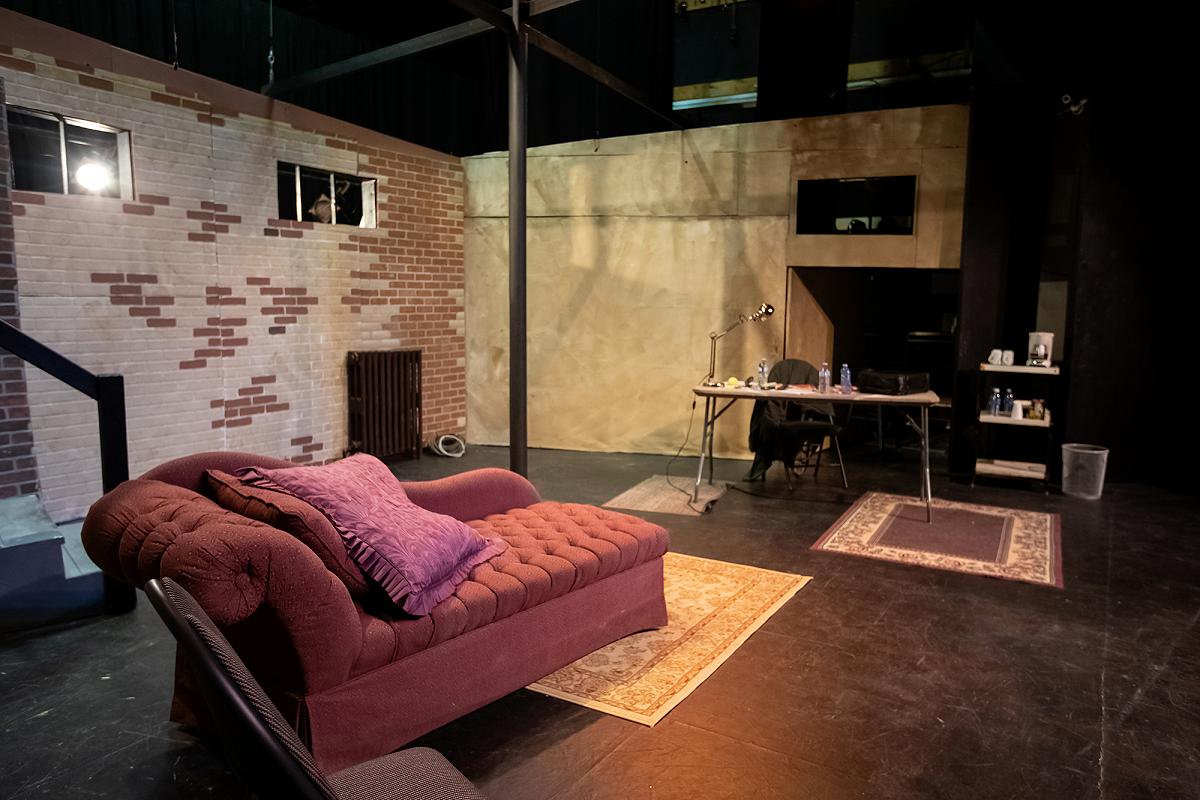
The play runs for 10 performances from Friday, September 18 to Saturday, October 3, with evening performances at 7:30 p.m. on September 18 and 19, 24 and 25, and October 1 to 3, and 1:30 p.m. matinee performances on September 20 and 26 and 27.
Assigned seating tickets are $30 for adults, $27 for seniors, and $20 for students and are available by phone at 705-745-4211 or online at www.peterboroughtheatreguild.com/upcoming-plays/venus-in-fur. For a limited time, those who use the promo code VENUS can get two tickets for the price of one for the September 18 and 19 stagings.
Of note, Venus in Fur is recommended for those aged 16 and up as it contains strong language, sexual content, and themes of power, dominance, and submission. Occasional flashing light effects will be used during the performance.
For more information on the Peterborough Theatre Guild’s 2026-27 season, visit www.peterboroughtheatre.com.
kawarthaNOW is proud to be a media sponsor of the Peterborough Theatre Guild’s 2026-27 season.