















Over the course of the just concluded 2026 municipal election, most candidates’ platforms spoke to the urgent need for affordable and safe housing for all.
Just a year ago, the release of the United Way’s 20th Housing is Fundamental report saw researchers Paul Armstrong and Dr. Naomi Nichols bring attention — again — to the adverse social impacts of the housing crisis, with the former noting “homelessness is expanding, food banks are overwhelmed, inequality flourishes.”
“The effects of the shift away from social support spending, starting in the 1980s, are indisputable today,” added Armstrong.
While the existence of a systemic shortfall continues to be acknowledged and lamented ad nauseam, a Peterborough organization focused on supporting those experiencing homelessness and/or criminalization to facilitate their inclusion as community members has been quietly taking decisive action.
Building additional rental units for people experiencing homelessness

Established in 2019 as a result of a merger between Warming Room Community Ministries and Peterborough Reintegration Services, One City Peterborough’s most visible work remains its operation of the Trinity Community Hub at the site of the former Trinity United Church.
While the provision of shelter, meals, basic needs support, and integrated pathways to health, housing and community-based services remain a One City priority, the ongoing acquisition of properties — funded via a combination of community fundraising, private donor support, grants, municipal incentive programs, and strategic partnerships — has taken One City beyond talk of providing housing.
It’s walking the walk.
“We made a very conscious decision at the time to pivot and focus on housing,” recalls Michael VanDerHerberg, One City’s director of development, of when One City was formed.
“We bought our first house on Water Street, we merged with another organization that allowed us to acquire two more homes and, year over year, we just started buying more housing with the intention of housing people coming out of homelessness.”
Then, in 2024, the work of Peterborough Action for Tiny Homes (PATH) — in particular the efforts of project manager Keith Dalton — appeared on One City’s radar.
By that point, PATH’s efforts since it was formed in 2022 to establish a community of “tiny homes” (sleeping cabins) for chronically unhoused people had been twice rejected by Peterborough city council.
“I had him here for coffee and essentially said ‘Keith, if you want to build, we have spaces in the backyards of houses that we already own. Would you be interested in building, not a tiny home that is movable, but an additional rental unit that is a fixture?”
The City of Peterborough defines an additional rental unit (ARU) as a “self-contained residential unit with a private kitchen, bathroom facilities, and sleeping areas within dwellings or within structures ancillary to a dwelling.” ARUs can include basement apartments and so-called in-law suites, as well as independent structures.
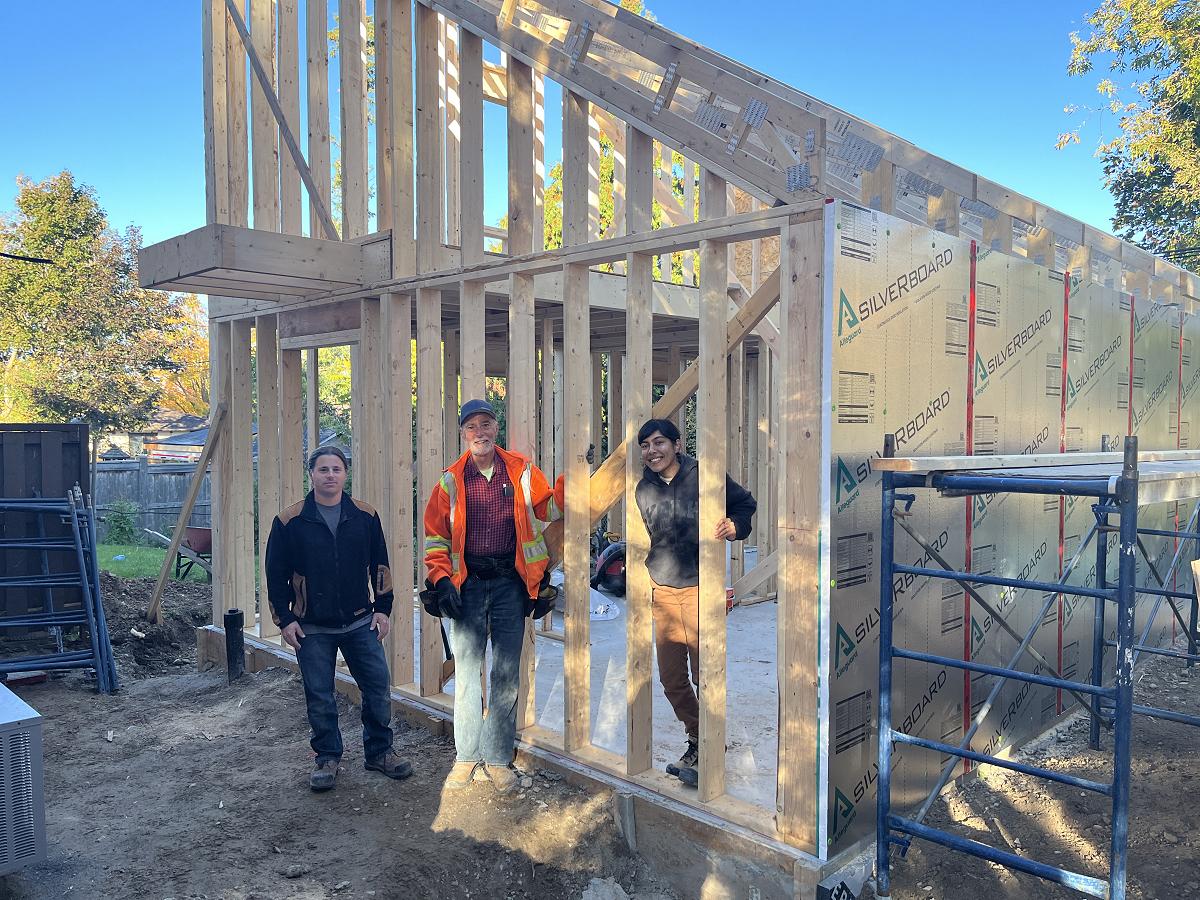
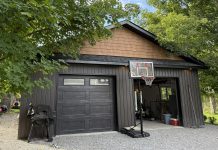
Partnering with PATH, along with fundraising and a donor’s generosity covering the $110,000 cost, One City’s first ARU was built in the backyard of a property it owns on Monaghan Road.
“The tenants of the existing home had a house meeting and one particular tenant was chosen to move into the backyard unit,” says VanDerHerberg, noting that freed up space in the house for someone else coming out of homelessness.
“The stability it has given the person who moved into the backyard unit is significant,” he recalls. “That really sparked an interest in me. We’ve known that one-bedroom units — where somebody can open their door, lock the door behind them, have their own space, their own bathroom, and their own kitchen — are gold in this sector, particularly for someone with mental health needs that would seem them thrive better in their own space.”
If you don’t have stable housing, VanDerHerberg points out, “your life is chaos.”
“Without housing stability, if they have any predisposition towards drug use, or especially if they have forms of childhood trauma, the gravitation towards really hard drugs is almost inevitable,” he says.
“That’s not a moral issue. That’s a systemic issue that we’re seeing. Yes, addictions sometimes cause homelessness but, more than anything I’ve seen, homelessness exacerbates addictions. Some can hack it for a long time. They camp outside and even exist with the shelter system and do relatively okay but, for most, they need a roof over their head to maintain a stable life.”
Municipal incentives help One City expand its affordable housing portfolio
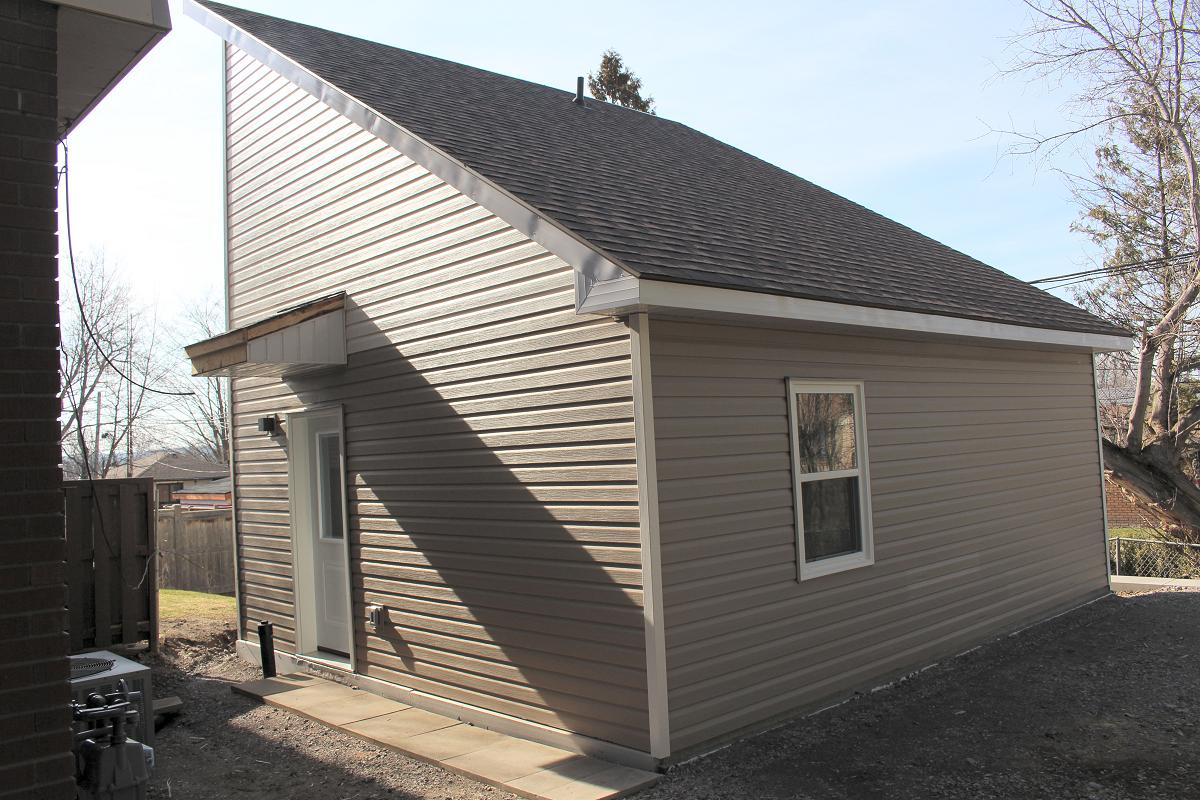
VanDerHerberg says the success of that initial ARU project led to a determination of “Let’s do this again.” With that, sights turned to a One City-owned property on Clonsilla Avenue operated by FourCAST.
“At this point, I had started asking about funding opportunities and learned that the City of Peterborough offers a wonderful program called the Affordable Housing Community Improvement Plan,” says VanDerHerberg.
Along with the Development Charges Program for developers building new affordable housing and the Tax Increment Grant Program for property owners, the plan includes the Municipal Incentive Program, which provides a financial incentive for affordable housing developments up to $80,000 per unit that is first applied to offset municipal fees and then toward project costs.
“The Municipal Incentive Program offers a specific cash capital investment when you’re developing affordable units,” VanDerHerberg explains. “I could get upwards of $60,000, $70,000, $80,000 per unit that we develop.”
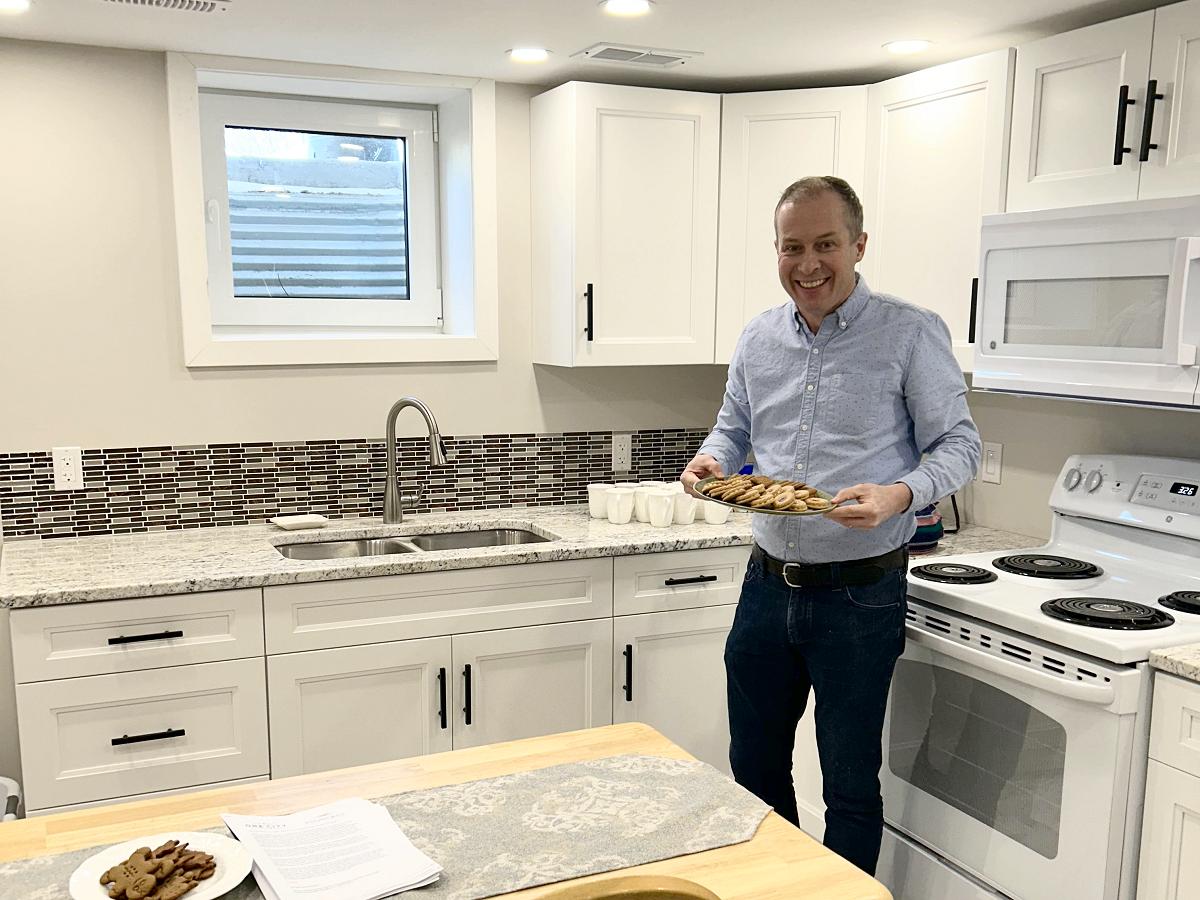
While the city wouldn’t approve funding retroactively for the Monaghan Road project, it did provide $60,000 for a basement unit and another $60,000 for a backyard ARU at the Clonsilla Avenue property. That was boosted by $70,000 from the United Way Peterborough & District and another $10,000 gifted by a private donor.
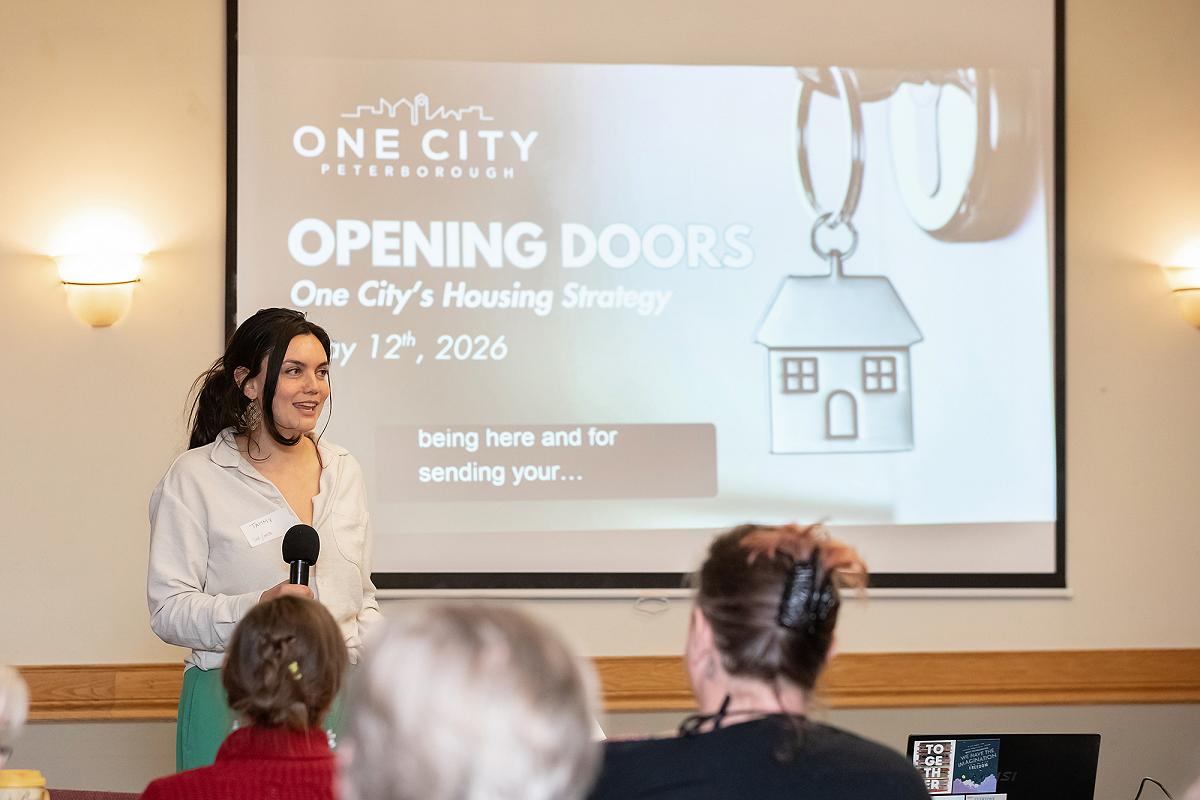
VanDerHerberg says “the stories that came out of that feel really good.”
“One man, a client of FourCAST, said to his intensive case manager that he had the opportunity to have his son for dinner for the first time in 10 years. He was able to unlock his door, bring his son in, close the door, and enjoy themselves in his own space. That’s rehabilitative stuff — that’s restorative stuff in terms of what it means to regain a sense of yourself. It’s dignity.”
Buoyed by these positive outcomes, VanDerHerberg eyed the acquisition of more properties with the goal of building more ARUs.
He says a strategy was developed so “from start to finish, we know all the steps required in terms of recognizing the opportunity to buy a home, determining if it’s a good fit, going to the housing team, and seeing if this is something they want to expand into.”
“If not, we approach somebody like FourCAST and see if they want to partner with us, and figure out all the financing mechanisms to buy the house.”
VanDerHerberg has moved forward in this work with the full blessing and support of One City executive director Tammy Kuehne, with one caveat: “If you want to buy new places, great, but you’ve got to buy them with 100 per cent financing. No debt.”
Challenge accepted, VanDerHerberg has since facilitated the purchase and debt-free financing of additional properties — one each on Stewart, Sherbrooke, and Dublin streets — providing not only a combined eight more ARUs with 19 beds in total, but also living space within the house on each property.
Community partners and private donors help housing beds surpass shelter beds
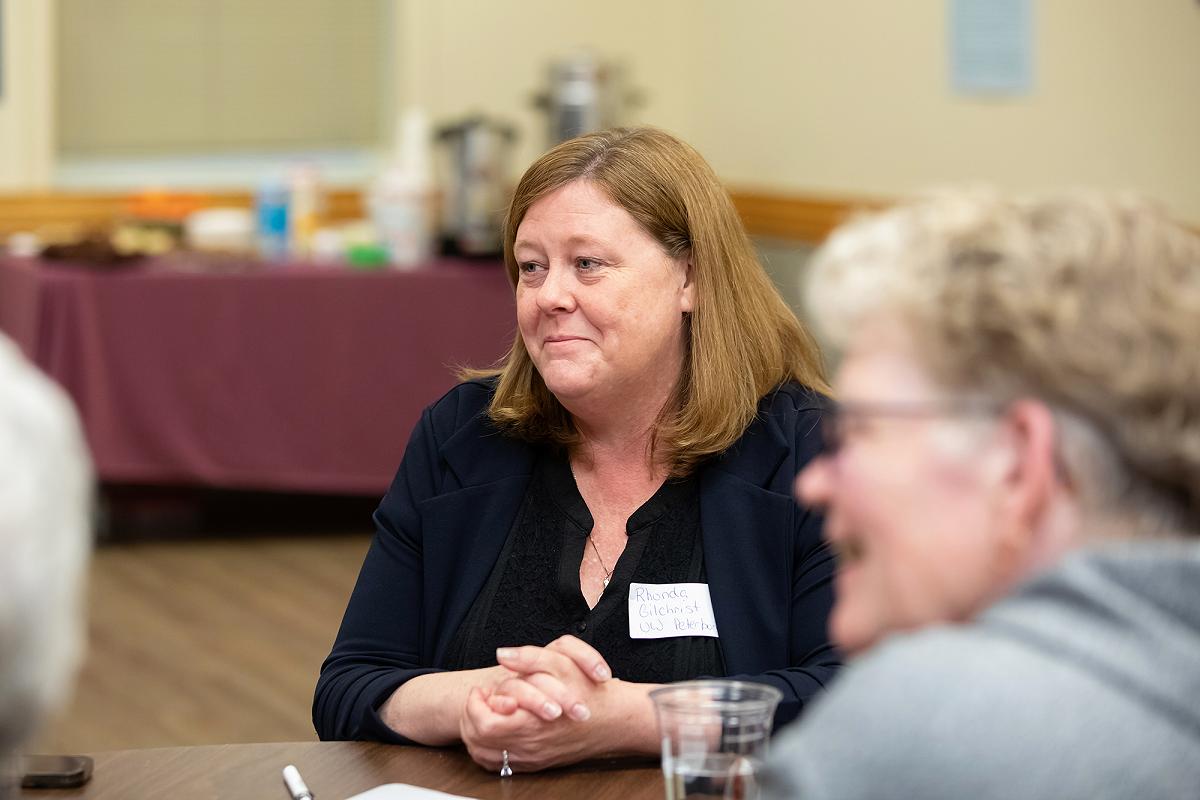
While funding from the city and partners such as the United Way, PATH, the Community Foundation of Greater Peterborough, and PTBO Renovates has made property purchases and ARU construction possible, another source of funding that’s as heartwarming as it is remarkable deserves attention: private donors.
While VanDerHerberg says he is “grateful” for the above-noted partnerships and the resulting funding, he adds that such support falls within each organization’s mandate. The contributions of private donors, he says, are another thing altogether.
“Once a donor puts a certain amount of trust in you that’s attached to a larger donation, the onus to do the work and do it well weighs on me. Not in a bad way, but there’s the weight of responsibility. Somebody has entrusted their money to you. They could buy a yacht with their money but they’ve chosen, out of their love of community, to say ‘Here’s a team buying spaces, building these additional rental units and housing people coming of out homelessness.'”
“A method that I think has resonated with donors has been ‘Find as much money as you can from government. Then go to the United Way and CFGP, or other granting organizations, and then come to us.’ Exhaust those two (funding sources) and then come to us.”
The long-term goal of this work, says VanDerHerberg, was to “get to a place where our housing beds exceed the 45 shelter beds we provide (at Trinity).”
That goal, he says, has been met, adding “Now our goal is to double that.”
“We do not want to expand the number of shelter beds we provide — we want to expand the number of housing beds we provide,” VanDerHerberg says.
While noting that shelter is essential and saves lives, he also calls it a “band-aid” solution to a more systemic problem.
“We’re in a housing crisis. We could fill 200 shelter beds, but I don’t think it’s the right idea.”
Working with neighbours to deal with issues while seeking lasting solutions to homelessness
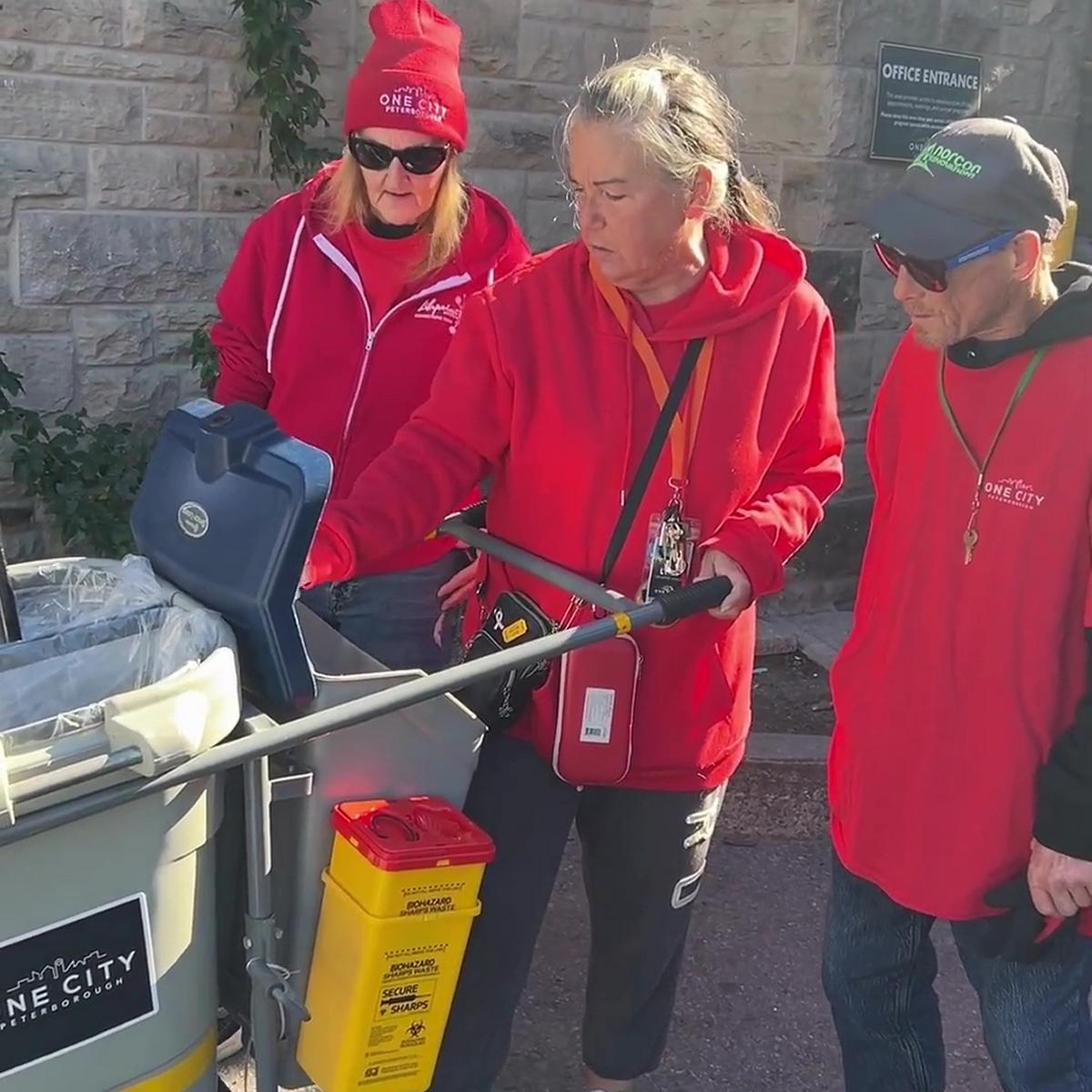
As for the neighbours of One City properties, VanDerHerberg says he does talk to them “to let them know what’s going on. It’s important for me that they know what our intentions are.”
“We’re adding gentle density. Adding a house and maybe one or two new units on a site … a neighbourhood can absorb that. If you were to add a much larger building, I would be much more conscientious around the effect on the neighbourhood. Alongside Keith, we have an architectural designer. I can already see the desire to build good spaces that build community in a healthy way; that fit the community already there.”
In the meantime, not lost on VanDerHerberg is the need to continue to monitor activity at its Trinity Community Hub site in response to ongoing concerns from neighbours, and make any changes and adjustments as they’re deemed necessary.
“I think there’s something about acknowledging that the work here is tough, and appreciating the folks that do complain — that there is truth in some of it,” he says.
“I’m okay with our immediate neighbours saying we have to do better. We will put in architectural upgrades to the space. We will change staffing routines. We’ll have community meetings with neighbours to bring forward emerging issues.”
VanDerHerberg says he has been “reluctant” to promote the housing work that One City does “because of how political the work is that we do here at Trinity.” He also wants to protect the privacy of tenants who live in the properties owned by One City.
“People have no business knowing the addresses,” he affirms, adding that One City works with immediate neighbours on any issues regarding the tenants. “Let them live there … Give them a chance to thrive there.”
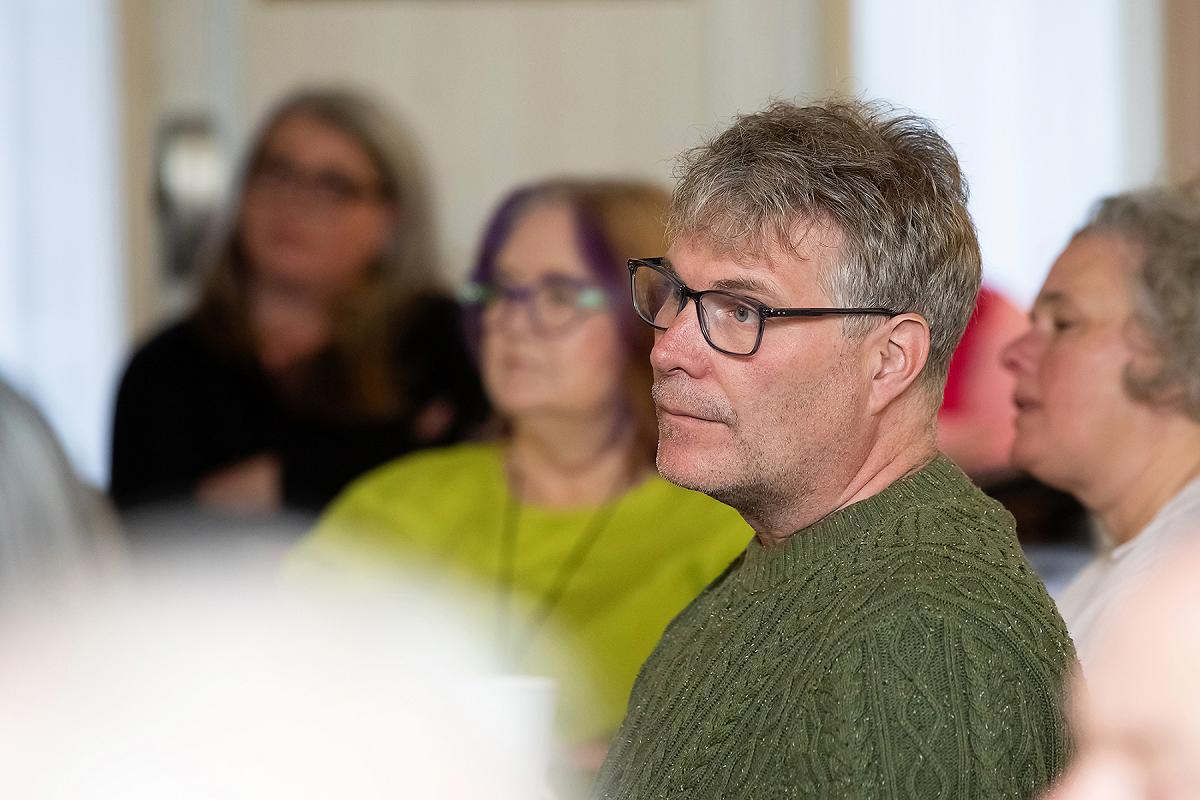
For anyone who believes One City shouldn’t be involved in developing affordable housing, VanDerHerberg has one question: “What do you want?”
“We’re doing a shelter, and a shelter is really tough, and we’re doing housing. If you don’t like either of those, what are you hoping for?”
As for those donating to One City’s housing efforts, VanDerHerberg says they want to see “tangible solutions” that are “changing the lives” of people.
Meanwhile, to the notion that Peterborough is unique in its number of homeless people and related challenges, VanDerHerberg says nothing could be further from the truth.
“This is happening right now at every single other regional hub in Ontario, Canada, and across North America,” he says. “There are no communities that are escaping homelessness.”
“If you think, for one second, that this is a Peterborough problem, give your head a shake. Travel. Get out of the city and look at what’s happening. Open your eyes. We have people falling through the cracks right now because of systemic issues. If it was just a Peterborough thing, we wouldn’t see it other communities.”
As for criticisms levelled against city council, city staff, and the non-profit sector for not doing enough to address homelessness, VanDerHerberg admits “we can all do better” by looking at longer-term solutions.
“We can invest more in affordable housing. We can talk about basic income guarantees. We can talk about things outside the concept of current capitalism that might improve things.”
He points out that simply finding housing for people “that are easy to house” is not going to solve the problem.
“It takes a community to lean into the hard work and say, ‘Okay, we’re going to intentionally buy spaces for people who are struggling,’ because what we’re seeing right now, happening in our community and in communities around North America, is simply not acceptable.”
For more information about One City Peterborough and to donate, visit www.onecityptbo.ca.