






















Clocks will “fall back” an hour when daylight saving time (DST) ends at 2 a.m. on Sunday (November 1).
The annual return to eastern standard time (EST) means it will be lighter in the morning when we get up, with the sun rising at 6:50 a.m. on Sunday in the Kawarthas. On the other hand, it will be darker earlier, with the sun setting at 5:02 p.m. on Sunday afternoon.
If you still have any manual clocks, remember to set them back an hour before you go to bed on Saturday night.
The end of DST also means it’s time to change the batteries in your smoke and carbon monoxide alarms and to check whether the alarms need to be replaced (if they are more than 10 years old, they probably do).
Here’s everything you should know about DST, including recent actions to make it permanent so we don’t have to change our clocks twice a year.
Who invented DST and why?
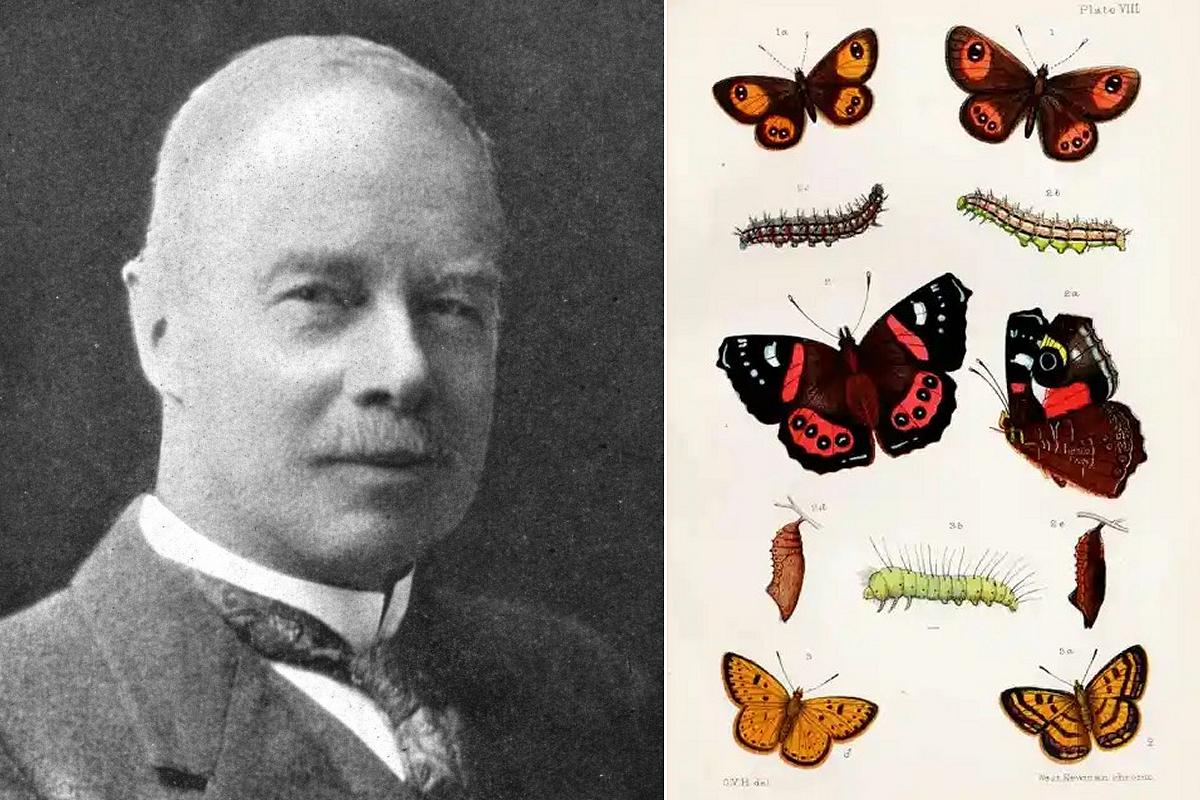
Although it’s commonly believed Benjamin Franklin came up with the idea for DST, it was actually New Zealand entomologist George Hudson.
In 1895, Hudson proposed a two-hour shift in the clocks (he wanted more daylight to collect insects).
“The effect of this alteration would be to advance all the day’s operations in summer two hours compared with the present system,” Hudson wrote in 1898, explaining his original proposal. “In this way the early-morning daylight would be utilised, and a long period of daylight leisure would be made available in the evening for cricket, gardening, cycling, or any other outdoor pursuit desired.”
A few years later, English outdoorsman William Willett also proposed advancing the clocks during the summer months (he wanted more daylight to golf).
The first governments to implement DST were Germany and Austria-Hungary in 1916, as a way to conserve coal during World War I. Britain and most other European countries adopted it shortly after, with the United States and Canada adopting it in 1918.
DST used to begin the first Sunday of April and end the last Sunday of October, but in 2007 the U.S. decided to change it to begin the second Sunday of March and end the first Sunday of November in an attempt to conserve energy.
To avoid issues with economic and social interactions with the U.S., the Canadian provinces that observe DST followed suit.
What are the health effects of changing time twice a year?
While the evidence is mixed, some research has found that “falling back” results in more accidents involving pedestrians, while “springing forward” increases the risk of heart attacks and traffic accidents.
In any case, moving clocks forward or backward changes our exposure to daylight and affects our circadian rhythm (the body’s natural internal clock).
In the spring, having to get up an hour earlier can disrupt your sleep patterns. In the fall, having an extra hour of sleep can actually make you feel jet lagged.
In either case, it can take up to a week to adjust your internal clock to the shift in daylight hours.
Why don’t we just get rid of DST?
It’s possible that we’ll eventually end the practice of changing our clocks twice a year, but by making DST permanent rather than getting rid of it.
On November 25, 2020, the Ontario government gave royal assent to The Time Amendment Act, a private members’ bill tabled by Ottawa-West Nepean MPP Jeremy Roberts that proposed making “the time now called daylight saving time the standard time year-round.” The bill would only come into force if the province of Quebec and the state of New York also make DST permanent.
On March 2, 2026, then British Columbia premier David Ebey announced the province was permanently adopting DST. In 2019, B.C. introduced legislation to allow the switch to permanent DST, following initiatives by California and Washington state to do the same. Originally, Ebey said he would wait for the American states to make the switch before doing the same.
“We are done waiting,” Eby said. “British Columbia is going to change our clocks just one more time, and then never again.”

British Columbia’s northern neighbour, Yukon, already ditched the switch in 2020, permanently adopting DST.
After Manitoba announced on September 17, 2026 that it would be permanently adopting DST this year, the Ontario government announced on October 13 it would also make DST permanent in Kenora and the northwestern regions of Ontario that have historically been aligned with neighbouring Manitoba. The change, to take effect on November 1, would be made through a regulation under the Time Act.
In 2022, it looked like the U.S. was on the verge of ending the bi-annual time change. On March 16, 2022, the U.S. Senate passed the Sunshine Protection Act, which would make DST permanent beginning in spring 2023. Despite passage in the Senate, the bill stalled in the House of Representatives, where it remained in a committee until it died with the expiration of the previous Congress. In March 2023, then Florida senator Marco Rubio reintroduced the bill into the 118th Congress, where it also died in committee with the U.S. election.
In January 2025, two Republican Florida senators reintroduced the bill into both the House and Senate, where it was again referred to committee. Although U.S. President Donald Trump said prior to his inauguration that DST “is inconvenient, and very costly to our nation,” in March 2025 he said it’s “hard to get excited” about changing DST and called it a “50-50 issue,” adding “a lot of people like it one way, a lot of people like it the other way.”
On July 14, 2026, the House of Representatives passed the Sunshine Protection Act with backing from Trump. After being sent to the Senate and referred to a committee, the bill has faced division among senators and remains stalled.
“The United States Senate is letting the Daylight Saving Bill die, when a vast Majority of the Country want it,” Trump wrote in a Truth Social post on October 26. “Most people are demanding light in the evening, but ALL want not to change their clocks anymore.”
While the Sunshine Protection Act remains in limbo, 19 states have enacted laws to make DST permanent. However, these laws can’t go into effect until Congress allows it at the federal level.
Is making DST permanent a good idea?
The primary argument for adopting DST permanently is that, by increasing the amount of daylight at the end of the day, it would lead to more economic activity and reduce vehicle collisions, energy usage, and robberies.
But researchers in chronobiology — the study of biological rhythms — disagree that DST should be made permanent. While they also want to get rid of the bi-annual time change, they say we should be permanently adopting standard time rather than DST.
“Based on current chronobiology knowledge, permanent Standard Time (ST) would be a wiser, healthier choice,” the Canadian Society for Chronobiology has said.
Chronobiologists say adopting permanent standard time would move sunrise closer to our body’s internal clock, while permanent DST would move it further away. It’s the light in the morning that is most important in resetting our biological clocks, they say.
And it’s not just the Canadian Society for Chronobiology advocating for the permanent adoption of standard time. The U.S.-based Society for Research on Biological Rhythms, the European Biological Rhythms Society, the British Sleep Society, and the European Sleep Research Society have all issued statements supporting it.
If DST is made permanent, sunrises in the winter would occur an hour later. On the shortest day of the year in December, sunrise would be at 8:47 a.m. in the Kawarthas region. That means it would still be dark when children are walking to school or waiting for the bus, although they’d have more sunlight after school to play outdoors (sunset would be at 5:38 p.m. on the shortest day of the year).
How can we reduce the health effects of the time change?
Although gaining an hour of sleep is much less disruptive than losing an hour, you can take a few simple actions to adjust more quickly to the time change.
- Shift your sleeping pattern gradually over the next few days, instead of all at once on Saturday night. Delay your bedtime and waking time by 15 minutes each night to ease the transition.
- Resist the urge stay up late on Saturday night or sleep in on Sunday morning, so you can keep your internal clock consistent.
- Eat a healthy breakfast when you first wake up, as food is one way to tell your body it’s the beginning of the day.
- Expose yourself to daylight as soon as you can when you wake up in the morning. Morning light is key to synchronizing your internal clock.
- Increase the overall quality of your sleep by reducing your use of caffeine and alcohol during the day and increasing your physical activity.