















‘Not just a symbol’: Red Dress Day gathering in Nogojiwanong-Peterborough calls for action on MMIWG2S+ crisis

May 5 ceremony at Peterborough City Hall honoured missing and murdered Indigenous women while challenging racism and discriminatory systems

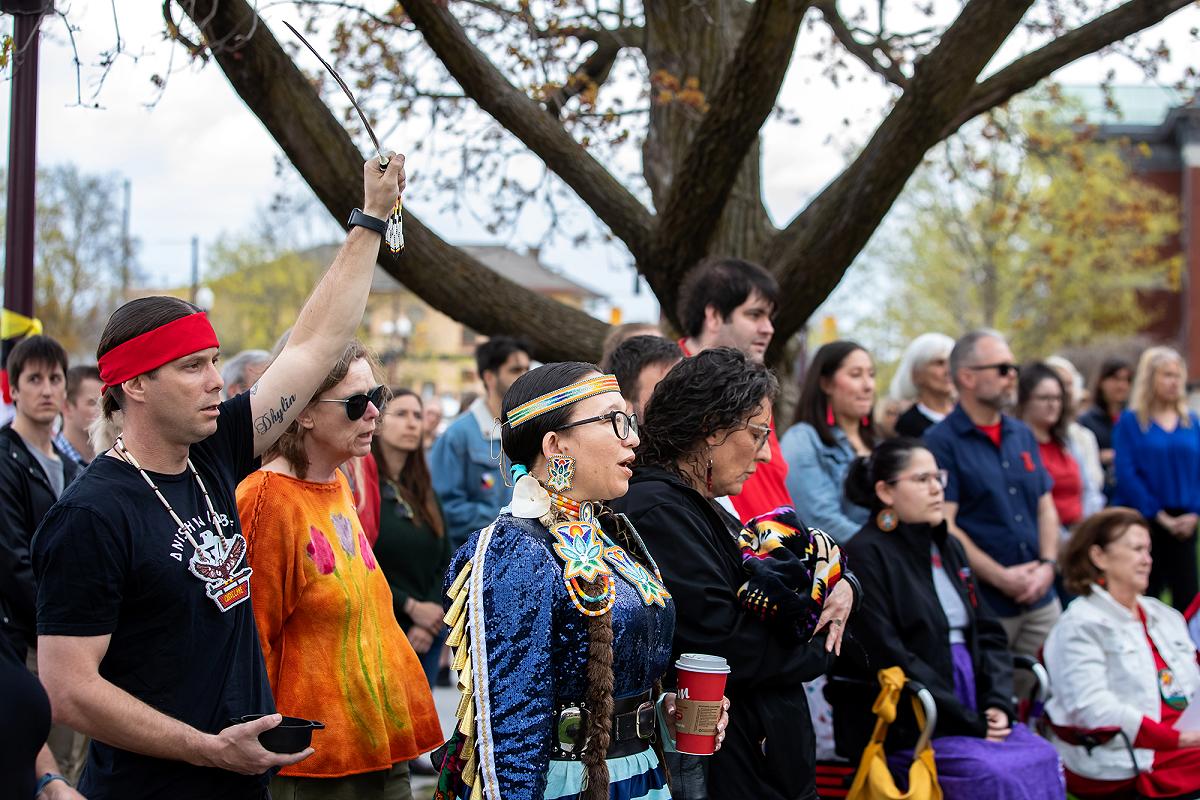
Residents of Nogojiwanong-Peterborough gathered at Peterborough City Hall on May 5, 2026 to commemorate Red Dress Day at an event led by the Urban Indigenous Working Group in collaboration with the City of Peterborough. May 5 has been recognized as the National Day of Awareness for Missing and Murdered Indigenous Women, Girls, and 2SLGBTQI+ People (MMIWG2S+) since 2010. (Photo: Jordan Lyall / kawarthaNOW)

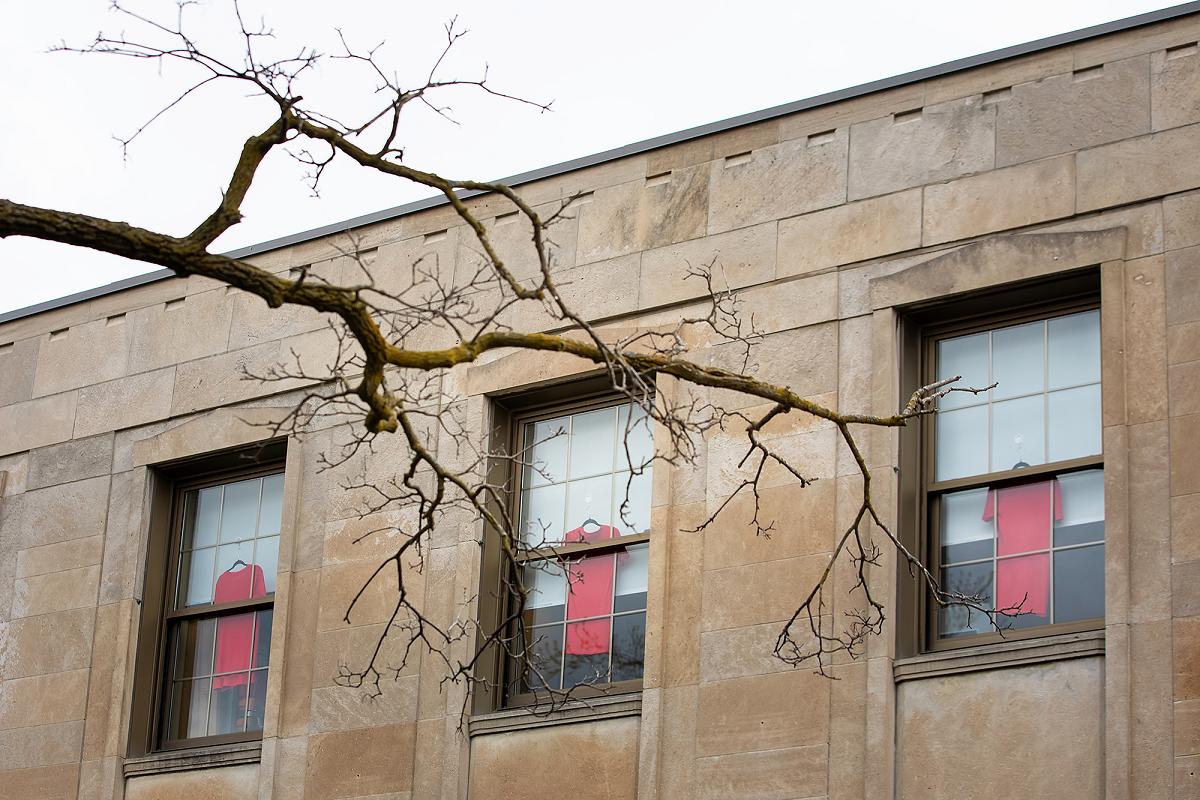
As red dresses adorned the windows of Peterborough City Hall, local Indigenous leaders called on the community to go beyond remembrance and to take action.

Residents of Nogojiwanong-Peterborough commemorated Red Dress Day on Tuesday (May 5) at an event led by the Urban Indigenous Working Group in collaboration with the City of Peterborough.

“Red Dress Day is not just a symbol, it’s a call to action,” said Chief Laurie Carr of Hiawatha First Nation.

Advertisement - content continues below


Chief Carr was joined by representatives from the City of Peterborough, Peterborough County, and Curve Lake First Nation, including Chief Laurie Hockaday and councillor Arnold Taylor.

The commemoration featured drumming and dance performances, an official proclamation made by Peterborough mayor Jeff Leal, and the raising of a symbolic red hand flag.

Leal said that the day was an opportunity for the city and community to “renew our commitment to meaningful action.”
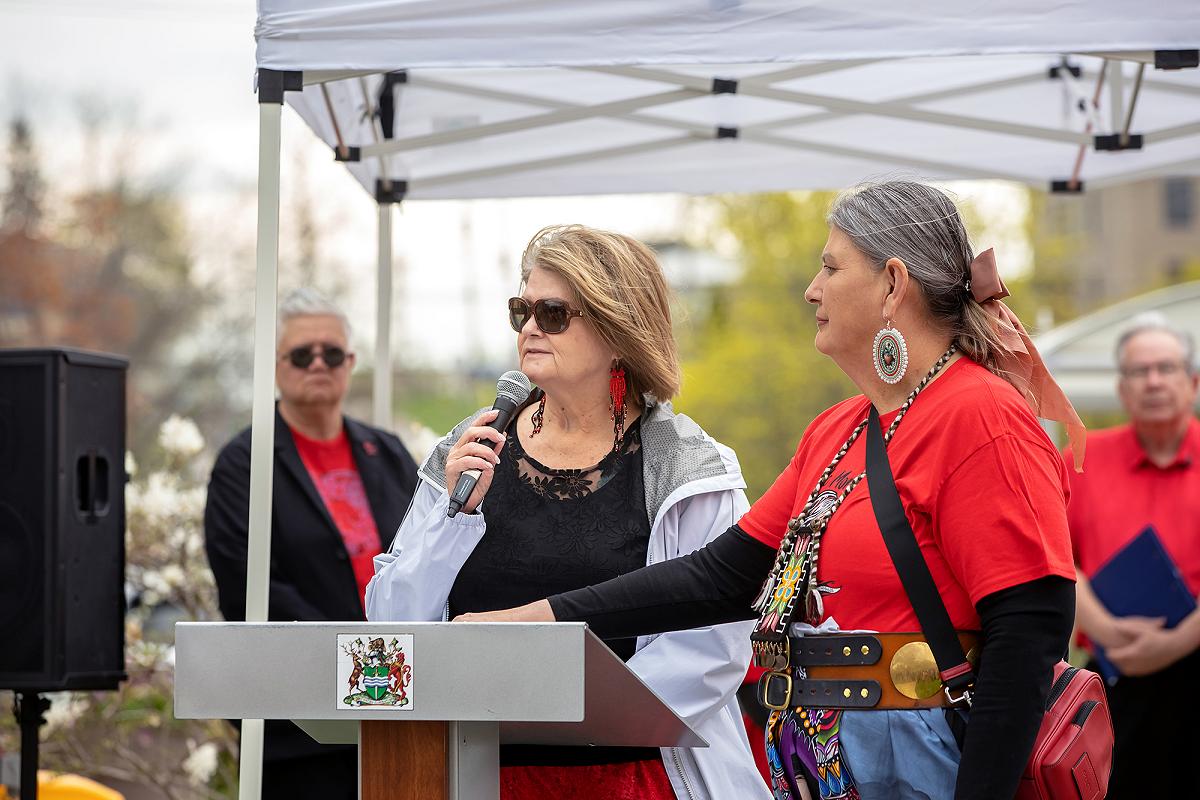
Hiawatha First Nation Chief Laurie Carr speaks during an event to commemorate Red Dress Day at Peterborough City Hall on May 5, 2026, with Curve Lake First Nation's Shelley Knott, Indigenous relations advisor for the City of Peterborough, by her side. Pictured in the background are Peterborough city councillor Joy Lachica and Peterborough mayor Jeff Leal. (Photo: Jordan Lyall / kawarthaNOW)
Hiawatha First Nation Chief Laurie Carr speaks during an event to commemorate Red Dress Day at Peterborough City Hall on May 5, 2026, with Curve Lake First Nation’s Shelley Knott, Indigenous relations advisor for the City of Peterborough, by her side. Pictured in the background are Peterborough city councillor Joy Lachica and Peterborough mayor Jeff Leal. (Photo: Jordan Lyall / kawarthaNOW)

After the ceremony, attendees gathered in Confederation Square across from City Hall to share stories, bannock, and tea, courtesy of the Urban Indigenous Working Group.

Commonly known as Red Dress Day, May 5 has been recognized as the National Day of Awareness for Missing and Murdered Indigenous Women, Girls, and 2SLGBTQI+ People (MMIWG2S+) since 2010.

The day of commemoration was inspired and established nationally in partnership with Métis artist Jaime Black as a continuation of her REDress Project, which displayed empty red dresses in recognition of missing or murdered women.

Advertisement - content continues below


“The colour red is quite significant in our culture because that’s the one colour that spirit can see,” Mshkiki Gitigaan Kwe, a member of the Urban Indigenous Working Group, told kawarthaNOW in a recent interview.

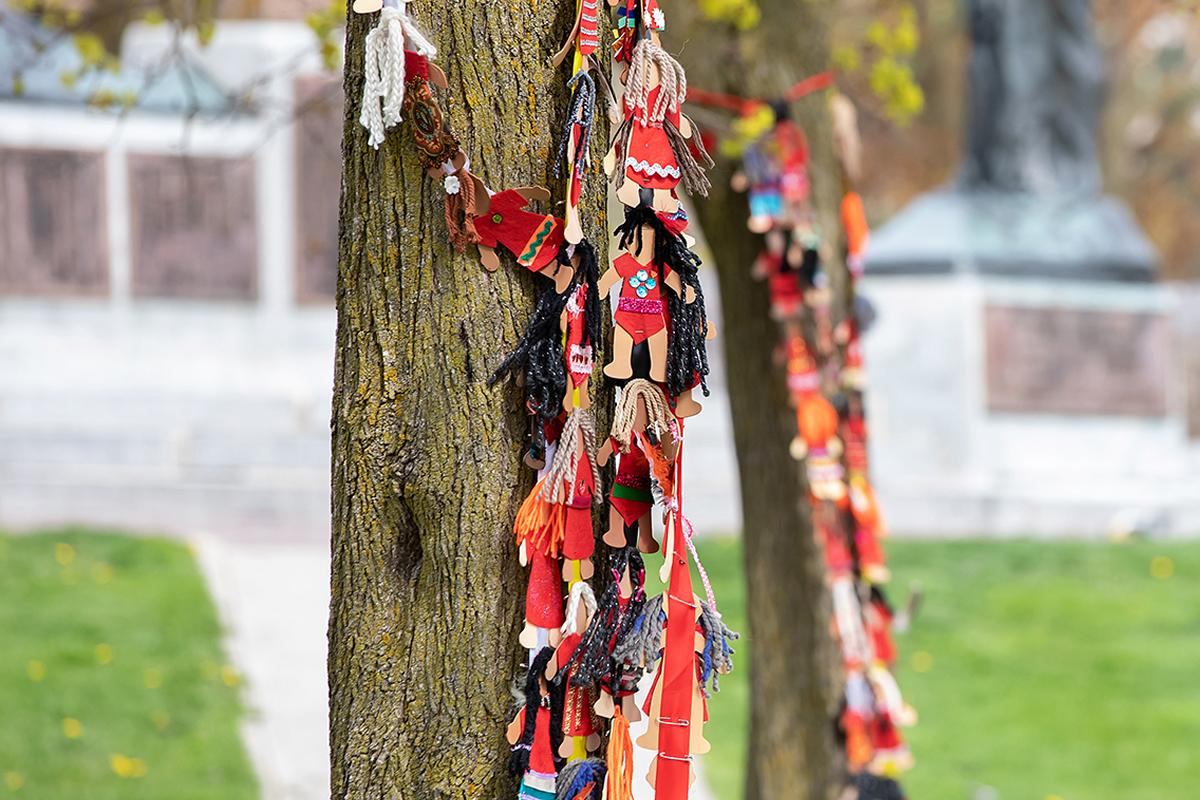
Ahead of the gathering, the Urban Indigenous Working Group and Lovesick Lake Native Women’s Association hosted two workshops where community members participated in crafting felt faceless dolls and collecting red dresses that were displayed at the event.

“The faceless dolls represent our friends, family, and community,” said Em Feltham Day and Jess Vossen, two representatives of the Nogojiwanong Friendship Centre participating in the Urban Indigenous Working Group.
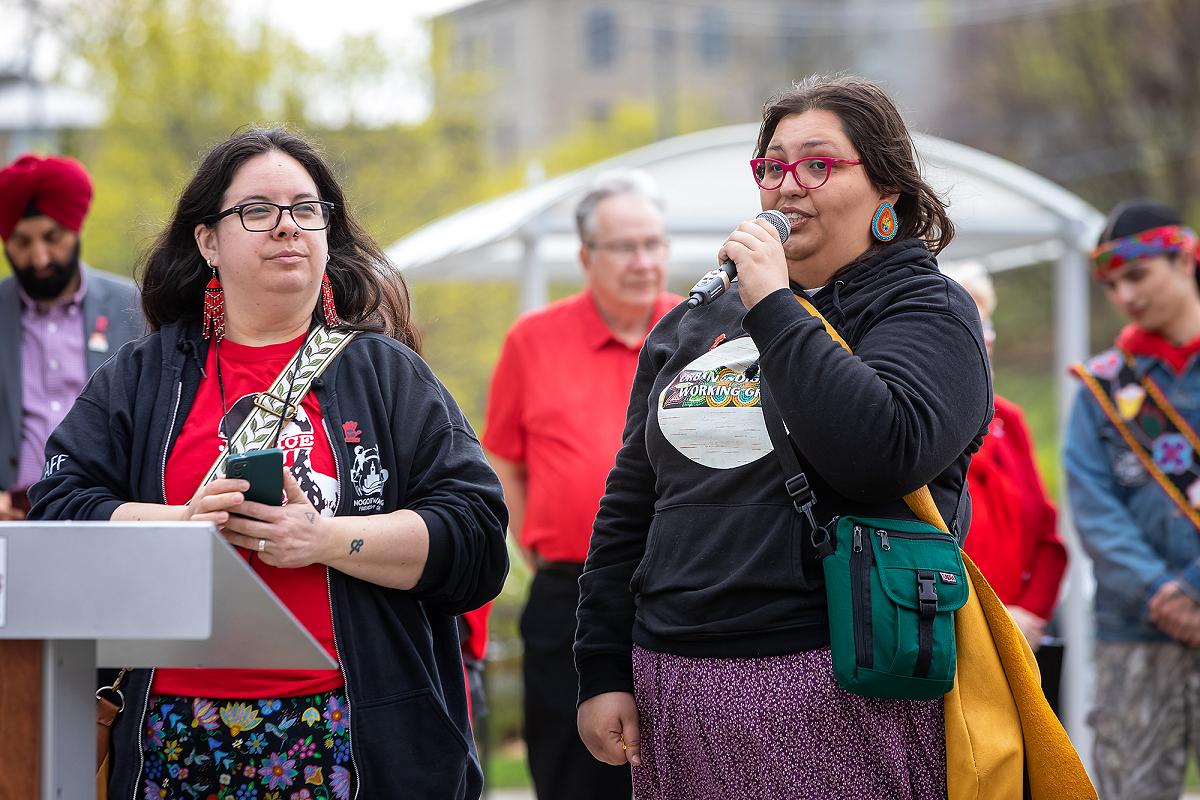
Em Feltham Day and Jess Vossen of the Urban Indigenous Working Group during an event to commemorate Red Dress Day at Peterborough City Hall on May 5, 2026. Pictured in the background are City of Peterborough CAO Jasbir Raina, Peterborough mayor Jeff Leal, Peterborough County warden Bonnie Clark (obscured), and Kelvin Boissoneau of Garden River First Nation. (Photo: Jordan Lyall / kawarthaNOW)
Red dresses in the windows of Peterborough City Hall to commemorate Red Dress Day on May 5, 2026. The dresses will remain in the windows until Friday, May 7. (Photo: Jordan Lyall / kawarthaNOW)

These crafts and dolls were displayed outside City Hall and in Confederation Square throughout the event. As for the red dresses placed in the windows of City Hall, they will remain there until Friday (May 8).

“We might have some of our stolen sisters wandering and looking for us, so having these dresses on display helps spirit find us,” Gitigaan told kawarthaNOW.

In response to the Truth and Reconciliation Commission, between 2016 and 2019 a national inquiry was commissioned by the Government of Canada to identify underlying social, institutional, and systemic factors contributing to violence against Indigenous women.

Advertisement - content continues below


According to the Assembly of First Nations, rates of violence against Indigenous women are four times higher than non-Indigenous women.

The National Inquiry into Missing and Murdered Indigenous Women and Girls determined that disproportionate rates of violence are due to “persistent and deliberate human and Indigenous rights violations and abuses” by Canadian governments and institutions.

“Their absence is not accidental,” said Chief Carr at Tuesday’s event.
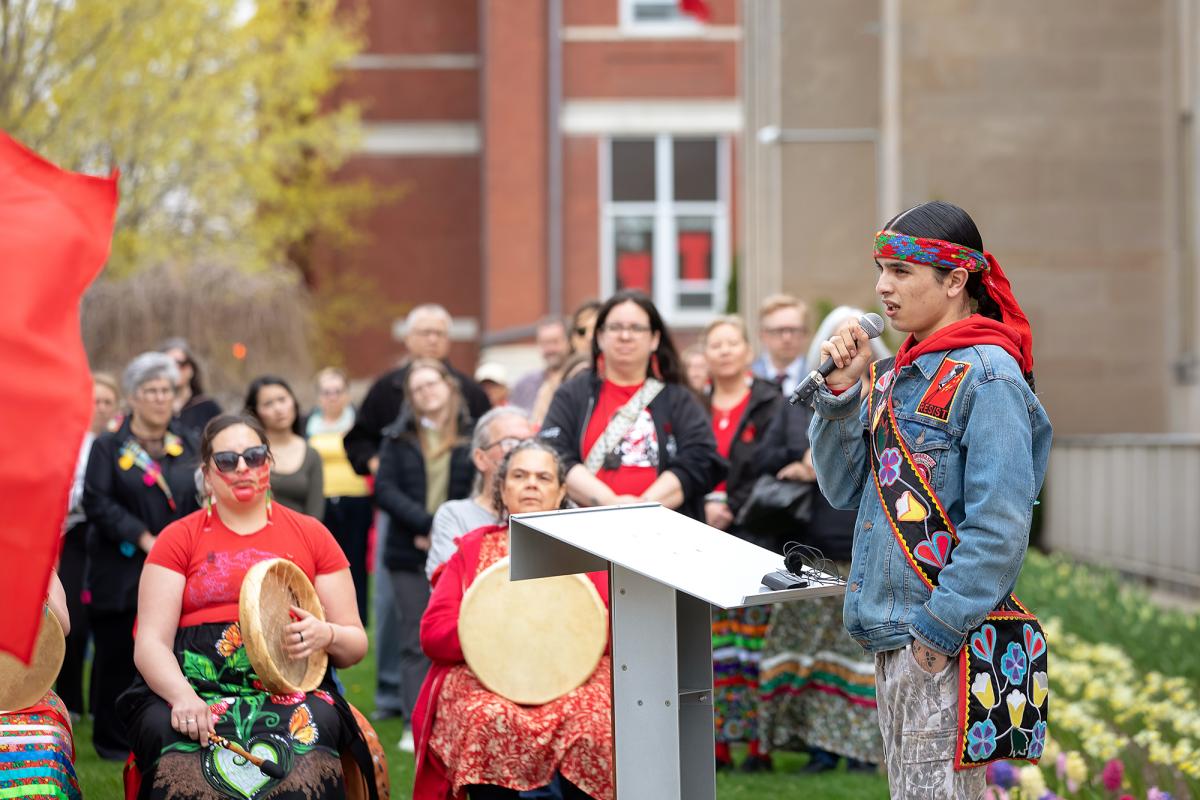
Kelvin Boissoneau, an 18 year old from Garden River First Nation near Sault Ste. Marie, led attendees in an opening prayer and song during an event to commemorate Red Dress Day at Peterborough City Hall on May 5, 2026. (Photo: Jordan Lyall / kawarthaNOW)

Speaking further to systemic discrimination and the large-scale nature of the MMIWG2S+ crisis, Gitigaan said all levels of government have a responsibility in the harm caused.

She explained that this, in part, is why the May 5 gathering took place at Peterborough City Hall, saying that it is a reminder that Indigenous women are underserved and underprotected by the government.

“It sends a message to our government — it sends a message to the ones that need to hear it,” she said.

Advertisement - content continues below


Having been organized by the Urban Indigenous Working Group with support from Shelly Knott, advisor for Indigenous relations at the City of Peterborough, the event centred on Indigenous voices and traditional ceremonial practices.

This was demonstrated by traditional performances including jingle dancing by Kelli Marshall and drumming by Naandewegaan (Healing With Drums). These are important pieces of ceremony to show honour and offer healing, explained Marshall.

Naandewegaan performed the “Strong Woman Song,” which they described as a song of solidarity and resistance created by Indigenous women to be able to identify when someone was missing or in need.

Kevin Boissoneau, an 18 year old from Garden River First Nation near Sault Ste. Marie, led attendees in an opening prayer and song where he called on Creator for protection and healing for those affected by the MMIWG2S crisis.
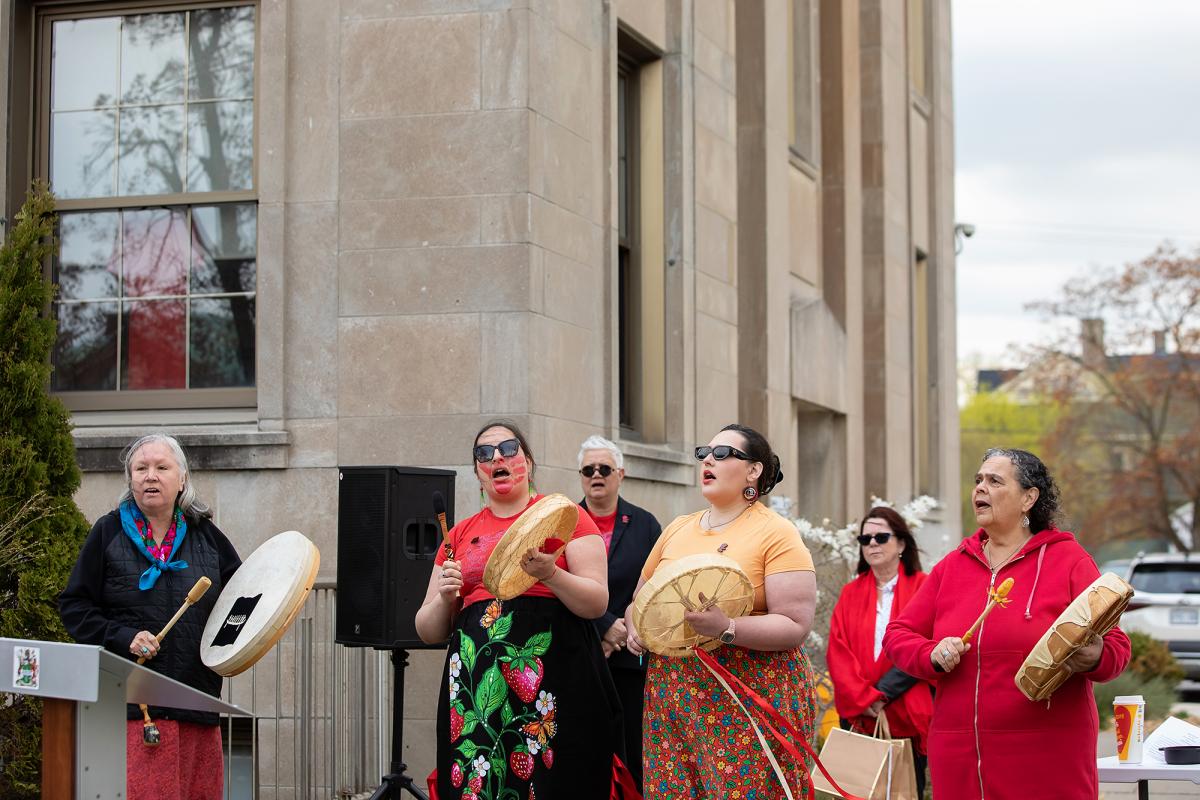
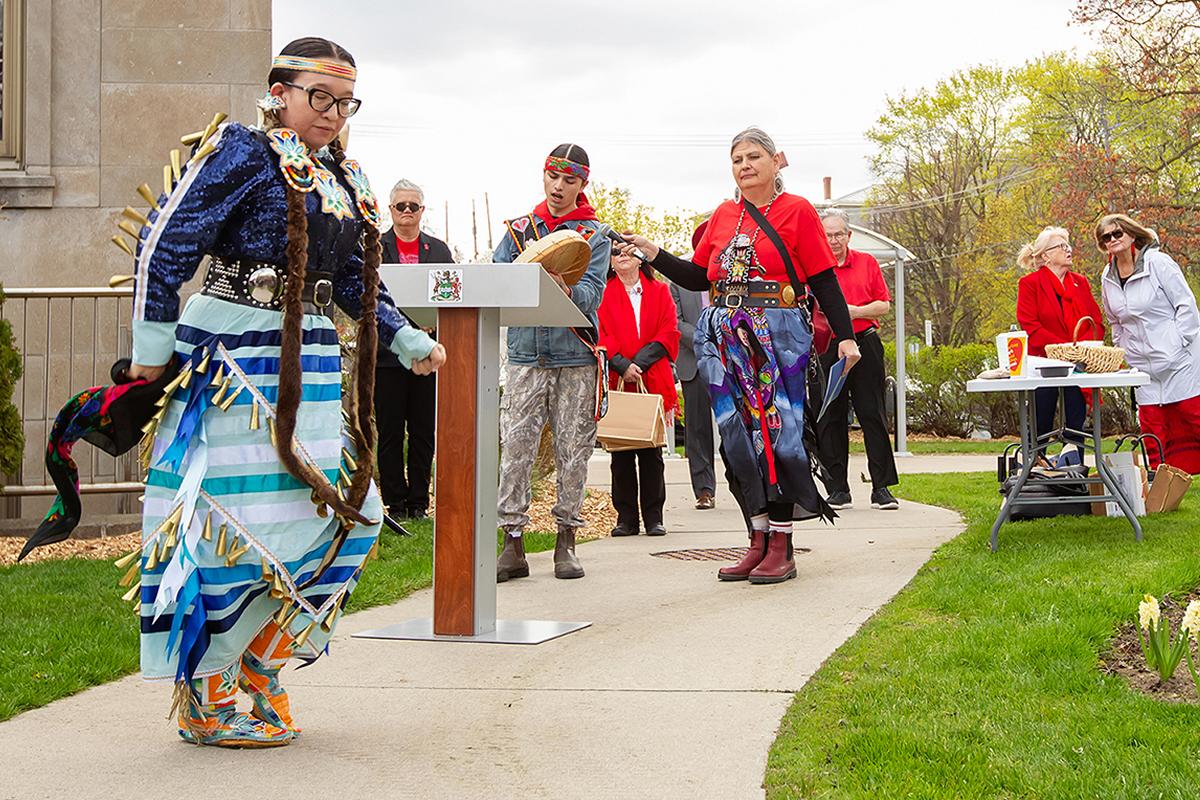
Members of Naandewegaan (Healing With Drums) performing during an event to commemorate Red Dress Day at Peterborough City Hall on May 5, 2026. (Photo: Jordan Lyall / kawarthaNOW)
Kelli Marshall performs a traditional jingle dance during an event to commemorate Red Dress Day at Peterborough City Hall on May 5, 2026. (Photo: Jordan Lyall / kawarthaNOW)

Event organizers and Indigenous activists pointed out that building awareness and gathering in remembrance alone is inadequate in the ongoing work towards reconciliation.

“These red dresses serve as a reminder that awareness must lead to action,” Knott said.

The Urban Indigenous Working Group and local First Nation representatives said there must be movement towards action as a result of increased awareness. Such action, they say, should focus on dismantling systems that discriminate against Indigenous women and girls.

“Learn and fight for change alongside us,” Day said.
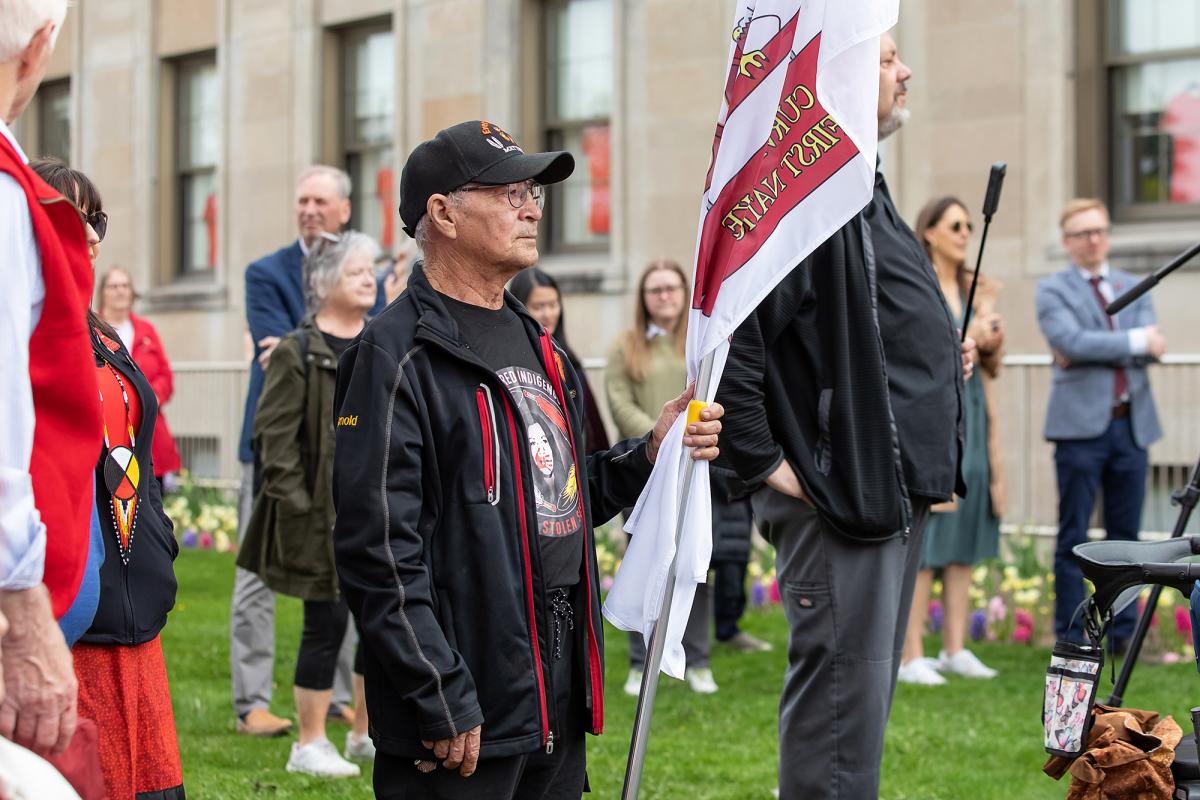
Curve Lake First Nation councillor Arnold Taylor during an event to commemorate Red Dress Day at Peterborough City Hall on May 5, 2026. Taylor is a survivor of the residential school system and the Sixties Scoop. (Photo: Jordan Lyall / kawarthaNOW)

For Chief Carr, significant further action at both the local and national level is necessary to protect Indigenous women in the face of discriminatory systems.

“Racism is not in the past,” she said.

The national inquiry highlighted a number of areas where Indigenous women encounter oppression and discrimination, notably child welfare, healthcare, and the justice system.
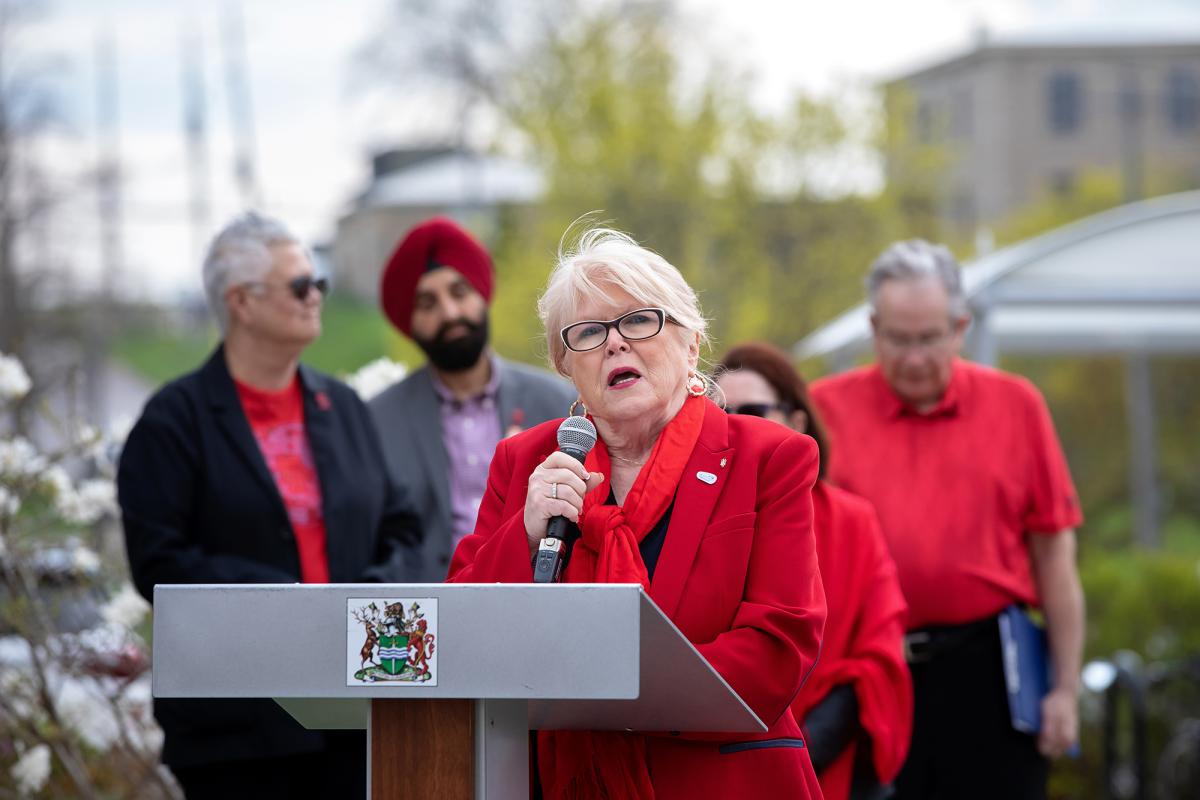
Peterborough County warden Bonnie Clark speaks during an event to commemorate Red Dress Day at Peterborough City Hall on May 5, 2026. (Photo: Jordan Lyall / kawarthaNOW)
Dr. Thomas Piggott, medical officer of health with Lakelands Public Health, at an event to commemorate Red Dress Day at Peterborough City Hall on May 5, 2026. (Photo: Jordan Lyall / kawarthaNOW)

Looking ahead, Peterborough County Warden Bonnie Clark said the county remains committed to reconciliation and embedding Indigenous knowledge into its work.

“Reconciliation is not a one-day commitment,” Clark said.

Local non-profit and Indigenous-led organizations are continuing to host educational opportunities and commemorative events in recognition of Red Dress Day and other initiatives such as Orange Shirt Day.
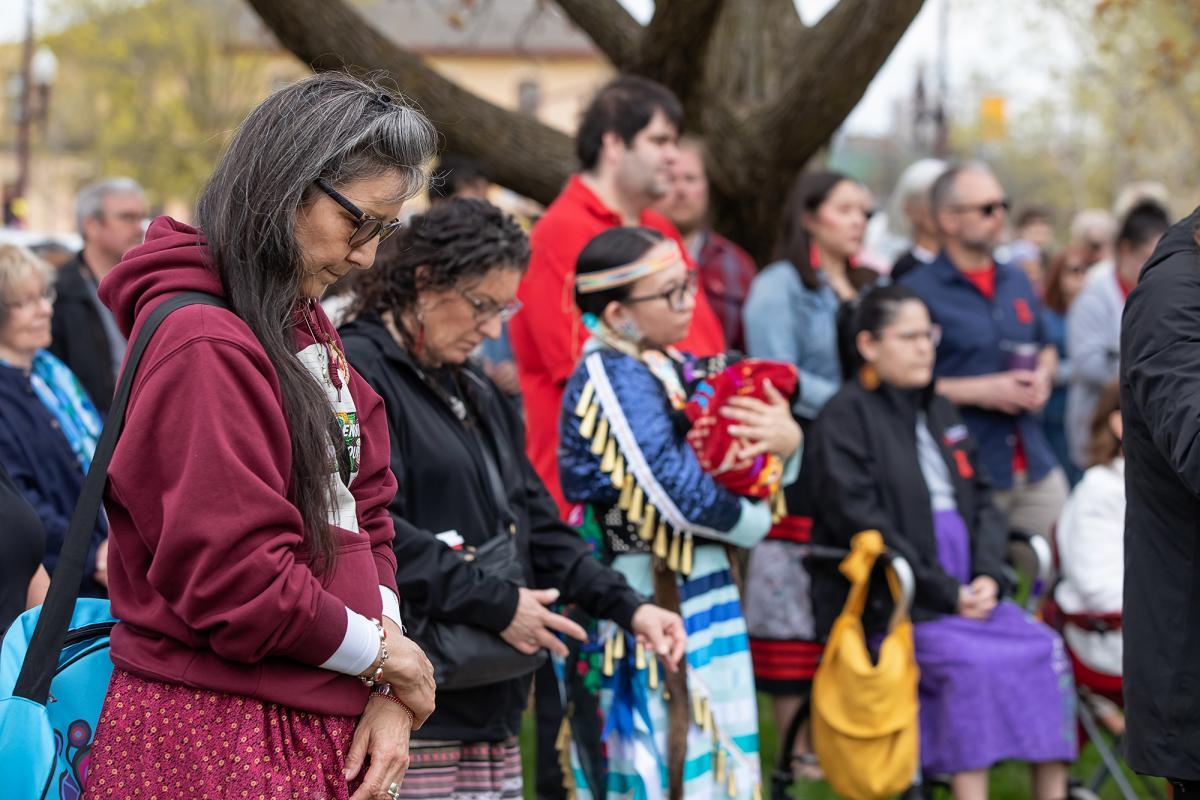
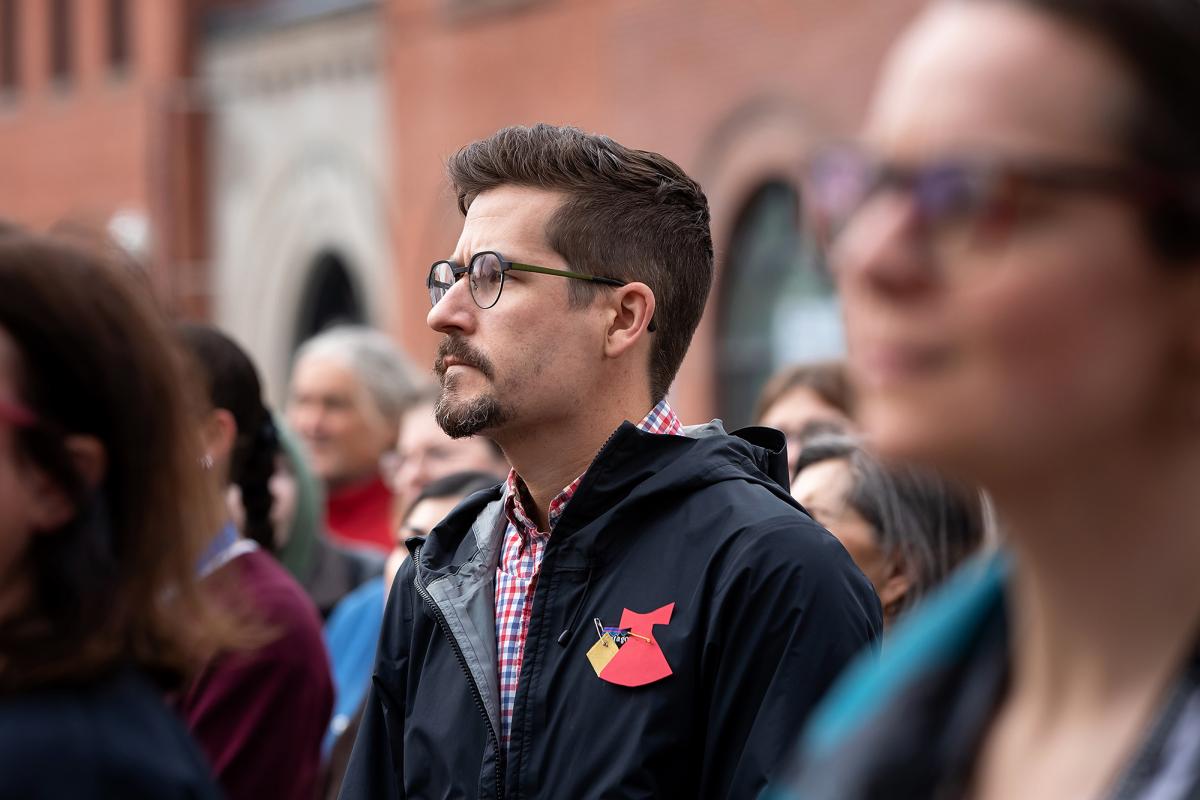
Attendees at an event to commemorate Red Dress Day at Peterborough City Hall on May 5, 2026. (Photo: Jordan Lyall / kawarthaNOW)
Faceless dolls representing missing and murdered Indigenous women at an event to commemorate Red Dress Day at Peterborough City Hall on May 5, 2026. Ahead of the gathering, the Urban Indigenous Working Group and Lovesick Lake Native Women's Association hosted two workshops where community members participated in crafting felt faceless dolls and collecting red dresses. (Photo: Jordan Lyall / kawarthaNOW)
Faceless dolls representing missing and murdered Indigenous women at an event to commemorate Red Dress Day at Peterborough City Hall on May 5, 2026. Ahead of the gathering, the Urban Indigenous Working Group and Lovesick Lake Native Women’s Association hosted two workshops where community members participated in crafting felt faceless dolls and collecting red dresses. (Photo: Jordan Lyall / kawarthaNOW)

On Tuesday evening, the Nogojiwanong Friendship Centre hosted a community dinner and sacred fire in honour of MMIWG2S+. Day and Vossen expressed the importance of hosting events that are accessible to everyone regardless of daytime availability.

Throughout the ceremony at City Hall and subsequent gathering, non-Indigenous attendees were encouraged to educate themselves on the MMIWG2S+ crisis and how systemic oppression continues to impact Indigenous communities.

“This your moment to listen and to learn,” Carr said.
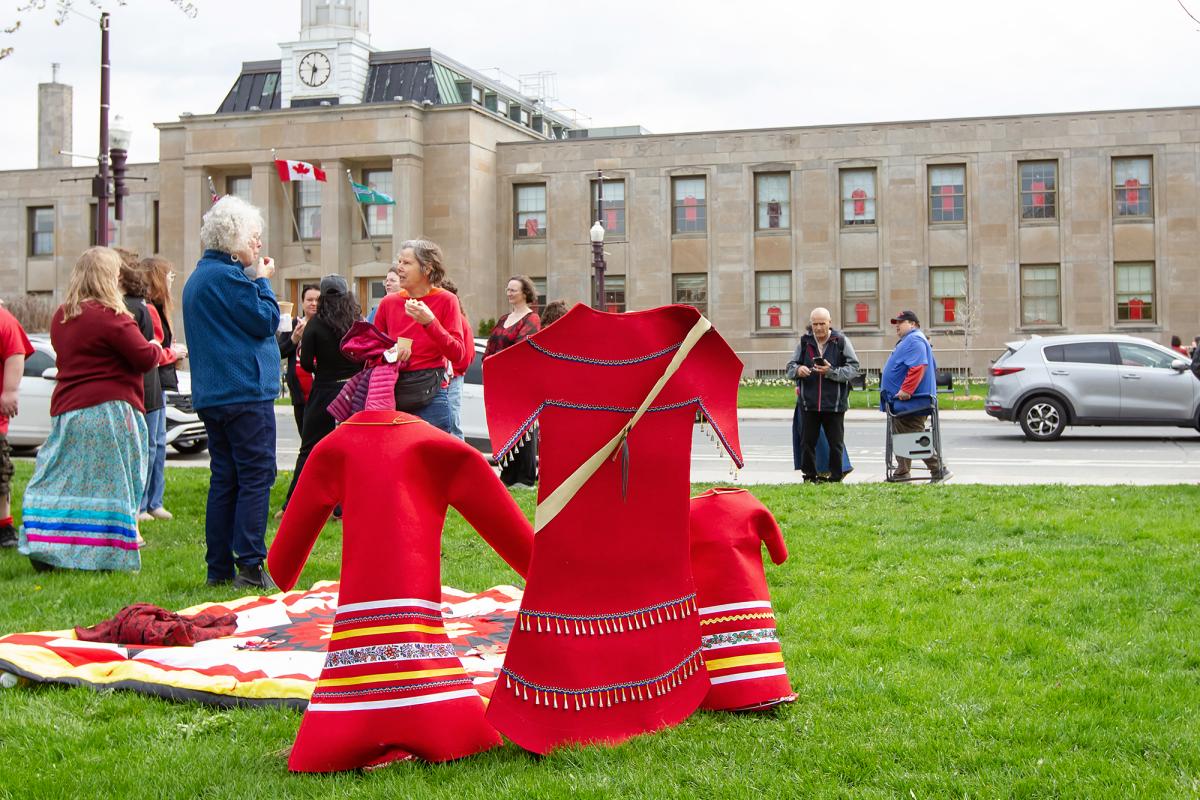
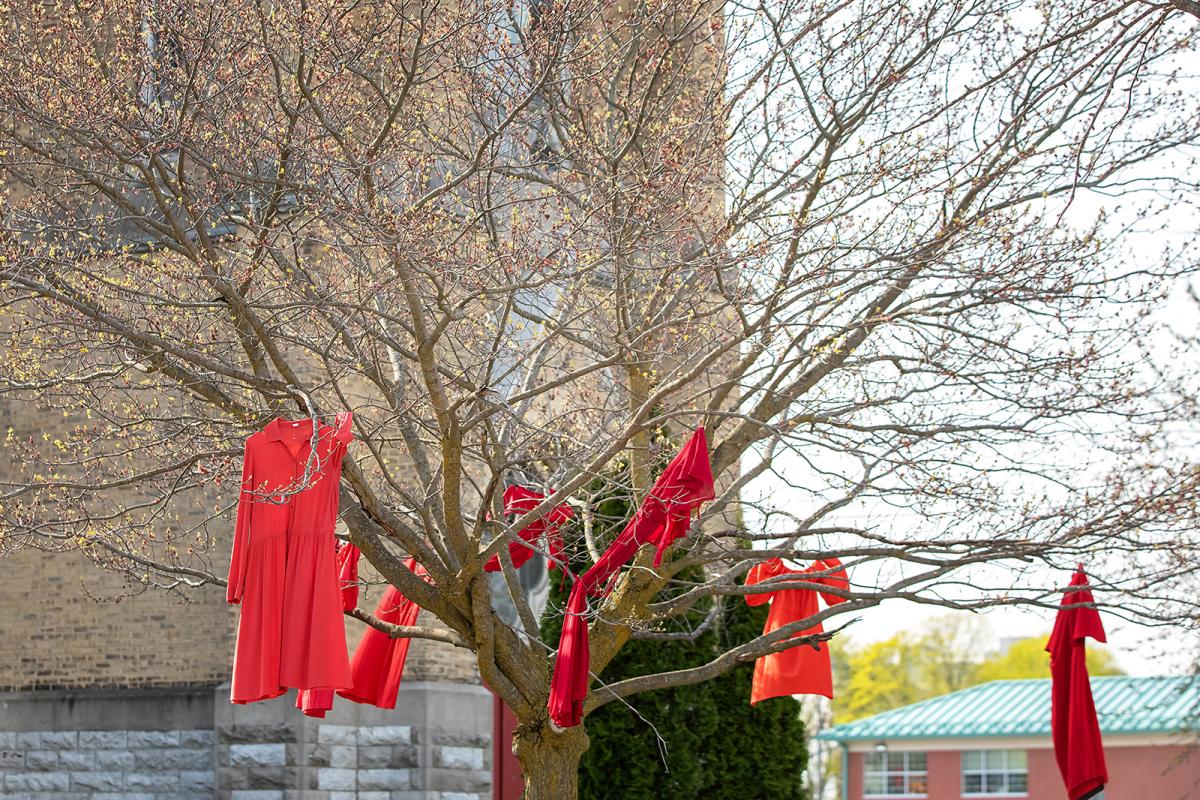
Red dresses representing missing and murdered Indigenous women at an event to commemorate Red Dress Day at Peterborough City Hall on May 5, 2026. (Photo: Jordan Lyall / kawarthaNOW)

Also on Red Dress Day, Prime Minister Mark Carney announced the federal government is providing the National Family and Survivors Circle, an Indigenous organization supporting survivors and their families, with $2.6 million in funding over three years.

Carney also announced the federal government is providing $300,000 to Red Dress Alert, a pilot project that notifies the public when an Indigenous woman, girl, or 2SLGBTQI+ person goes missing. The project is being led by Giganawenimaanaanig (“we all take care of them”), formerly known as the MMIWG2S+ Implementation Advisory Committee, in partnership with the federal government and the Government of Manitoba.

The national toll-free 24/7 crisis call line at 1-844-413-6649 provides trauma-informed supports for anyone who requires emotional assistance related to missing and murdered Indigenous women, girls, and 2SLGBTQI+ people.