




















As heavy rain events become more common, managing stormwater runoff at the source is increasingly important.
Only 25 per cent of runoff produced in the City of Peterborough is treated for pollutants before it reaches the Otonabee River and its tributaries.
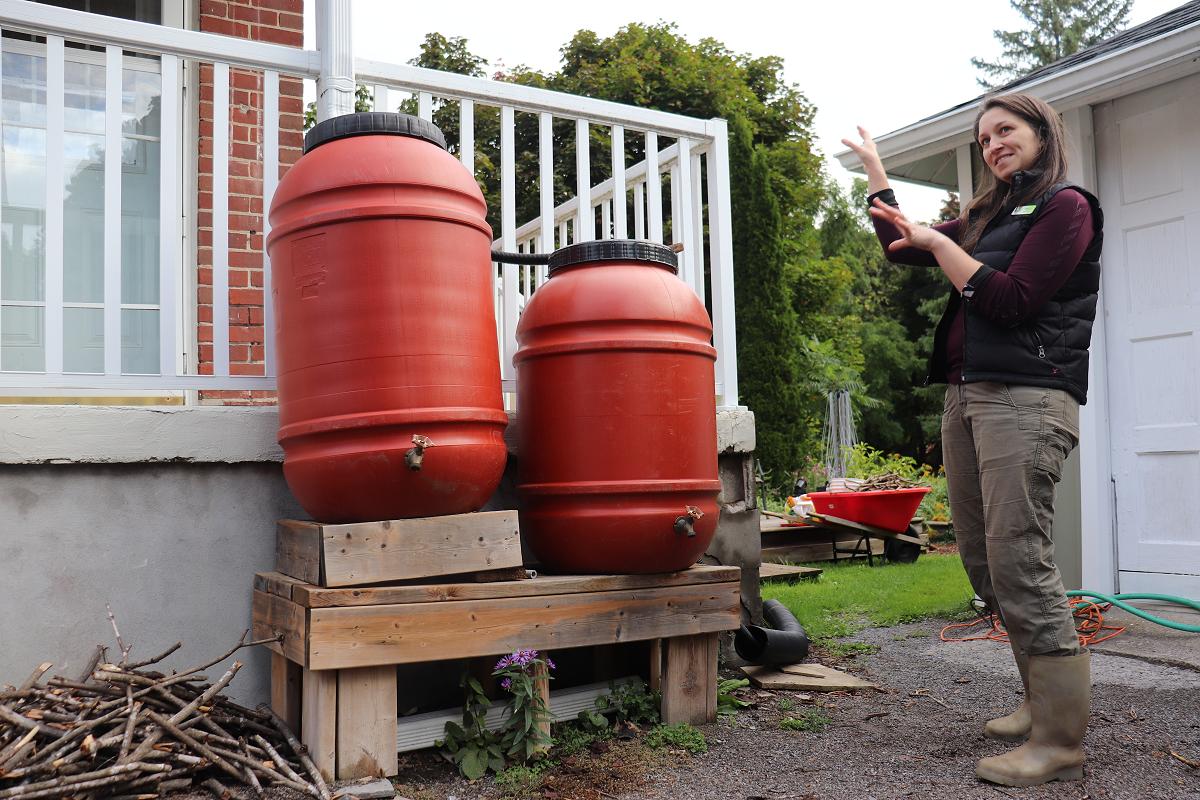
Installing a rain barrel is a simple way to collect water for outdoor use while reducing the amount of water entering local storm sewers.
Rain barrels work by holding back the runoff from a roof and other hard surfaces. Instead of permitting it to flow untreated into the nearest sewer, it is released onto a permeable surface such as a lawn or garden where it can filter into the ground, recharging groundwater stores while pollutants are filtered out.
It is often asked whether rainwater from a roof is safe to use for watering vegetable gardens and other edible crops. While research is limited, a 2013 peer-reviewed study found that rainwater collected from asphalt shingle roofs in New Jersey did not typically contain dangerous levels of heavy metals or hydrocarbons.
For added insurance, the “first flush” of rainwater collected in a barrel each spring can be emptied onto a lawn or another permeable space that is not used to produce food. The pollutant load during the first few rains is typically higher than the rest of the season.
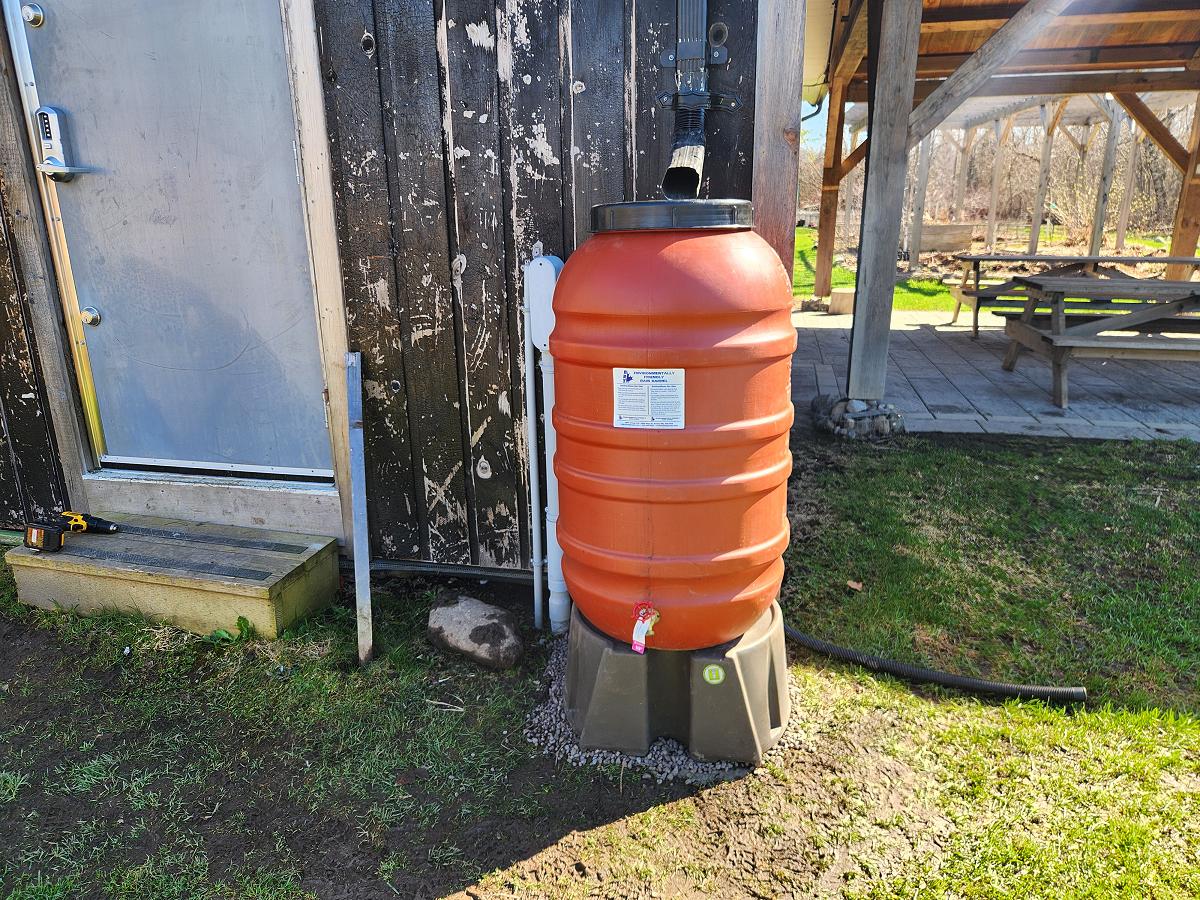
Rain barrels come in all shapes and sizes, and can even be made at home by repurposing an old garbage can or another suitable container. Each 220-litre food-grade barrel available for purchase through GreenUP Ecology Park is made from repurposed olive barrels, serving the additional purpose by diverting plastic from the landfill.
Whether purchasing a barrel or building it, all rain barrels should include a fine mesh screen to keep mosquitoes from laying eggs inside, and an overflow hose to direct excess water away from any building foundation.
When well cared for, a rain barrel can last indefinitely. It’s important to empty and disconnect a barrel each winter and store it upside down or in an enclosed space to prevent cracking due to repeated freeze-thaw cycles.
A barrel that collects runoff from an average-sized roof can fill completely in just a few hours. If space permits, barrels can be installed in multiples and linked together so that the overflow from the first barrel is directed into the next, and so on. The more rainwater collected for reuse, the lower water bills can be.
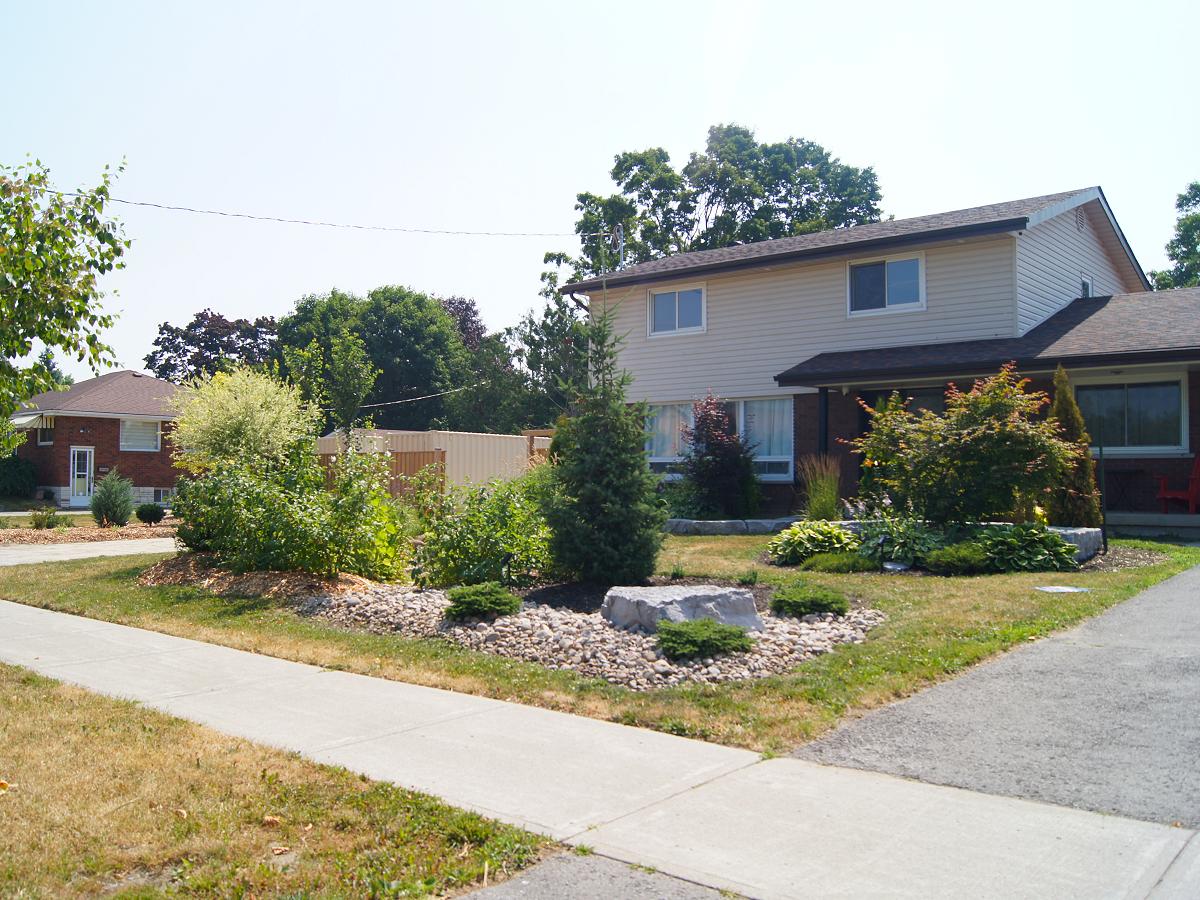
Rain barrels can also be integrated into a wider strategy for managing stormwater and rainfall on a property. For example, a rain barrel can be installed so the overflow is directed toward another landscape feature, such as a rain garden. Rain gardens are bowl-shaped gardens designed to absorb and filter large volumes of water. Locally, the City of Peterborough offers eligible residents up to $1,000 towards support and installation through the Rain Garden Subsidy Program.
By making simple changes at home, such as installing a rain barrel or rain garden, residents can contribute to broader efforts to manage stormwater and protect local waterways.
To order a rain barrel in advance for pick up at Ecology Park in early May, visit greenup.on.ca/native-plant-nursery/ or call 705-927-1104.
Rain barrels will also be available for purchase at the Ecology Park Native Plant Nursery throughout the season. The nursery is open Thursday through Sunday from 10 a.m. to 4 p.m., from opening day on Saturday, May 16 until the nursery closes on Friday, October 9.
For more information about the Rain Garden Subsidy Program, visit greenup.on.ca/rain-garden-subsidy-program/ .