




















When asked to imagine a typical front or backyard, most people readily picture a flat yard but, in reality, this is rarely the case.
In fact, a perfectly flat yard is not permitted. According to the Ontario Building Code and its municipal interpretations, a minimum slope of three per cent is required for the first two to three metres around the foundation to ensure water drains away from a home to protect the building, foundation, and surrounding property from water damage.
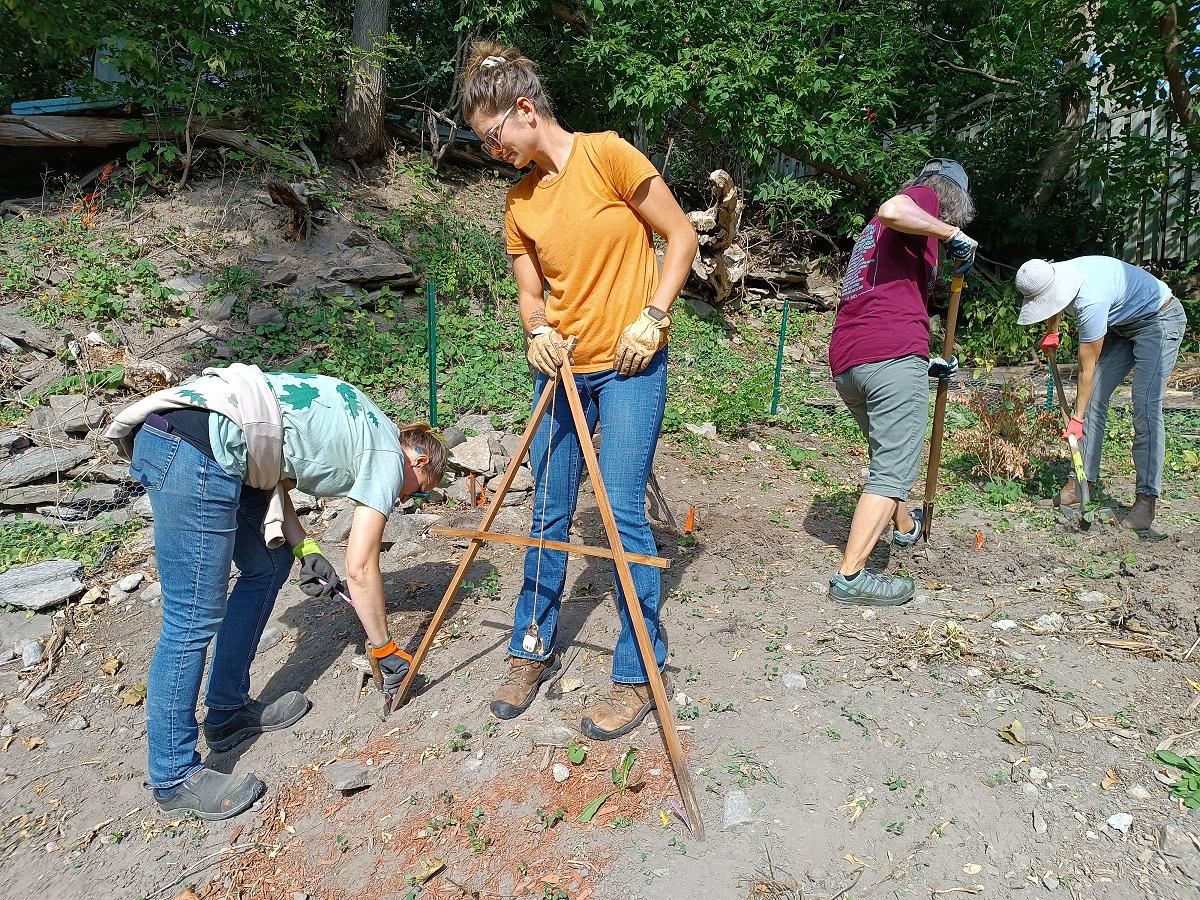
When it comes to the average yard, a homeowner’s relationship to slope largely ends there. However, “slope” can be much more exciting than vague memories of math class. With the help of a small homemade measuring tool called an A-frame, a few pegs, and a shovel, a lot more can be done with a slope in the yard to keep it healthier and more biodiverse.
Landscape contouring is a low-tech, cost-effective, and proven permaculture technique used to naturally stabilize a slope, while simultaneously retaining the vital soil nutrients that keep plants healthy while minimizing the damage caused by water run-off.
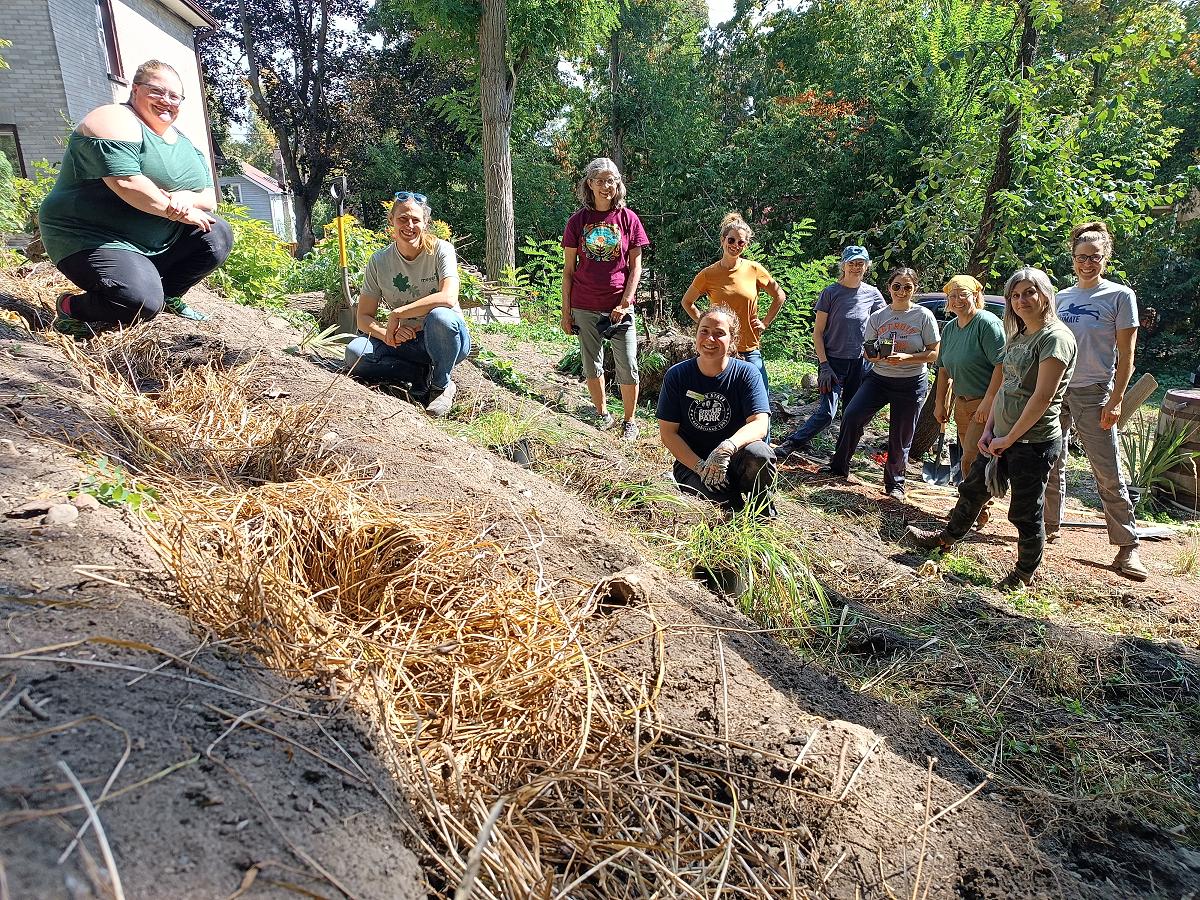
To create a contoured landscape, an A-frame tool is used to mark a level line going across the face of the sloping yard. Then, a ditch is dug above the “level line” and the soil from this ditch is deposited below the level line. This creates a “swale” (ditch) directly uphill of a “berm” (mound).
This process is repeated all the way down the slope so that in the end terraces snake across the yard following its natural contour. Once this earthwork is done, the recommended next steps are to fill the swales with dried leaves and cover the berms with mulch.
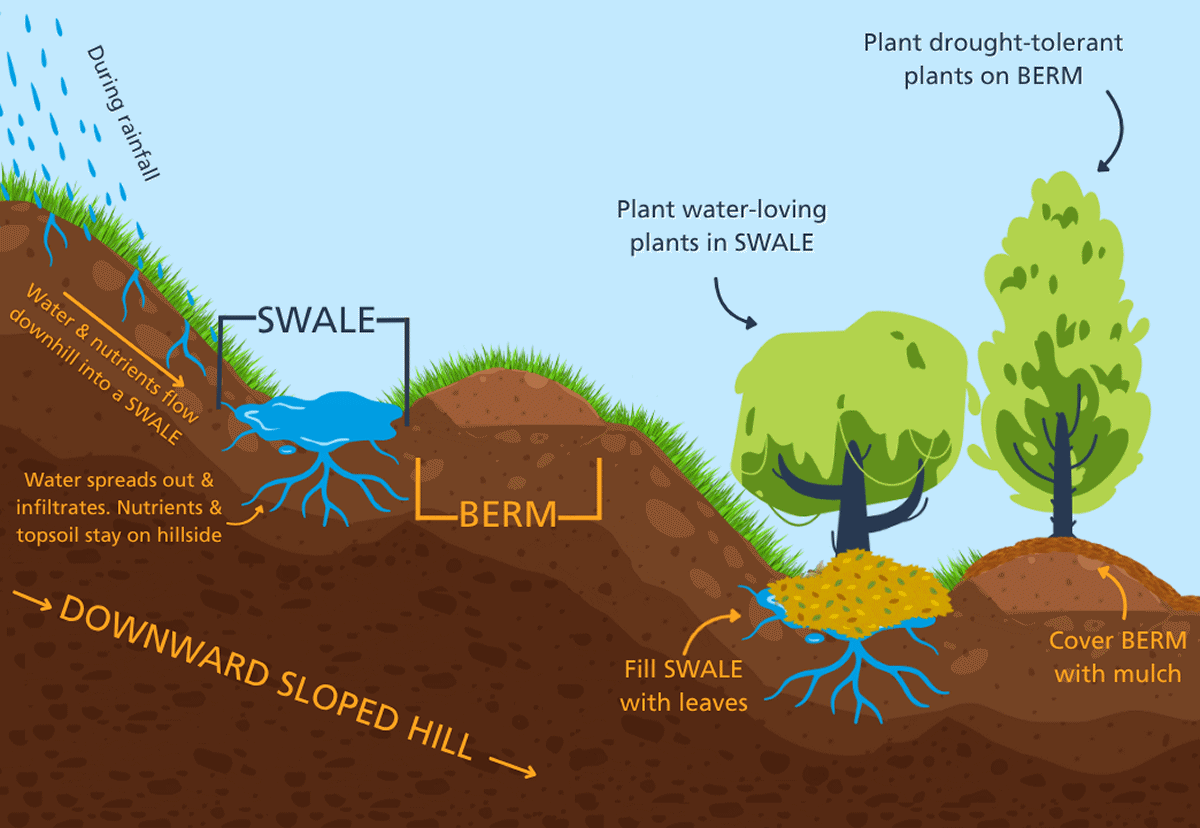
The impact of this method is most visible when it rains. Water flows down the slope until it meets the first swale, enters the swale, and as the swale is level the water spreads out rather than flowing away via the path of least resistance.
By slowing down the flow of water in this way, it has more time to seep into the earth, bringing many benefits to the garden. The swales serve as catchments and trap the nutrients and topsoil that would otherwise be washed downhill. The dried leaves in the swales act as a sponge and keep the swale environment moist and more suited for water-loving plants with strong root structures, like awl-fruited sedge, spotted joe-pye weed, brown fox sedge, and Canada anemone.
The berm can be a drier, so protecting the soil with a layer of mulch and planting slightly more drought-tolerant plants here works best. Examples of drought-tolerant native plants with strong anchoring root systems include sideoats grama, bearberry, Canada wild rye, little bluestem, and prairie dropseed.
A few other factors to consider:
- Slope gradient: Steeper slopes may require smaller but more frequent berms or swales, while flatter areas can have larger berms spaced further apart.
- Soil type: Sandy or clay-heavy soils may require berms to be thicker and swales to be deeper to ensure proper water absorption and retention.
- Expected runoff volume: The size of the berms and swales should be large enough to handle the expected rainfall during a storm.
- Maintenance: Berms and swales require minimal maintenance but should be regularly inspected for erosion and adjusted as necessary.
From the Zai Pits in Burkina Faso to the rice paddy fields in the Philippines, people have used a version of berms and swales for thousands of years to grow food, stabilize hillsides, and keep soil nutrients where they belong.
Why not employ these simple and effective techniques in local backyards?
The plants mentioned in this article are all available at the GreenUP Ecology Park Native Plant Nursery, now open for the 2026 season Thursdays through Sundays from 10 a.m. to 4 p.m.
Check the online stock list at greenup.on.ca/native-plant-nursery/.
To learn more about ecological restorative practices, join GreenUP at Ecology Park this summer for the Restoration Wednesdays Volunteer Stewardship Series. Keep an eye on the events calendar at greenup.on.ca/events/ for details to come.