

















Peterborough-Nogojiwanong Pride has announced the theme for Pride Week 2026 is “Woven Together.”
On June 2, Peterborough Pride posted on their Facebook page that, following contributions from the community, the theme had been chosen to represent connections within the 2SLGBTQIA community.
While June is Pride Month, Peterborough’s annual Pride Week celebration takes place in September, with this year’s celebration set for Friday, September 18, to Sunday, September 27.
‘It is the unity and connection of each thread that gives us strength and visibility’
Peterborough Pride’s website details the reasoning behind this year’s theme, highlighting inclusion, intersectionality, and resilience and describing how each individual and their unique experience is a thread that contributes to the tapestry of the 2SLGBTQIA community.
“No thread is more important than the next,” the website reads. “It is the unity and connection of each thread that gives us strength and visibility.”
The theme also recognizes the importance of diversity and strength as 2SLGBTQIA rights continue to face attacks across the world
“When one part of our community is under attack, we all are. Transphobia, ableism, racism, sexism, homophobia, and hate are slowly cutting away at the threads of our tapestry.”
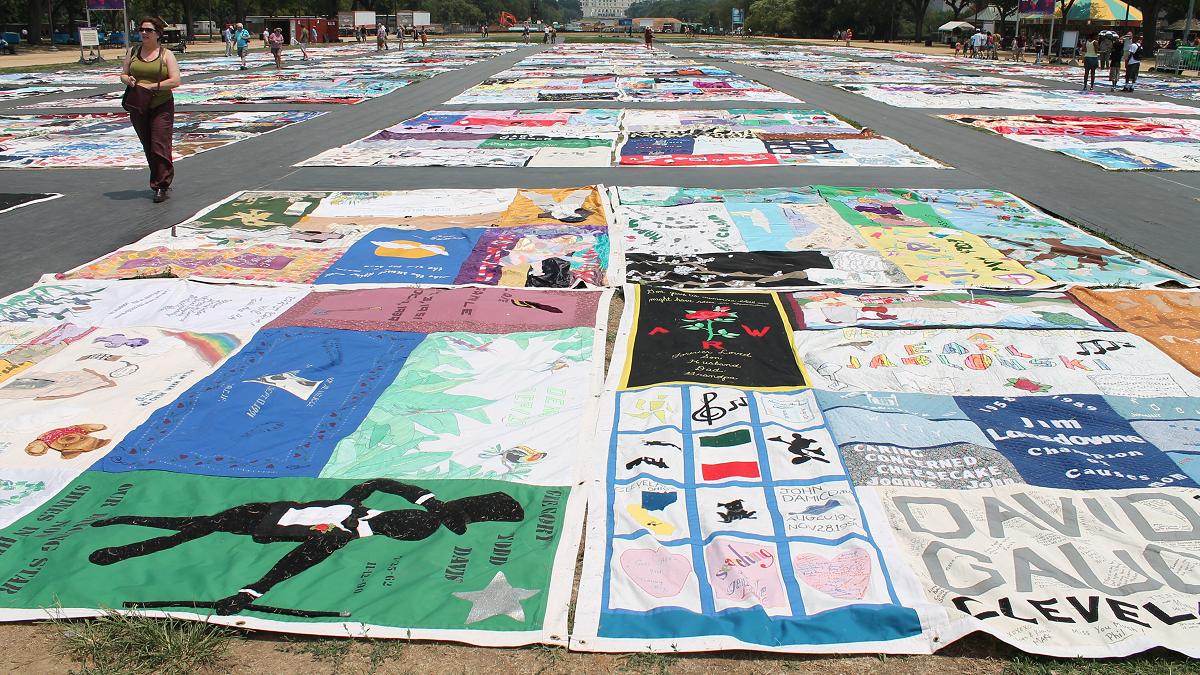
The Woven Together theme and its tapestry motifs are also inspired by, and in honour of, the AIDS Quilt. Considered the largest community arts project in the world, the 54-ton tapestry originated with American activist and author Cleve Jones in 1985.
Now under the stewardship of the National AIDS Memorial, the quilt displays memorial panels dedicated to over 110,000 individuals. Canada is one of more than 35 countries that also has an AIDS Memorial Quilt.
Pride Week theme honours the legacy of the AIDS Quilt
Acquired Immune Deficiency Syndrome (AIDS) was first recognized in the United States in 1981, with Canada reporting its first case in March 1982. A connection between Human Immunodeficiency Virus (HIV) and AIDS was recognized in 1982 in part due to reports of cases in blood transfusion recipients.
The AIDS crisis of the 1980s was closely connected to the gay liberation movement due to the disproportionate number of gay men affected by HIV/AIDS and the subsequent injustice faced by these men in the healthcare system.
“The creation of the original quilt brought the 2SLGBTQIA community together in remembrance, protest, and love,”, reads Peterborough Pride’s website. “Each square of the quilt is woven together to tell the story of a life and of those who refuse to let their story be forgotten
Further to this, Peterborough Pride states that the theme “recognizes how social determinants of health, including access to care, housing, and food security, impact the tapestry of our community and its well-being.”
Local supports for gender-diverse residents
Locally, trans and non-binary individuals have been identified by the Peterborough Community Health Centre (PCHC) as facing social, economic, and health inequalities. Members of the 2SLGBTQIA community are part of the PCHC’s priority population and the clinic provides gender-inclusive care and support through program such as the Trans ID Clinic.
The Trans ID Clinic is a free monthly service where individuals can receive guidance with navigating systems related to identification and documentation. The clinic occurs at the PCHC’s 360 George Street North location on the first Monday of the month.
“This welcoming and inclusive space provides guidance with legal name changes, gender marker updates, and updating government-issued ID,” said a spokesperson for the PCHC in an email to kawarthaNOW.
The PCHC said that individuals often face barriers related to identification and documentation when accessing healthcare, housing, employment and other important services. Programs such as the Trans ID Clinic help create a space where individuals can receive “practical assistance, information and guidance in a respectful environment.”
The Nogojiwanong Friendship Centre offers the program Creating Gender Diverse Communities, which provides one-on-one mentorship and culturally informed services for youth aged 16 or over.
Services include access to gender-affirming gear and traditional medicines to support 2SLGBTQIA youth, in particular those identifying as two-spirit or Indigiqueer. This program provides alternative well-being approaches that recognize the intersections of gender, well-being, and Indigeneity.
The Canadian Mental Health Association – Haliburton, Kawartha, Pine Ridge Branch (CMHA HKPR) operates a Trans Peer Outreach program which provides one-on-one consultation or group programming for young people aged 16 or older who identify as trans, non-binary, or are questioning their gender.
The outreach program, which is offered at no cost to trans and gender-diverse people, aims to improve well-being and quality of life through client-centred care. In their one-on-one consultation services, CMHA HKPR provides support navigating the healthcare system and identifies developing advocacy skills for accessing healthcare as a focus.
CMHA HKPR also offer a Trans Peer Family Outreach group for family members and other loved ones.
‘Governments continue to fall short regarding intersex rights’
Activist Nikki Lawrence, who is intersex, spoke to kawarthaNOW recently about her experiences accessing healthcare in Ontario. Lawrence said she had faced prejudice and witnessed ignorance regarding intersex people.
“Finding new doctors and finding doctors that want to actually work with me — it’s kind of hell,” said Lawrence.
She detailed past experiences of being dismissed and ignored by medical professionals and spoke about the need for more awareness and education on intersex not only in schools but beyond.
Intersex is considered rare and, as such, intersex individuals make up only a small percentage of the 2SLGBTQIA community. Lawrence noted she had seen some healthcare providers promote themselves as inclusive, but in practice continue to cause harm to intersex and non-cisgender members of the 2SLGBTQIA community.
“Even though they have the flag, it doesn’t always mean they’re accepting,” said Lawrence.
Through her work with Egale Canada and Intersex Canada, Lawrence is working to rewrite best practices and policy recommendations regarding how intersex infants are treated in hospitals and by healthcare providers.
A 2025 report by Egale Canada said that “federal and provincial governments continue to fall short regarding intersex rights,” noting concerns about pervasive stigma, medicalization, and systemic exclusion.
Notably, Canada permits doctors to perform surgery on intersex infants to alter their external genitalia with the permission of the parents. Egale Canada refers to this practice as Intersex Genital Mutilation (IGM).
“I’m part of the group that is working to stop the killing or hurting of infants, like cutting off their genitals without the consent of the child,” said Lawrence.
For more information about Peterborough Pride and for upcoming events, visit www.peterboroughpride.ca. The group is currently seeking volunteers to help plan Pride Week.
The original version of this story has been updated to remove the word “intersexism” to describe intersex people, as the word refers to discrimination against intersex people.