





















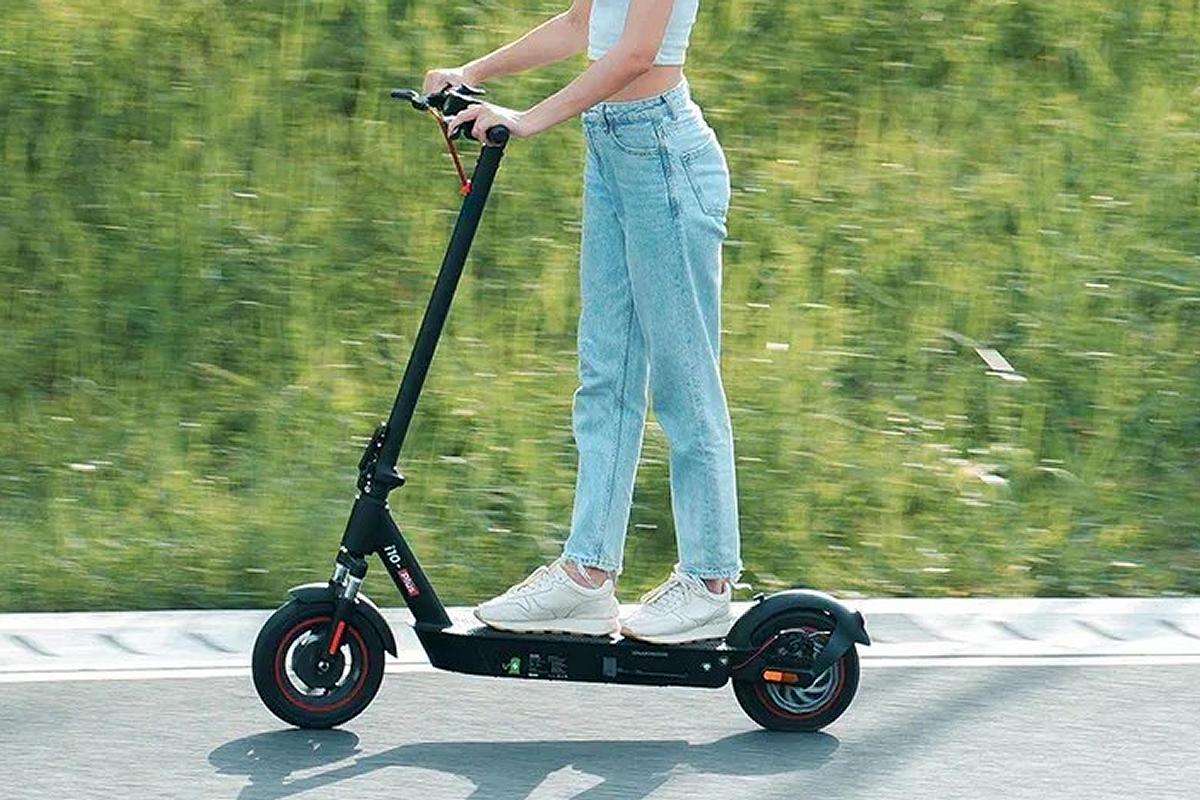
Just days before the start of the new school year, Peterborough police are reminding residents that electric kick-scooters — commonly called e-scooters — remain prohibited on roads, sidewalks, trails, paths, and other public spaces in Peterborough, Cavan Monaghan Township, and the Village of Lakefield.
In a media release issued Friday (September 4), the police service said none of the three municipalities in its policing area is participating in Ontario’s provincial pilot program that allows municipalities to regulate the use of the powered micromobility devices.
Although e-scooters are widely available for purchase, under Ontario law they can only be operated on private property or in municipalities that have passed a by-law permitting their use under the provincial pilot program.
Municipalities must opt in to provincial pilot project to regulate e-scooters
“At this time, the use of these scooters is prohibited as the municipalities in our policing area have not opted in to a provincial pilot project,” police stated in the release, adding that the reminder is part of the service’s back-to-school traffic safety messaging.
Ontario launched its e-scooter pilot in 2020, initially planning to run it until November 2024. The province extended the program for another five years (until November 27, 2029) to continue collecting information before deciding whether e-scooters should be permanently permitted in Ontario and, if so, under what rules.
Under the pilot, municipalities decide whether to permit e-scooters and where they can be used. Participating municipalities must pass a by-law allowing e-scooter use and can establish local rules governing where scooters can operate and park, whether businesses renting them require permits or licences, and whether insurance is required.
Meanwhile, provincial rules require permitted e-scooters to have a maximum speed of 24 kilometres per hour, a maximum 500-watt motor, brakes, lights, and a horn or bell. In addition, riders must be at least 16 years old and riders younger than 18 must wear a bicycle helmet.
The pilot project’s governing legislation, Ontario Regulation 389/19 under the Highway Traffic Act, states an e-scooter cannot be operated on a highway, sidewalk, trail, path, walkway, public park, or exhibition ground unless its use is both permitted under the provincial regulation and authorized by the municipality responsible for the location.
Peterborough police said people caught operating an e-scooter where prohibited could face monetary fines or be summoned to court, although officers may use an education-based approach and issue warnings depending on the circumstances.
Increasing concern from healthcare professionals about injuries involving e-scooters
The police reminder comes amid increasing concern from healthcare professionals about injuries involving e-scooters, particularly among children and teenagers.
Data released in August by the Canadian Institute for Health Information showed 837 people across Canada were hospitalized for e-scooter injuries between April 2025 and March 2026, up almost 40 per cent from 601 during the previous 12-month period. Fractures and head and brain injuries were among the most common reasons for hospitalization.
The increase was especially pronounced among children aged 15 and younger, with hospitalizations in that age group increasing from 54 in 150 over the same period. As noted, children under 16 are not permitted to use an e-scooter under Ontario’s pilot program.
Earlier this summer, pediatric emergency physicians warned that they have been seeing a growing number of children with serious injuries from e-scooters, including fractures, concussions, skull fractures, and abdominal injuries.
Children’s Hospital at London Health Sciences Centre issued its own warning shortly before the Peterborough police announcement after treating 58 e-scooter-related injuries between April and June, compared with around 22 during the same period in 2025. Doctors said some of the injured children were younger than 16.
A Canadian Paediatric Surveillance Program report released in August also identified 10 deaths in 2025 involving children and youth using e-scooters, e-bikes, and other powered micromobility devices. E-scooters were the most commonly used device among the reported serious injuries and deaths.
Prior to these concerns from healthcare professionals, disability advocates have long objected to the use of e-scooters, particularly over their potential impact on people who are blind or partially sighted.
CNIB has warned that e-scooters being ridden on sidewalks can pose a collision risk for pedestrians who may neither see nor hear them approaching. The organization has also raised concerns about improperly parked scooters becoming obstacles and tripping hazards, including when they block access to pedestrian signals.
The Accessibility for Ontarians with Disabilities Act Alliance has similarly campaigned against allowing e-scooters in public spaces, arguing they create safety and accessibility risks for people with disabilities, seniors, children, and other vulnerable pedestrians.
Peterborough resident: ‘It has become part of my everyday life’
Despite concerns about the safety of e-scooters, there are some people who rely on the devices as an alternative form of transportation.
That includes Peterborough resident Tiffany Arcari, who emailed seven members of Peterborough city council Friday evening after seeing the police announcement and asked them to reconsider the city’s approach.
Arcari told councillors she uses an e-scooter for everyday transportation because public transit does not suit her lifestyle and cycling is uncomfortable for her.
“I wear a helmet, follow the rules like a cyclist and use it as a practical, affordable and environmentally friendly way to get around,” she wrote. “It has become part of my everyday life. I genuinely didn’t think it was an issue until I saw the Peterborough police post tonight.”
Arcari said she regularly uses her scooter to travel to the Peterborough Regional Farmers’ Market to buy groceries, to run errands, for work, and to take her dogs to Jackson Park.
She adds that she sees people using e-bikes in a similar manner.
“Scootering around town running my errands, doing work, loving local … made me feel even more connected to a community that I love,” she wrote.
‘Regulate them and treat them similarly to e-bikes and other forms of active transportation’
Arcari pointed to her recent experience using an e-scooter in Ottawa, one of the Ontario municipalities participating in the provincial pilot, as an example of how e-scooters could be regulated instead of prohibited.
She stressed she is not calling for unrestricted use, but to regulate them like e-bikes, which are governed by many of the same rules that apply to non-electric bicycles but also have a minimum rider age of 16 and a mandatory helmet requirement.
“I’m not asking for a free for all,” Arcari wrote. “I’m asking for a chance to regulate them and treat them similarly to e-bikes and other forms of active transportation, with appropriate rules around where and how they can be used.”
Under the provincial framework, a Peterborough by-law allowing e-scooters could establish where they could be ridden and parked and impose additional local requirements while retaining provincial requirements including the minimum riding age, maximum speed, equipment standards, and helmet rules for riders under 18.
Arcari asked councillors to consider what municipalities such as Ottawa have learned through the pilot and whether Peterborough could develop its own regulatory framework.
“Can we look at what Ottawa and other communities are doing, learn from it, and have a real conversation about whether Peterborough could create a responsible framework of its own?” she wrote.