
















Being a good leader is about more than just what you know — it’s about who you are while you lead.
For senior leaders, leadership effectiveness has consequences far beyond the individual. It influences the quality of decisions being made, whether good people stay, how effectively teams perform, whether future leaders are being developed, and how prepared an organization is for what comes next.
In October, Fleming College Institute (FCI) is kicking off its new P.E.A.K. Executive Leadership program, designed to give busy leaders dedicated time to step out of the day-to-day demands of running an organization and work on their leadership — strengthening the judgment, relationships, strategic thinking and leadership capacity that ultimately affect organizational performance.
Short for “Positive. Effective. Applied. Knowledgeable.” and subtitled “A Cohesive Path to Purposeful Leadership,” the program includes five interconnected modules — each distinct yet complementary — providing practical frameworks, reflective insights, and skill-building opportunities, helping leaders reach their full potential and become more intentional, more strategic, and more impactful as they lead.
Developing the leader behind the leadership

While their organizations may look very different, senior leaders across the private, public and not-for-profit sectors wrestle with remarkably similar questions: How do I keep good people? How do I develop other leaders? How do I navigate change? How do I think beyond today’s demands? And who can I turn to when I need my own thinking challenged?
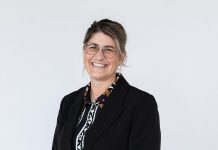
Leaders in the P.E.A.K. Executive Leadership program will embark on a transformative journey over six months of collaborative learning facilitated by Executive Leadership Coach Sophie Mathewson.
Established in 2023, FCI delivers specialized professional and personal development programs to meet current and future market demands. Their specialized training programs prepare individuals in a range of organizations to excel in their roles, including leadership.
“As we were talking with employers in the area we found a lot of business owners — small business owners in particular — had questions around planning for business succession,” says Karen Foster, Project Manager, Specialized Training for FCI. “Sophie helped us to develop a really amazing program that will focus on the ability of senior leadership in organizations to very intentionally plan forward for their companies.”
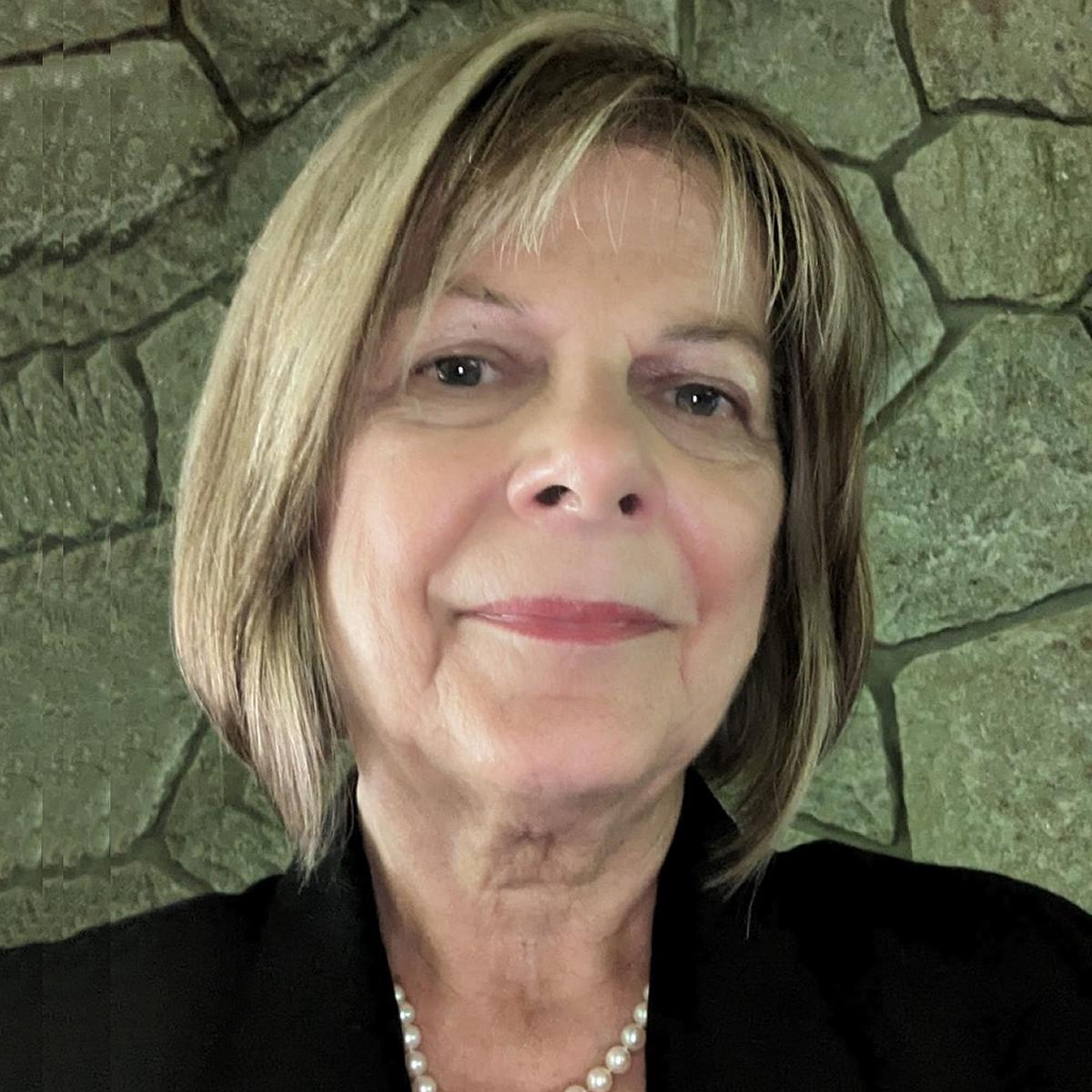
Mathewson has built an award-winning career in executive coaching, consulting, and facilitation. She holds a Professional Certified Coach (ICF PCC) designation and has held certifications as an EqMentor, Professional Behavioural Analyst, Driving Forces (Values) Analyst, TriMetrixHD Analyst, and Emotional Quotient (EQ/EI) Analyst.
Locally, she has taken on various high-level leadership roles including serving as President of the Women’s Business Network of Peterborough, President of the Greater Peterborough Chamber of Commerce, and co-chair of a United Way Campaign. She has also served with the Ontario Chamber of Commerce, the Greater Peterborough Area Economic Development Corporation, the Human Resources Professionals Association’s Peterborough Chapter, and Community Living Peterborough.
“There are a million books on how to do strategic planning, how to delegate or do performance reviews, or how to do succession planning,” says Mathewson. “Those skills matter, but this program goes deeper. It focuses on developing the leader behind the leadership — how you think, how you make decisions, how you show up under pressure, how you build trust, and how intentionally you develop the people around you. Because ultimately, who you are as a leader influences everything else.”
Monthly sessions on leadership, engagement, communication, succession, and strategy

Senior leaders rarely have difficulty filling their calendars. The greater challenge is finding time to step away from the immediate and think about the important. P.E.A.K. Executive Leadership deliberately creates that space.
If leaders never step out of the day-to-day demands of the organization, it becomes very difficult to think strategically about where they’re taking it.
Over six months beginning in October, the cohort of participants will meet for one in-person session held on the second Wednesday of each month.
The first and final sessions will focus on the “Leadership by Design” module, promoting self-awareness and reflecting on how leaders show up for themselves and their people, as well as their strengths, values, priorities, and leadership impact.
By the end of the program, participants will have their own individual, personalized Leadership by Design Canvas, a ready-to-use tool designed to aid them in being the best leaders that they can be. The Canvas will prove to be an invaluable tool long after the program ends.
“Great leadership bridges the gap between who you are and how your organization operates,” Mathewson says. “We help you apply your Canvas to your team’s broader reality — identifying key initiatives, refining relationships, and ensuring your team culture is driving the results you need. At the end, you’ll have greater clarity about who you are as a leader and have your personal Canvas to help guide you.”
The second module aims to unlock the power of personalized leadership through “Engagement by Design.” This module is designed to help leaders genuinely engage with the people they manage because, Mathewson says, when people feel seen, understood, and valued, their performance and commitment will naturally improve.
“We’re going to boost and look at that commitment and morale and learn to decode what truly drives their team,” Mathewson adds.
“It’s about picking up clues from people and then personalizing an approach to each person to create an engaging environment for them. Through that, we can drive sustainable results and cultivate a leadership style that acknowledges diverse needs and aspirations, translating that to improve overall team performance.”

The next module explores “Communication by Design,” inspiring leaders to craft a presence that inspires trust and action. Participants will discover how leadership is communicated long before words are spoken.
“Leaders influence culture every single day through how they listen, respond, ask questions, and handle difficult conversations,” Mathewson says. “This module helps leaders become more intentional about the experience people have when interacting with them.”
In the module “Succession by Design,” participants will learn why succession planning is also about organizational risk and that it shouldn’t begin when someone announces their retirement. The module will encourage leaders to think about the legacy they leave behind.
What happens when a key employee unexpectedly leaves? How much critical knowledge resides with one person? Who is being prepared to take on greater responsibility? And for business owners, what needs to happen now to ensure the organization can eventually succeed without them?
“Succession planning isn’t about creating a list of replacements,” Mathewson says. “It’s about deliberately building capacity throughout the organization. If we’re developing people continuously, transferring knowledge and giving emerging leaders opportunities to grow before we need them, the organization becomes more resilient.”
The final module, “Strategy by Design,” encourages participants and leaders not only to develop strategic planning skills but also to build the discipline of strategic thinking. It’s about developing a vision for the future and then executing that vision.
Participants will move beyond day-to-day management to develop the capacity for long-term vision for the goals of their business or organization.
“Participants leave with practical ways to think further ahead, make better decisions, and align people around a common vision,” Mathewson says.
One-on-one coaching and peer connection

In addition to the module sessions, participants will also have access to three one-on-one coaching sessions with Mathewson to help them apply some of the ideas they have learned to their own leadership challenges. The coaching sessions will also provide an opportunity to walk through real-life situations and problems.
“They can pick something very specific to them that they want to be coached on,” Mathewson says.
Participants will also have access to monthly mastermind groups. Each monthly mastermind conversation will centre on a relevant leadership question, issue or thought-provoking article, giving participants an opportunity to test ideas, hear different perspectives and learn from the experience of other senior leaders.
“These connections will last far beyond the program,” Mathewson says. “Senior leaders often don’t have a lot of people they can trust — the more senior you become, the fewer people you may have with whom you can openly test an idea, challenge an assumption or admit that you don’t have the answer. This program and these groups give them that opportunity.”
‘Grow into the leader that you aspire to become’

Between the module sessions, one-on-one coaching, and peer-to-peer connections, Mathewson says each participant will take away something different from the program, depending on the leader they are and the leader they want to be.
“This is a place where you can come and really grow into the leader that you aspire to become,” Mathewson says. “It’s one day a month where you’ll come and commit not only to yourself and the program, but to the other participants. It’s an investment in yourself as a leader, but the return extends well beyond you. It shows up in the decisions you make, the people you develop, the culture you create and ultimately the organization you lead.”
To learn more about the P.E.A.K. Executive Leadership program, visit flemingcollegeinstitute.ca/p-e-a-k-executive-leadership-program/ or email training@flemingcollege.ca.
This branded editorial was created in partnership with Fleming College Institute. If your organization or business is interested in a branded editorial, contact us.