



















The Peterborough Family Health Team and the New Canadians Centre have added their voices to those who oppose changes to the Interim Federal Health Program (IFHP) that would require refugees to begin paying fees for some healthcare services.
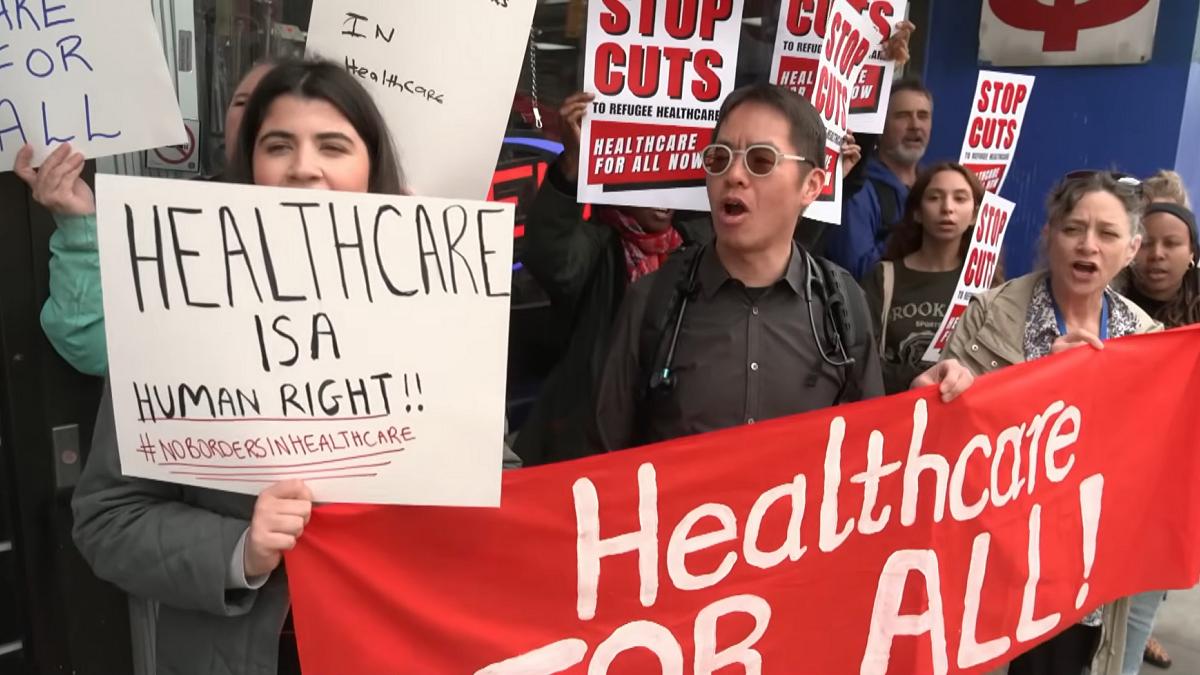
On Tuesday (April 14), healthcare workers, immigration professionals, and other advocates across Canada mobilized to protest the changes coming into effect on May 1, which would require IFHP beneficiaries to pay 30 per cent of the cost of supplemental health products and services — including dental care, vision care, counselling, and assistive devices — as well as $4 when filling or refilling prescription medication.
“We urge the Government of Canada to reconsider these measures and to work collaboratively with healthcare providers and community partners,” reads a joint statement issued on Tuesday by the Peterborough Family Health Team and the New Canadians Centre.
The two organizations noted the impact of the IFHP changes on the Peterborough Newcomer Health Clinic, which they co-sponsor in partnership with family physician Dr. Madura Sundareswaran, who founded the clinic in 2023 to provide short-term medical care for immigrants and refugees until they can transition into the healthcare system.
New fees will create a barrier to healthcare access
Immigration, Refugees and Citizenship Canada (IRCC) describes the federal program as providing “limited and temporary coverage for urgent and essential health products and services” for eligible refugees and asylum seekers “until they transition to provincial or territorial health care programs.”
When introducing the 2025 budget last November, the Liberal federal government announced that IRCC would “introduce a modest co-payment model to its Interim Federal Health Program for supplemental health products or services” to help meet the IRCC target of reducing spending by 15 per cent. In January 2026, IRCC announced details of the co-payment model.
Despite the government’s description of these fees as “modest,” frontline healthcare and immigration workers are concerned that implementing a financial requirement will be a significant barrier to access, leading to refugees either delaying or foregoing healthcare.
“Even a modest co-payment for refugees in the first year will make services inaccessible,” Dr. Sundareswaran told kawarthaNOW.
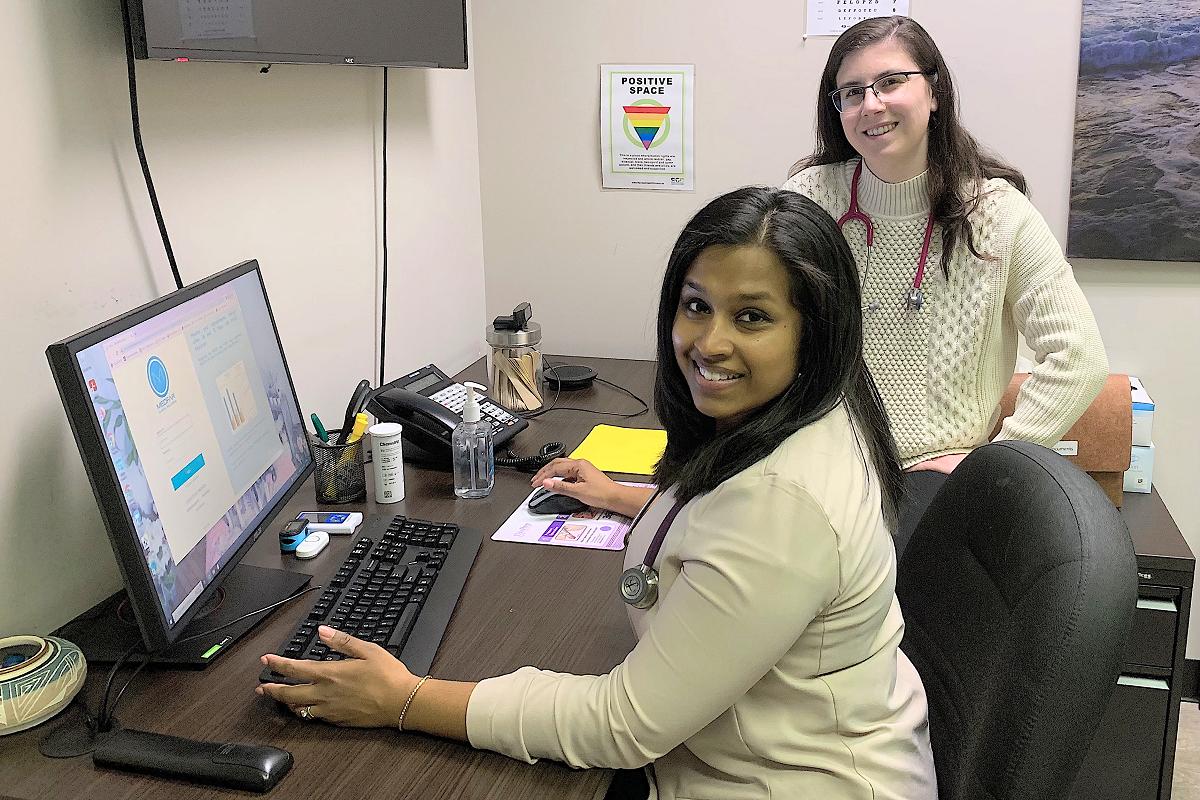
Dr. Sundareswaran said there is already significant financial strain for refugees when they arrive in Canada, as they must secure housing, purchase suitable clothes, and cover numerous other expenses.
The New Canadians Centre, which serves the Peterborough and Northumberland regions with its Resettlement Assistance Program (RAP), works as a partner of the Peterborough Newcomer Health Clinic, referring many clients to their services as part of their journey towards integration and settlement.
“A 30 per cent co-pay is not a small ask when you have nothing,” said Katelyn Rothenbush, director of fundraising and communications at the New Canadians Centre.
Both Dr. Sundareswaran and Rothenbush said that when healthcare requires a payment, it creates a barrier to access as people are often forced to choose between care and other essential expenses such as rent or food.
“When people must choose between medication and food, it is effectively the same as denying care,” said Rothenbush.
Fees will result in higher downstream costs for healthcare system
Considering the long-term impact of the co-payment fees, Dr. Sundareswaran said that when refugees forego healthcare in the early stages of settlement, the effects are ultimately pushed further down the line into the wider healthcare system. If she is unable to provide preventative care as a physician, she said, conditions become more severe and urgent.
Rothenbush spoke to how refugees without access to routine healthcare are often forced to visit the emergency room or experience extended hospital stays as a result of long-term untreated conditions, which increases costs on the healthcare system at large.
Co-payment fees reducing costs for IFHP would not be a sign of success, Dr. Sundareswaran said, but rather a representation of how refugee-associated healthcare costs have been redistributed throughout the system. She added the reducing costs by decreasing the number of beneficiaries is a poor measure of the quality of healthcare delivery and access.
“It will look like a success because people won’t use the service,” said Dr. Sundareswaran.
Many of the healthcare services that will now have a co-payment requirement under IFHP are typically offered on a fee-for-service model, including physiotherapy, psychotherapy, and dental services. Some Canadians and non-refugee newcomers access these treatments with the support of extended health benefits or by paying out of pocket. For those without employment or income, these services can be expensive and out of reach.
Many refugees have untreated medical conditions or complex needs
The Peterborough Newcomer Health Clinic follows patients for around 12 months, focusing on assessments, vaccinations, and referrals and ensuring that any medications are evaluated and refilled. Dr. Sundareswaran said many refugees have a long history of fragmented or no healthcare and tend to have complex and concurrent needs.
She further explained that, due to the nature of refugee admission to Canada — which prioritizes those in the most distress and need — many refugees arriving in Canada have significant untreated medical conditions.
“Our goal is to level the playing field with the rest of the population,” said Dr. Sundareswaran of the clinic’s mission.
When clients are discharged from the Peterborough Newcomer Health Clinic, they must navigate the complex and overwhelmed Canadian healthcare system alongside temporary residents, permanent residents, and citizens. Dr. Sundareswaran said that equipping refugees with the skills to engage with the Canadian healthcare system is central to her work.
Dr. Sundareswaran said the recent integration of the Peterborough Newcomer Health Clinic with the Peterborough Family Health Team Connect Clinic, which provides primary healthcare services to unattached patients in the City and County of Peterborough, will enable more effective information sharing, providing of services across clinics and specialties, and maximizes resources and space through collaboration.
“This has streamlined and equipped both organizations to make spaces that are more equitable for all populations,” she said.
Fees will make settlement and integration into the community more difficult
Rothenbush identified the new co-payment requirement as representative of a larger attitude and policies regarding refugees and immigrants, such as funding cuts to English language learning programs.
“There are already changes that make settlement and integration into our community more difficult,” she said.
For her part, Dr. Sundareswaran also spoke to the compounding nature of funding cuts and increased costs for patients, explaining that accessing healthcare is often a necessary first step for refugees before they can participate in other settlement activities, such as learning English as a second language.
“If you can’t see, it makes learning English very hard in class,” she said, referring to the new co-payment fee for vision care.
Both Dr. Sundareswaran and Rothenbush said that co-payment fees are antithetical to Canadian-held values of equity and inclusion, with Rothenbush noting that immigration programs should be designed with these values in mind.
“These are people that Canada and our government have invited here, and we have a responsibility to support them,” she added.
According to a February 2026 report by the Office of the Parliamentary Budget Officer commissioned by the Standing Committee on Health, the cost of the IFHP program increased from $211 million to $896 million between 2021 and 2025 and is projected to rise to over $1.5 billion by 2030.
The report did not include the potential savings to the program from the introduction of co-payments.