


















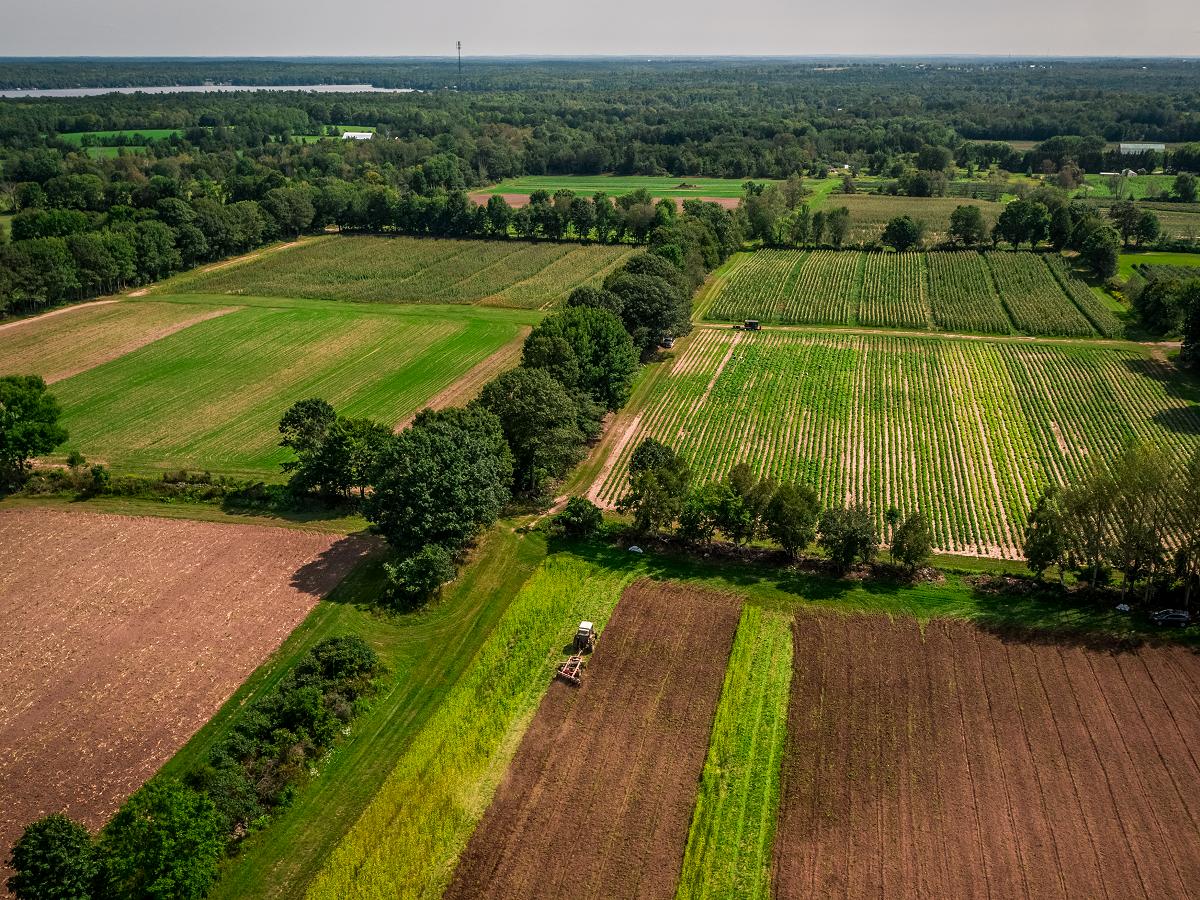
With an increasing amount of farmland sitting idle, Farms at Work is helping non-farming landowners understand their critical role in Ontario’s agricultural community and local food system.
From 1976 to 2021, the total “area on farms” in east central Ontario declined by 34 per cent, or close to 600,000 acres. As land goes out of production, the capacity for food production declines, jobs are lost and economic activity shrinks. As farmers age and more farms are sold to non-farmers, this trend is likely to continue.
Farms at Work was formed in 2010 to support new farmers, keep farmland in production, and promote on-farm environmental stewardship in east Central Ontario. Based in Peterborough, the charitable organization provides support and resources to encourage non-farmers who own farmland to get it back in production.
“It’s crucial for anyone who owns farmland to see themselves as part of the agricultural community and part of the food system in Ontario,” says Farms at Work founder and board member Pat Learmonth. “People buying farms who are non-farmers have a real role to play in trying to keep farmland in production.”
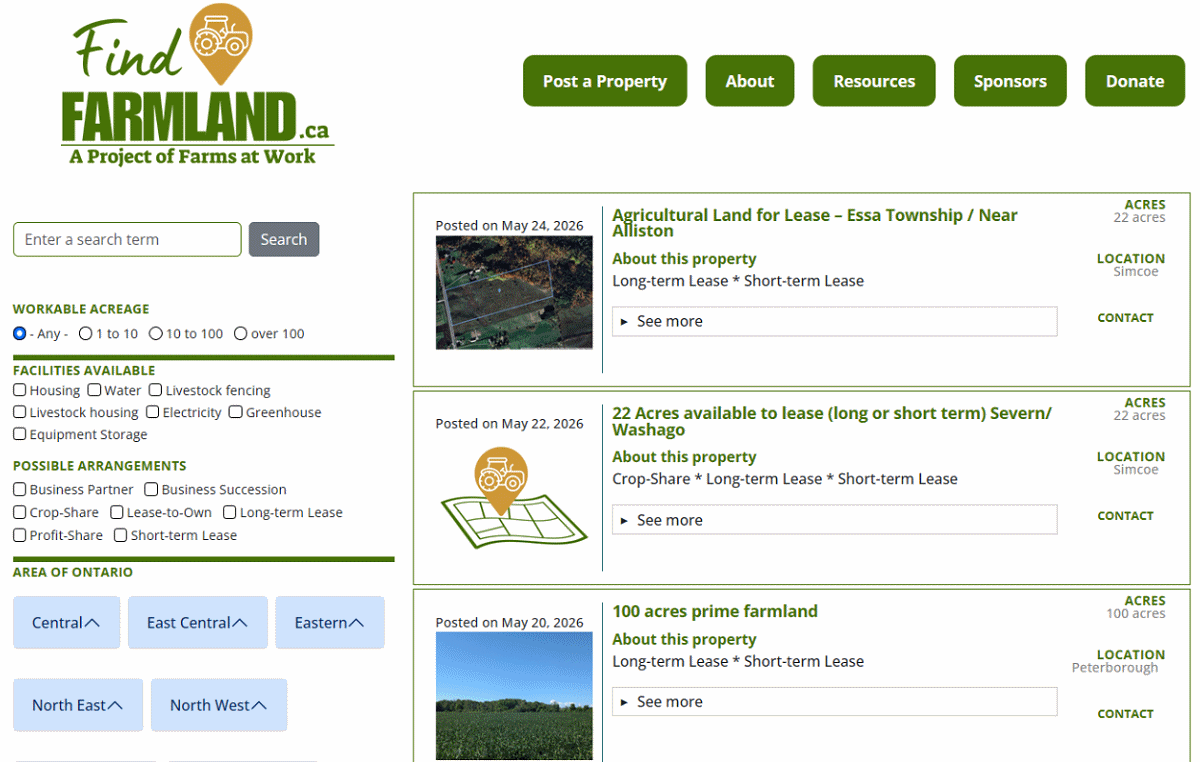
That’s why the organization runs FindFarmland.ca, a free platform that connects owners of farmland with aspiring or experienced farmers. The user-friendly searchable website allows landowners to list farmland available anywhere across the province, making it easy for farmers to find available land and for farmland owners to lease their land or develop other farm business or succession relationships for their land.
To support farmland owners and potential tenants who want to enter into an agreement, Farms at Work also offers the Making Good Farmland Agreements Guide. The 38-page guide features more than 70 key questions — including land use expectations, communication, decision-making, and dispute resolution — along with real-world scenarios. While the guide does not replace legal counsel, it makes the process more transparent, clear, and comfortable for both landowners and tenants before they proceed to the next step.
“It’s a really strong support before you get to that stage to think through all the different questions and considerations that could be in play,” says Heather Thoma, Operations Manager at Farms at Work. “It can help clarify things upfront so there are fewer conflicts or confusions later on. We have heard many times that this is a really valuable resource for landowners and farm tenants.”
On the Farms at Work website, farmland owners can also find other resources including information on property tax programs, farm insurance, environmental improvement projects, and the financial resources available to support them in making those improvements.
“Keeping your soil healthy and using cover crops is one aspect, but then paying attention to what’s happening in the ponds and the wetlands and in those marginal areas around the cropland feeds into the overall health of the farm,” says Thoma. “We need the whole system to be healthy.”
To learn more about the innovations and practices on farms around east Central Ontario, farmers and farmland owners are invited to join Farms at Work on monthly farm tours.
For more information about Farms at Work and to subscribe to the newsletter for up-to-date announcements on workshops, tours, new resources, and more, visit farmsatwork.ca. For questions or comments, email contact@farmsatwork.ca.
Know Your Locals™ is a branded editorial feature about locally owned independent businesses and locally operated organizations, and supported by them. If your business or organization is interested in being featured in a future “Know Your Locals” branded editorial, contact Jeannine Taylor at 705-742-6404 or jt@kawarthanow.com or visit our Advertise with kawarthaNOW page.