




















With loons having returned to Ontario cottage country, lake associations in the Kawarthas are joining a campaign to protect them by encouraging anglers to get rid of their lead-based tackle.
The grassroots “Let’s Get The Lead Out” campaign was launched by the Wolfe Lake Association in Westport in 2022 to encourage anglers to switch to lead-free fishing tackle, in response to studies showing lead poisoning is the leading cause of death for adult common loons.
The highly toxic metal also poisons other wildlife, including ducks, geese, herons, swans, eagles, ospreys, gulls, otters, turtles, and game fish.
According to federal government research, 545 metric tonnes of lead — equivalent to 20,000 car batteries or 44 fully loaded dump trucks — enters Canada’s lakes and rivers every year from lost fishing tackle.
Suzanne Montgomery, director at large for the Drag and Spruce Lakes Property Owners Association in Haliburton County, came across the campaign through her network and connections with other lake associations.
“We’ve got a lot of residents who really cherish our loons as well as the rest of our wildlife,” she says. “Everyone in the lake community here is very concerned about our loons and wanting to ensure that we do everything to protect them, so this was something that fell in line with that.”
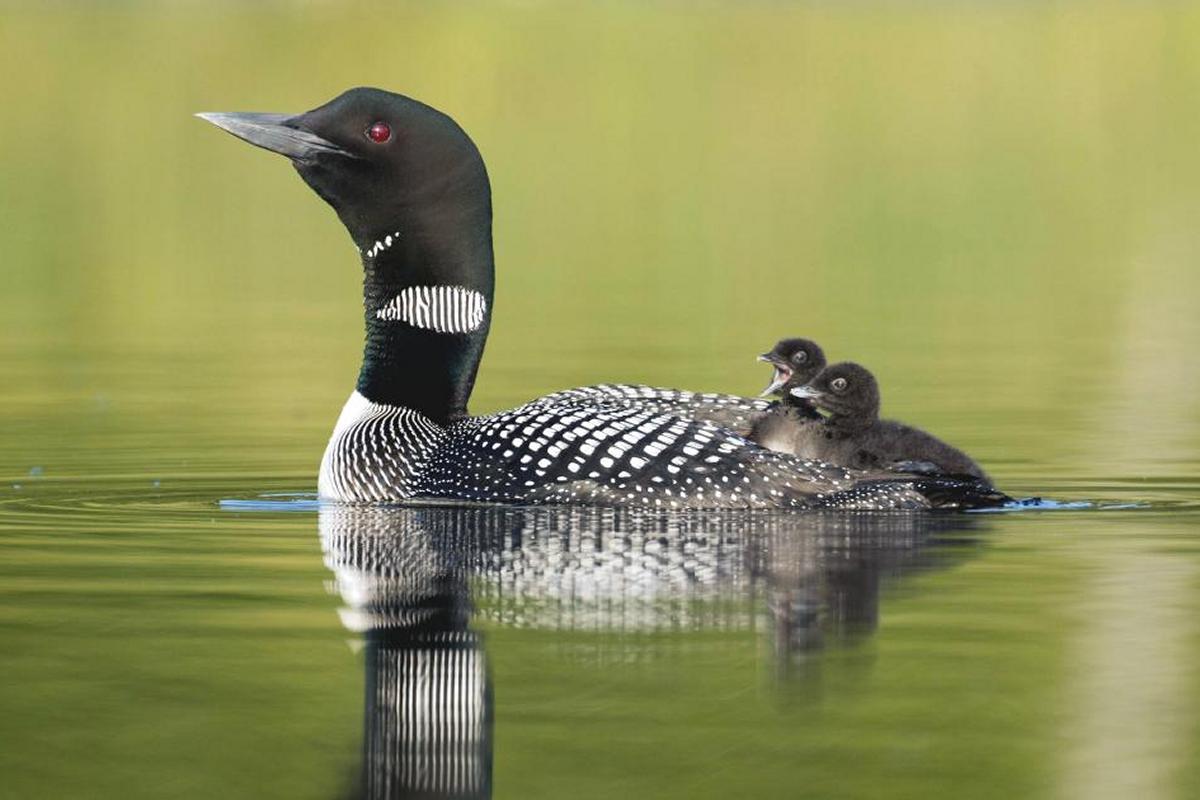
Montgomery was surprised to learn how quickly lead, which is highly toxic, can kill a loon.
Because loons swallow their food whole, they intentionally eat pebbles from the bottom of lakes that act like surrogate teeth in their gizzard to grind up indigestible fish bones, crustacean shells, and aquatic insect exoskeletons. They can mistake lead sinkers that have sunk to the bottom of a lake for pebbles and swallow them.
Even just one small lead sinker is enough to poison a loon and kill it within two to four weeks of ingestion.
The Let’s Get The Lead Out campaign encourages fishers to swap their lead tackle for sinkers and jigs made from tungsten, bismuth, steel, tin, or ceramics. Some of these alternatives are more durable, have improved sensitivity on the fishing line, and are not toxic.
Montgomery suggests anglers can even drill a hole in a pebble or a stone to create a sinker.
“There are cheaper alternatives if you think outside the box,” she says.
In the spring, Montgomery conducted a survey across members of the Drag and Spruce Lakes Property Owners Association to determine how much they knew about the dangers of lead tackle.
“What was interesting about the poll results is that a lot of the respondents had awareness of lead and the harm it can do to wildlife and our ecosystems and some of them already fish with lead-free tackle,” Montgomery says.
“Others actually gave us commitments that they were going to start fishing with lead-free tackle, that they were going to empty their tackle box, swap it, and were going to now start fishing without lead. They had an idea (about lead poisoning) but didn’t realize to the extent and now they’re committed to making the change.”
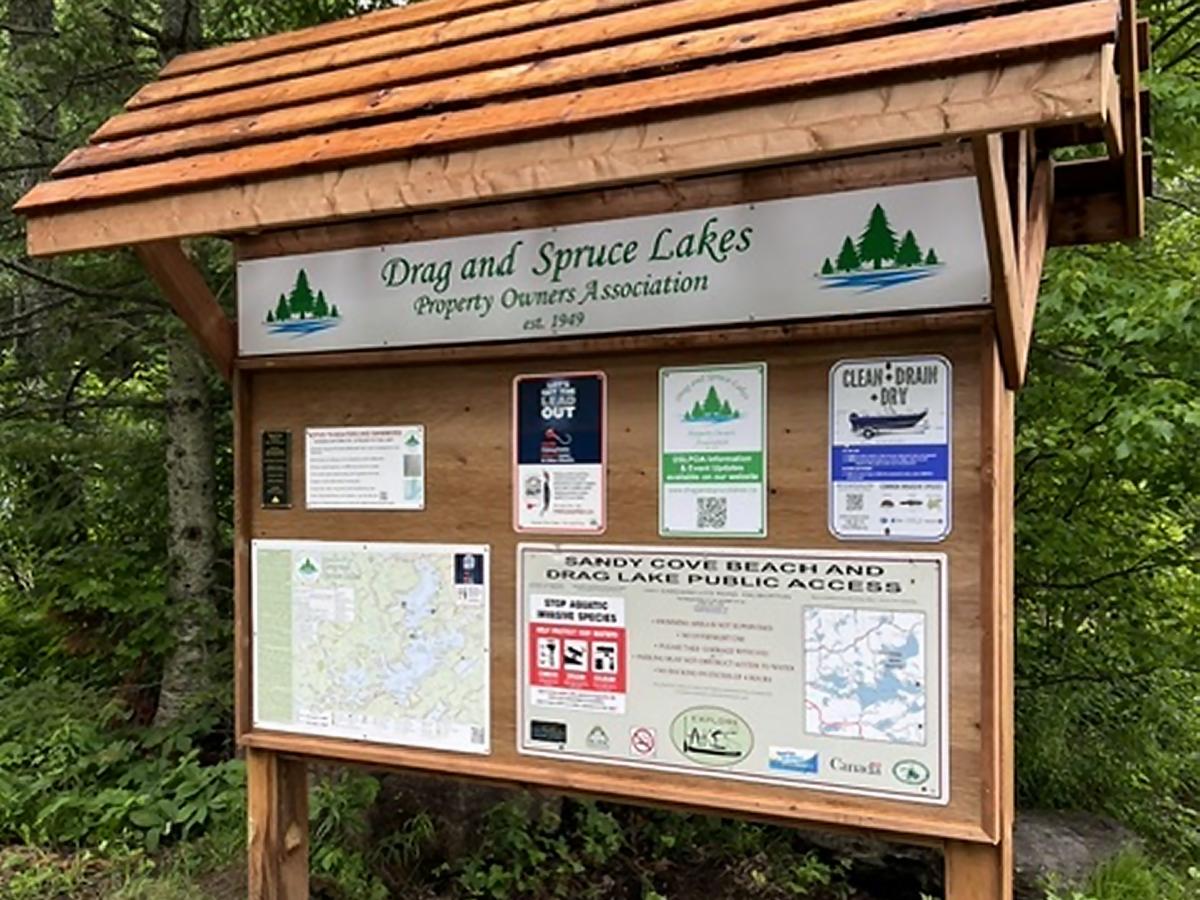
The survey is the same metric Montgomery will be using to track progress following a series of educational events and exchanges happening throughout the summer. Recently, the association used a municipal grant to erect kiosks at lake boat launches and public beaches. The kiosks include posters and other information around lead-free fishing.
“For Haliburton, our tourism is completely tied to our environment, and the more we can do to educate people, the better,” says Montgomery. “Even if people who visit our lakes see our kiosks and see the Let’s Get the Lead Out signage, they’ll consider fishing lead-free. The more we can sway even one person here or there, it all helps.”
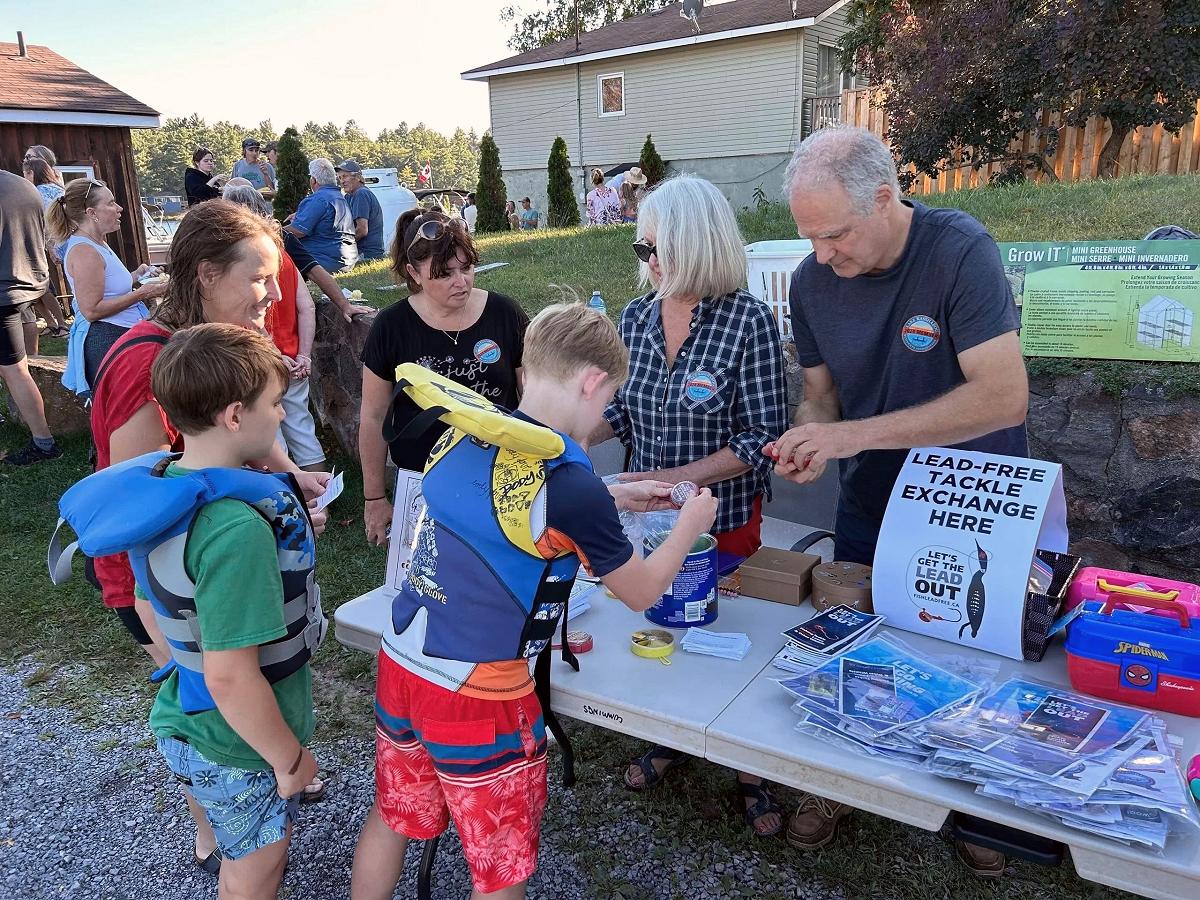
The grant also allowed the association to purchase lead-free tackle to distribute to residents and members who are getting rid of the lead currently in their tackle boxes. These exchanges will take place at member events throughout the summer, including at the association’s annual general meeting on July 12, where the more lead tackle members swap, the more likely they are to win prizes from local businesses.
Since beginning the exchanges, the Drag and Spruce Lakes Property Owners Association has collected more than four pounds of lead tackle, which will be brought to trusted partner recycling facilities.
“I won’t take it anywhere unless I know for sure it’s definitely not going back into the fishing tackle industry,” says Montgomery.
The association has also partnered with other local organizations to support the initiative, including getting Outdoors Plus, to stock more lead-free tackle and provide posters and educational resources. They are also working with U-Links Centre for Community-Based Research to further assess barriers to the program, and will be hosting lunch and learns to help other local lake associations develop their own campaigns.
“If we can make it easier for someone else, we’re more than happy to do that,” Montgomery says.
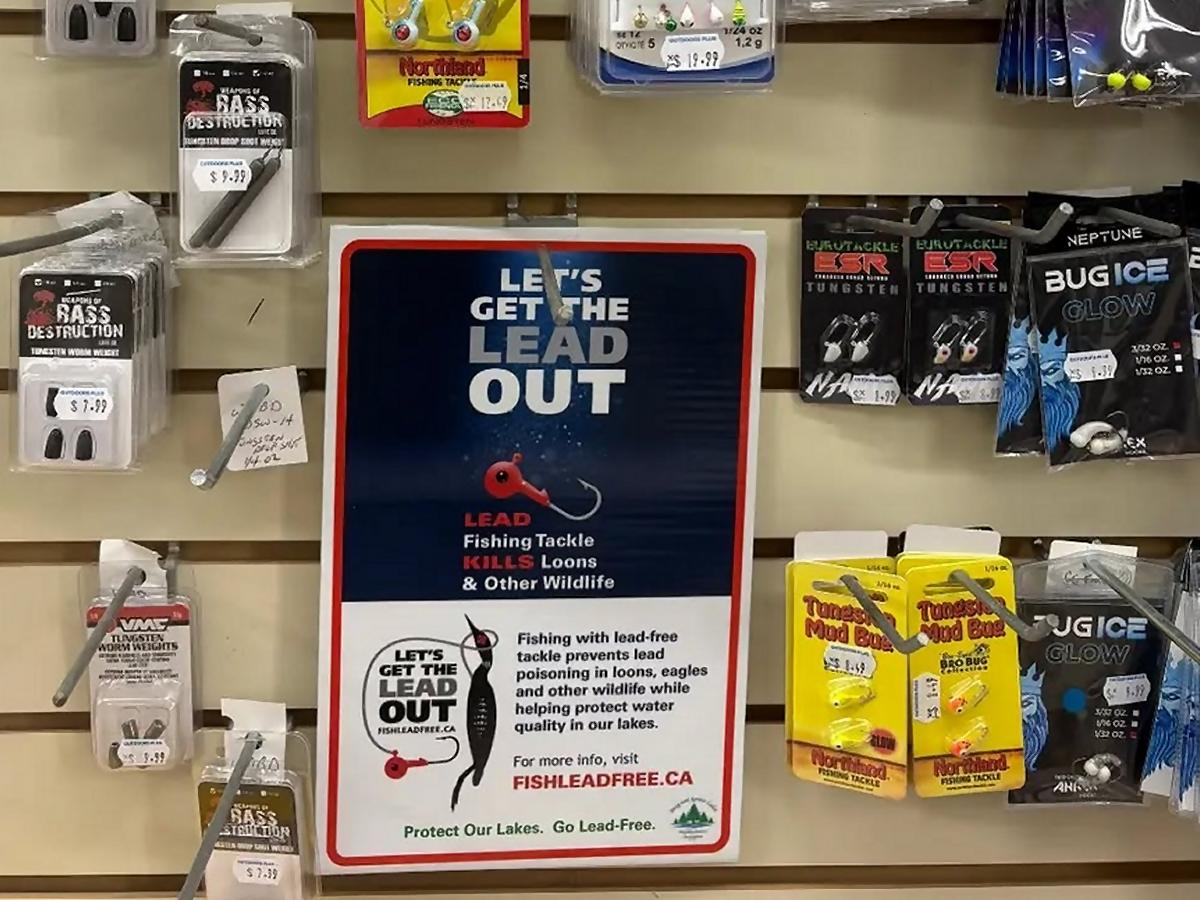
Other lake associations in the Kawarthas have similarly taken notice of the Let’s Get the Lead Out campaign.
In 2024 and 2025, the Lake Kasshabog Association in Peterborough County held tackle exchanges during events, offering rewards for those who participated, and placed signs at each of the boat launches and near major lake entrances.
Anglers on the lake were also approached with information and tungsten tackle to exchange with their own. Over the two years, 12 pounds of lead were collected from local tackle boxes and redirected from lakes.
Since its founding in 2022, Let’s Get the Lead Out has expanded to 29 lake associations across Ontario, with 500 pounds of lead tackle collected and safely recycled.
During that time, the campaign has also been circulating a petition calling on the Legislative Assembly of Ontario to ban the sale and use of lead sinkers, weights, and jigs under 50 grams in weight and any lead-headed tackle under 6.5 cm in length across all lakes in the province.
In the U.S., similar bans have been effective in New Hampshire, New York, and Maine, where lead-related deaths in loons and another animals began to decline after their bans were implemented.
“That’s going to create a larger public campaign beyond lake associations, and that would be wonderful,” says Montgomery. “If that builds the momentum for a wider breadth of people to have awareness, that’s a bonus.”
For more information about the Let’s Get The Lead Out campaign and to sign the petition, visit fishleadfree.ca.