




















When you or a loved one face a healthcare emergency, it’s comforting to know that the Emergency Department team at Peterborough Regional Health Centre (PRHC) has already been trained to respond to that emergency — not only through their own individual professional medical training, but as a team working step-by-step together.
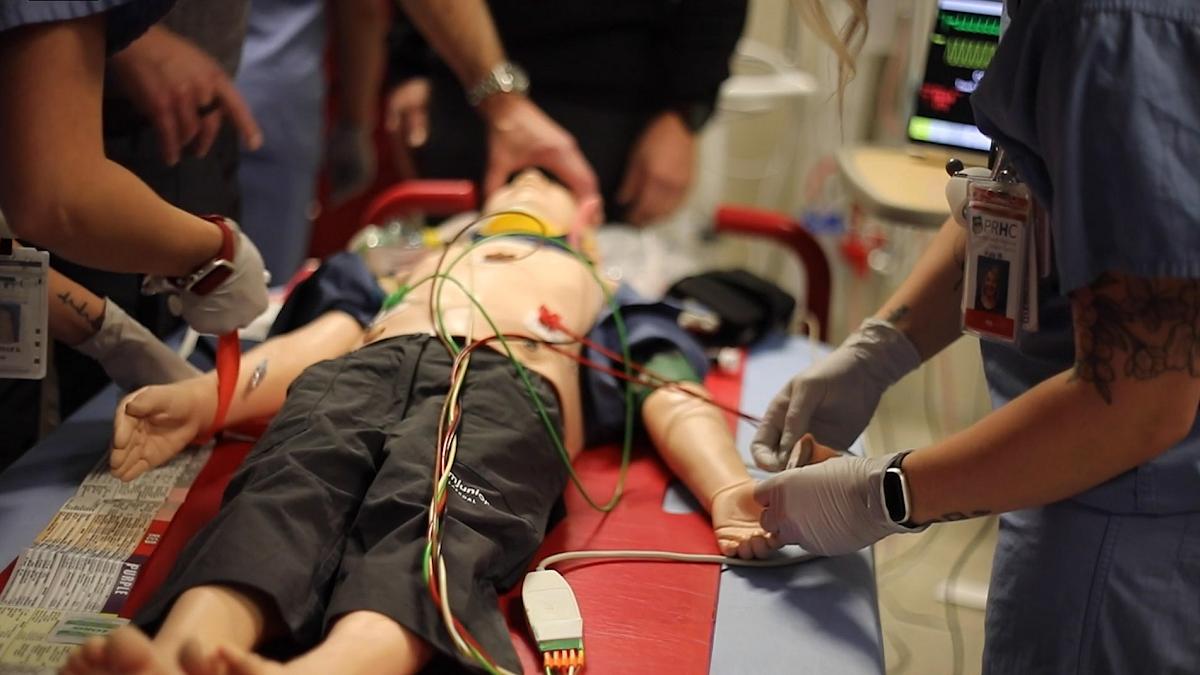
In fact, PRHC’s Emergency Department (ED) staff participate in monthly simulation training to practise responding as a team to both common and rare emergencies before they happen, and having access to state-of-the-art simulation mannequins will enhance that training even more.
That’s why the PRHC Foundation has made it a priority to acquire a new, cutting-edge simulation mannequin as part of the $70 million Campaign for PRHC.
“This was a recent request that will innovate PRHC’s ED training in support of world-class patient care,” says PRHC Foundation President and CEO Lesley Heighway. “It’s donors who make it possible for the Foundation to respond to the hospital’s urgent equipment and technology needs as they arise across all areas of care.”
Step-by-step training for healthcare emergencies before they happen
“When every second counts when we need emergency care, we’re not thinking about all the preparation that PRHC’s hardworking Emergency Department team has done behind the scenes to be ready, but that preparation, beyond regular medical training, is vital to us receiving lifesaving emergency care,” Heighway adds.
“Essential to that preparation are advanced simulation tools that help our skilled doctors, nurses, and staff practise medical procedures, processes, and teamwork in the most realistic ways possible. A state-of-the-art simulation mannequin that can respond just like a human in a training scenario means better teamwork and care, faster, and with less risk of complication for the real-life patients with similar symptoms or injuries.”
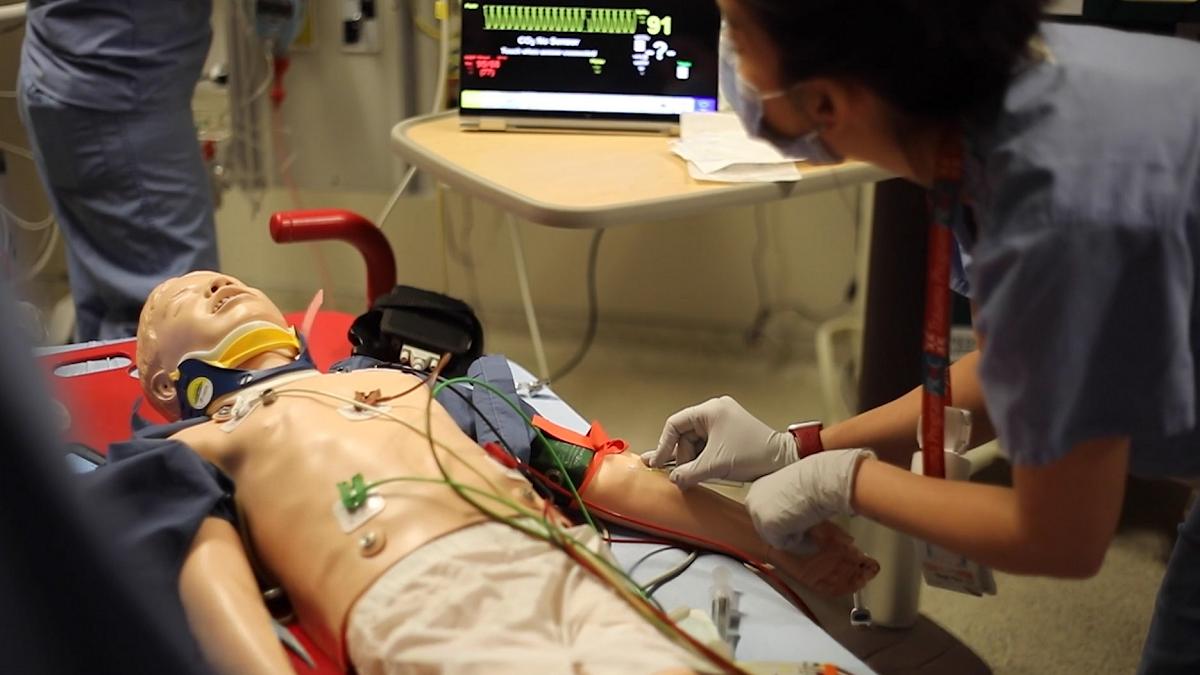
As a Level III Trauma Centre, PRHC’s busy Emergency Department cares for some of the region’s most critically injured patients. During simulation training, doctors, residents, medical students, nurses, nursing students, the respiratory therapy team and partners like Emergency Medical Services (EMS) come together to practise these emergency situations using mannequins that are designed to mimic a real patient.
A more realistic patient for more realistic training
However, PRHC’s existing simulation mannequins are more than 10 years old, and today’s technology is far more advanced. The latest mannequins are far more realistic, mimicking basic functions like breathing, blinking, and talking all while displaying changing vital signs.
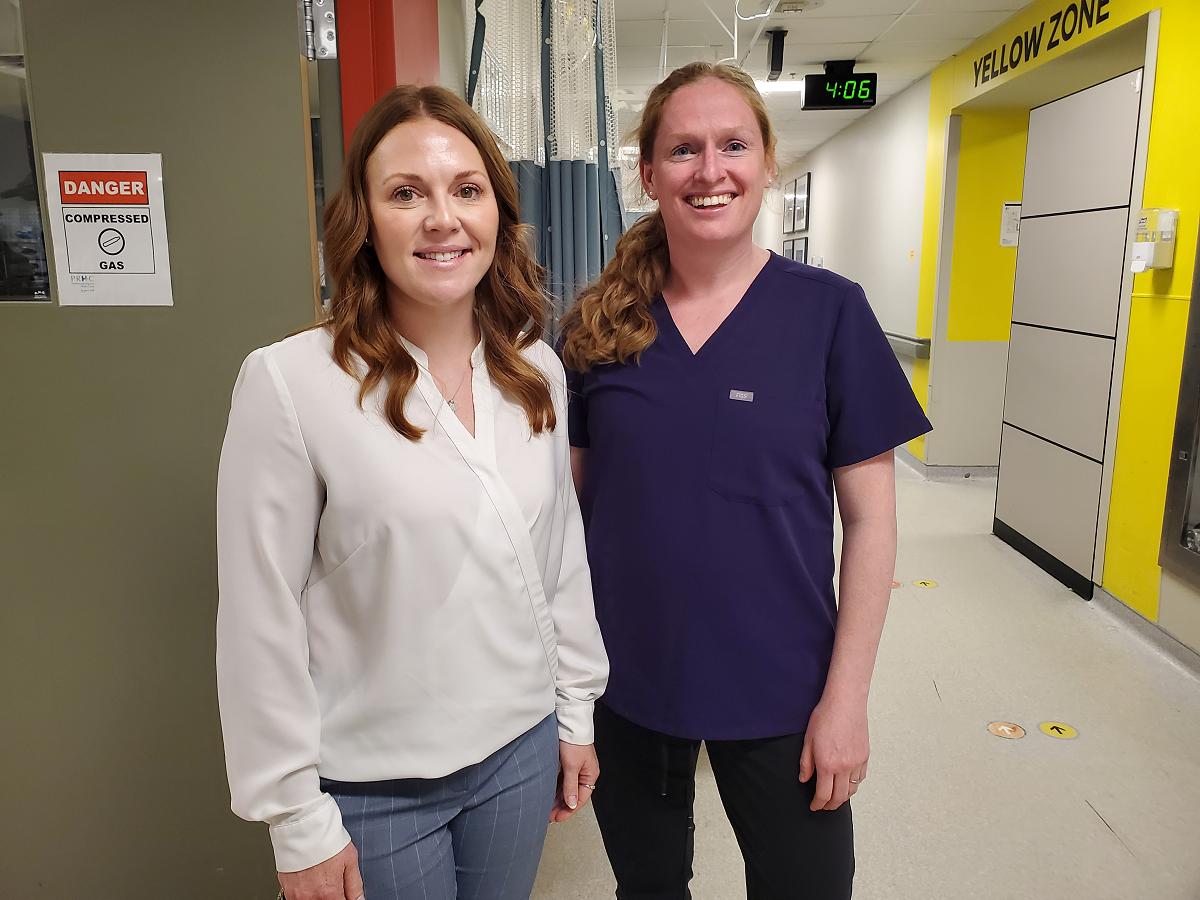
According to PRHC Emergency Department Clinical Nurse Educator, Emily Philips, who leads simulation training for the Emergency Department alongside PRHC Emergency Department Physician Dr. Sarah Foohey, this technology will be transformative for the Emergency Department’s healthcare professionals and in turn, the population of more than 600,000 people the regional hospital services.
“We want to mimic real life as much as possible when we’re doing simulations,” Philips explains. “When Sarah and I are running a sim, we try to put ourselves in the corner and let the sim play out because we want people to engage with it as they would in real life, but that’s not as achievable as we’d like because of the quality of the current mannequin we use.”
Keeping teams immersed in simulations from start to finish
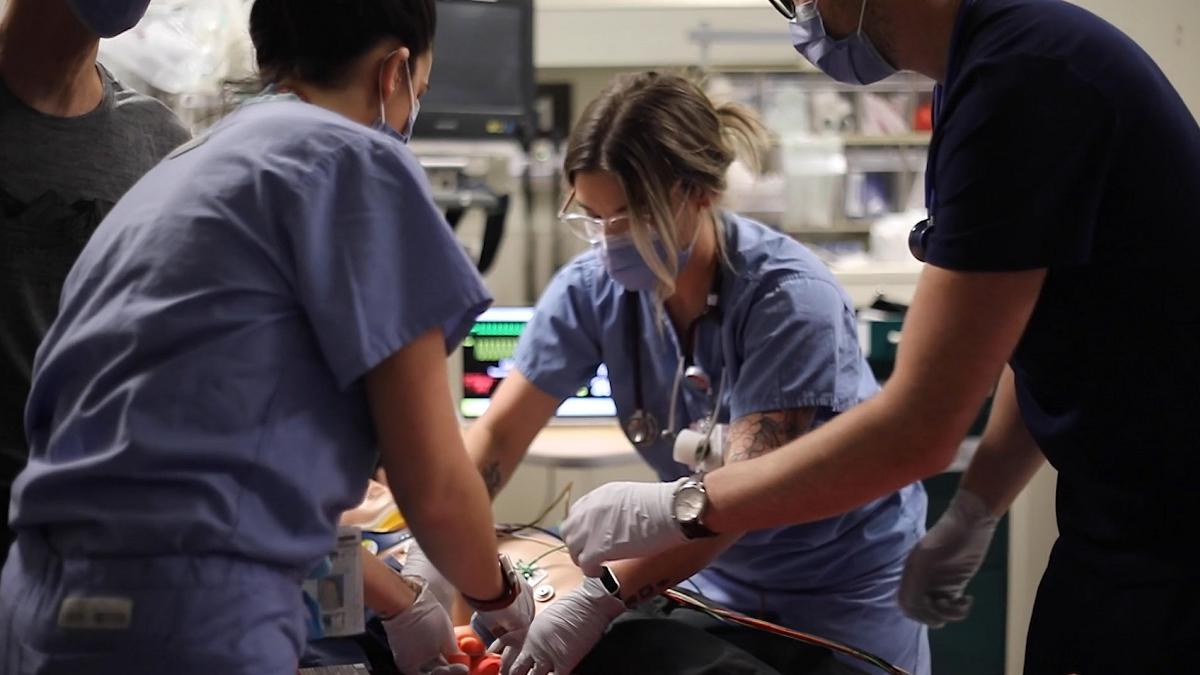
For example, the Emergency Department team at PRHC is unable to observe changing vital signs with the current mannequins.
Instead, they have to remove themselves from the simulation and ask Philips and Dr. Foohey to describe changes in the simulated patient, such as if they are breathing, what their blood pressure is, and whether their pupils are dilated.
Having a mannequin that presents changing vital signs on its own in real time would allow the team to remain present in the simulation from start to finish, more closely matching a true-life scenario.
“There’s an element of willing suspension of disbelief when your mannequin is quite old,” Dr. Foohey says. “Having a better mannequin helps with that hurdle of emotional fidelity. Once you get past those first few minutes of a sim, then people are immersed. That’s when the learning happens.”
Hands-on practice of lifesaving procedures
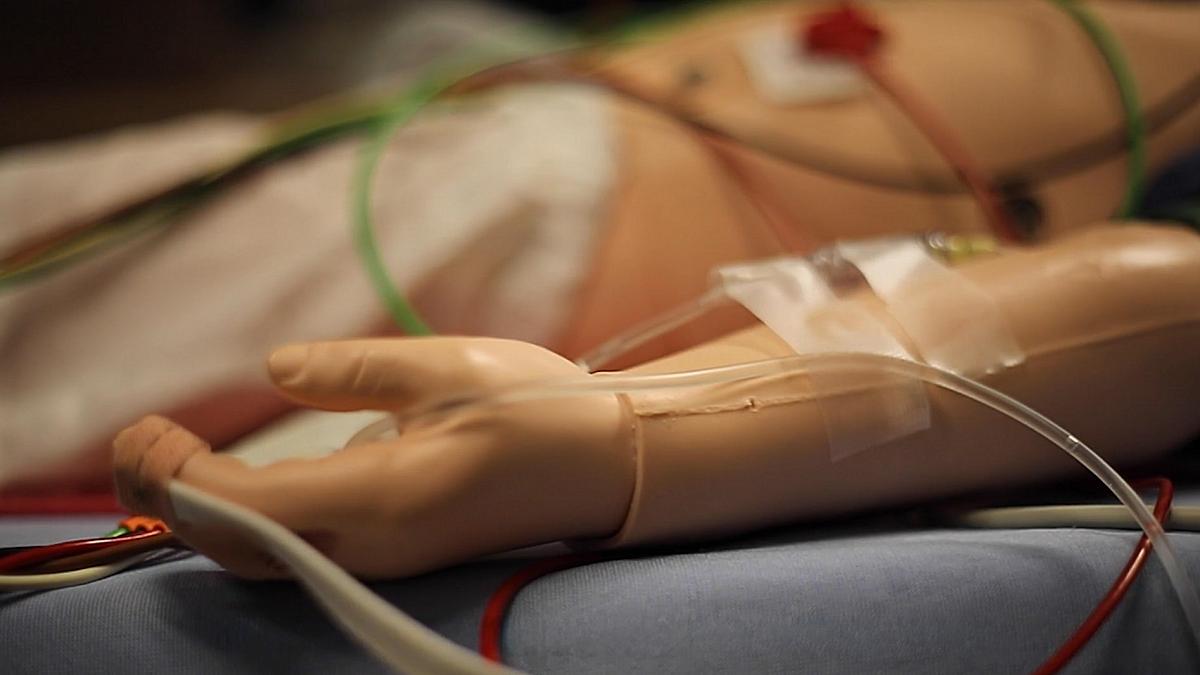
The new simulation mannequin will have four removable limbs to simulate traumatic accidents and gunshot wounds.
In addition, the mannequin can take injections into veins, bones, or muscles, unlike the current ones where the team pretends to give injections and tapes tubes to the mannequin. It’s also able to simulate a cricothyrotomy situation — a procedure often depicted on TV or in movies that isn’t common in real life, where healthcare professionals have to access an airway through the front of the neck.
“Having the procedural options is such better training for the doctors and nurses because they actually practise hands-on and it adds to the sense of reality,” says Dr. Foohey.
“When someone has to pretend and say ‘I did a chest tube’ but actually didn’t, it doesn’t really simulate the five to ten minutes it takes to do one, and they lose situational awareness. Until you’re actually walking through a procedure, you’re not really simulating a procedure. And for something like the cricothyrotomy that might be more of a once-in-a-career situation, the team has a chance to become familiar with the procedure, but also where to access the necessary supplies and how to work together on it.”
Identifying obstacles in advance before real patients arrive
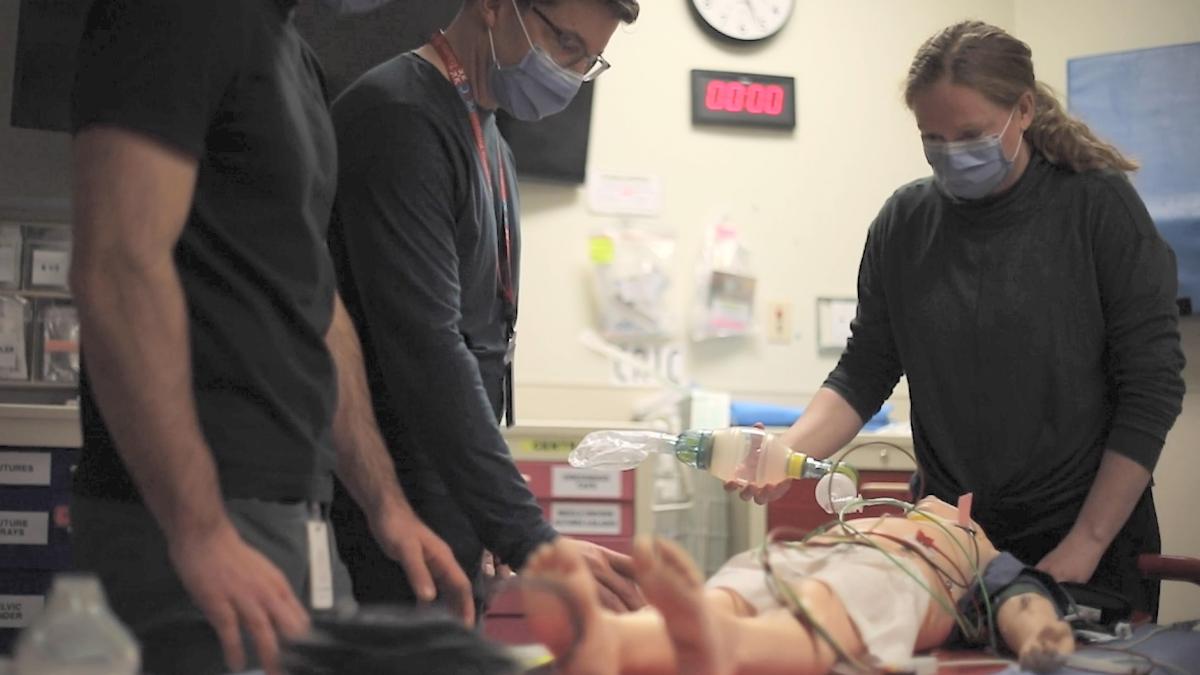
Simulation training also helps the team identify other problems and obstacles that could arise during an emergency and affect patient care.
A recent simulation helped the Emergency Department team see that a rare medication that was needed in the scenario was located in another department — which could make a lifesaving difference when seconds count.
“We get to practise the medical learning and work through our processes so that, in real-life moments, it’s not the first time you’re experiencing it, everything is where it should be, and we’ve talked about it,” Philips says.
Strengthening team communication and fostering a safe learning environment
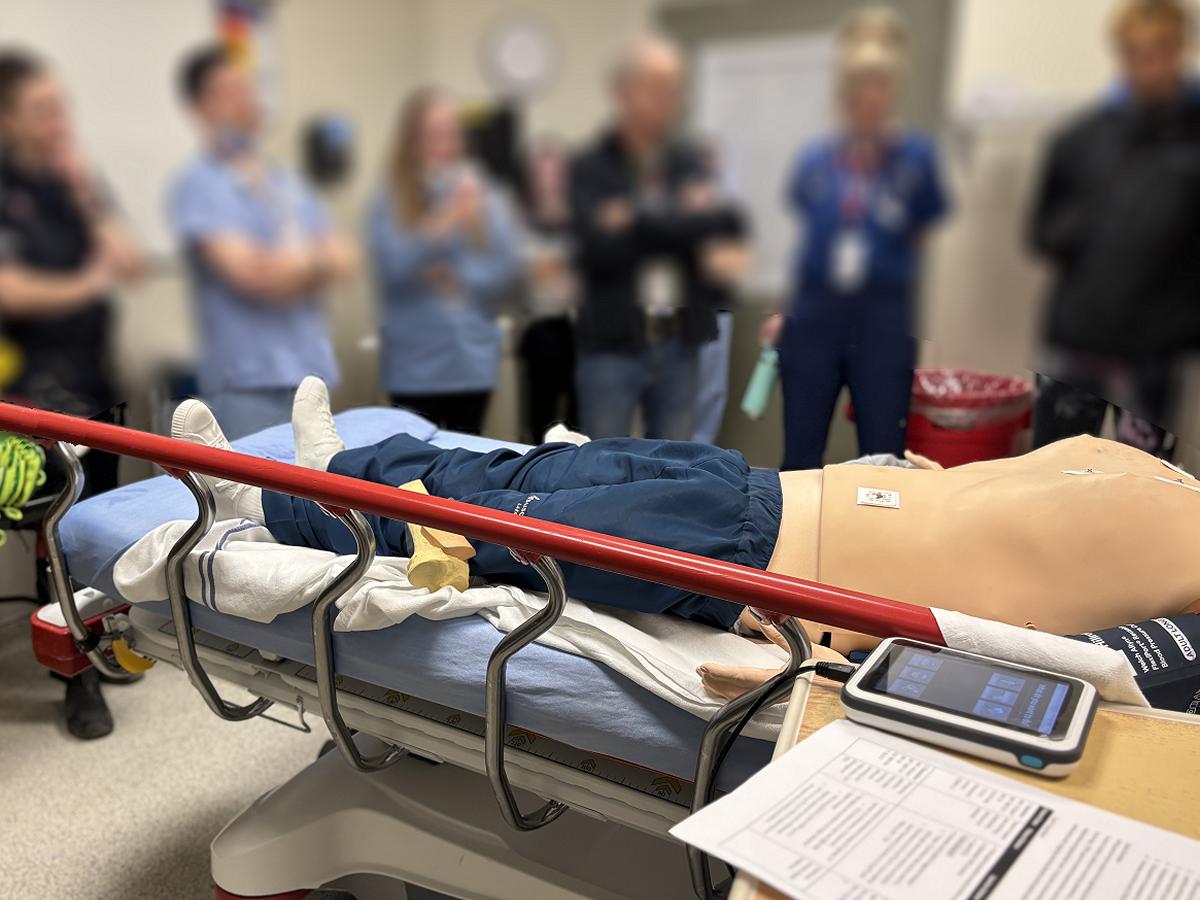
Dr. Foohey adds that these simulations also strengthen team communication, which indirectly benefits patient care. Sim debriefs look at how well teams interact with each other to ensure clarity, such as participants using each other’s names and following closed-loop communication practices.
“We use sim as an opportunity to remind teams that, when multiple doctors are involved in a case, they can brainstorm, but the one doctor designated as lead needs to be clear with the decision and their language,” Dr. Foohey says.
“It also gives members of the team the opportunity to say ‘This stresses me out’ or ‘That’s unclear.’,” Dr. Foohey points out. “It becomes a sounding board for non-sim communication challenges because it’s a safe space to bring it up and address it effectively.”
Philips says the training also aims to break down the “perceived hierarchy” that exists between participating practitioners to ensure all team members are comfortable speaking up and sharing their concerns in support of better patient care.
“We’re really fostering that safe learning environment for everybody, whether you’re a longtime emergency doctor or nurse, new to emergency medicine, upskilling or a junior team member joining sim as part of orientation,” she says. “Practising lifelike situations helps everyone to learn together when they wouldn’t ordinarily do that. Training could be very segregated otherwise.”
Philips notes that cultivating that level of teamwork and trust enhances the team’s ability to work together under pressure, in what are likely to be the most critical and vulnerable moments of their patients and their families.
Improving collaboration and enhancing PRHC’s simulation training program
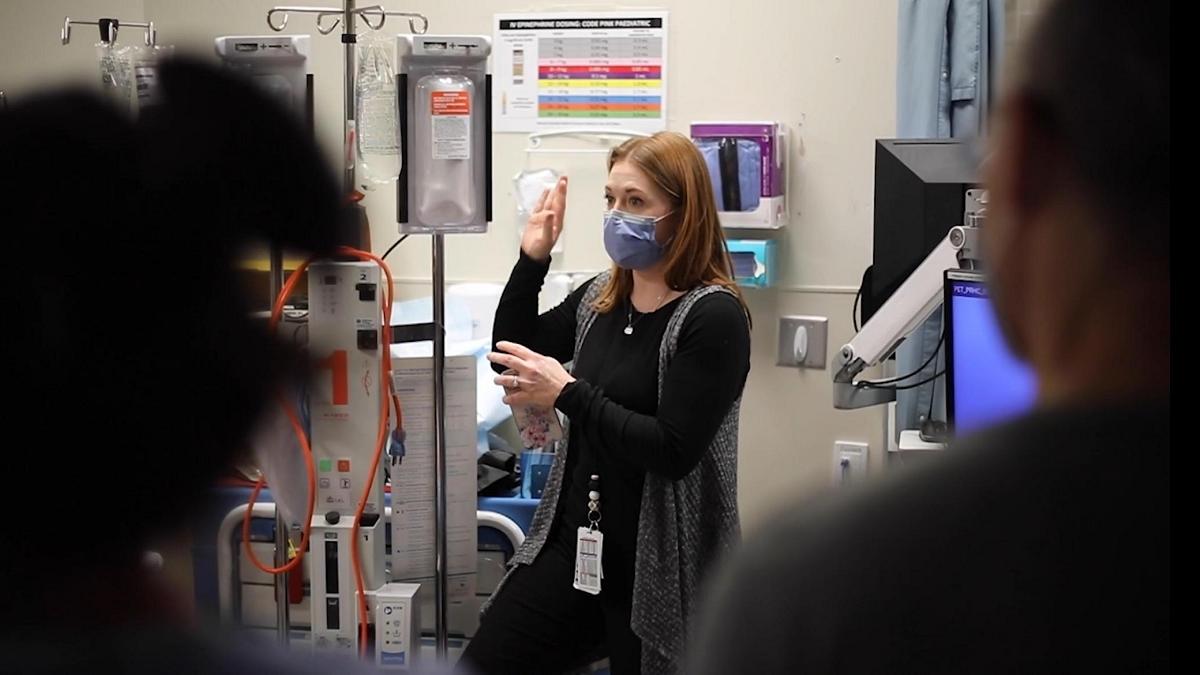
PRHC invites EMS crews to join in the training, not only to enhance the realism of the scenario but to extend the team trust to and encourage collaboration across partner organizations for the best care for the patient.
“When the relationship is strengthened, so is patient care,” says Dr. Foohey. “EMS trust us because they know that we’re trying our best to do right by the patients and it’s reflected in everything we do. It extends beyond sim and education.”
This collaborative approach lends itself to PRHC’s reputation as a regional healthcare leader with a high-quality simulation training program. Other regional health centres take inspiration from it.
Dr. Foohey says a new Emergency Department simulation mannequin will only strengthen that reputation by generating more interest among healthcare professionals and expanding the range of learning opportunities. If other centres can create successful simulation training programs, care in those communities will be strengthened, contributing to a stronger system.
“People know our program is working and want to know how and why and that’s important,” Dr. Foohey says. “Not only will a new mannequin have a positive impact on patient care, but when everyone is working hard while facing the challenges of frontline emergency medicine having a successful, engaging program with new tools and new supplies helps energize them. There’s inherent value in that and it’s something I’m excited for.”
Donations fund urgent needs for equipment or technology
The simulation mannequin is just one of many areas of urgent care that are being supported through PRHC’s $70 million Campaign for PRHC.
Other urgent needs funded throughout the campaign by donors who have given general, undesignated gifts have included nutrition services equipment, the hospital’s new Reactivation Care Centre, mental health care supports, Emergency Department trauma care equipment, and technology for the Palliative Care Unit, among many others.
“These are unexpected opportunities for innovation or advancement that support better patient care right away,” Heighway says. “When PRHC asks us to urgently fund equipment or technology, it’s the generosity of our community that gives us the flexibility to do so.”
“A simulation training mannequin for the Emergency Department is an exciting opportunity to support our hardworking ED team,” she adds. “This is a unique and regionally specific way donors in our area can assist our emergency healthcare professionals with the extraordinary work they do when we need them most.”
“It’s an honour to fundraise for something that Emily and Dr. Foohey, who are so passionate about patient care and the training that helps their teams deliver the very best care possible, need. Together, we can raise the $160,000 to bring this specialty training equipment to PRHC.”
To learn more about fundraising for urgent needs at PRHC and to make a donation, visit the PRHC Foundation website at prhcfoundation.ca or call 705-876-5000.
This branded editorial was created in partnership with the Peterborough Regional Health Centre Foundation. If your organization or business is interested in a branded editorial, contact us.