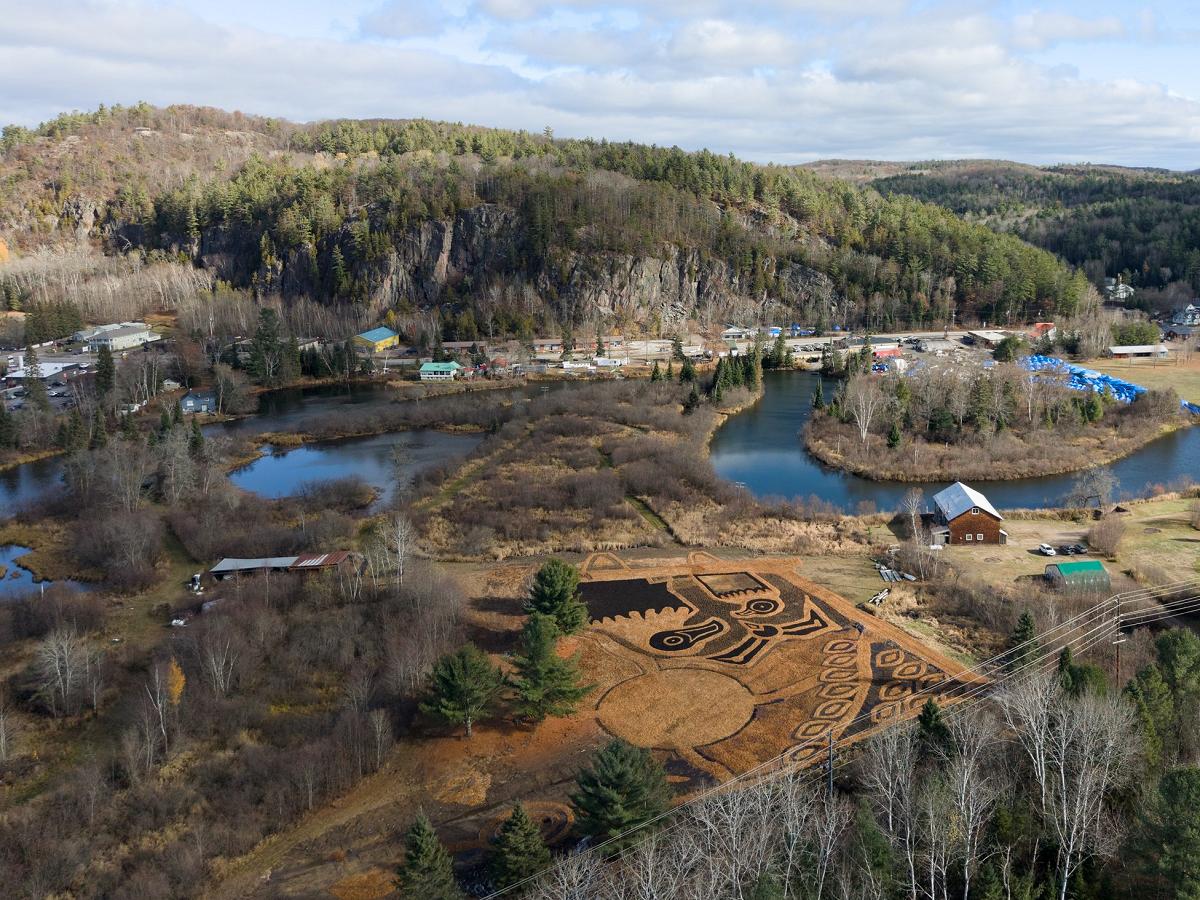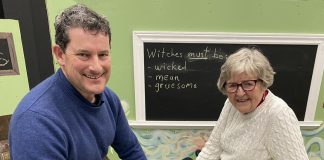

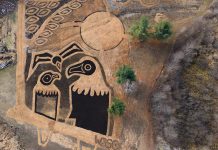










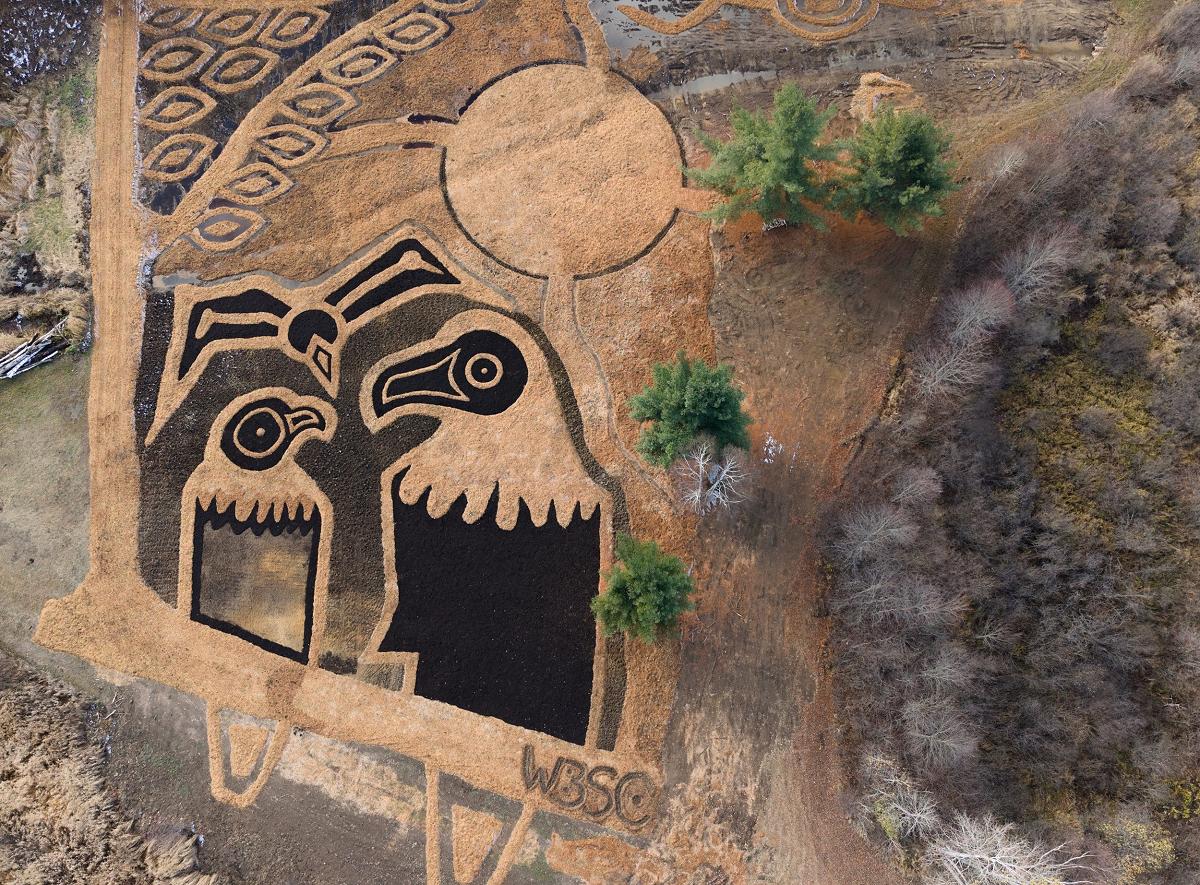
If you were at the lookout at Eagle’s Nest Park in Bancroft this fall before the park closed for the season, you may have noticed in the distance a large piece of artwork depicting two eagle heads formed in the land across the river. If you looked more closely, you may have seen Indigenous artist Sherry Crawford waving up at you.
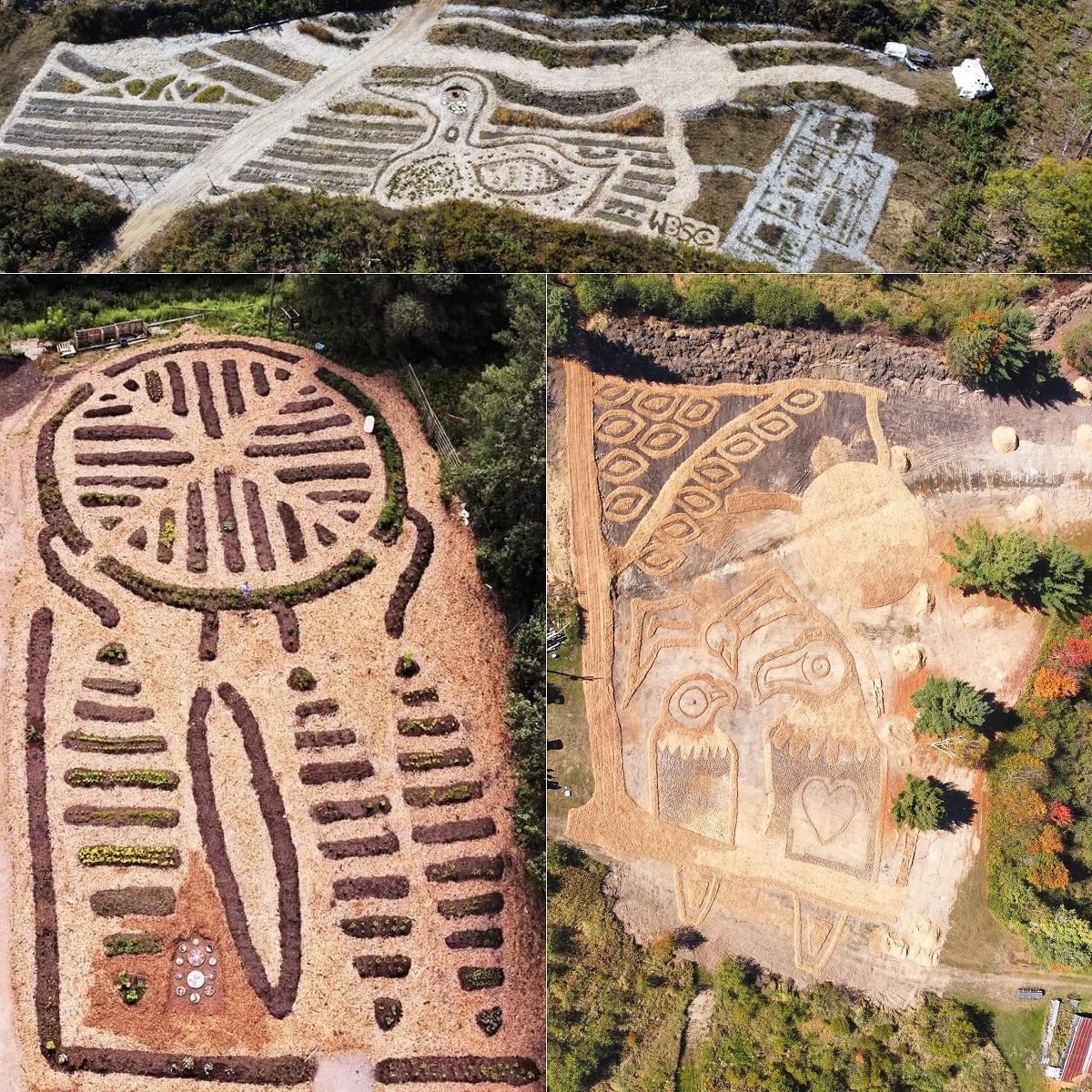
She is the creator of the artwork, titled “Return to Shawashkong,” which has become the third in a series of reconciliation gardens that celebrate the Algonquin peoples.
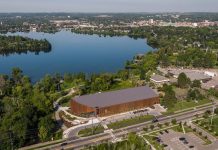
This one references the story of the last eagle on Eagle’s Nest, an enormous mass of igneous rock overlooking Bancroft and the York River that has been turned into a park with hiking trails, a viewing platform, and a self-guided walking tour that shares the 10,000-year-old stories of early Indigenous settlement in the area.
Oral history recounts that a young settler child was taken by an eagle that had nested in a large pine on the cliffs as long as anyone could remember. After the child was saved, the settlers ensured this would never happen again.
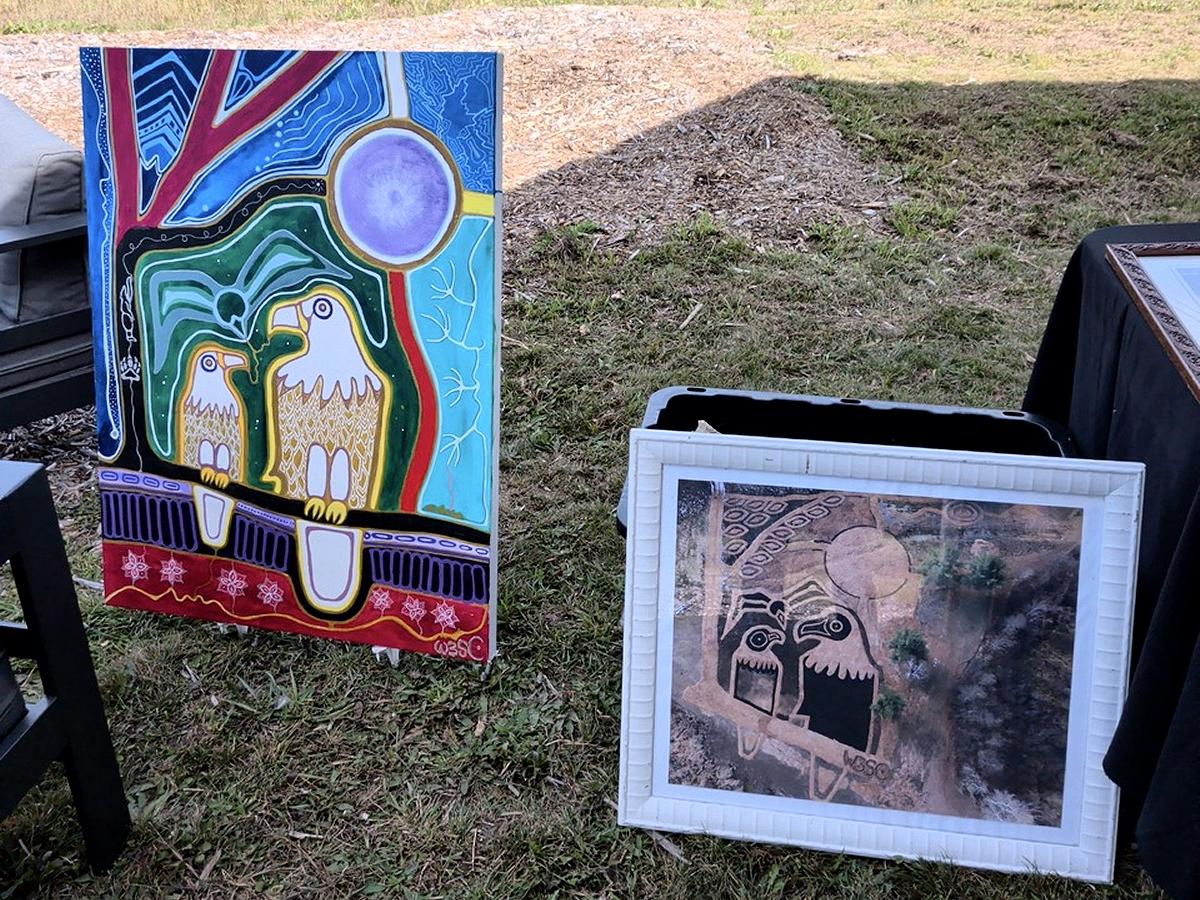
“The townspeople went up and destroyed all the nests on the eagle’s nest, and so the eagles left and they hadn’t been back since,” says Crawford. “The painting I made, called Return to Shawashkong (the historical Algonquin name for the York River), was an invitation for the eagles to come back to Eagle’s Nest and make that their home again.”
Crawford, also known by her traditional spirit name White Bear Standing, is a multi-disciplinary Algonquin woodland-style artist who carries ancestral teachings and is guided by the Seven Grandfather Teachings and the medicine wheel.
Though she now resides in Millbrook, Crawford is originally from Bancroft — on the traditional territory of Kijicho Manito Madaouskarini Algonquin Nation — and calls it her “home community.”
A few years ago, Crawford was contacted by Fraser Young of Ecostructure Canada, a sustainable design consulting firm for homes and biodiverse organic orchards and gardens, who expressed interest in turning her work into edible and medicinal reconciliation gardens.
Using Crawford’s design, Young first began creating a 100-foot medicinal wheel that’s now used as a community garden by the Canadian Peace Museum in Bancroft. Another of Crawford’s paintings, depicting a loon, was turned into a second garden on private property on Woodcox Road.
“He does everything by hand,” Crawford says of Young. “I did the image, then he gridded it out on paper, then hand by hand with wheelbarrow and woodchips, he created the image,” says Crawford. “He then started planting after the image was created.”
Woodchips are used to outline the images, which are filled in using raspberries, wildflowers, sage, sweetgrass, berries, and other edible and medicinal plants. Crawford explains that next year, when the wildflowers have grown in, Return to Shawashkong will be even more stunning to look at from the top of Eagle’s Nest.
“Within five weeks he had the whole image created,” says Crawford. “It just totally blew me away I’d never seen anything like it. When I saw the image and it looked exactly as the painting, I was shocked. I’m still blown away, actually, because I can’t believe that he can do it so quickly with so much labour involved.”
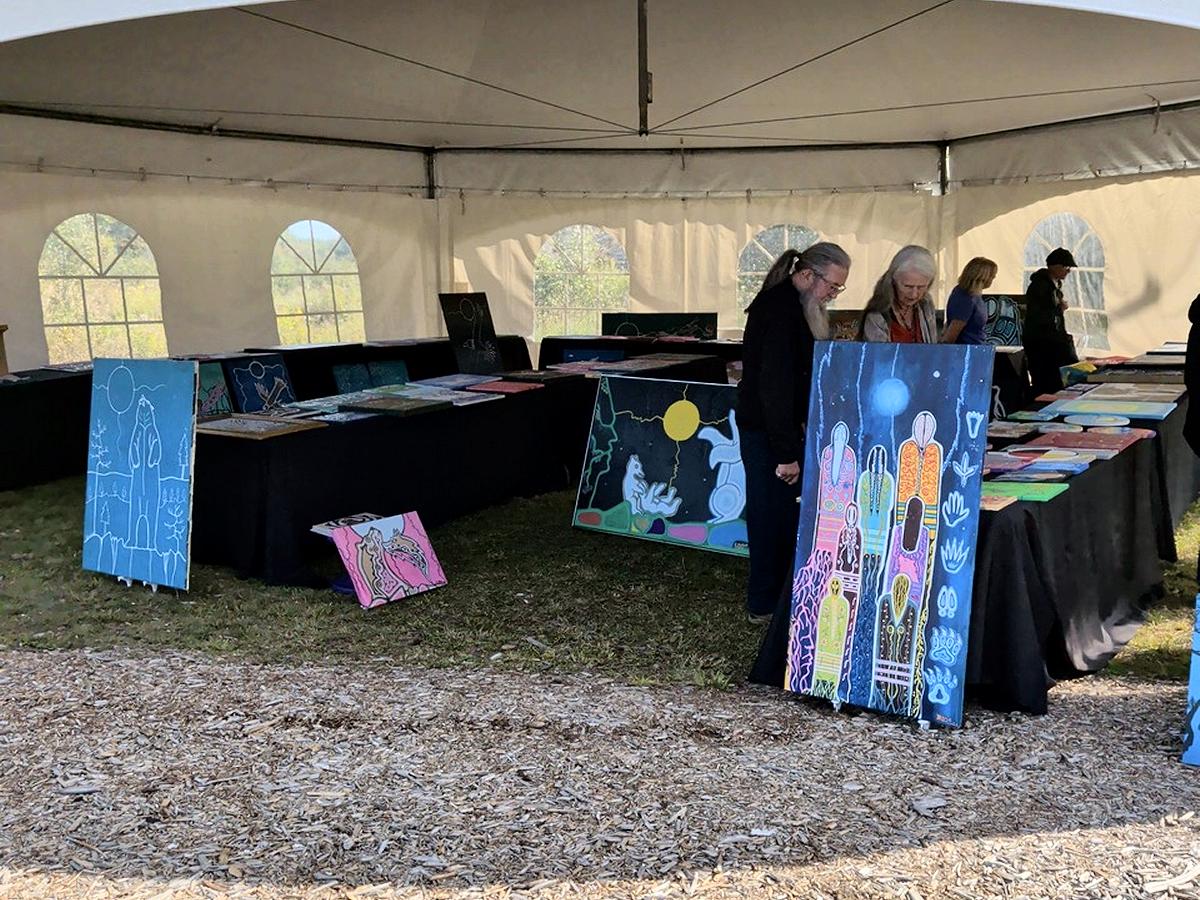
During the Bancroft & Area Studio Tour in September, visitors were invited to the lot to view Crawford’s artwork and walk through and learn about the gardens. They were even given seeds to plant so community members could be involved in the gardens.
Crawford says many people walked up to the Eagle’s Nest lookout afterwards so they could see the gardens from all angles.
“That was a really positive experience, so we’re hoping that we can do something like that every year, along with our own pop-up events and lots of community gatherings. Hopefully, we’re going to have something out there every day of the week from walk-throughs and teaching seminars.”
Crawford says the reconciliation garden “is not just for the art.”
“Fraser’s whole goal is to try and better things for the Algonquin people and all the community with farm-to-table experiences,” she explains.
“It’s a recognition of Algonquin land, it’s recognition that we’re still here — we’re always going to be here — and we’d like to do more, so that eventually we will have aerial tours so people can actually fly over and do these little tours when we get a few more gardens going.”
Crawford says the produce grown in the gardens will not be sold. Instead, it will be given away at educational events and donated to food shares.
“We believe that you give things away and you get things back in other ways. The more you give, the more it comes back, so a lot of times donations are much healthier than an actual fee.”
She hopes to get some community grants and funding to turn more of her work into community gardens, especially her signature piece “Seven Generations of Grandmothers,” which she says she’d “love to see in the Earth” — though it will take time, funds, and about eight acres of land.
“It’s (the garden) opened up so many people’s eyes about nature and just how important gardening is,” Crawford says. “Self-sustaining food projects like that are what we need, because it’s a community thing.”