










Decades after his gruelling wartime slog through Sicily and the Italian mainland as a Canadian soldier, Farley Mowat’s moving account of that experience — what he saw and what he heard, and how it made him feel — is coming to the stage.
Adapted by renowned Canadian playwright and Peterborough native Dave Carley, And No Birds Sang opens a 27-show run on Friday, August 14 at the historic Capitol Theatre in Port Hope.
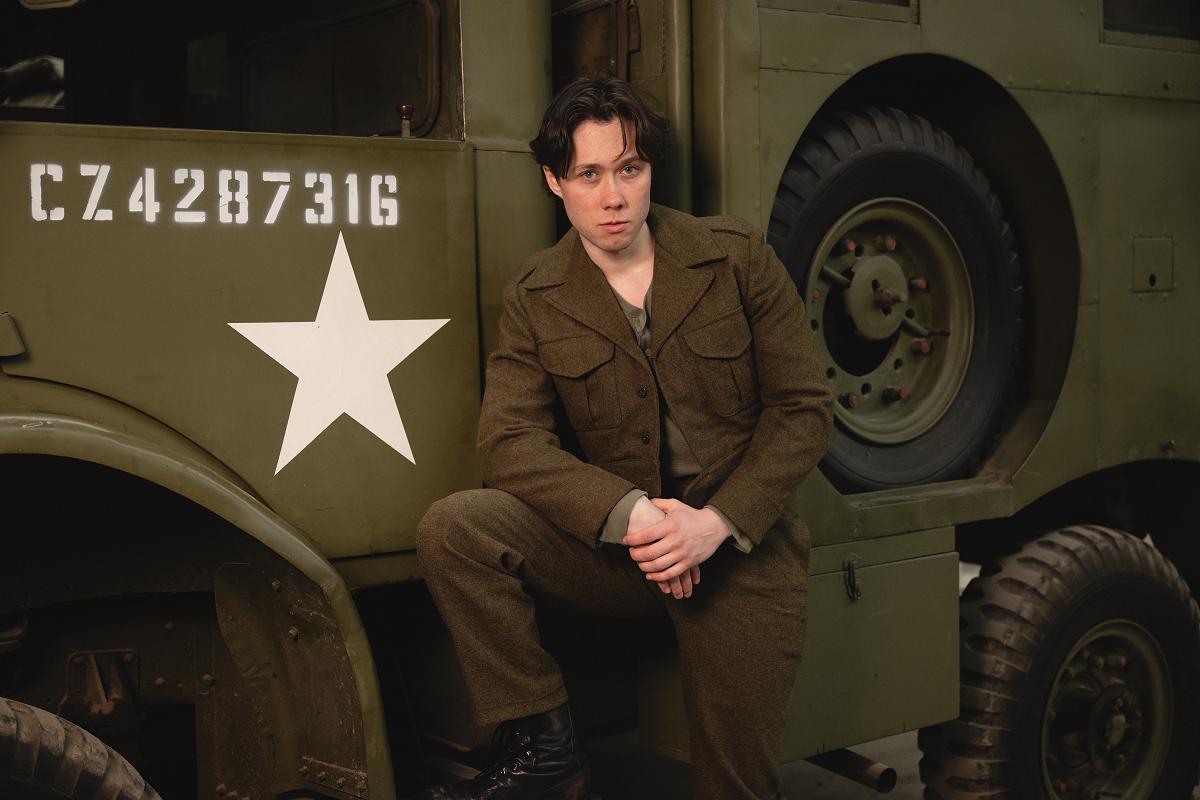
Staged in the performance venue’s intimate Sculthorpe Theatre, Carley’s adaptation is based on Mowat’s 1979 memoir of the same name, which recounts his wartime experience as a platoon commander with The Hastings and Prince Edward Regiment as it invaded Nazi-occupied Sicily in July 1943 before landing in Italy proper two months later.
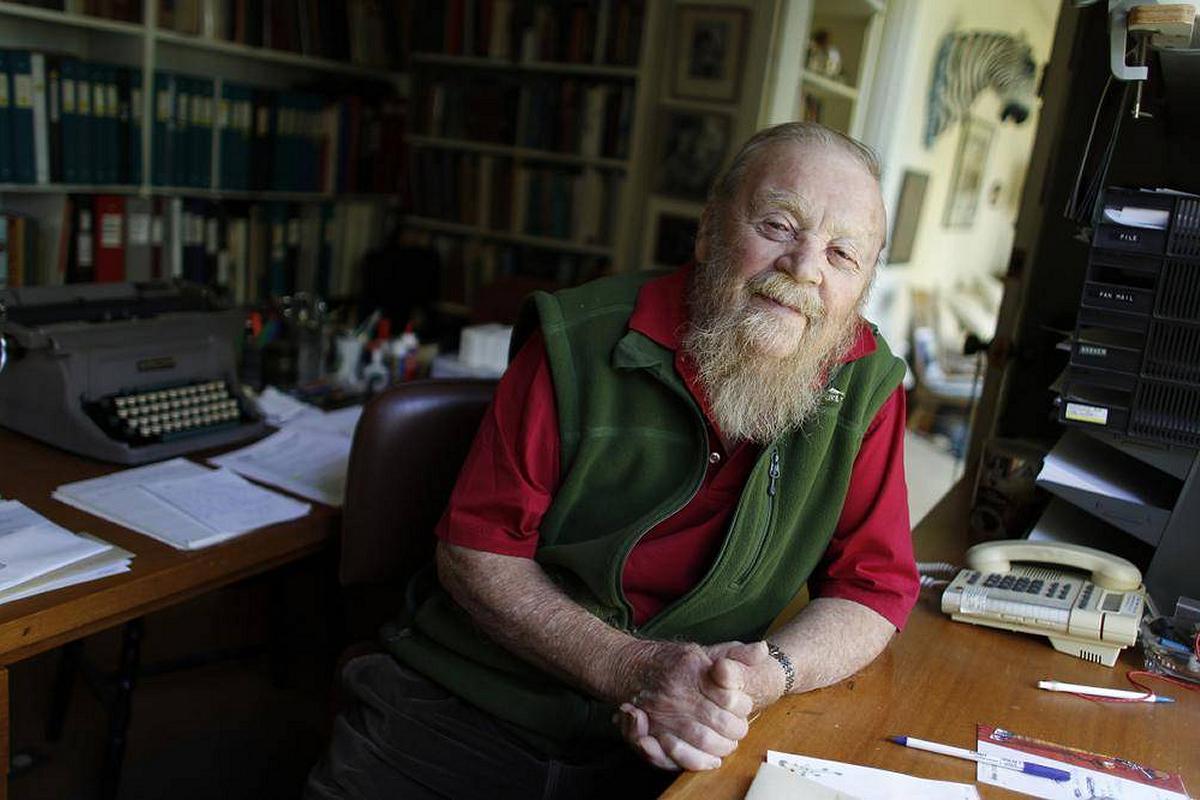
That the play being premiered in Port Hope is most fitting, in that Mowat and his second wife Claire spent much of the later years of their life together in the town where, in May 2014, he was buried at St. Mark’s Anglican Church Cemetery.
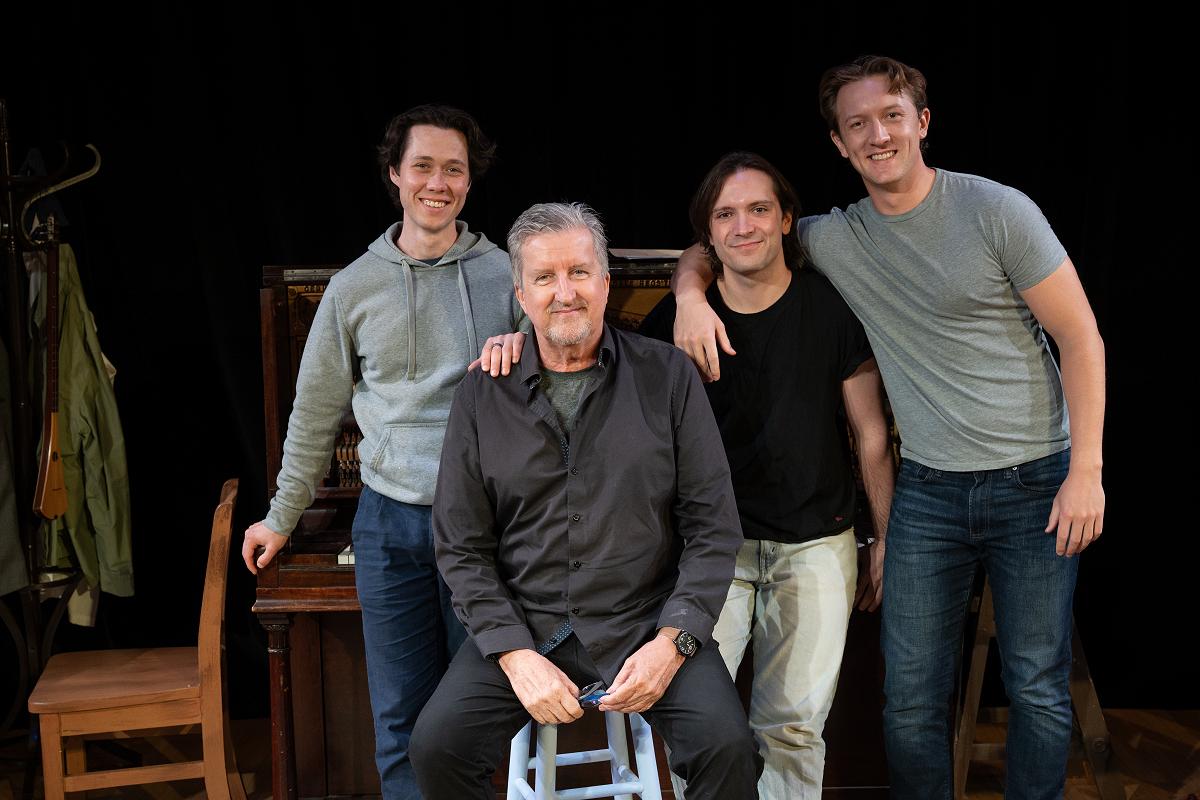
Directed by Capitol Theatre artistic director Rob Kempson and starring Aaron Macpherson as Mowat with Daniel Reale and Mayson Sonntag featured in multiple roles, And No Birds Sang was developed in the Capitol’s Creators’ Unit in 2024.
“I’ve been curating the 10-Minute Play Series in Port Hope for a few years now as part of their summer festival — it’s hard not to come across something about Farley Mowat,” Carley says. “There’s the park there (Farley Mowat Park), there’s the boat there (the Boat Roofed House monument in Eastside Ganaraska Park) … the local bookstore has shelves of his books. He remains a fixture of the town.”
“I had read some his books but I had never read his war memoir. It immediately hit me that it was worth dramatizing. We did a 10-minute excerpt (for the 10-Minute Play Series) but I kept going from there.”
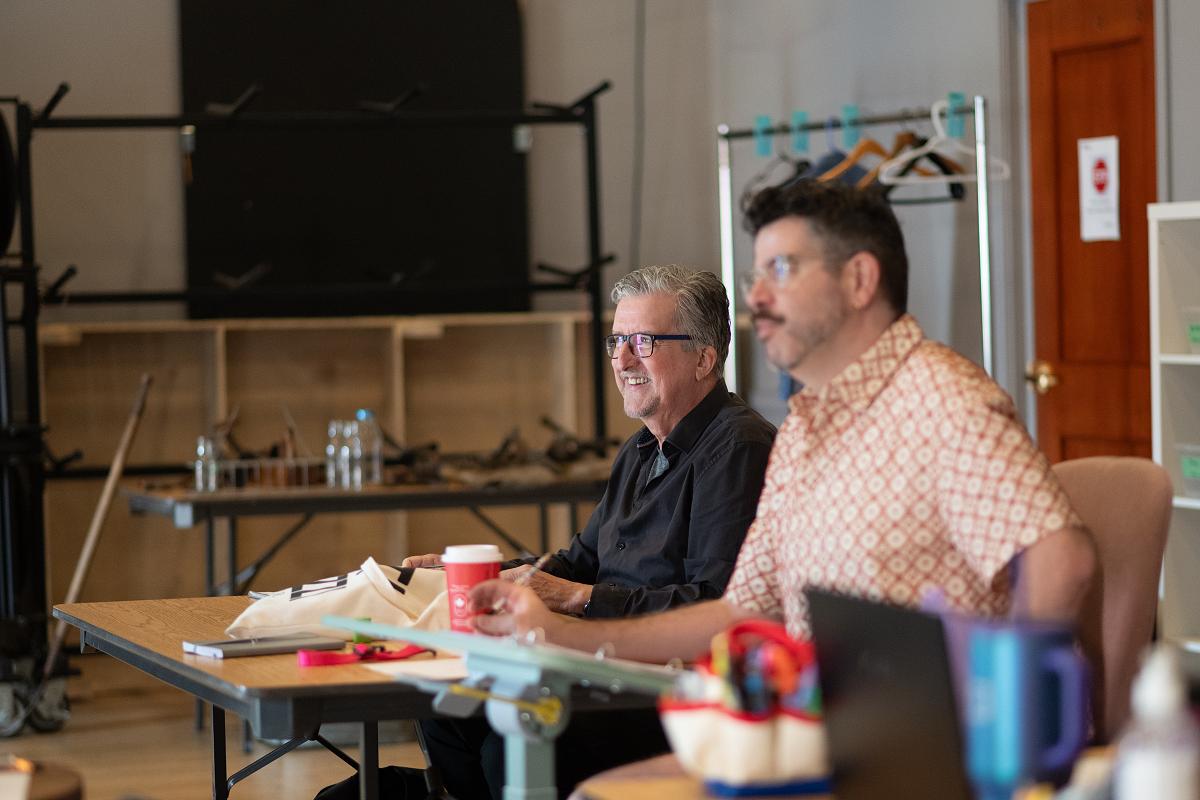
Carley says while the history of both world wars continues to captivate readers and audiences, Mowat’s autobiographical account is compelling for another reason.
“It’s a real look into the psyche of the very young men that went off to war,” he says, adding “I just marvel at what they did, because they were so young.”
The loss of youthful innocence, notes Carley, is what attracted him to the memoir as a dramatist.
“It begins with Farley being a young man going off to war and trying to impress his girlfriend. He’s going to make his dad happy. He thinks it’s going to be a big old lark and then, by the end, he realizes what it really is, which is hell.”
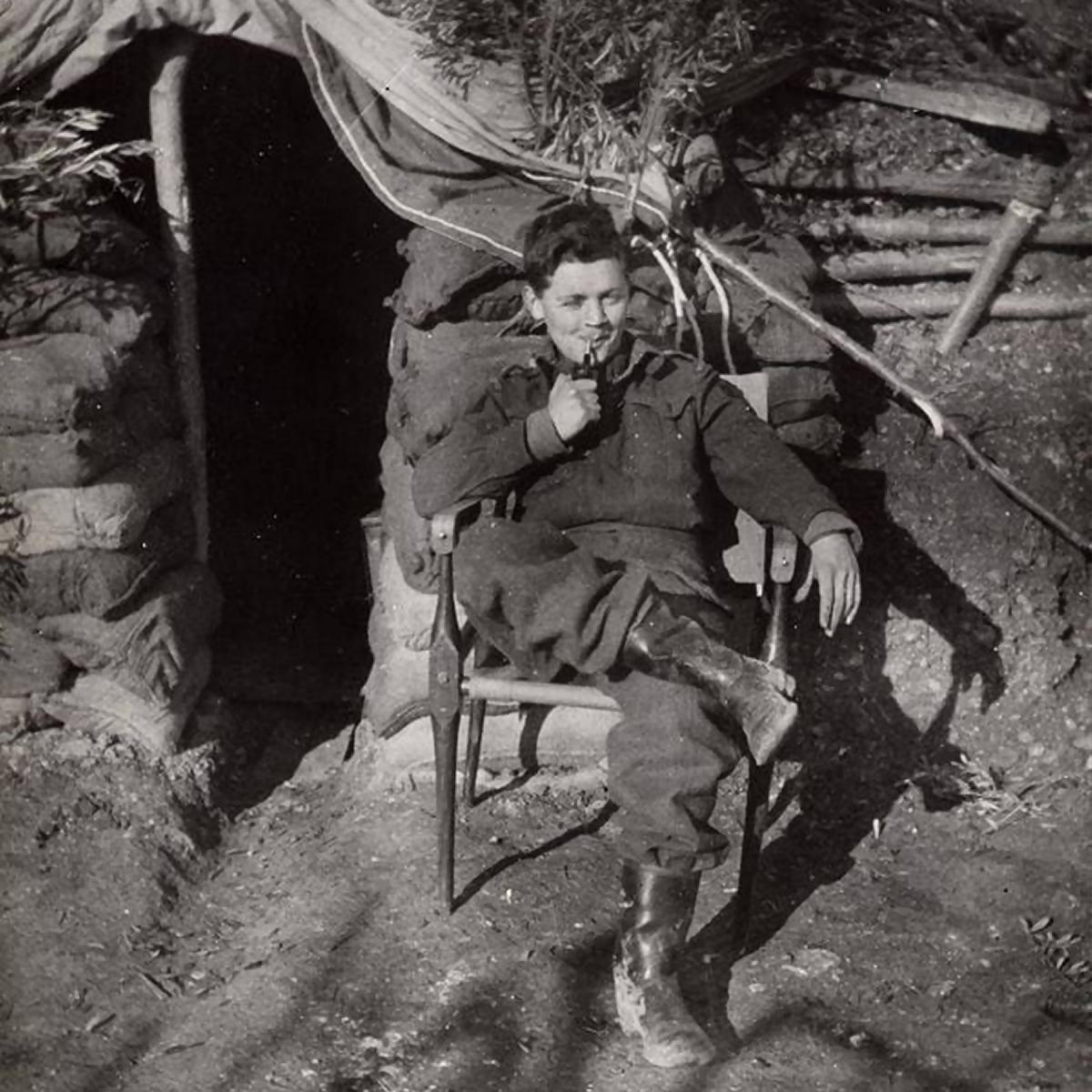
As recounted in his memoir, Mowat, after a year of basic training in Canada, arrived in England in July 1942 at the age of 21. A year later, he was part of the Allied seaborne invasion force that invaded Sicily, codenamed Operation Husky.
Come September 1943, Mowat was in Italy where some of the fiercest fighting of the Second World War took place. During the Battle of Ortona, Mowat was sidelined with battle stress, also called combat neurosis. His memoir describes the deaths of friends lost in battle, and ends with his weeping by the stretcher of an unconscious friend wounded in the head by a bullet.
Not unlike All Quiet on the Western Front, Erich Maria Remarque’s vivid semi-biographical account of the horrors of the First World War, Pierre Berton’s Vimy and, more recently, Steven Spielberg’s film Saving Private Ryan, Mowat’s account tears away at the glorification of war to present it as it really was.
For Carley, considerable thought went into what to highlight and what to leave out, all while best serving that notion — “A very hard part of the process,” he says.
“You pick the book because you love it and then, at some point, you have to stop loving it enough to drop out chunks that slow down the advance of the plot, or are extraneous, or are too much information. In this case, there’s a point where he’s chronicling battle after battle after battle. That just wouldn’t work dramatically. I’ve really truncated time and made it more compact.”
Carley credits Kempson with “adding a lot to the process.”
“I worked for many years at CBC Radio in radio drama, so I know radio sound effects. We’re adding a whole suite of live radio sound effects. As they doing the play, they’re also making all the sounds that you would hear in a war. He (Kempson) brought that feature in and I’ve been able to capitalize on it.”
Speaking to the cast, Carley is equally full of praise.
“They’re wonderful young actors. They’re all at the threshold of great careers. They’re very versatile. Two of them (Reale and Sonntag) are playing about 20 roles. It’s pretty marvellous how they move through them.”
“And they’re all versatile musically. They’re going to be playing the piano, there’s violins … you name it, we got it. That’s all apart from the sound effects they’re creating.”
A graduate of Adam Scott who was inducted into Peterborough’s Pathway of Fame in 2022, Carley’s plays have seen more than 500 productions across Canada, the United States, and abroad. Just earlier this year, his comedy Midnight Madness was staged by the Peterborough Theatre Guild. At present, he working on an adaptation of Lucy Maud Montgomery’s Emily of New Moon.
“I just love telling stories,” says Carley of the continued appeal of playwriting.
“I tell ones that I make up but I also love telling stories that other people have created. Farley Mowat is one our country’s greatest storytellers. He really had just a brilliant way of moving us from A to Z. I’m happy to be a part of that.”
“I really enjoy doing adaptations of other authors’ work,” Carley adds. “You have to crawl into their heads sort of. I’ve done a Margaret Atwood adaptation (The Edible Woman) and a few others. It’s been really fun trying to figure out what they’re saying. You start to see the methods they use to get their story across, but most of what I do comes out of my poor little head.”
Asked what he hopes audiences will take away from his adaptation of And No Birds Sang, Carley answers quickly.
“Obviously, they’re going to come away thinking ‘Wow, war isn’t a good thing’ but I also want them to come away with two things,” he says. “A sense of pride in the Hastys Ps (the Hastings and Prince Edward Regiment), a local regiment. They were integral to the invasion of Sicily, a battlefront that was kind of overlooked by history. These are local guys that fought there. It’s important to me that that be made known.”
“It just blows my mind how young these guys were; that they went off and did this. There were many reasons why they went, but part of it was idealism. Full kudos to them all. I hope people come away with a feeling of respect for these young guys.”
Curtain for And No Birds Sang is 7:30 p.m. on August 14 and 15, 20 to 22, 27 to 29, and September 3 to 5, with 2 p.m. matinees on August 16, 18 to 20, 22 and 23, 25 to 27, 29 and 30, and September 1 to 3 and 5 and 6.
Tickets are $45 ($35 for those under 30) and are available at capitoltheatre.com.