















If you’ve ever wanted a long-lasting photo of yourself or your family that uses original photography practices dating back centuries, now is your chance.
On Friday, November 13 and Saturday, November 14, Raven Lunatic Tintype Photography will be set up at the Coboconk Community Centre from 10 a.m. to 4 p.m., teaching about the history of tintype, providing demonstrations of the photographic process, and taking tintype portraits for a fee.
Then, beginning at 5:30 p.m. each evening, the photography studio will be part of Hystory Entertainment’s Victorian murder mystery dinner experience at the community centre, where guests can also sit for tintype portraits.
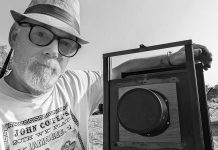
“We’re in a crazy world right now and there’s a lot of analogue happening, where people are going back to things that they can actually put a hand on, and that’s what I love about it,” says Terry Thomas, owner of Raven Lunatic Tintype Photography. “More and more people are seeking out an analogue experience — something that’s not fake, that’s real — and you can’t get more real than this.”
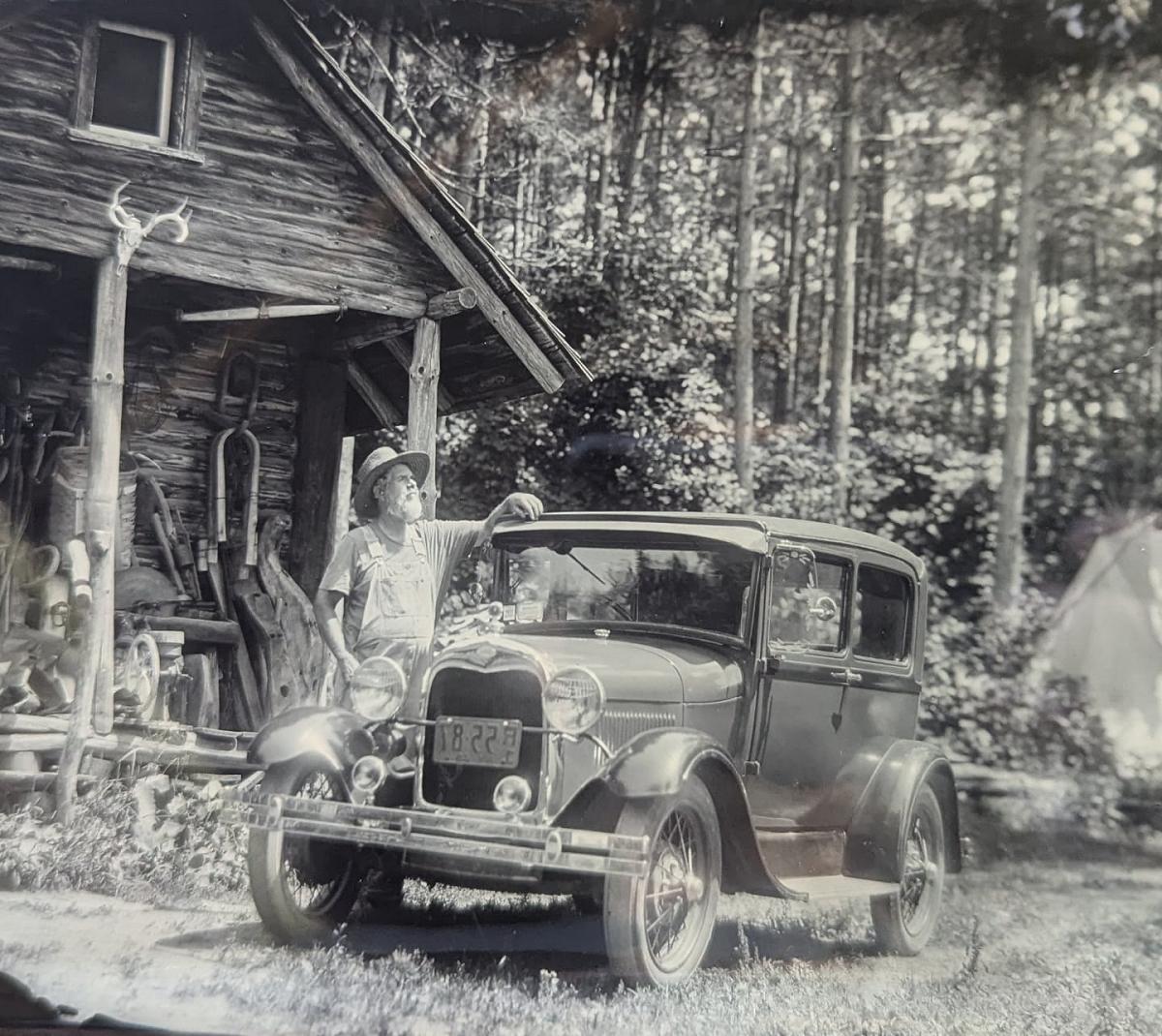
First introduced in 1853 by Adolphe Alexandre Martin in Paris, tintypes are one-of-a-kind photographs created using the same wet plate collodion process that produced glass-plate negatives known as ambrotypes. Tintype is actually a misnomer, since they are made on a thin sheet of iron coated with a dark lacquer (the proper name is “ferrotype”).
Compared to daguerreotype, the first publicly available photographic process, tintypes were inexpensive, relatively easy and quick to make, and less fragile than ambrotypes, and they soon became popular.
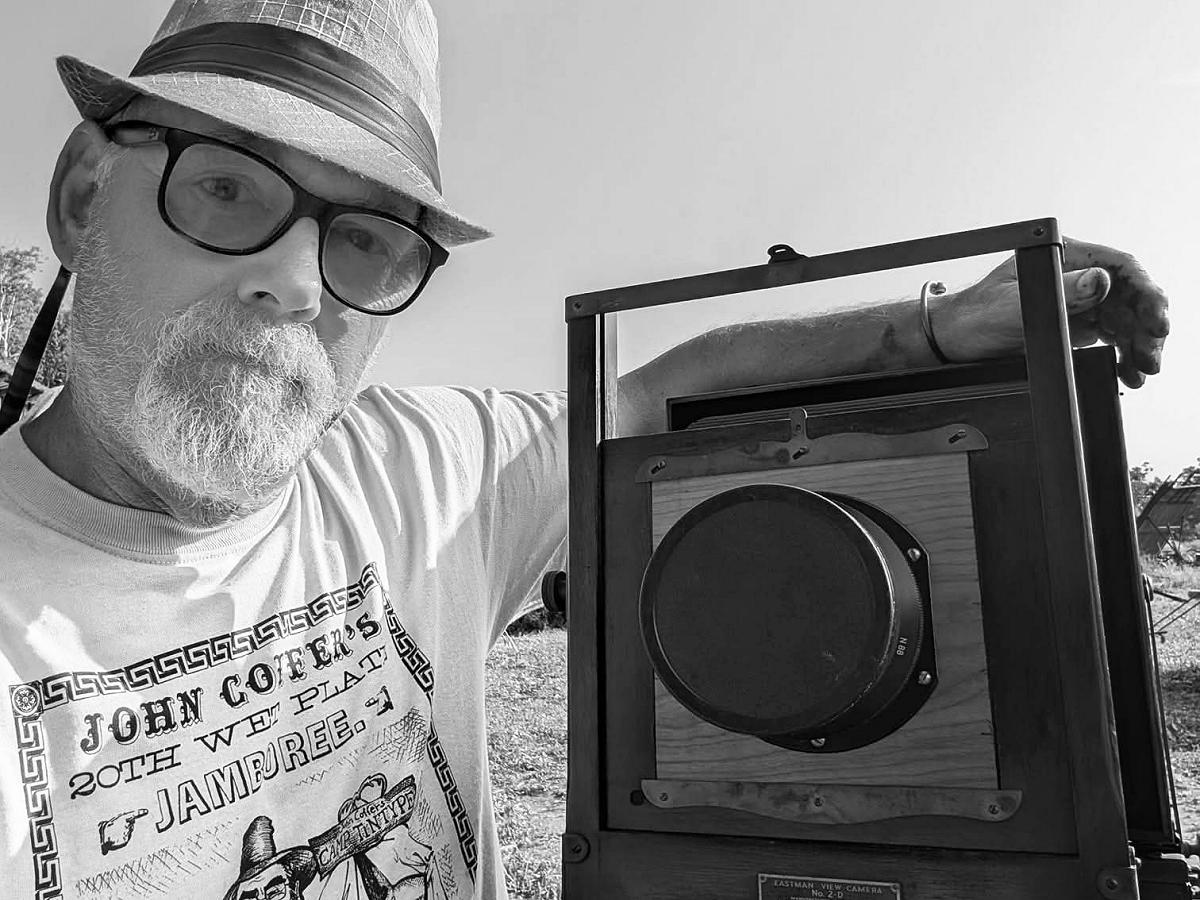
“It’s slow photography,” says Thomas. “I used to go to Algonquin Park and shoot 2,000 photos in a day with my digital camera. If I go home with one good tintype — in an artful day, not a day shooting people — I’m happy.”
Thomas has been a photographer since the age of 12, but when a concussion several years ago left him unable to edit photos on the computer, he searched for analogue methods.
“I got into tintype because I wanted something that would endure, that would be archival, and would last,” he says, noting he prefers tintype over ambrotype because “glass is very fragile.”
“Every time I see this wet plate tintype evolve out of the chemistry, it’s a thrill — it’s an absolute thrill.”
Thomas’ methods follow the traditional process as much as possible using homemade chemicals. He says the process requires good exposure and lighting, which means it can be very “volatile” and can go “very wrong or it can go very right.”
“I actually make the film right in front of them (visitors). I go into the dark room, and then when it comes out, I can put it in a tray and, for that last step, I pour what’s called a fixer on it, which is the last chemical. It actually changes from a negative to a positive right before their eyes and it’s magic. That’s the way I describe it and a lot of people feel the same thing.”
Tintypes played an important role in history, and were most popular during the American Civil War when soldiers had their portraits done so they could be sent my mail to their mothers and other loved ones.
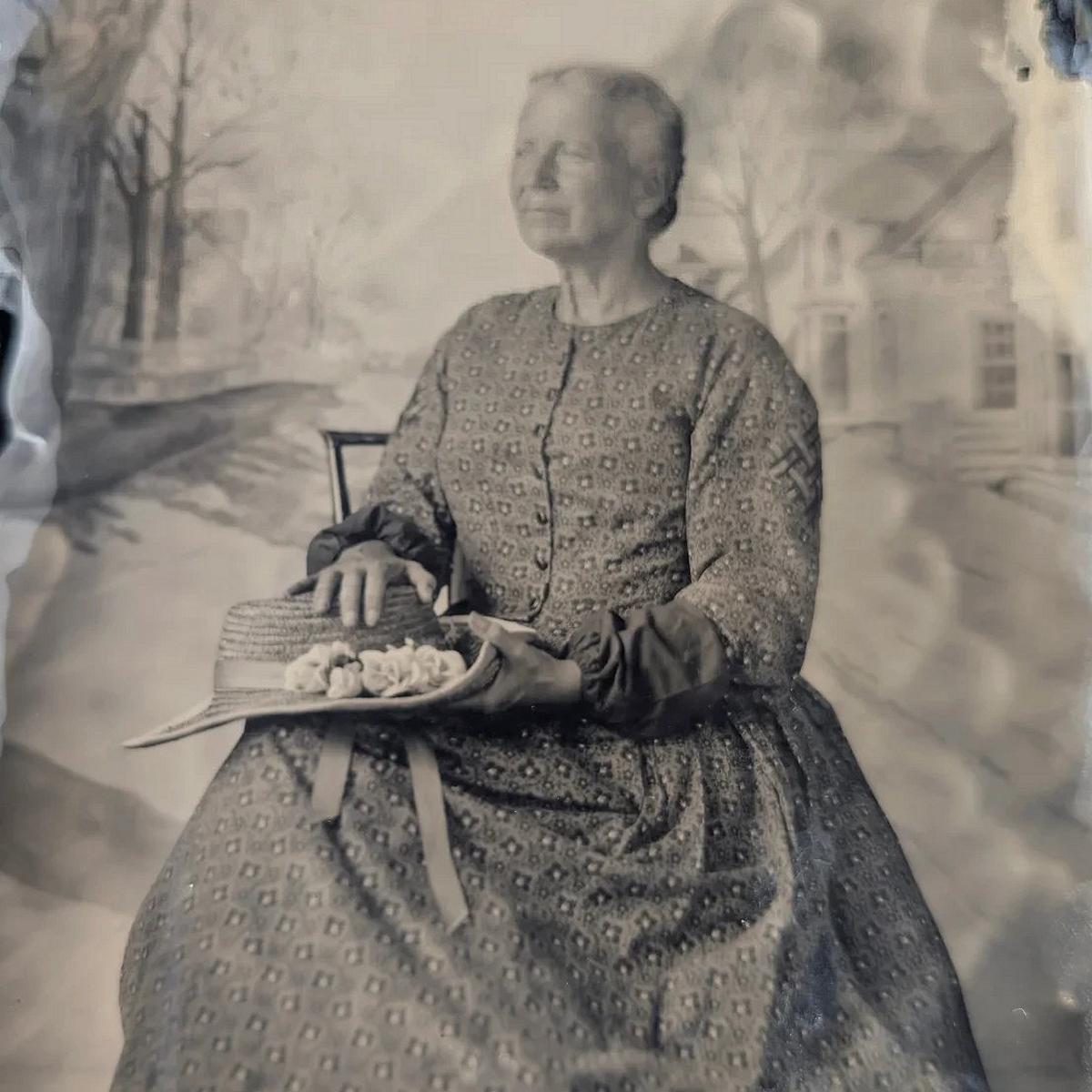
Thomas can also tell roughly when a tintype was taken based on some context clues. If it’s more playful and jovial, for example, it’s likely from the late 1800s because, by then, sales were going down and photographers encouraged people to have more fun with them by incorporating more props.
“Everybody that does this is tuned right into the history,” he says. “We’re pulling out stuff from documents from the 1800s and how to deal with certain problems, because the first photographers were chemists and scientists, not photographers.”
When Raven Lunatic Tintype Photography is at Coboconk Community Centre, visitors will get to learn some of this history while browsing through a range of tintypes. They can watch a live demonstration of the wet plate collodion process, from the coating to development, and sit for their own portraits.
Within minutes, a one-of-a-kind black-and-white image will be produced on metal, with no negative and no copy. The piece needs time to dry, after which Thomas will varnish it with his homemade varnish. The final tintype will be mailed to the photo subject following the event, but people are welcome to take a photo of their plate before they leave.
Watching the process is free, while portraits are priced at $60 for a 4×5-inch plate and $90 for a 5×7-inch plate. A limited number of plates can be made per day, so Thomas recommends booking in advance by calling 705-795-9179.
“I consider this to be a performative art,” Thomas says. “It’s a performance. I go through the whole demo with everybody that I take a picture of, and I think it’s entertainment. They’ll learn a lot.”
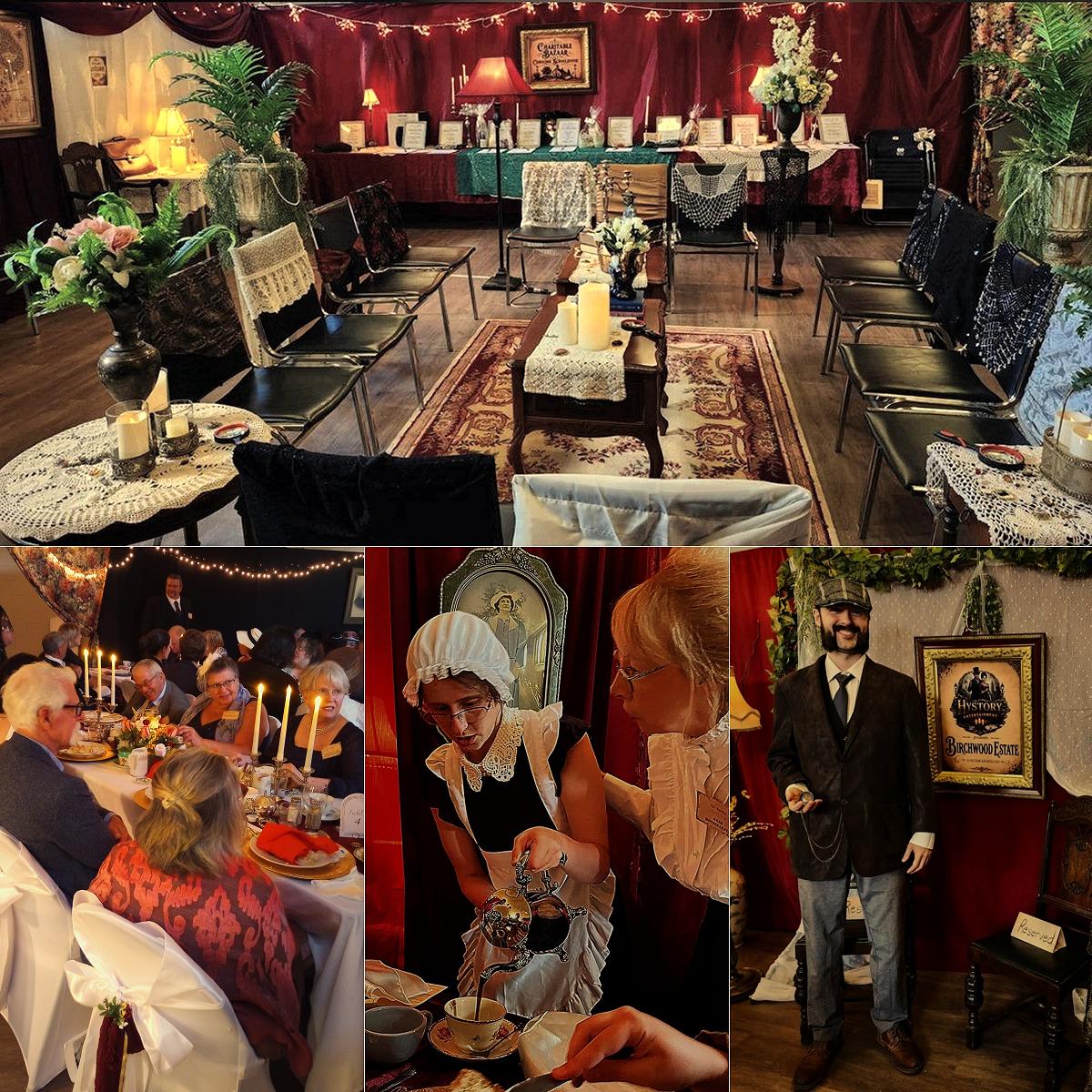
Each evening, the tintype studio will become part of the Victorian murder mystery dinner experience “A Masque of Secrets” hosted by Hystory Entertainment. The Minden-based producer of immersive Victorian murder mystery dinners was founded earlier this year by Jacquie Barker, with the debut event, “Murder at Birchwood Estate,” also held at the Coboconk Community Centre in July.
“I love the Victorian period, and I know people love watching it,” Barker says. “Downton Abbey was a successful series, and so was the Bridgerton series and Murdoch (Mysteries), so that shows people are interested in this period.”
“But they’re only watching it (on TV). I wanted people to actually experience it: to wear the clothing, to see the décor, to touch it, to interact as if we’re part of that world. I want to create an experience for people.”
When they arrive for the murder mystery, each guest is assigned a character and a rumour they must distribute. With a waltz, dinner, and lots of mingling with other suspects throughout the evening, guests must do their best to solve the mystery and catch the killer.
The story continues on from the sold-out debut show this summer, though no knowledge of the first event is needed.
“It’s the same family, the same manor, the same estate, except now it’s two years into the future,” Barker says. “The owner of the estate was murdered in the first one, so now his widow is reopening her manor to the public. Her daughter’s come home and it’s her debutante (masquerade ball).”
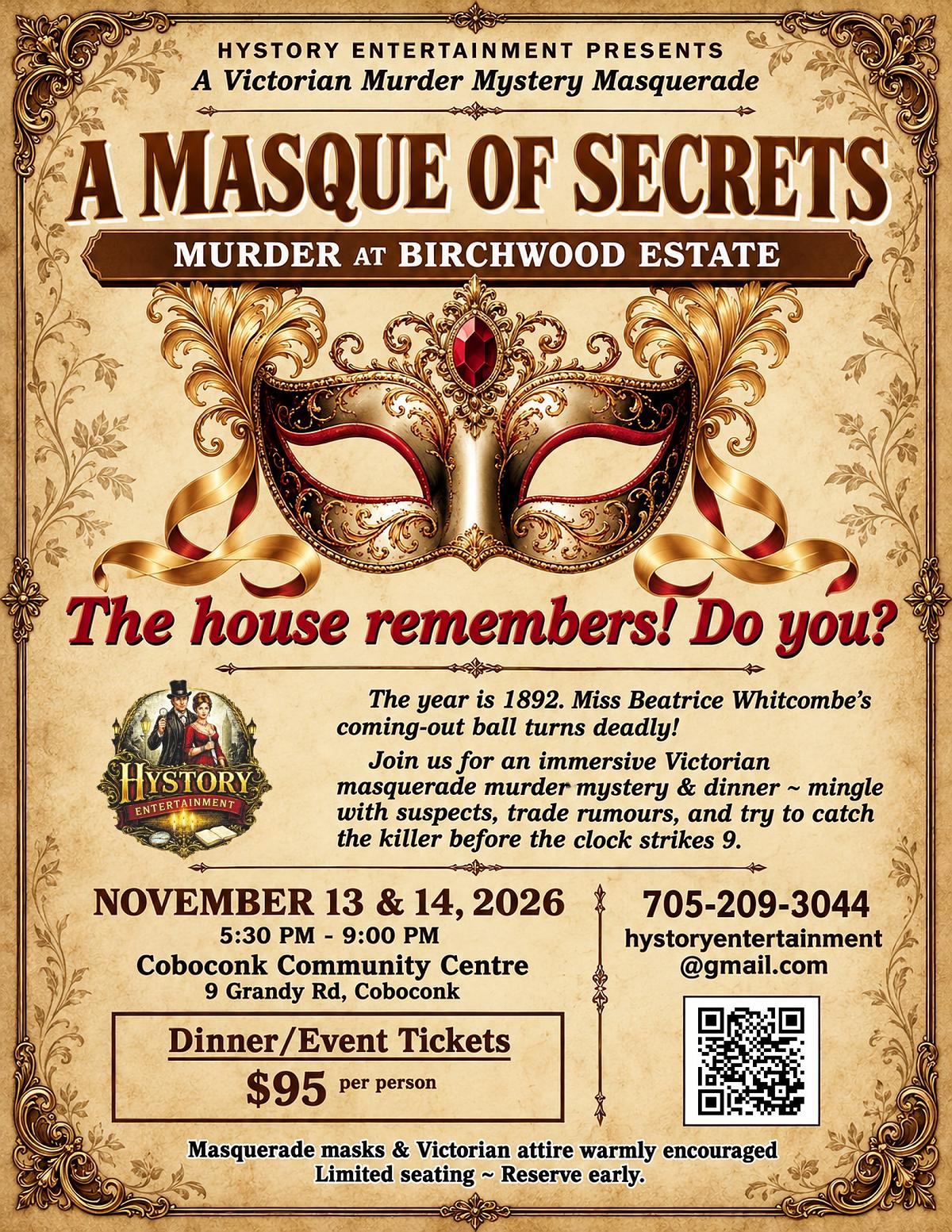
The event now includes alcohol on the dinner menu, and there are more opportunities for guests to interact with one another while they’re trying to solve the mystery. And, of course, this time around, guests can bring a piece of the evening home with them by sitting for a tintype portrait dressed in their costume and mask.
“Our guests spend the evening living in 1892, then they can take a real photograph home with them — made exactly as it would have been then,” says Barker.
With dinner and a drink included, tickets are priced at $95 per person, with discounts for groups of four or more. To buy tickets, visit www.bloomtickets.ca/hostinfo/2120 or call 705-209-3044. Optional tintype portraits are $60 for a 4×5 inch plate and $90 for a 5×7 inch plate.