




















When most people think about pollinators, bees often come to mind. While bees are an important part of any ecosystem, they are not the only insects that help plants reproduce.
Butterflies, moths, beetles, flies, and even wasps all contribute to pollination and ecosystem health, and the relationships between these insects and other living things are known as species interactions.
Some interactions are simple and observable, such as a butterfly visiting a flower; others are more subtle. For example, lepidoptera (butterflies and moths) spend the bulk of their lives as caterpillars feeding on specific host plants until they muster enough energy to transform into their final form.
Unlike recently introduced ornamental plants, native plants have evolved alongside local wildlife for millennia and therefore provide ideal food and habitat for these species, which is why it’s important to include a range of native species when planting.
Creating ecosystems high in biodiversity helps to ensure that host plants for these species will continue to persist, ultimately allowing for their long-term survival.
One well-known example of species interactions is the white oak (Quercus alba), a large native tree known for its shady canopy. White oak is what ecologists refer to as a keystone species, meaning it has a disproportionately large impact on the ecosystem around it.
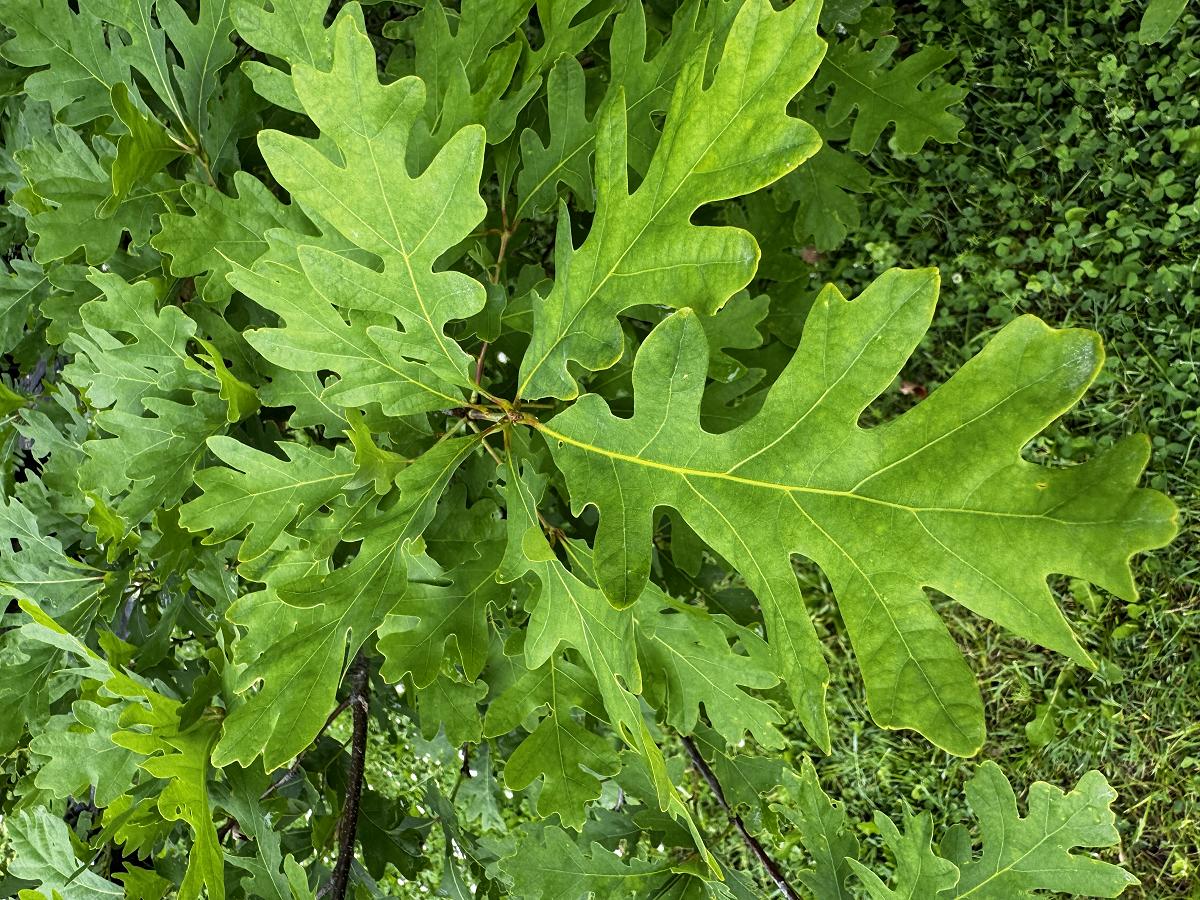
Research has shown that these towering giants serve as hosts for more than 500 different species of lepidoptera, playing an important part in local food webs.
The banded hairstreak (satyrium calanus) is one of the butterfly species that calls the white oak home. Adult hairstreaks lay their eggs on oak twigs, branches, and in bark crevices in the summer. The larvae do not emerge until the following spring, when the fresh green foliage is ready to eat.
Once fully developed, these caterpillars pupate and metamorphose into butterflies, continuing the life cycle.
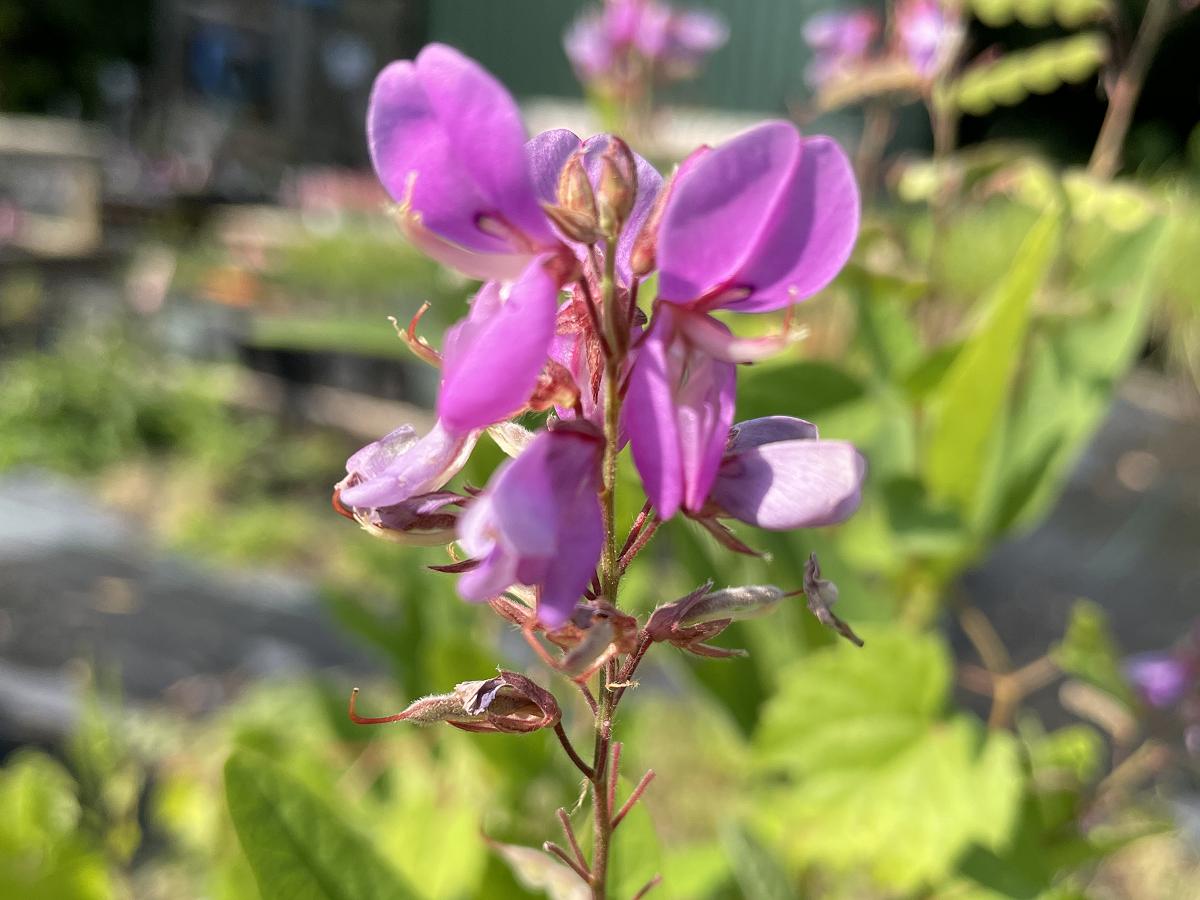
Moving from the canopy to the meadow, showy tick-trefoil (Desmodium canadense) is a native member of the pea family that produces vibrant pink clusters of nectar-rich flowers that attract a plethora of pollinators throughout the summer.
The seeds of this plant are covered in tiny hooks that cling to fur, feathers, and even clothing. Though annoying to some, this interesting adaptation is critical to this plant’s reproductive success.
Along with its nutrient-rich nectar, the leaves of showy tick-trefoil and similar species feed insects such as the larvae of the gray hairstreak butterfly (Strymon melinus). In reciprocation for this sustenance, adult butterflies pollinate other flowering plants as they flutter throughout the landscape.
Less showy plants are equally important when building a pollinator habitat. Grasses and sedges are often overlooked when designing pollinator-friendly gardens.
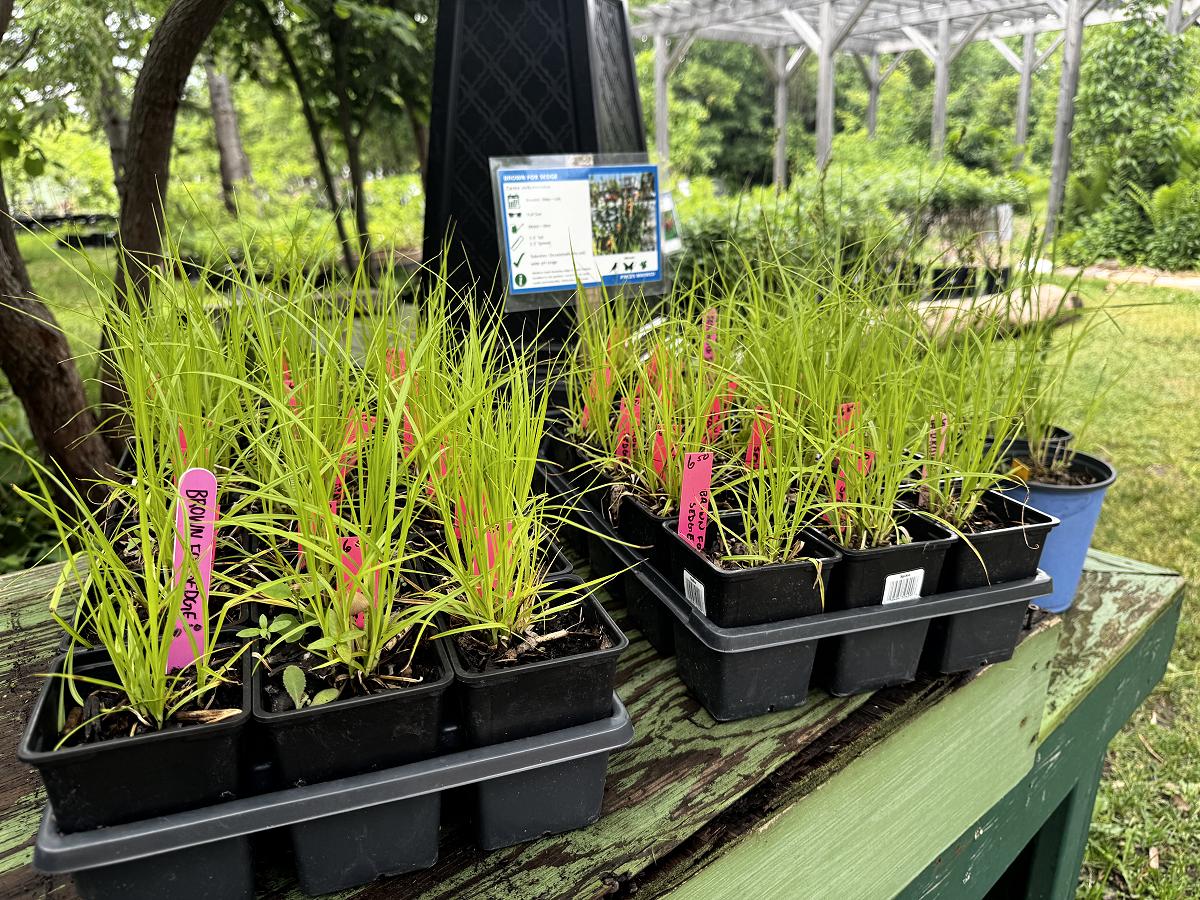
Brown fox sedge (Carex vulpinoidea) is a perfect example of a plant that serves as more than just a small clump of grass — this native sedge provides critical habitat for a wide range of organisms.
Members of the sedge family are discreet but powerful host plants for numerous moths and skipper butterflies whose young caterpillars feed on the foliage. These insects grow to become food for birds and other wildlife, adding to the food web beyond.
A moisture-loving plant, brown fox sedge stabilizes soil at the water’s edge, offers shelter for small animals, and adds to the overall diversity found within depleting wetlands and moist meadows.
The lesson here is that no organism works alone. Individually, each of these plants supports a variety of wildlife, but together they weave a complex tapestry where every strand is as important as the next.
By choosing to plant native species, habitat is being created and lost relationships between pollinators, birds, plants, and other wildlife are rekindled. Each native plant added to a garden contributes to the larger underlying web of life.
The native plant species referenced in this article, among many others, are available for purchase at the GreenUP Ecology Park Native Plant Nursery, open Thursdays through Sunday from 10 a.m. to 4 p.m until Thanksgiving weekend. Learn more about the nursery at greenup.on.ca/native-plant-nursery/.