
















“Our shores are breathing again.”
So says Gold Lake cottager Cindy Bartoli amidst a multi-association initiative currently underway to remove abandoned docks across the Catchacoma-Mississagua lake system.
Though more than 60 abandoned docks have already been removed from the waterways, more and more continue to be documented. To keep up with the momentum, lead organizers have launched a GoFundMe with the goal of raising $20,000.
“Everything helps,” says Gary Jarosz, president of the Cavendish Community Ratepayers Association Inc. (CCRAI). “Let us finish the job because we’ve got the volunteers, we’ve got everything all arranged — we just need the money.”
A community-based organization dedicated to working with local associations as well as businesses and residents across the Municipality of Trent Lakes to share and represent concerns to policy makers, the CCRAI is leading the Abandoned Dock Initiative.
Jarosz says the project has been on the association’s radar for a number of years, as more and more docks have built up across the seven-lake system which includes Catchacoma, Gold, Mississagua, Beaver, McGinnis, Cavendish, and Cold Lakes. Property owners often build or install new docks without properly disposing of their old ones, often leaving them abandoned in the bays.
“It costs money to take it to the dump,” Jarosz notes. “It’s a heck of a lot of work because these things weigh a ton, and a lot of times the wood’s waterlogged and everything, so people just drag them into a back bay and dump them. It’s out of sight, out of mind.”
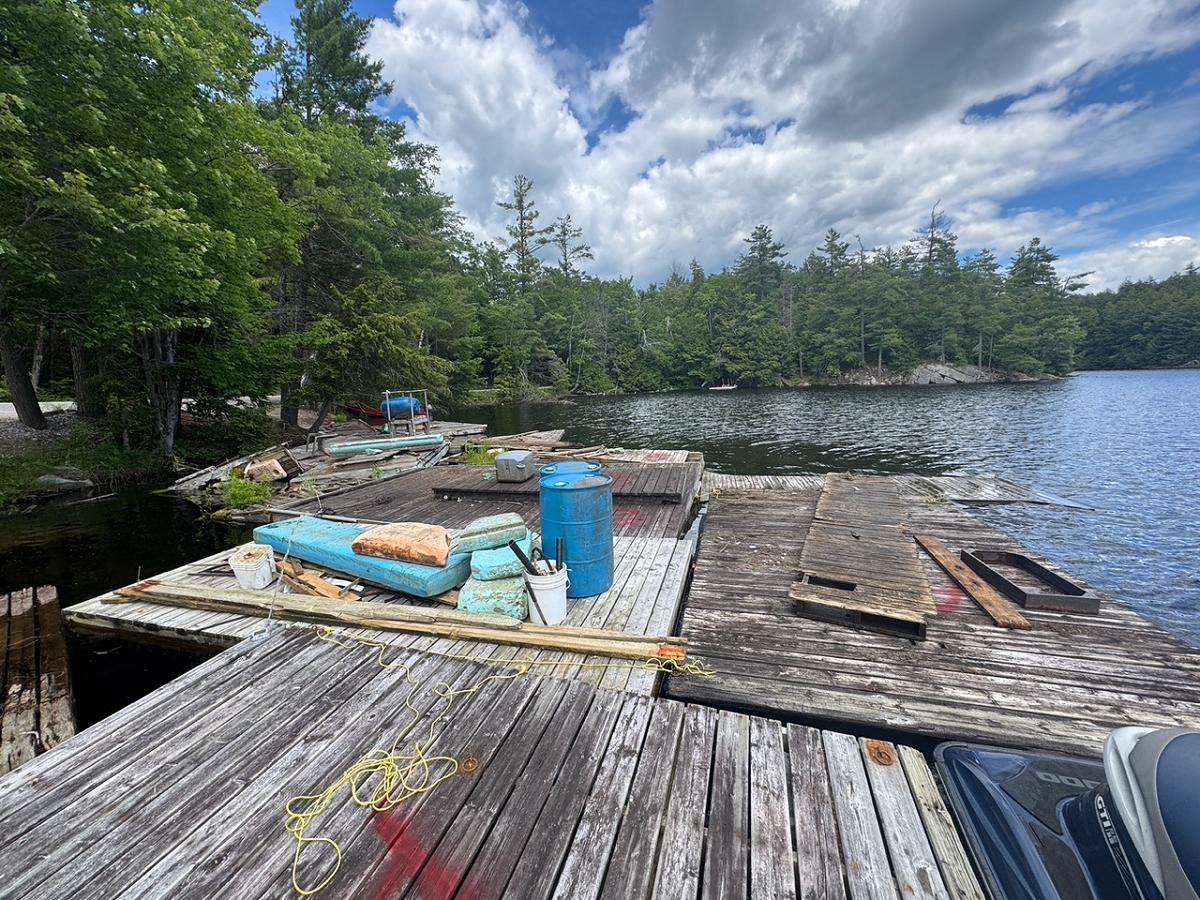
Not only do the abandoned docks pose a hazard to boaters and other watercraft operators, many of the older abandoned docks use an unencapsulated plastic foam that the Ontario government has banned in new docks and platforms since 2021. These foam bats often break down or fall apart when they smash against rocks.
“Unfortunately, waterfowl and fish and other wildlife eat it and sometimes it kills them,” Jarosz says. “The pressure-treated wood has chemicals in it so it’s not good for the water. It starts to destroy the riparian ribbon which is the first section of shoreline from the water and extremely important in terms of naturalization of your shoreline.”
For her part, Bartoli — whose family has had their Gold Lake property since the early 1950s — says that while a lot of people may not notice the docks when they’re boating or on their property, it’s a major “eyesore” for those like herself who like to dip into the bays.
“I do a lot of paddling the shorelines of the lakes, so I’m in these back bays so I see this stuff,” she says. “For me, it was a huge priority because it would just be so upsetting. You’re going back for this lovely pristine nature paddle and all you’re seeing are abandoned docks and breaking up styrofoam flotation bats, and just general garbage and junk on the shorelines.”
When the CCRAI began working towards a project to clean up the abandoned docks, they learned dumping of any kind, including abandoning docks, is illegal on Crown land and in lakes, and fines can go up to $5,000.
The association began rounding up a range of other stakeholders to begin an educational campaign spreading this information and working towards a cleanup initiative.
Involved partners include the Catchacoma Cottagers Association, the Mississauga District Cottagers Association, the Beaver, Cavendish, Bottle McGinnis Cottage Owners Organization, and Gold Lake representatives, as well as Curve Lake First Nation, the Ministry of Natural Resources, the Ministry of the Environment, Conservation and Parks, Kawartha Highlands Signature Site Park, Little Gull Marina, Catchacoma Marina, and the Municipality of Trent Lakes Waste Management.
In January, the partners were awarded a $14,400 community grant from the Municipality of Trent Lakes after the organizations documented 28 abandoned docks they wanted to remove, and anticipated finding more to remove during the cleanup.
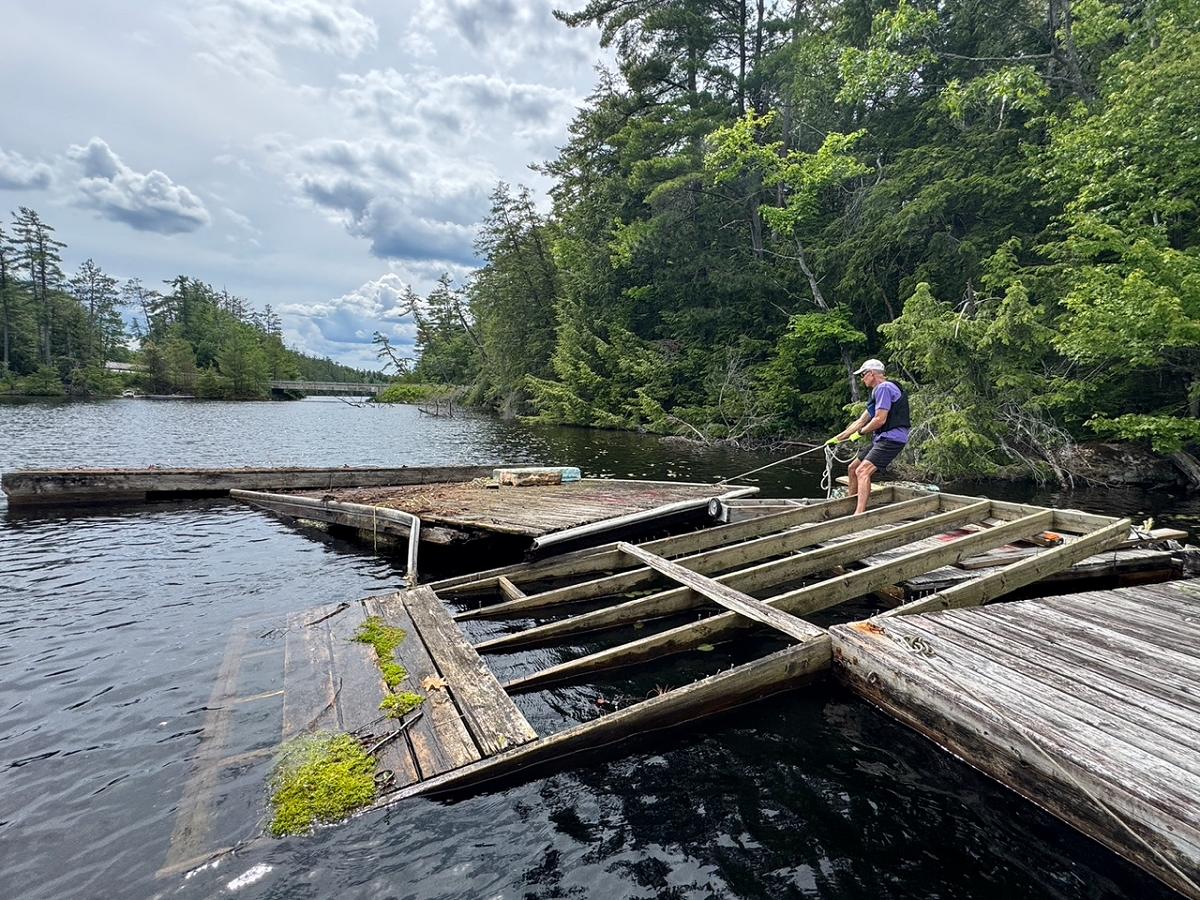
But after the ice went out and the partners searched for abandoned docks, “pinning” them on a Google map, they realized there were a lot more than they initially thought.
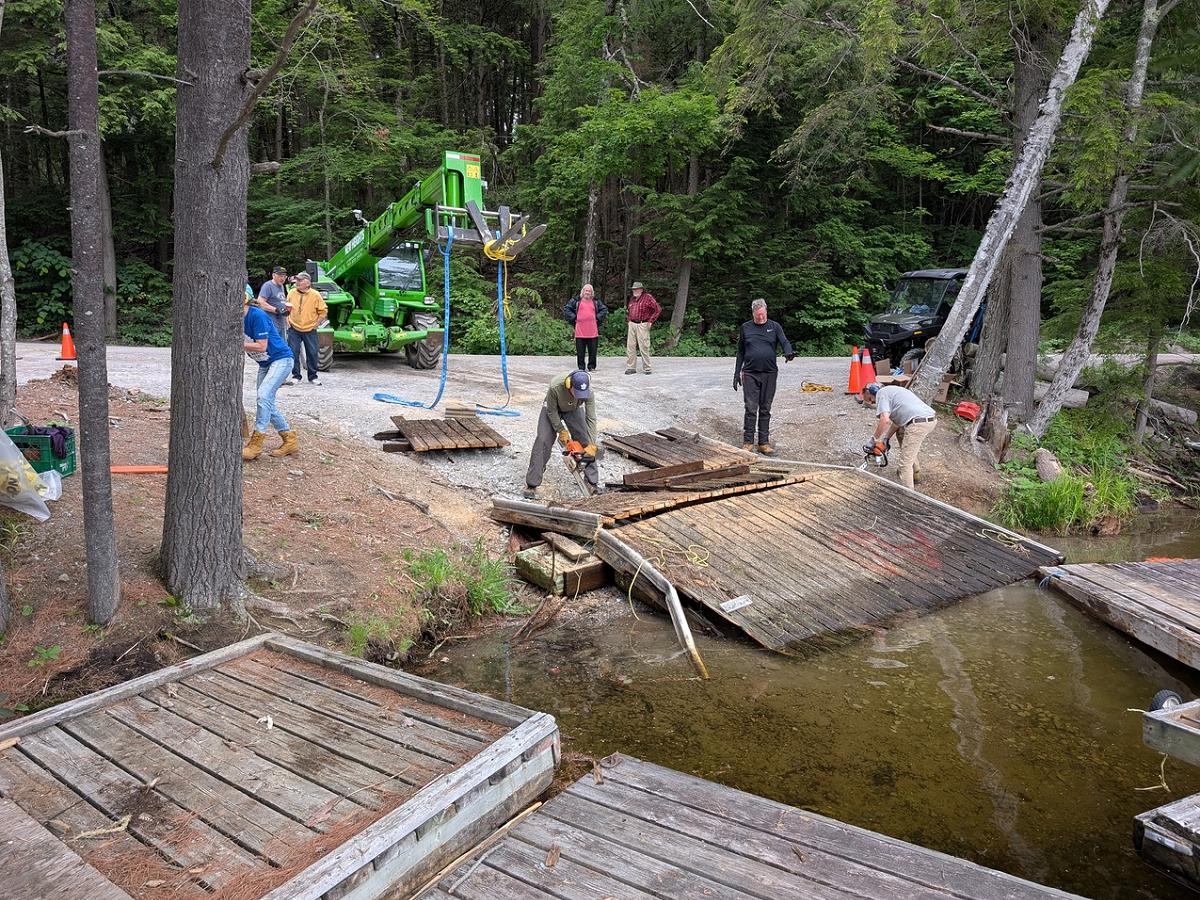
From June 26 to 28, a wide group of volunteers worked to pull more than 60 collected abandoned docks out of the Little Gull Marina on Mississagua Lake and the Gold Lake Boat Launch. These abandoned docks filled 12 40-yard bins, which were all then taken to landfill for proper disposal.
“Not only were we pinning docks (on the Google map), but we were finding empty stray blue barrels from someone’s dock that had floated away, styrofoam bats, and pieces of styrofoam all over the place,” Jarosz points out. “We were pinning all of those too, because if we’re going to do a cleanup we’re going to do a cleanup of everything.”
Including the 60 already collected, there are now a total of 106 abandoned docks — and counting — the volunteers are hoping to pull out of the lakes.
Between machinery rental fees, bin rental fees, and landfill tipping fees, the one-weekend cleanup in June cost about $20,000, leaving the organization down by more than $5,000 after the grant, and with much more work to do.
Instead of waiting to get another grant next year, the organizers decided to get more of the community involved by launching a GoFundMe with the goal of raising $20,000 to make up the $5,000 shortfall and fund the removal of the remaining docks.
The volunteer teams will be doing the removals at the Misssissagua Dam from July 17 to 19, and at the Catchacoma Marina in August.
“What we don’t want to do is lose the momentum,” Jarosz says. “We’ve got people all around the lake and while we’re towing docks on a Saturday morning in the rain, people are out there on their docks cheering us on.”
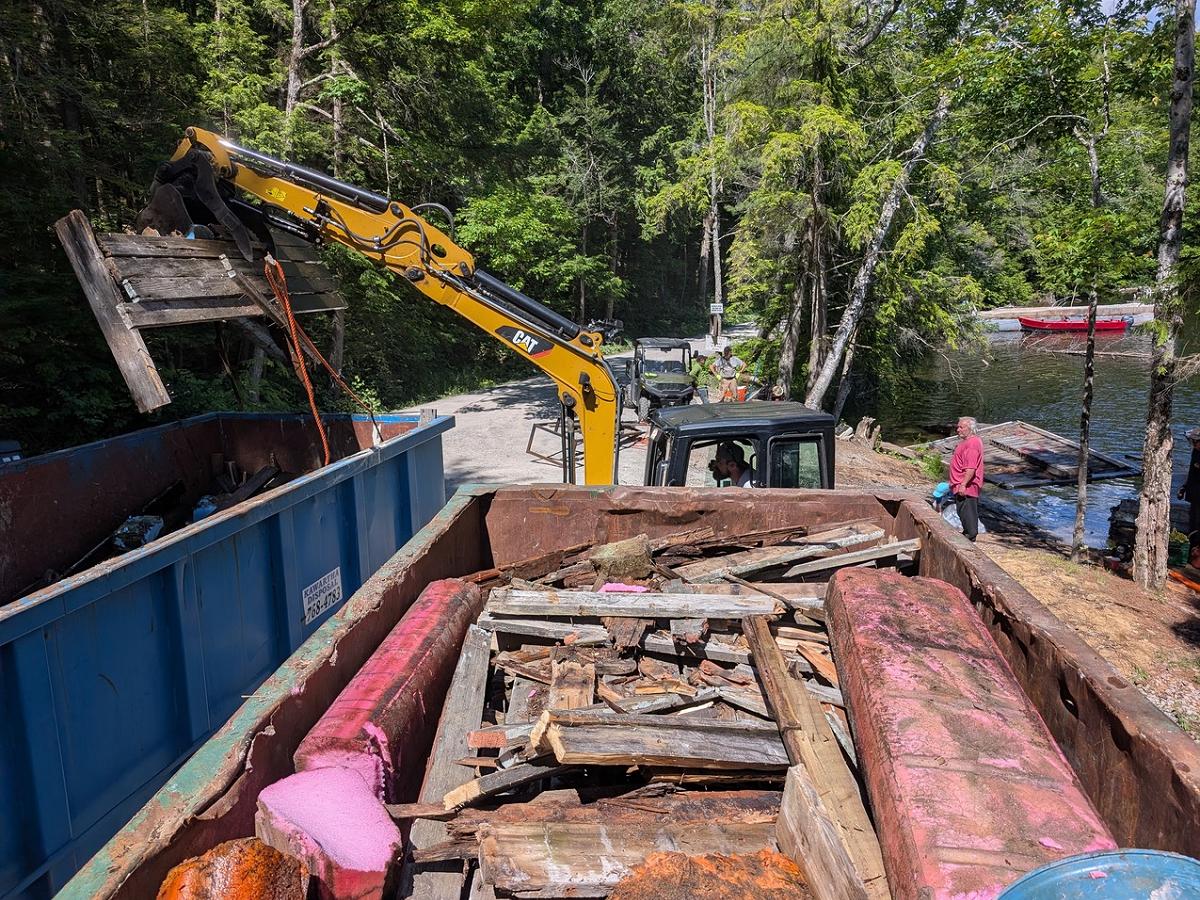
Jarosz says an unexpected bonus of the initiative has been seeing local associations, the municipality, residents, and businesses (including the Catchacoma Marina and Little Gull Marina) all coming together for the project.
“We’re galvanizing the entire community from the municipality downwards, including the businesses, to a common goal,” Jarosz says. “It’s great because what’s happening is a lot of people are meeting other people on the lake system, which creates a better community.”
As volunteers continue the cleanup efforts, the organizers suggest they will also be continuing to educate the public on how it’s illegal and dangerous to abandon their docks.
“Identification of the docks and the removal of the docks is a huge, massive part of the project, but education and prevention are going to be, going forward, very big continuing parts of the project,” says Bartoli. “We have to make sure that we’re not in the same position in another ten years.”
After all, since the first cleanup, Bartoli has already been reaping the rewards of exploring a lake that’s free of abandoned docks.
“I have been out paddling this week and to go along areas of the shoreline that have been cleaned up — it’s been great just to see this, to see it clean and to see it natural and not covered in these bits and pieces of garbage,” she says.
To donate to the CCRAI Abandoned Dock Initiative, visit gofundme.com/f/ccrai-abandoned-dock-initiative