





















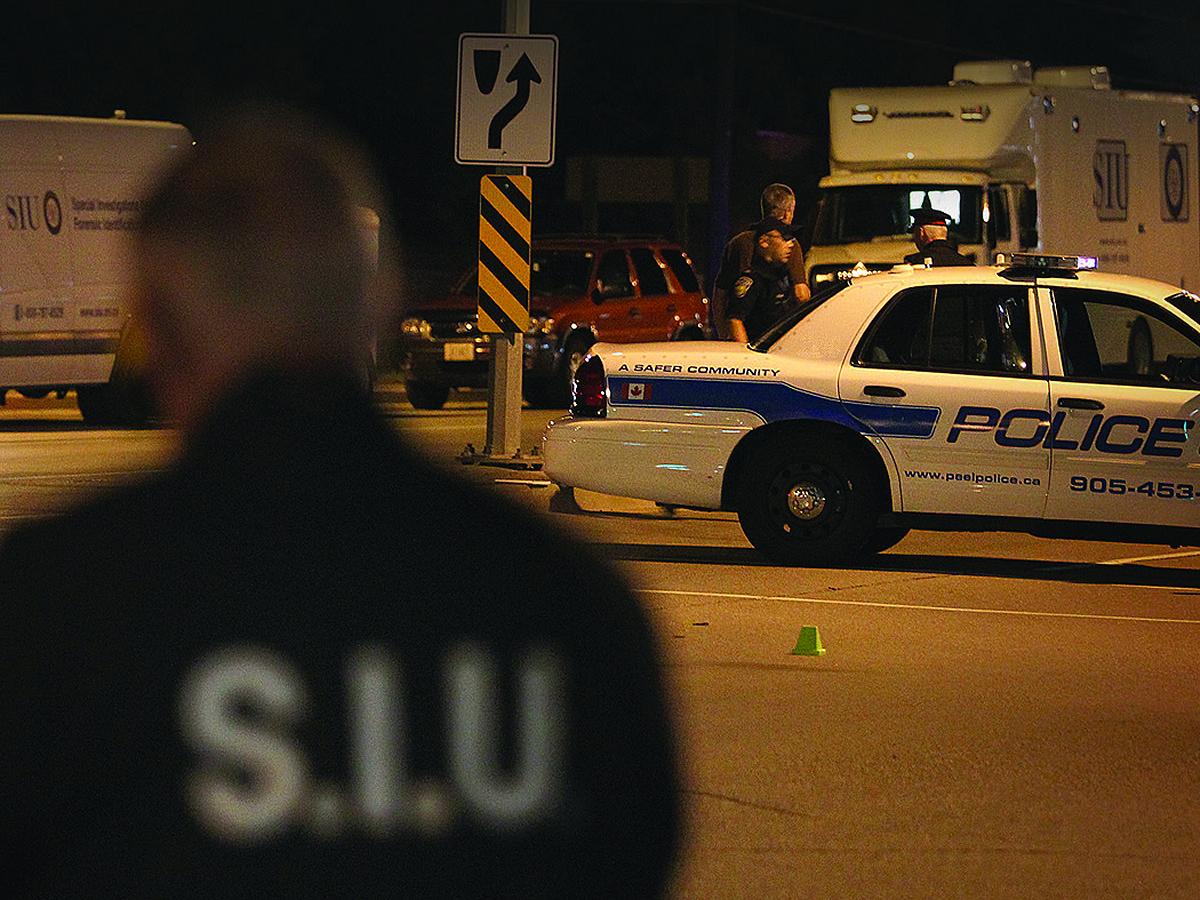
Ontario’s police watchdog has found no reasonable grounds to believe any Ontario Provincial Police (OPP) officer committed a criminal offence in connection with the May death of a 28-year-old man who suffered a medical crisis while in police custody in Cobourg.
In a report released by the Special Investigations Unit (SIU) on Friday (September 18), director Joseph Martino concluded the officers responsible for the man’s custody acted with due care for his health and well-being before and during his detention.
The man was arrested in Cramahe Township on the evening of May 24 after a family member contacted police to request a welfare check. During a video call earlier that day, the family member said they had seen the man had significant facial injuries, including swollen black eyes and blood on his face.
OPP officers initially attended a residence in the township shortly after 7 p.m. and were told the man had suffered a seizure in a garage, injuring his face and arms. After later learning the man had returned to the residence, officers went back and entered because they believed there were urgent medical circumstances.
Police found the man with visible facial injuries and determined he was violating a release order requiring him to live at his mother’s residence. He was arrested without incident.
The man told police he had fallen during a seizure and had not taken his prescribed medication that day.
Although he initially denied recent alcohol or drug use, he later told paramedics he had used cocaine the previous night and that other seizures he had experienced were associated with sleep deprivation and drug use. Paramedics warned there was a risk of another seizure and recommended that he be assessed at hospital.
The man was taken to Northumberland Hills Hospital in Cobourg, where he underwent a CT scan. He was medically cleared, prescribed two medications, and discharged back into police custody.
Police took him to the Cobourg detachment, where he was searched and placed in a cell shortly before midnight to await a bail hearing. The search found no contraband, and a previous search following his arrest had also found no contraband.
According to the director’s report, the man was checked at intervals of 15 minutes or less and custody video showed he appeared to have slept on the cell bench for more than nine hours.
Shortly before 10 a.m. the following morning, custody video showed the man use the toilet and then turn his back to the camera. Martino wrote that he appeared to reach into the toilet bowl and described his actions as “curious.”
The man was provided breakfast at around 10 a.m. and then laid down on the bench. A few minutes later, he began showing signs of a seizure, fell off the bench, and convulsed on the floor.
Officers immediately entered the cell, provided care, and called paramedics. The man was initially responsive and briefly became combative, requiring officers to restrain him, but his condition deteriorated and he suffered another apparent seizure.
Paramedics arrived at around 10:32 a.m. and transported him to Northumberland Hills Hospital, where he was pronounced dead at 12:09 p.m.
An autopsy did not identify any injuries that would account for his death. His cause of death remained pending when Martino completed his report on September 15.
In his review of the incident, Martino considered whether the officers’ conduct amounted to failure to provide the necessaries of life or criminal negligence causing death.
Failure to provide the necessaries of life requires conduct representing a marked departure from the care a reasonable person would have provided under the circumstances. Criminal negligence causing death requires a marked and substantial departure from reasonable care that demonstrates a wanton or reckless disregard for another person’s life or safety.
Martino found the officers’ conduct did not approach either threshold.
The man was lawfully arrested for breaching his release order, Martino concluded, and officers appropriately arranged for paramedics to assess him before he was taken to hospital because of his injuries and seizure history.
After the hospital determined he was medically fit for police custody, officers regularly monitored him in the cell and responded promptly when he began convulsing.
In his report, Martino wrote “There is a suspicion in the evidence” that the man may have accessed and consumed cocaine while in the cell, possibly precipitating the seizures.
However, Martino stressed the evidence had not established whether drug use occurred and concluded it would not change his assessment of the officers’ potential criminal liability.
The man had been searched twice before being placed in the cell, with neither search finding an illicit substance.
Martino noted that only a strip search might have detected a concealed substance, but such searches are highly invasive and permitted only in exceptional circumstances when police have reasonable grounds to believe one is necessary.
He added that police did not appear to have grounds for a strip search, particularly because the man had not been arrested for a drug-related offence.
The officer designated as the subject of the investigation declined to be interviewed or provide his notes, as was his legal right.
The investigation included interviews with six civilian witnesses and four police witnesses, as well as a review of body-worn, police-cruiser, and cell-block video, police communications and custody records, medical records, and preliminary autopsy findings.
“For the foregoing reasons, there is no basis for proceeding with criminal charges in this case,” Martino concluded. “The file is closed.”
The SIU launched its investigation on May 25 after being contacted by the OPP. The civilian agency investigates incidents involving police that may have resulted in death, serious injury, sexual assault, or the discharge of a firearm at a person.