

















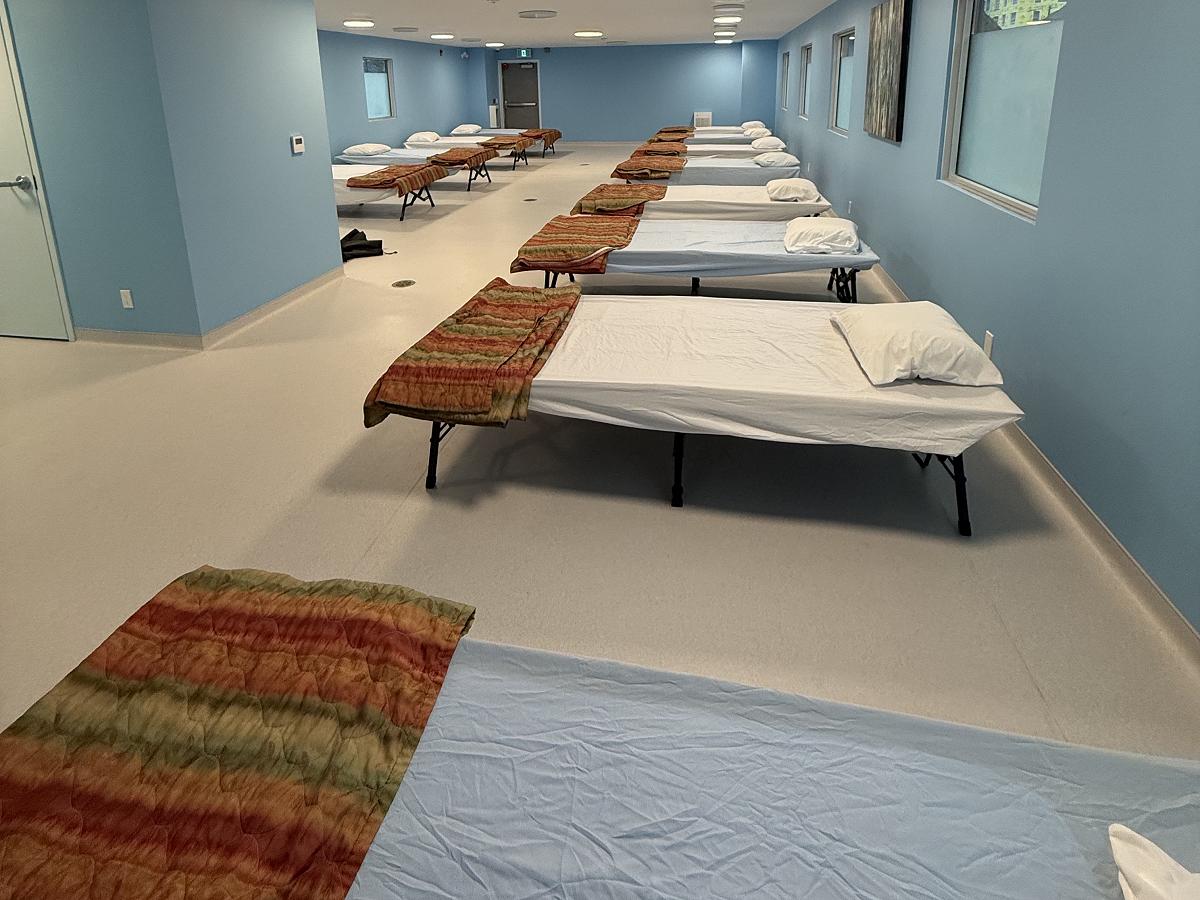
A new 12-bed emergency shelter in Lindsay has opened this week, following an announcement last Tuesday (April 7) of $850,000 in provincial funding.
The emergency shelter is part of the Community Integrated Care Hub (“The Hub”), a purpose-built space at 22 Peel Street led by the John Howard Society of the Kawarthas to provide services for people experiencing homelessness and concurrent conditions including addictions.
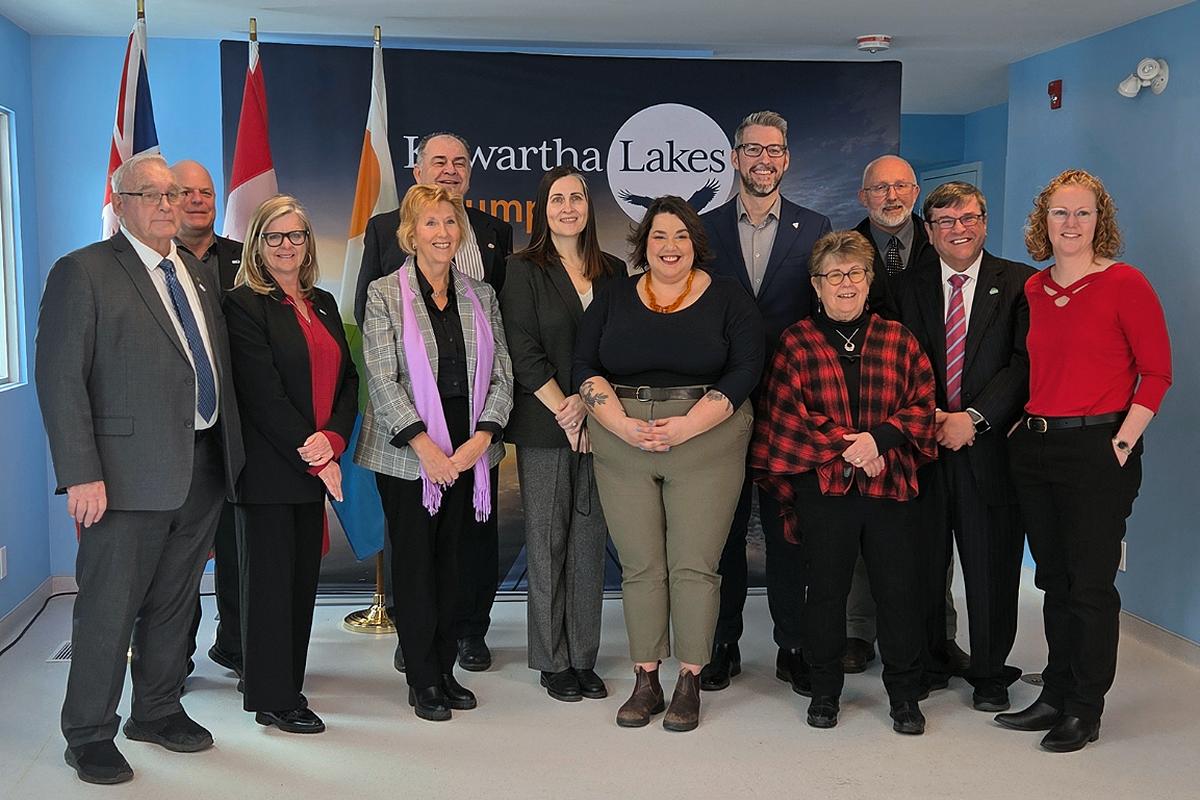
Construction of The Hub began in April 2024, with the Ontario government investing $850,000 through the Homelessness Prevention Program (HPP) for property acquisition, along with additional support through the Building Faster Fund.
The City of Kawartha Lakes contributed by waiving approximately $2,500 in application and permit fees, while community partners provided additional funding support, with the United Way Kawartha Lakes and Haliburton contributing $5,000 through its Community Capacity Fund and the Kawartha Community Foundation contributing $8,000 through its Social Sustainability Fund.
Kristal Jones-Craighead, program director for The Hub, recently spoke to kawarthaNOW about the significance of the provincial funding in establishing the new space and in providing stability for both clients and service providers.
“Incredible work has been done in Kawartha Lakes long before The Hub opened and we are excited to be the port where all that good work can come together,” Jones-Craighead said.
The Hub is separated into three areas: the overnight program providing beds for 12 people, the drop-in day program that can support 14 people at a time, and office space for community partners and service providers.
The space previously housed a smaller drop-in service and the John Howard Society’s adult justice and literacy skills programs. Jones-Craighead explained that the space has had significant renovations to create a purpose-built space that addresses the needs of clients.
“It was designed to be a community space with a community feel that feels intentional,” said Jones-Craighead, noting that drop-in programs are often located in multi-use community spaces, such as church basements or town halls, or in extremely clinical environments.
Jones-Craighead said the John Howard Society recognized the lack of spaces designed with homelessness and addiction treatment services as the primary focus.
“The feel of The Hub is very bright, cheery, and welcoming,” she said.
The Hub is already offering drop-in services on an extended hours basis and the overnight shelter portion will open on Monday (April 13).
Jones-Craighead explained the provincial funding has allowed the John Howard Society to offer 24-hour low barrier, wraparound services. In a media release, Kawartha Lakes mayor Doug Elmslie said the emergency shelter “will make a huge difference in our community and will allow residents to get the care they need.”
Although A Place Called Home in Lindsay operates a 30-bed emergency shelter, Jones-Craighead said there is often a shortage of shelter spaces for unhoused people in the area, especially for those who require low-barrier access and additional support such as medical care.
The overnight space at The Hub is an emergency shelter providing a communal all-gender space that operates on a first-come, first-served basis. Jones-Craighead explained that it is not a traditional shelter where individuals are provided a room to return to night after night.
“It’s so exciting to be able to offer the overnight service and to increase safety for some of our most vulnerable neighbours,” she said.
Speaking about the overnight program, Jones-Craighead highlighted the importance of individuals being able to access services for basic needs. She described how most people need a few simple things to start their day — such as a shower, use the washroom, have a hot coffee, and wear clean clothes — but for unhoused individuals these “acts of daily living become impossible.”
The overnight program will provide a safe bed to sleep in as well as hygiene items, meals, clothing, and survival gear. Furthermore, due to the centralized structure of The Hub, people will also be able to access wraparound services offered by the John Howard Society and community partners.
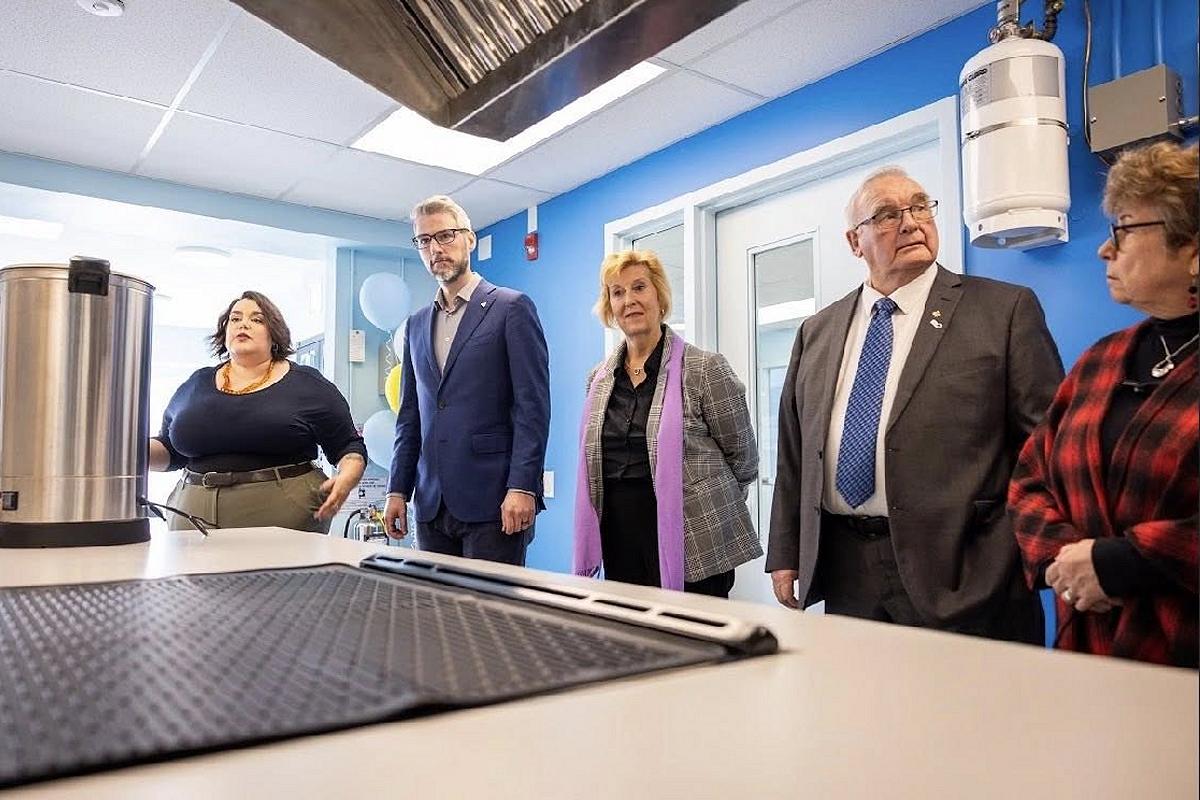
Jones-Craighead shared that the $850,000 in provincial funding has allowed the John Howard Society to greatly expand the services at The Hub. In particular, she spoke about the importance of having a permanent and purpose-built space. She said this stability provides both service providers and unhoused individuals a space “where beginning to form and reach goals becomes a realistic proposition.”
She also spoke about the importance of having a centralized location near key amenities where many community service providers and partners can work together, providing not only collaboration opportunities for the organizations but also convenience and additional support for clients.
“When folks are experiencing housing insecurity, it becomes an insurmountable obstacle to all the things you need in a day, especially in a rural community where services are spread out,” Jones-Craighead said.
She added that the provincial funding has also allowed the allows the John Howard Society to offer on-site office space to community partners as an in-kind service, ensuring that a wide range of service providers are able to connect with their shared client community.
While the John Howard Society cannot confirm yet which community partners will be involved, as they are still finalizing details and start dates, Jones-Craighead said that services would include wound care, harm reduction, justice services, and cultural supports.
Noting that The Hub is being opened in partnership with the City of Kawartha Lakes and their homelessness and housing outreach team, she thanked community members and residents for their ongoing support of the John Howard Society and The Hub as they work to address the need of unhoused people.
“We’ve been very fortunate to be supported and welcomed by our neighbours on Peel Street and in the City of Kawartha Lakes,” Jones-Craighead said.
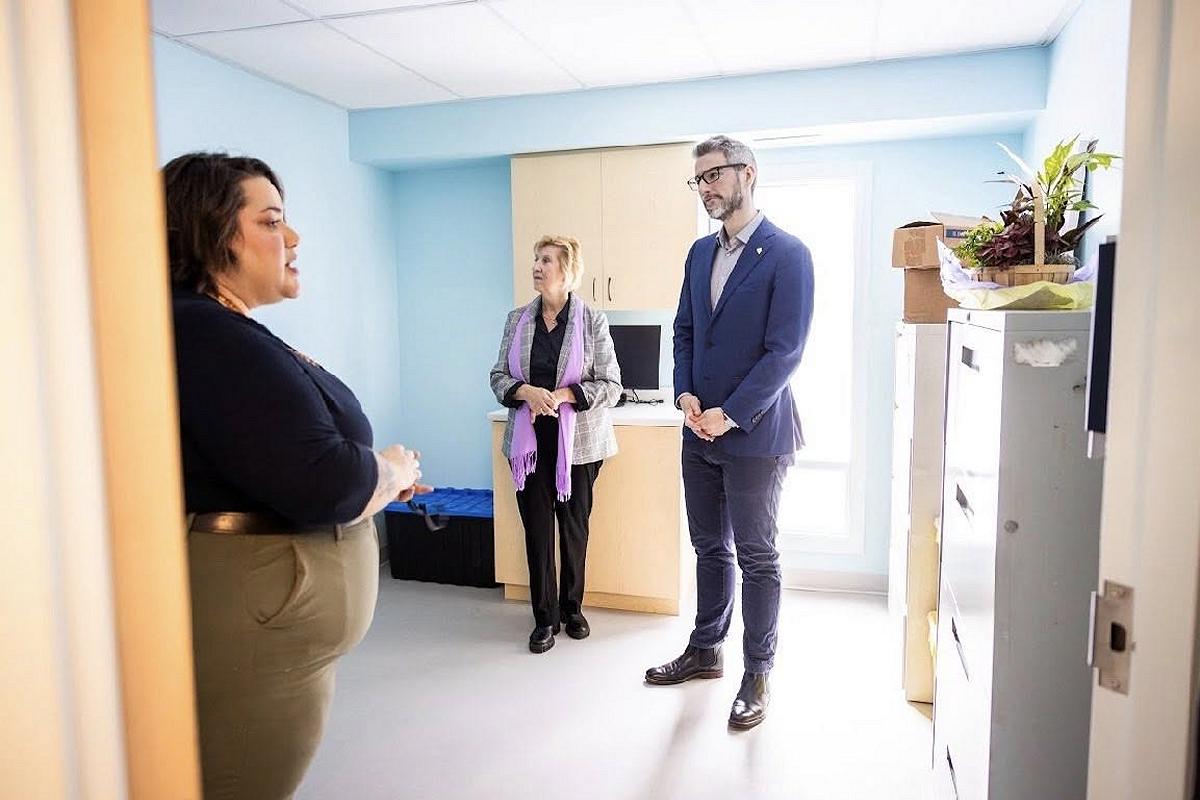
Although the John Howard Society is excited about the opportunities supported by the provincial funding, Jones-Craighead said there is still much work to be done to address chronic homelessness in Kawartha Lakes and beyond.
Speaking about the role of government in addressing the ongoing needs of unhoused people and supporting them in transitioning to permanent housing, she highlighted the need to invest in outreach programs to connect people with services, provide affordable and rent-geared-to-income housing, and being flexible in the definitions of housing models, especially for transitional housing.
She also said it was important to align all aspects of community services to support ending chronic homelessness.
“This needs to be coupled with healthcare, transit, affordable groceries, and providing the social determinants of health,” Jones-Craighead said.
On a local level, Jones-Craighead said there is also a role to play for members of the community, including the need for continued conversation to break down stigma surrounding homelessness and addiction and to increase awareness and understanding of the complex issues many such individuals face.
To that end, she encouraged residents to continue to engage with the John Howard Society on social media and through volunteerism.