
















Canada’s nuclear regulator, the Canadian Nuclear Safety Commission (CNSC), is holding a two-day public meeting on Wednesday and Thursday (May 27 and 28) at the Holiday Inn Peterborough Waterfront to conduct a mid-term review of BWXT Nuclear Energy Canada’s operations at its Peterborough and Toronto nuclear fuel facilities.
BWXT, which has been involved with the Canada Deuterium Uranium (CANDU) industry from its earliest years, employs 40 people at its Toronto facility to make ceramic pellets from natural uranium dioxide powder received from Cameco Corporation in Port Hope.
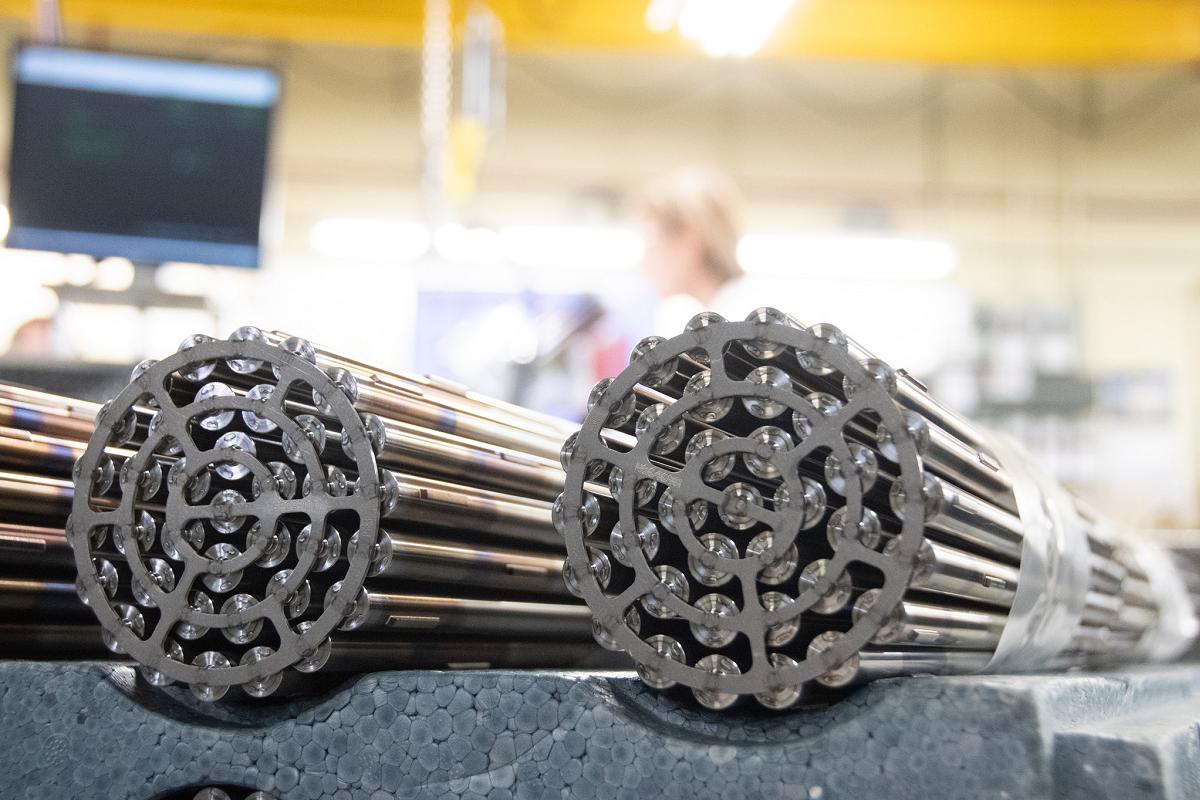
The manufactured pellets are then sent to the company’s facility in the former GE factory complex in downtown Peterborough where, using zirconium tubes manufactured at BWXT’s Arnprior facility, the pellets are assembled into fuel bundles for CANDU nuclear power stations in Ontario.
Of BWXT’s 400 employees in Peterborough, around 20 per cent are involved in the manufacturing process for nuclear fuel bundles, which are used to produce around 25 per cent of Ontario’s electricity.
In 2020, BWXT participated in a public hearing with CNSC to renew the company’s Class IB Nuclear Fuel Facility Operating Licence for a period of 10 years. The commission renewed BWXT’s licences as two facility-specific licences — one for Peterborough and one for Toronto — both of which expire on December 31, 2030. The mid-term update will cover the first five years of the 10-year licensing period for both facilities.
The mid-term review process comes amid ongoing public scrutiny of BWXT’s Peterborough operations, including past concerns raised by residents and advocacy groups about environmental contamination, emissions, and community safety.
VIDEO: BWXT’s Peterborough Fuel Bundle Fabrication Facility (2021)
According to published documents by CNSC, compliance activities between 2021 and 2025 included inspections, desktop reviews, and technical assessments, with 22 CNSC inspections conducted during this period resulting in 35 notices of non-compliance, all of which were ranked as having low safety significance.
CNSC also reports there were 43 safeguards inspections conducted independently at BWXT facilities by the International Atomic Energy Agency to verify nuclear material inventories and ensure the absence of undeclared nuclear material and activities. No non-compliances were issued from these inspections.
In 2022, CNSC staff conducted extended air sampling for beryllium, a highly toxic metal used at the BWXT facility in Peterborough during the nuclear fuel bundle manufacturing process, and found levels of beryllium observed in air samples consistently below available guidelines that are protective of human health and the environment.
“CNSC staff are satisfied that the BWXT NEC facilities have been operating safely and in accordance with their licence conditions since 2021,” the CNSC states. “No major enforcement actions have been issued to BWXT NEC during this period.”
The public meeting at the Holiday Inn, which will be livestreamed at www.cnsc-ccsn.gc.ca, begins at 9 a.m. on both Wednesday and Thursday. Those who were interested in submitting an intervention at the meeting had to apply to the CNSC by April 17.
On Wednesday, there will be morning presentations from BWXT staff as well as from CNSC staff. Following lunch, the commission will hear presentations from organizations and individuals including the Canadian Environmental Law Association for Citizens Against Radioactive Neighbourhoods, Unifor Locals 252, 524 and 599-O, the Canadian Nuclear Workers’ Council, Erica Martin, Pete Woolidge, Peter Harris, William G. Templeman, Port Hope Community Health Concerns Committee, Deirdre McGahern, James Wilkes, Janice Keil, Jane Scott, and Angel Hamilton.
On Thursday, CNSC will hear presentations from Hiawatha First Nation, Curve Lake First Nation, and Mississaugas of Scugog Island First Nation, which will be followed by a final round of questions from CNSC members.
In addition to the oral presentations made at the meeting, organizations and individuals also provided written submissions to the CNSC, whose members will have the opportunity to ask questions of CNSC staff and BWXT staff about the written submissions during the final round of questions.
Written submissions were provided by Prince of Wales Public School, Roger Desrochers, Rotary Club of Peterborough, Kelly McDowell, Stephanie Benn, Jonathan Campbell, Lora Vassiliadis, Caroline Tennent, Zahir Topan, Emily Straka, Jessica Rowland, Roy Brady, Oasis Dufferin Community Centre, Conexus Nuclear Inc., Jake Wadland, Catherine Vakil, M.D., Corina McCoy, Creative Fire LP | Des Nedhe Group, Unifor Local 599-O, Ken Brown, Barbara Chisholm, Janet Harris, Radiation Safety Institute of Canada, Canadian Nuclear Association, Rebecca Schillemat, Wendy Trusler, Timothy Wilson, Mark Achbar, and Lakelands Public Health.
The three First Nations, along with the Radiation Safety Institute of Canada and the Canadian Environmental Law Association, collectively received up to $61,578.81 in funding from CNSC to cover eligible costs to participate in the review process, such as professional services, travel, and administrative costs.
More information about the mid-term review public meeting is available on the CNSC website.
BWXT also has a dedicated page about the mid-term review public meeting on the BWXT website.